
Sports
When the Scores Go Too Low, the Drama Disappears

Jeff Stanislow, Golfers Unite
Tune in on AM 820 Tampa – Saturday Morning’s at 8:00 AM for the Let’s Go Low Radio Show hosted by Jeff Stanislow and sponsored by Golfers Unite. More details on the show and streaming instructions…
There’s something magical about watching the world’s best golfers battle a championship course under pressure. The tension of a tight leaderboard, the drama of a crucial two-footer on 18, the possibility that anyone within striking distance could steal the trophy — that’s what makes tournament golf appointment viewing. That’s what keeps fans glued to the broadcast from Thursday to Sunday.
So why, then, does the CJ Cup Byron Nelson at TPC Craig Ranch feel like it loses me somewhere around Friday afternoon?
The answer, I’ve come to realize, is the same every year: the scores.
A Tournament That Practically Plays Itself
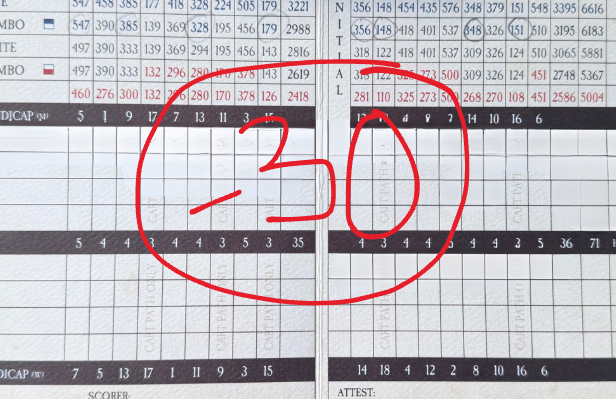
Let me be clear — Wyndham Clark’s performance at the 2026 CJ Cup Byron Nelson was genuinely impressive. Shooting an 11-under 60 in the final round to win at 30-under 254 is a remarkable athletic achievement. The man was on fire, and credit where it’s due. But here’s my honest reaction watching it unfold on Sunday: somewhere around the 12th hole, when it became clear Clark was going to run away with it, I found myself reaching for my phone.
That’s not a knock on Clark. That’s a knock on the setup.
When a golfer can shoot 60 in a final round and it barely raises eyebrows — when it’s essentially the expected ceiling of performance rather than a stunning outlier — something has gone wrong. Tournament golf should be hard. It should feel like a fight. When scores balloon into the 25-, 28-, 30-under range by Sunday, the leaderboard starts to look less like a championship and more like a putting contest at a resort course.
The 2026 Byron Nelson winner finished at 30-under 254. The runner-up, Si Woo Kim, was three back. Scheffler, one of the greatest players of his generation, finished third at 25-under and barely made noise. Twenty-five under par, and you’re an afterthought. That should tell you everything.
Fun Florida Fact – Lowest Score Ever at the Arnold Palmer Invitational – Payne Stewart with a 264 (-20) in 1987!
Last Year Was Even Worse — Or Better, Depending on Your Perspective
If this year’s edition felt excessive, cast your mind back to 2025. Scottie Scheffler — the world’s number one player, a man who wins major championships — showed up to TPC Craig Ranch, shot a 61 in the opening round, and never let anyone breathe. He finished at 31-under par, winning by eight strokes over Erik van Rooyen. Eight shots. The tournament was effectively over by Saturday.
That 31-under total tied a PGA Tour record for the lowest 72-hole score in relation to par. At a regular tour stop. On a course that is supposed to test the best players in the world.
And here’s the uncomfortable question that raises: if the best players in the world can shoot 31-under at your golf course, is your golf course actually testing them?
The counterargument, of course, is that you’re watching history. You’re watching elite athletes performing at the absolute peak of human capability. Who wouldn’t want to see that? And I understand that perspective. Genuinely. But there’s a difference between witnessing greatness and watching a formality play out. When the winning score is almost guaranteed to be somewhere in the upper 20s or low 30s under par before the first ball is struck Thursday morning, the suspense evaporates. You’re not watching a competition so much as a performance review.
Join Golfers Unite – memberships are free and you get access to four brand deals including FoundGolfBalls.com, for $30 a year get access to 14 more deals…
The Psychology of the Leaderboard
Part of what makes golf compelling — arguably the most compelling thing about it as a spectator sport — is the leaderboard’s unpredictability. Golf is uniquely cruel. A player who looks comfortable with a four-shot lead on Sunday morning can implode on the back nine. A journeyman in 40th place after 36 holes can go low on the weekend and steal a trophy. The margins matter. The pressure matters.
But none of that drama functions properly when the course offers so little resistance that low scores become almost inevitable. When everyone is shooting in the mid-60s, the leaderboard compresses into a kind of chaos where individual holes barely matter. A birdie here, a birdie there — it all blurs together. The viewer loses the sense that any single moment is truly pivotal.
Compare this to watching a U.S. Open setup, where par feels like a victory and bogeys cascade like dominos under pressure. Every shot matters. Every putt matters. The viewer is hyper-aware of the stakes because the margin for error is razor thin. That is gripping television.
The Byron Nelson, by contrast, often feels like watching a birdie-fest where the real competition isn’t against the course — it’s just against the other guys also torching it. That’s a fundamentally different kind of contest, and to my eye, a less interesting one.
Is It the Course, the Setup, or Both?
To be fair to the tournament organizers, TPC Craig Ranch underwent a significant renovation ahead of the 2026 event — a $25 million project led by Lanny Wadkins. The fact that Clark’s winning total of 30-under was a shot higher than Scheffler’s record-setting 31-under in 2025 might indicate the renovation tightened things up marginally. But one shot is not exactly a dramatic correction. The course still surrendered scores in the mid-to-high 20s across the top of the leaderboard, and Jordan Spieth fired a 62 in the second round. Sungjae Im shot a 61 the same day.
Those are extraordinary numbers. And while I have enormous respect for the players posting them, it raises a legitimate question about course setup philosophy. Is the goal of a PGA Tour event to showcase scoring, or to showcase the totality of the game — including defense, course management, and the ability to grind through adversity?
Great golf courses demand both offense and defense. They reward brilliance but punish recklessness. They create drama by keeping the door open for multiple players deep into Sunday while still making it genuinely difficult to close. TPC Craig Ranch, at least as currently set up for this event, seems to lean heavily toward offense. And while that can be spectacular in short bursts, it erodes the drama over the course of a full tournament week.
The Broader Problem With Soft Setups
This isn’t exclusively a Byron Nelson problem. There are several stops on the PGA Tour schedule where similar dynamics play out year after year — courses that the modern professional golfer has simply outgrown, or setups that prioritize scoring pace and entertainment value in ways that inadvertently drain the competitive tension from the event.
The PGA Tour has made significant strides in recent years toward elevating its product — the Signature Events model, elevated purses, stronger fields. But field strength only takes you so far if the course isn’t holding up its end of the bargain. You can have the 50 best players in the world in the field, but if 35 of them finish under par and the winning score is 28-under, the elite nature of the field doesn’t feel reflected in the results.
There’s also a psychological effect on the players themselves, though they’d rarely admit it publicly. When a course sets up soft, conservative course management goes out the window. Players know they need to be aggressive. They know they need to go low. The nuance of the game — the lay-up into a precise yardage, the decision to take on a tucked pin or play to the fat part of the green — disappears. It becomes a bombing contest. That’s entertaining for a certain kind of golf fan. But for those of us who love the chess-match dimension of the sport, it feels like something is missing.
What I’d Like to See Changed
I want to be constructive here, because I do enjoy this tournament in other respects. The Dallas-Fort Worth area is a fantastic golf market. The crowds are passionate. The field is typically strong, with hometown hero Scheffler drawing enormous local support. There’s real energy around the event.
But the setup needs to be braver.
Tighten the fairways. Let the rough grow. Firm up the greens. Tuck some pins. Make par feel like an accomplishment on at least half the holes. Use the wind — north Texas has plenty of it — rather than setting up the course on the calmest possible conditions. Challenge these players in ways that force them to think, scramble, and fight.
I’m not asking for U.S. Open brutality. I’m not asking for a course where players are struggling to break 75. I’m asking for a setup where finishing at 15-under for the week feels like a serious contending score rather than a footnote. Where a final round 65 is a brilliant performance rather than a slightly disappointing one. Where the difference between champion and also-ran isn’t just “who caught fire and went low” but “who managed the whole week with the most skill, patience, and nerve.”
That’s what I want from a PGA Tour event. And I don’t think it’s too much to ask.
Credit Where It’s Due
Before I close, let me circle back to Wyndham Clark, because I don’t want my critique of the setup to diminish what he accomplished. Shooting 60 in any context is extraordinary. Doing it in the final round of a PGA Tour event to come from behind and win is a special achievement, and Clark — a player who has shown a talent for performing under pressure ever since his U.S. Open win at Los Angeles Country Club — deserves full credit for his composure and brilliance on that Sunday.
Similarly, Scottie Scheffler’s 2025 performance was a reminder of just how dominant he is when locked in. A 61 on Thursday, steady brilliance all week, and a wire-to-wire win by eight shots — that’s the kind of performance that defines a generational player.
My issue was never with the players. It was never with the golf. My issue is with what happens to my investment as a viewer when the course stops fighting back.
The Bottom Line
Golf is at its best when it’s a struggle. When the course asks hard questions and the players have to search deep for answers. When the leaderboard is tight and every hole carries meaning. When a two-shot swing on a par-3 feels like it might decide the tournament.
The CJ Cup Byron Nelson at TPC Craig Ranch has the pieces to be a great tournament. A strong market, a passionate fan base, and — when the best players in the world show up — genuinely elite competition. But until the setup starts asking harder questions of those elite players, I’ll keep finding myself drifting away by Sunday afternoon, mildly impressed but not emotionally invested.
And in a crowded sports landscape competing for every minute of viewer attention, that’s a problem the tournament can’t afford to ignore.