Connect with us

Business

What’s the top concern among billionaires? Not a financial crash or debt crisis. It’s tariffs

Published

on


Money can’t buy you love, but surely billions of dollars ought to be enough to insulate you from global uncertainty and provide some peace of mind, right? Maybe not.

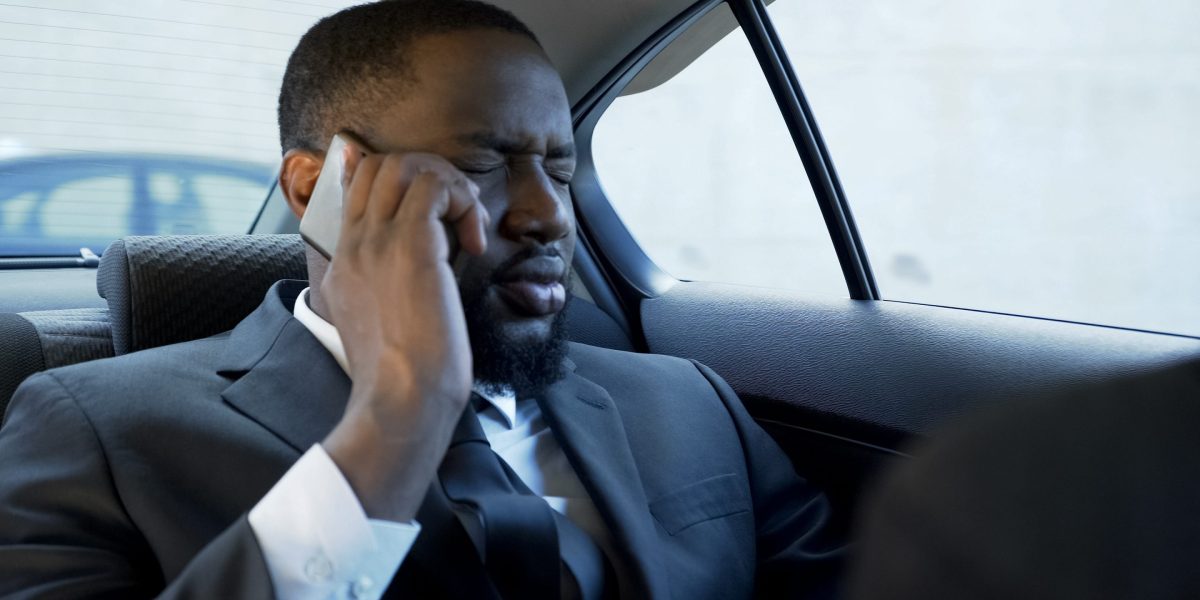
According to the latest UBS Billionaire Ambitions Report, which surveyed superrich clients around the world, only 1% said, “I am not worried about any economic, market, or policy factors negatively impacting the market environment over the next 12 months.”

Meanwhile, the most widely cited concern by billionaires was tariffs, with 66% saying it will most likely harm market conditions over the coming year. Close behind was “major geopolitical conflict” at 63% and policy uncertainty at 59%.

And while Wall Street is worried about soaring U.S. debt, other sovereign borrowers, and AI hyperscalers issuing more bonds, a comparatively low 34% of billionaires flagged a debt crisis as the biggest thing keeping them up at night.

Other risks that are top-of-mind elsewhere but were lower on the list for billionaires were global recession (27%), a financial market crisis (16%), and climate change (14%).

To be sure, UBS pointed out there are regional differences in what billionaires are worried about. For example, 75% of billionaires in the Asia-Pacific region cited tariffs, compared with 70% in the Americas citing higher inflation or major geopolitical conflict.

That’s as President Donald Trump’s trade war has hit China and Southeast Asia with steep duties, while Japan and South Korea face lower but still historically high tariffs.

On the other end of the trade war, importers in the U.S. are passing along some tariff costs to American consumers, who are increasingly anxious about high prices and affordability.

In fact, Trump’s tariffs may actually cool inflation for the rest of the global economy while keeping price pressures sticky at home.

The president and the White House insist costs are lower, but the consumer price index has seen its annual rate accelerate steadily since Trump’s “Liberation Day” shocker in April.

Of course, billionaires are not as bound by international borders as most, making any regional differences among them more fluid.

The UBS report found 36% have relocated at least once, with another 9% saying they are considering it. The top reasons given were seeking a better quality of life (36%), geopolitical concerns (36%), and the ability to organize tax affairs more efficiently (35%).


Source link

Continue Reading

Business

Amazon robotaxi service Zoox to charge for rides in 2026, with ‘laser-focus’ on transporting people, not deliveries, says cofounder

Published

on


Amazon’s self-driving robotaxi subsidiary, Zoox, expects to start charging passengers for rides in Las Vegas in early 2026, with paid rides in the San Francisco Bay Area coming later next year, a company executive said Monday.

The move, which would represent a key milestone for Zoox as it seeks to catch up with Alphabet’s Waymo, depends on obtaining federal regulatory and state approvals, Zoox Co-founder and chief technology officer Jesse Levinson told the audience at Fortune’s Brainstorm AI event in San Francisco on Monday.

And while robotaxi rival Waymo recently partnered with DoorDash to test food deliveries with driverless cars, Levinson said that Zoox is “laser focused” on moving people around cities, an addressable market he sees as being “just profoundly huge.” That directive has come “all the way from the very top” at Amazon, he added, despite the retailer’s significant interest in driverless package delivery.

“It’s harder to move people around than packages in terms of what you have to do with your vehicle,” Levinson said. On the other hand, automating package delivery is rife with its own challenge because the boxes have to get in and out of the vehicle, which isn’t as straightforward as people who can move themselves, he added.

Zoox crossed the 1 million mile technical threshold for autonomous rides just last week, Levinson said. The company’s distinct, carriage-seated vehicles, which have no steering wheels or manual controls, currently provide rides to passengers free of charge in portions of Las Vegas and Zoox is slowly opening up the waitlist to use the service in San Francisco.

Despite the progress and the plans to start charging fares, Zoox won’t generate revenues that are meaningful to Amazon, its $2.4 trillion parent company, for at least several more years, Levinson said. 

“This is pretty expensive,” said Levinson. “Over the next few years, it will start to be a really interesting business because the revenue you can generate from the robotaxi is quite a bit more than the expense to run robotaxi.”

That’s the point at which the business will become more “financially interesting,” he added.

Building cars without human drivers in mind

While creating a driverless robotaxi service comes with various challenge, Levinson believes it will ultimately be a key method for moving people around dense urban areas.

“Our view is that people aren’t doing this, not because it’s not a good idea, but because it’s just really hard,” said Levinson. “It takes a lot of time, it’s very cross functional, and it’s expensive. But I do think over time this is going to be a much more popular way of human transportation”

One of the gaps between a driverless robotaxi service like Zoox and Waymo, said Levinson, is in the way the cars are built. Rather than retrofitted vehicles that were manufactured with a human driver in mind, Zoox cars were built to be driverless. Levinson said the four-passenger cabins have carriage seating, active suspension, individual screens for each seat, and four-zone climate control. 

“The cars that have been designed over the last 100 years are for humans,” Levinson said. “All the choices, their shape, their architecture, what components they have in them—they were all designed for human drivers.” Levinson said Zoox offers a more cushy, social rider experience that he thinks will be a differentiator among competitors like Waymo and potentially Tesla’s robotaxi fleet. 

Another competitive element for Zoox is its battery, said Levinson. The bigger battery is more environmentally and economically friendly because it requires less charging.

“The economic opportunity and the opportunity for customers [as we] create this whole new category of transportation is actually much more exciting and even more financially compelling than simply taking something they do today and saving a bit of money,” he said.


Source link

Continue Reading

Business

The U.S. has over 900 billionaires and their wealth soared by 18% to $6.9 trillion this year: UBS

Published

on


The United States remains the clear leader in global wealth creation, with its billionaire population expanding and their combined fortunes soaring over the past year, according to UBS Global Wealth Management’s Billionaire Ambitions Report for 2025. It reveals that U.S. billionaires’ wealth increased by almost a fifth (18% year on year) to a staggering $6.9 trillion in 2025.

This massive surge helped lift the global billionaire population to 2,919 individuals, holding a total record wealth of $15.8 trillion. The U.S. now hosts 924 billionaires, representing nearly a third (31.7%) of the global billionaire population. The growth in the Americas region, which was led by the U.S., saw overall billionaire wealth climb 15.5% to $7.5 trillion.

The dramatic increase in U.S. wealth was largely driven by an exceptional year for innovation and rising financial asset prices, the Swiss bank concluded. The United States welcomed 109 fresh entrants to the billionaire ranks, vastly outnumbering the 18 who dropped below the threshold or passed away. The growth was heavily buoyed by self-made success, as 87 new U.S. residents became self-made billionaires, contributing $171.9 billion to the Americas’ total new wealth.

The technology sector played a crucial role in this growth, UBS added, with tech billionaires globally seeing their assets increase by 23.8% to $3 trillion. This surge in tech wealth is closely linked to the appreciating values of companies driving the artificial intelligence revolution, such as Nvidia, Oracle, and Meta.

Six U.S. tech billionaires alone saw their wealth increase by a combined $171 billion compared with the previous year. This wave of entrepreneurship means that 2025 recorded the second-highest number of self-made individuals becoming billionaires in the history of the report, behind the remarkable year for markets that was 2021, demonstrating widespread business creation across diverse sectors.

That year, 360 self-made billionaires accounted for $782 billion, an “exceptional rise [that] resulted from asset price appreciation in a period of ample financial liquidity following the COVID-19 pandemic.” The result in 2025 was more down to “widespread business creation,” UBS added. The report found the number of new billionaires minted annually increased roughly eightfold from 35 in 2022 to 287 in 2025, while their assets have grown by roughly ninefold, from $74.6 billion to $684.3 billion.

The coming transfer of wealth

While U.S. entrepreneurs are busy creating new wealth, the long-anticipated “great wealth transfer” is accelerating. Globally, at least $5.9 trillion is expected to be inherited by billionaire children over the next 15 years. Of that amount, at least $2.8 trillion will pass to U.S. heirs over this period. This calculation is likely conservative as it does not factor in future appreciation of asset values.

The report highlights that families are becoming increasingly international as the wealth transfer intensifies, yet the inheritance itself is set to be concentrated in a small number of markets, with the U.S. leading the way.

Female billionaires made notable progress in 2025, according to the report. While there are only 374 female billionaires globally, compared with 2,545 male, their average wealth grew by 8.4% to $5.2 billion in 2025, more than twice the 3.2% average growth rate for men. This is part of a trend, with the average wealth of female billionaires rising at a faster rate for each of the four years since 2022. In part, this is driven by inheritance, with more women becoming billionaires through inheritance than any other way in 2025. Of the 43 women who became billionaires in the year, UBS found that 27 inherited while 16 were self-made.

Despite the vast sums set for inheritance, surveyed billionaires expressed a strong desire for their children to achieve success independently. More than eight in 10 (82%) of those surveyed hope their children will develop the necessary skills and values to succeed without relying solely on the inherited fortune. Over half (55%) also want their heirs to use their wealth to make a positive impact on the world.

Furthermore, billionaires are highly mobile, with 36% of those surveyed having relocated at least once, and a further 9% considering a move. The top three reasons for relocation are linked to better quality of life (36%), geopolitical concerns (36%), and organizing tax affairs more efficiently (35%). This high level of mobility could potentially alter the geographic picture of where wealth is ultimately transferred.

The report was generated in part through an online survey of 87 billionaire clients as well as in-depth interviews which took place over several weeks in September and October.


Source link

Continue Reading

Business

‘This isn’t what Walt and Roy would have wanted’: Disney fans with disabilities sue over new ride restrictions

Published

on


Changes that Disney made to a popular program that lets qualifying disabled people skip long lines at its California and Florida theme parks are too restrictive, disabled fans contend in a federal lawsuit and shareholder proposal that seek to expand eligibility.

The battle over who can skip long lines on popular rides because of their disabilities marks the latest struggle by Disney to accommodate disabled visitors while cracking down on past abuses. But some Disney fans say the company has gone too far and has no right to determine who is disabled.

“This isn’t right. This isn’t what Walt and Roy would have wanted,” said Shannon Bonadurer, referring to the Disney brothers who founded the entertainment empire. Despite being unable to wait for long periods of time in the heat because she uses an ileostomy bag, Bonadurer was denied a pass for the disability program.

In a statement, Disney said it was committed to providing a great experience to all visitors, particularly those with disabilities who may require special accommodations.

Here’s a look at changes to Disney parks’ policies for disabled visitors.

What is the disability program?

The Disability Access Service, or DAS, program allows pass-holders and their immediate family members to make an online reservation for a ride while in the park and then get into an expedited line that typically takes about 10 minutes when it’s their time to go on the ride. DAS guests never have to wait in normal standby lines, which on the most popular attractions can be two hours or more.

The DAS program started in 2013 in response to past abuses by disabled “tour guides” who charged money, sometimes hundreds of dollars, to accompany able-bodied guests, enabling such guests to go to the front of lines. Disney says the DAS program needed changing because it had grown fourfold. Before last year’s changes, the percentage of guests having DAS passes jumped from around 5% to 20% over the past dozen years “and showed no signs of slowing,” the company said in court papers.

Disney parks make other accommodations for disabled visitors, including maps in Braille, a device that helps transfer visitors from wheelchairs to ride seats, quiet break locations and American Sign Language interpreters for some live shows. The parks permit some service animals on rides and allow some disabled guests to leave a line and rejoin their party before boarding a ride.

Who qualifies now?

Disney narrowed the scope from people with a wider range of disabilities to mostly guests who “due to a developmental disability such as autism or similar” have difficulties waiting in a long line. Under the changes, guests seeking a DAS pass must be interviewed via video chat by a Disney worker and a contracted medical professional who determine if the person is eligible. Visitors found to have lied can be barred from the parks.

Some people with disabilities who have been denied say the new policy is too restrictive. Not only was Bonadurer denied a pass, but so was her 25-year-old son, who is blind and has cerebral palsy and autism.

“They are making a determination about whether you’re disabled enough,” said Bonadurer, a professional travel adviser from Michigan. “I would love to wait in line with everyone else, and so would my son, since that would mean he has a normal life. But we don’t, and unfortunately for us, we need adaptations to how we wait.”

Disney says the Americans with Disabilities Act doesn’t require equal treatment of people with varying disabilities. The company accommodates those visitors who don’t meet the new DAS criteria with alternatives, Disney said in court filings responding to a federal lawsuit in California.

“For example, in a crowded movie theater, a person using a wheelchair may be entitled to priority seating even if they arrive shortly before the movie starts, while a deaf person may only be entitled to a seat with closed captioning,” the company said.

At Disney’s main theme park rival, Universal, disabled visitors can get shorter lines if they have a card issued by an international board that certifies venues for their accessibility.

What’s next?

A shareholder proposal submitted on behalf of DAS Defenders, an advocacy group of Disney fans opposed to the DAS changes, calls on the company next year to commission an independent review of its disability policies and publicly release the findings. The shareholder proposal claims the change to the DAS program has contributed to lower park attendance.

Disney’s attorneys told the Securities and Exchange Commission in a November letter that it intends to block the proposal ahead of the company’s 2026 shareholder meeting, saying it was false and misleading about the reasons for an attendance decline, which the company attributed to hurricanes. The company also argued the shareholder proposal amounts to micromanaging day-to-day operations.


Source link

Continue Reading

Trending

Copyright © Miami Select.