Connect with us

Business

What’s next for Greenland? Denmark sending more European troops into its territory

Published

on


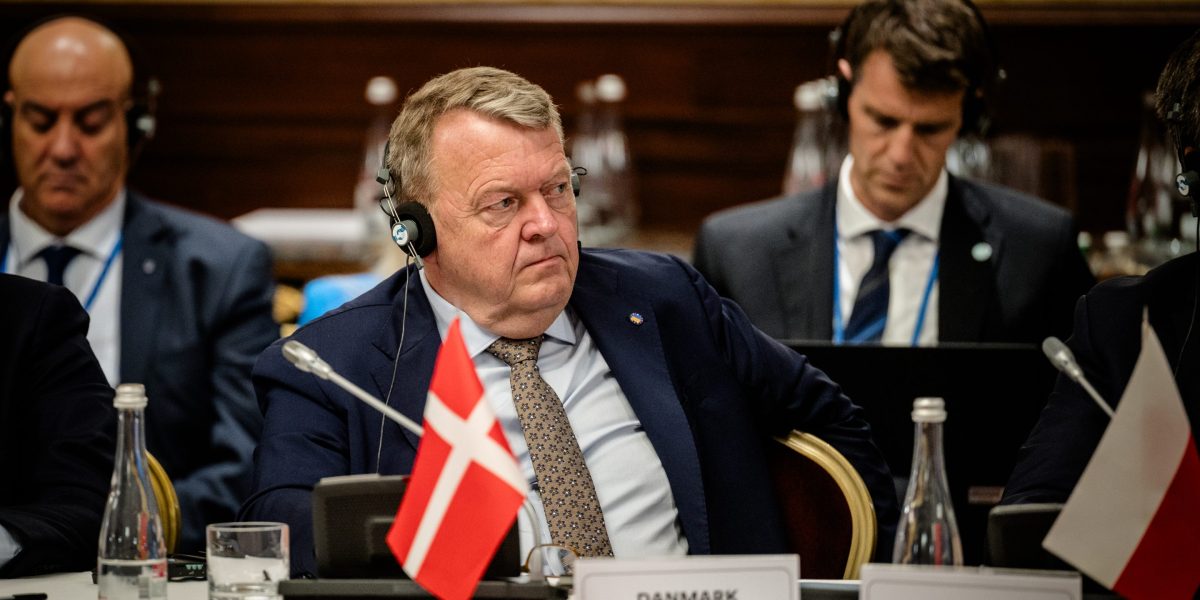
U.S., Danish and Greenlandic officials have met face to face to discuss President Donald Trump’s ambitions to take control of Greenland, a semiautonomous territory of Denmark. At the same time, Denmark and several European allies are sending troops to Greenland in a pointed signal of intent to boost the vast Arctic island’s security.

Danish Foreign Minister Lars Løkke Rasmussen said after a meeting in Washington on Wednesday with his Greenlandic counterpart, U.S. President JD Vance and Secretary of State Marco Rubio that a “fundamental disagreement” remained. He acknowledged that “we didn’t manage to change the American position” but said he hadn’t expected to.

However, Wednesday’s events did point to ways ahead.

Searching for a compromise

Denmark, Greenland and the U.S. agreed to form a high-level working group “to explore if we can find a common way forward,” Løkke Rasmussen said. He added that he expects the group to hold its first meeting “within a matter of weeks.”

Danish and Greenlandic officials didn’t specify who would be part of the group or give other details. Løkke Rasmussen said the group should focus on how to address U.S. security concerns while respecting Denmark’s “red lines.” The two countries are NATO allies.

“Whether that is doable, I don’t know,” he added, holding out hope that the exercise could “take down the temperature.”

He wouldn’t elaborate on what a compromise might look like, and expectations are low. As Danish Defense Minister Troels Lund Poulsen put it Thursday, having the group is better than having no working group and “it’s a step in the right direction.” It will at least allow the two sides to talk with each other rather than about each other.

Trump has argued repeatedly that the U.S. needs control of Greenland for its national security. He has sought to justify his calls for a U.S. takeover by repeatedly claiming that China and Russia have their own designs on Greenland, which holds vast untapped reserves of critical minerals.

Sending a military signal

Just as the talks were taking place in Washington on Wednesday, the Danish Defense Ministry announced that it was increasing its military presence in Greenland, along with NATO allies. France, Germany, Norway and Sweden announced that they were each sending very small numbers of troops in a symbolic but pointed move signaling solidarity with Copenhagen.

The U.K. said one British officer was part of what it called a reconnaissance group for an Arctic endurance exercise. The German Defense Ministry, which dispatched 13 troops, said the aim is to sound out “possibilities to ensure security with a view to Russian and Chinese threats in the Arctic.” It said it was sending them on a joint flight from Denmark as “a strong signal of our unity.”

Poulsen said that “the Danish Armed Forces, together with a number of Arctic and European allies, will explore in the coming weeks how an increased presence and exercise activity in the Arctic can be implemented in practice,” he said.

On Thursday, he said the intention was “to establish a more permanent military presence with a larger Danish contribution,” and to invite allies to take part in exercises and training on a rotating basis, according to Danish broadcaster DR.

While the European troops are largely symbolic at this point, the timing was no accident.

The deployment “serves both to send a political signal and military signal to America, but also indeed to recognize that Arctic security should be reinforced more,” said Maria Martisiute, an analyst at the European Policy Center in Brussels. “And first and foremost, this should be done through allied effort, not by the U.S. coming and wanting to take it over. So it complicates the situation for the U.S.”

Talking to NATO

The European efforts are Danish-led and not coordinated through NATO, which is dominated by the United States. But the European allies are keen to keep NATO in play, and Germany said that “the aim is to obtain a well-founded picture on the ground for further talks and planning within NATO.”

Poulsen has said he and Greenland’s foreign minister plan to meet NATO Secretary General Mark Rutte in Brussels on Monday to discuss security in and around the Arctic. NATO has been studying ways to bolster security in the Arctic region.

“I’m really looking forward for an announcement of some kind of military activity or deployment under NATO’s framework,” Martisiute said. “Otherwise there is indeed a risk that … NATO is paralyzed and that would not be good.”

___

Sylvain Plazy in Brussels contributed to this report.


Source link

Continue Reading

Business

Stocks: ‘Dedollarization’ is dead—investors discount Trump’s drama as they pile into U.S. assets

Published

on


There is a conflict between Wall Street analysts right now over the right strategy for dealing with U.S. dollar-denominated assets. Some, like Pimco chief investment officer Dan Ivascyn, have recommended investors diversify out of U.S. equities because the Trump administration is so unpredictable. And analysts at ING have been pushing a “sell America” argument for a while now, noting that the 9% decline in the value of the dollar over the last 12 months has imposed a harsh haircut on anyone who bought U.S. assets in that period.

But yesterday we got some data showing that the tide may be turning against the “sell America” crowd.

First, the S&P 500 ticked up 0.26% yesterday and futures were up 0.36% this morning. One day’s trading is not significant on its own, of course. But it means that the S&P is up 1.45% year to date—a pretty decent pace of growth over such a short stretch.

More significantly, The U.S. government released its most recent numbers for Treasury International Capital Data (covering November) and they revealed that net foreign inflows into U.S. assets of all kinds were $212 billion.

That’s a lot, according to ING’s Chris Turner.

“The main takeaway is that foreigners continue to pour money into U.S. asset markets. The TIC release is a volatile data set, but looking at the rolling 12-month average, in November the net foreign purchase of US assets was around $100 billion per month – compared to around $25 billion in the summer of 2024,” he told clients this morning.

Cathie Wood adjusts her ‘rolling recession’ theory

There are several other factors giving traders good vibes about the U.S.

Ark Invest’s Cathie Wood announced in a new commentary that her “rolling recession” theory (that various sectors of the economy have suffered recessions even though the economy as a whole has held up) may be coming to an end. The U.S. “has evolved into a coiled spring that could bounce back powerfully during the next few years,” she said.

Wood is an idiosyncratic investor but she has a fervent fanbase buoyed by the performance of her ARK Innovation ETF, which is up 45% over the last 12 months, per Yahoo Finance:

Tech bulls are enthusiastic about Q4 earnings

Her bullishness looks tepid compared to Wedbush’s Dan Ives, who told clients to ignore all the people who have hating on tech stocks recently.

“We believe tech stocks will have a very strong 4Q earnings season led by Big Tech as the cloud stalwarts Microsoft, Alphabet, and Amazon had very robust AI enterprise demand in the quarter based on our field checks,” he said. “We believe … the Street is still underestimating how big this AI spending trajectory is and we expect 4Q tech earnings to be another validation moment with a doubling down on aggressive initial cap-ex numbers into 2026. Our bullish view is that investors are still not fully appreciating the tidal wave of growth on the horizon from the $3 trillion of spending over the next 3 years coming from enterprise and government.”

There’s a price gauge showing he may be right: The price of copper is up 33% over the last 12 months (based on the Comex continuous contract). President Trump’s copper tariffs didn’t help, of course, but the underlying issue is that tech companies building AI data centers need as much copper as they can get—so the copper price looks like an indicator of robust tech activity.

Trump: much smoke, less fire

Lastly, investors are becoming inured to Trump’s political dramas as they learn that much smoke often means little fire. Trump may have apprehended Venezuelan dictator Nicolás Maduro but he left the remainder of his regime in place. He may have threatened to bomb Iran again, but then he didn’t. His administration may be criminally investigating U.S. Federal Reserve Chairman Jerome Powell, but after Powell came out against him with guns blazing in a video on Sunday Wall Street was reassured that Fed independence wasn’t going away in the short term. Even Trump’s threat to invade Greenland looks like it might end up in the Pentagon’s “Easier said than done” file.

‘De-dollarisation is going to take some time’

ING’s Turner isn’t giving up on his theory that the world is slowly moving away from the dollar, yet. But his note this morning admitted that the greenback isn’t dead yet. The dollar has gained nearly a full percentage point in value on the DXY index of foreign currencies since the start of the year.

“The dollar is drifting higher this week on probably what is best described as a macro move. U.S. data has come in on the firmer side, e.g. retail sales and jobless claims, while the Fed’s Beige Book presented a view of a gently expanding economy and no immediate threat to the jobs market,” he told clients.

“We would again conclude that de-dollarisation is going to take some time and that if the dollar is to come lower this year, it will be driven by lower U.S. [interest] rates and increased foreign hedging of U.S. assets.”

Here’s a snapshot of the markets ahead of the opening bell in New York this morning:

  • S&P 500 futures were up 0.36% this morning. The last session closed up 0.26%.
  • STOXX Europe 600 was flat in early trading.
  • The U.K.’s FTSE 100 was flat in early trading. 
  • Japan’s Nikkei 225 was down 0.32%.
  • China’s CSI 300 was down 0.41%. 
  • The South Korea KOSPI was up 0.9%. 
  • India’s NIFTY 50 was up 0.16%. 
  • Bitcoin was down to $95.5K.


Source link

Continue Reading

Business

Jamie Dimon says his success is down to ‘details, no bullsh**ting, or meetings after meetings’

Published

on


Jamie Dimon’s ethos on running a company is pretty simple: Be relentless, and don’t overlook the details. When organizations get too comfortable and begin ignoring the fine print, he said, is when complacency sets in, and a business begins to decay.

With more than 300,000 employees worldwide, the CEO of America’s largest bank can’t be across every issue in the company—which is why he believes this diligence needs to be instilled at every level.

Speaking at the U.S. Chamber of Commerce yesterday, Dimon was asked how he had made JP better than “every other bank in the world,” a take which its CEO immediately disagreed with: “a lot of people do things better,” he began.

That reflection is “one of the reasons we sometimes do better a little bit,” Dimon added, explaining: “I’m relentless: Details, facts, analysis, no bulllshitting, no meetings after meetings, share all the information—put it on the table, put the dead cats on the table—go through system by system by system, get out on the road, visit other companies, they all do things better than you.”

The overall message is to “learn, learn, learn”, a mantra the Wall Street veteran has advised for everyone from Gen Z’s entering the job market to those in leadership.

“Big companies slow down, they become complacent, they become bureaucratic … arrogant,” Dimon added, all of which eventually leads to “stasis and death.” “Huge, wonderful companies” have failed because of this pitfall, Dimon said, and as such “nothing is too small to care about.”

Watchers of the 69-year-old’s career will not be surprised by his energetic leadership advice. Last April, Dimon wrote in his letter to shareholders that he runs the bank with a military tactic in mind named the ‘OODA loop,’ which stands for observe, orient, decide, act.

JP without Jamie

Under Dimon’s stewardship, JP has scored many wins: Its share price is up 21% over the past year, it is continually leading in AI adoption according to Evident AI’s barometer, and its CEO has the ear of everyone from lawmakers to President Trump.

However, Dimon shocked investors last year when he changed his oft-repeated response to the question of when he may be leaving the top job at JPMorgan Chase. For many years, Dimon would joke that his retirement was five years away. In May last year, that changed. “It’s not five years anymore,” he said.

Speculation has since been rife about which of JPM’s executive team would step in to fill the significant shoes of Dimon. But this week the executive’s tone changed again.

When a “five more years” anecdote was repeated back to Dimon this week, the CEO responded “at least,” suggesting his departure is anything but imminent. “I love what I do, it’s up to the board how long I do it,” he added.

Dimon’s success at JPM, which has included handling politicians and policymakers, led many to question whether one day he might make a move to Capitol Hill. The bank executive completely shut down the notion of a presidential run, as well as the role of Fed chairman (which will be vacated by Jerome Powell this spring).

“Fed chairman, I’d put in the absolutely, positively, no way, no chance, no way, no how for any reason,” Dimon doubled down this week. Since Trump’s return to the White House, the role of Fed chairman has become significantly less attractive, acting as a target for the Oval Office to level criticism and lobbying for the base rate to move one way or another.

But Treasury Secretary Dimon would “consider,” he added: “If a president calls you up asks you to do something, you should consider it. So I would take the call, consider it, and think about why and what they want, but what they want and how they want to operate would be important to me.

“I like my job, I’ve been my own boss for pretty much 25 years, and I like it that way.”


Source link

Continue Reading

Business

AI is baked into health care. Now CEOs are focusing on patient and staff outcomes

Published

on


Good morning. What is the state of U.S. business? It depends on where you are and what you do. I was in San Francisco earlier this week, debating the AI dividend with a dozen CEOs of major hospital systems at a dinner sponsored by Philips. If you’re Suresh Gunasekaran of UCSF Health, which consistently ranks among the world’s best in health outcomes and medical research, AI is becoming baked into a more seamless patient experience. “Being a medical student, a pharmacy student, a nurse is no longer the same in the age of AI,” Gunasekaran said.

For Providence CEO Erik Wexler, who faces staff shortages, rising costs and reduced Medicaid payments in 51 hospitals and 1,000 clinics spread across seven states with different regulatory environments, AI is perhaps less ubiquitous but equally powerful. The reaction to ambient technology that acts on insights gleaned from doctor-patient conversations? “This is life-changing technology,” Wexler told me. “When a physician says that, you feel like you’ve discovered plutonium.”

While many Americans may fear the impact of AI on their jobs, many welcome the prospect of it lowering their average $17,000 tab for health care, which is expected to account for almost 19% of U.S. GDP this year.

Americans’ struggle with affordability and access to health care are two persistent problems U.S. Chamber of Commerce President and CEO Suzanne P. Clark cited in her 2026 State of American Business remarks yesterday in an otherwise upbeat speech. She drew comparisons between this 250th anniversary year and the last time America had a big birthday in 1976. Along with fond memories of waving a little flag in the Englewood, Ohio bicentennial parade, she recalled a dour mood shaped by 5.7% inflation, 7.7% unemployment, soaring energy costs, rising crime, stagnating productivity and a “ballooning regulatory state”—not to mention fear of nuclear annihilation amid the Cold War.

Fast forward to today, she said, and there’s been a threefold increase in GDP, a homegrown energy revolution, a 40% rise in median household income and of course several waves of transformative technologies. The lesson for Clark? “Despite all of our challenges, we live in an era of abundance and advancement,” she said. “America is very good at getting better.”

In the AI age, the question for business leaders is how to accelerate adoption and transformation while keeping costs in check. 2026 may be the year where the focus shifts to outcomes. As Jeff DiLullo, chief region leader of Philips North America, advised health systems leaders at our dinner: “AI either has to increase access to care, increase the quality and the outcomes, or reduce staff burden. And if it can’t do those things, don’t do it.”

Contact CEO Daily via Diane Brady at diane.brady@fortune.com

Top news

Questions for the next Fed chair

The DOJ’s criminal probe into Federal Reserve Chair Jay Powell has delayed the search for his successor by raising questions about the independence of the next chair and whether they’ll win Senate confirmation. Two Republican Senators have vowed to withhold any vote until the investigation is resolved. One person who will “absolutely, positively” not take the job is JPMorgan CEO Jamie Dimon, an often-rumored candidate. What about running the Treasury? “I would take the call,” he said in a new interview

Ashley St. Clair sues xAI

The conservative influencer Ashley St. Clair, who had a child with Elon Musk, has sued his xAI firm in New York, seeking a restraining order to keep the chatbot Grok from undressing images of her. xAI has not commented on the filing, but has sued St. Clair in Texas for allegedly violating its terms with her lawsuit. 

Trump targets power plants

The Trump administration is reportedly considering a plan to have tech companies bid on building new power plants in an effort to lower electricity prices for average Americans, who are starting to push back against data centers. The president has praised Microsoft for announcing that it will pay higher utility bills for its U.S. data centers. 

Gov. Newsom comes out against billionaire’s tax

California Governor Gavin Newsom has joined a list of business leaders in opposing a billionaire tax for the state that will be voted on in November. He describes it as “bad business,” creating a split in the Democratic Party between him and New York City Mayor Zohran Momdani’s “tax the rich” sentiment.

Oracle struggles to bring employees to new HQ

Oracle is struggling to bring employees to its “world headquarters” in Nashville despite investing over a billion dollars in the office and offering various amenities. Most employees are reportedly hesitant to move simply because of salary ceilings in the state.

Tesla’s self-driving subscription model draws criticism

Tesla customers are speaking out on social media after CEO Elon Musk announced that the company’s self-driving technology will only be available through a monthly subscription after Feb. 14. The technology is currently available for a flat $8,000 fee, or $99 a month. “You will own nothing and be happy,” one X user posted.

The markets

S&P 500 futures were up 0.28% this morning. The last session closed up 0.26%. STOXX Europe 600 was up 0.08% in early trading. The U.K.’s FTSE 100 was up o.02% in early trading. Japan’s Nikkei 225 was down 0.32%. China’s CSI 300 was up o.41%. The South Korea KOSPI was up 0.90%. India’s NIFTY 50 was up 0.11%. Bitcoin was at $95K.

Around the watercooler

Exclusive: Former OpenAI policy chief creates nonprofit institute, calls for independent safety audits of frontier AI models by Jeremy Kahn

‘They’re going to have to think and act a lot more like hotels’: The new rules of office space now that the ‘genie is out of the bottle on hybrid’ by Jake Angelo

Worried about AI taking your job? New Anthropic research shows it’s not that simple by Sharon Goldman

Singapore tries to give its flagging stock market a kickstart with a link to the NASDAQ, allowing firms to easily list in both places by Angelica Ang

CEO Daily is compiled and edited by Joey Abrams, Claire Zillman and Lee Clifford.


Source link

Continue Reading

Trending

Copyright © Miami Select.