Connect with us

Business

What’s next for Greenland? Denmark sending more European troops into its territory

Published

on


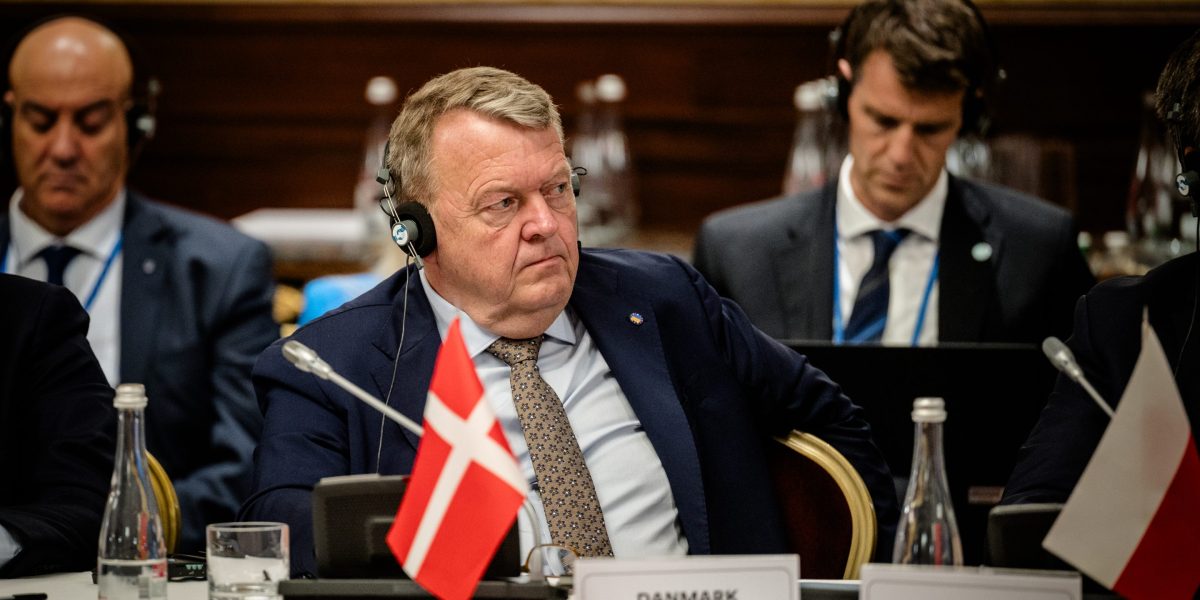
U.S., Danish and Greenlandic officials have met face to face to discuss President Donald Trump’s ambitions to take control of Greenland, a semiautonomous territory of Denmark. At the same time, Denmark and several European allies are sending troops to Greenland in a pointed signal of intent to boost the vast Arctic island’s security.

Danish Foreign Minister Lars Løkke Rasmussen said after a meeting in Washington on Wednesday with his Greenlandic counterpart, U.S. President JD Vance and Secretary of State Marco Rubio that a “fundamental disagreement” remained. He acknowledged that “we didn’t manage to change the American position” but said he hadn’t expected to.

However, Wednesday’s events did point to ways ahead.

Searching for a compromise

Denmark, Greenland and the U.S. agreed to form a high-level working group “to explore if we can find a common way forward,” Løkke Rasmussen said. He added that he expects the group to hold its first meeting “within a matter of weeks.”

Danish and Greenlandic officials didn’t specify who would be part of the group or give other details. Løkke Rasmussen said the group should focus on how to address U.S. security concerns while respecting Denmark’s “red lines.” The two countries are NATO allies.

“Whether that is doable, I don’t know,” he added, holding out hope that the exercise could “take down the temperature.”

He wouldn’t elaborate on what a compromise might look like, and expectations are low. As Danish Defense Minister Troels Lund Poulsen put it Thursday, having the group is better than having no working group and “it’s a step in the right direction.” It will at least allow the two sides to talk with each other rather than about each other.

Trump has argued repeatedly that the U.S. needs control of Greenland for its national security. He has sought to justify his calls for a U.S. takeover by repeatedly claiming that China and Russia have their own designs on Greenland, which holds vast untapped reserves of critical minerals.

Sending a military signal

Just as the talks were taking place in Washington on Wednesday, the Danish Defense Ministry announced that it was increasing its military presence in Greenland, along with NATO allies. France, Germany, Norway and Sweden announced that they were each sending very small numbers of troops in a symbolic but pointed move signaling solidarity with Copenhagen.

The U.K. said one British officer was part of what it called a reconnaissance group for an Arctic endurance exercise. The German Defense Ministry, which dispatched 13 troops, said the aim is to sound out “possibilities to ensure security with a view to Russian and Chinese threats in the Arctic.” It said it was sending them on a joint flight from Denmark as “a strong signal of our unity.”

Poulsen said that “the Danish Armed Forces, together with a number of Arctic and European allies, will explore in the coming weeks how an increased presence and exercise activity in the Arctic can be implemented in practice,” he said.

On Thursday, he said the intention was “to establish a more permanent military presence with a larger Danish contribution,” and to invite allies to take part in exercises and training on a rotating basis, according to Danish broadcaster DR.

While the European troops are largely symbolic at this point, the timing was no accident.

The deployment “serves both to send a political signal and military signal to America, but also indeed to recognize that Arctic security should be reinforced more,” said Maria Martisiute, an analyst at the European Policy Center in Brussels. “And first and foremost, this should be done through allied effort, not by the U.S. coming and wanting to take it over. So it complicates the situation for the U.S.”

Talking to NATO

The European efforts are Danish-led and not coordinated through NATO, which is dominated by the United States. But the European allies are keen to keep NATO in play, and Germany said that “the aim is to obtain a well-founded picture on the ground for further talks and planning within NATO.”

Poulsen has said he and Greenland’s foreign minister plan to meet NATO Secretary General Mark Rutte in Brussels on Monday to discuss security in and around the Arctic. NATO has been studying ways to bolster security in the Arctic region.

“I’m really looking forward for an announcement of some kind of military activity or deployment under NATO’s framework,” Martisiute said. “Otherwise there is indeed a risk that … NATO is paralyzed and that would not be good.”

___

Sylvain Plazy in Brussels contributed to this report.


Source link

Continue Reading

Business

Trump’s ‘Department of War’ rebrand could cost $125 million, says the CBO

Published

on


President Trump’s bid to knock four letters off the “Department of Defense” in a rebrand to the “Department of War” could cost upwards of $100 million, the Congressional Budget Office (CBO) has estimated.

On September 5, the president signed an executive order to restore the George Washington-era names of the Department of War and the Office of the Secretary of War as secondary titles for the Department of Defense and the Office of the Secretary of Defense.

Within that order was a stipulation that the Secretary of War would later submit a presidential application to permanently change the name of the department.

However, rebranding the nation’s biggest employer is no small task. The Pentagon oversees 1.32 million people in active duty and 750,000 civilian personnel.

According to the CBO, which responded to a request for information from senators Jeff Merkley and Chuck Schumer, the shift would cost about $10 million for a “modest implementation” of the change, primarily within the department itself. This sum could be absorbed as an opportunity cost, the CBO added, paid out of existing budgets.

But there are two ends to the scale: Minimal implementation might cost a measly few million, the CBO said, but on the extreme end it could cost taxpayers $125 million.

“Broadly, the costs would include staff time spent updating document templates, revising websites, or modifying letterhead, time that could be devoted to the activities that the department had planned to conduct before the executive order was issued,” the CBO wrote. “Similarly, funds used for signage or ceremonial items could reduce resources available for planned items or activities.”

The scale of the costs depends on how “aggressively” the rebrand is rolled out, and how it would be prioritized against remaining activities and “ongoing missions.” A more aggressive rollout, for example, might include “immediately replacing stationery, signage, and nameplates” as opposed to replacing them when existing stock runs out.

“The faster the changes were implemented, the more parts of DoD that the changes applied to, and the more complete the renaming, the costlier it would be,” the CBO added.

“Under President Trump’s leadership, the now aptly-named Department of War is refocused on readiness and lethality—and its title now reflects its status as the most powerful fighting force in the world,” the White House told Fortune. “The White House is working hand-in-glove with the Department of War on implementation of the executive order.”

One of the most expensive endeavours in the proposed change would be renaming the air bases. Even back in March 2023, the Army projected that it would cost at least $39 million to rename nine posts: Forts AP Hill, Benning, Bragg, Gordon, Hood, Lee, Pickett, Polk, and Rucker. That was nearly double an estimate by the Naming Commission a year prior, which put the price at $21 million.

There are also costs incurred for other non-federal entities if the Department of War decides to push its name change through as a blanket approach. For example, the CBO points out that North Carolina spent $400,000 in 2023 to change the name of Fort Bragg to Fort Liberty, just to change it back to Fort Bragg again last summer.


Source link

Continue Reading

Business

How to get $20 account credit for Verizon outage

Published

on


Verizon says it will offer $20 account credits to 1.5 million customers affected by a widespread network outage that left users without service for up to 10 hours Wednesday, even as the company continues to be cryptic about what actually caused the outage. 

In a statement to Fortune Wednesday, the communications giant acknowledged the scale of the failure and apologized to customers, calling the outage a lapse in its own standards.

“Yesterday, we did not meet the standard of excellence our customers expect and that we expect of ourselves,” a Verizon spokesperson told Fortune. The company said affected customers can redeem the $20 credit through the MyVerizon app, noting “on average, this covers multiple days of service.” Business customers, Verizon added, will be contacted directly about credits.

Verizon stressed the credit was not intended to be full compensation for the outage—”no credit really can” make up for it, they wrote. But they encouraged customers still experiencing problems to restart their devices in order to reconnect to the network. 

Despite the apology, Verizon did not say whether the outage stemmed from a technical failure or a broader systems issue, fueling speculation and frustration online. 

One widely shared post on X featured a user threatening to cancel their Verizon plan outright. 

“[T]hey can have this phone back,” the user wrote in a post that racked up more than 1 million views.

Rival carriers were quick to seize the moment. AT&T replied directly to the post, promoting its wireless free-trial program. The original poster responded minutes later asking for help switching plans.

Data from Downdetector showed a sharp spike in outage reports beginning early Wednesday and persisting throughout the day, with the highest concentration of complaints coming from major metro areas including New York City, Atlanta, Houston, Dallas, and Philadelphia. Roughly 60% of reported issues involved mobile-phone service, followed by loss of signal and mobile internet disruptions.

The outage also arrives just months after Verizon announced the largest layoffs in its history. In November 2025, the company said it would cut roughly 15,000 jobs as part of a restructuring effort. Verizon CEO Dan Schulman said at the time the reductions were necessary to reduce “complexity and friction that slow us down and frustrate our customers.”

It remains unclear whether the workforce reductions had any role in Tuesday’s outage or the company’s ability to resolve it quickly.


Source link

Continue Reading

Business

Congress’ solution for rare earths crisis: a brand-new $2.5 billion federal agency

Published

on


A bipartisan group of lawmakers have proposed creating a new agency with $2.5 billion to spur production of rare earths and the other critical minerals, while the Trump administration has already taken aggressive actions to break China’s grip on the market for these materials that are crucial to high-tech products, including cellphones, electric vehicles, jet fighters and missiles.

It’s too early to tell how the bill, if passed, could align with the White House’s policy, but whatever the approach, the U.S. is in a crunch to drastically reduce its reliance on China, after Beijing used its dominance of the critical minerals market to gain leverage in the trade war with Washington. President Donald Trump and Chinese President Xi Jinping agreed to a one-year truce in October, by which Beijing would continue to export critical minerals while the U.S. would ease its export controls of U.S. technology on China.

The Pentagon has shelled out nearly $5 billion over the past year to help ensure its access to the materials after the trade war laid bare just how beholden the U.S. is to China, which processes more than 90% of the world’s critical minerals. To break Beijing’s chokehold, the U.S. government is taking equity stakes in a handful of critical mineral companies and in some cases guaranteeing the price of some commodities using an approach that seems more likely to come out of China’s playbook instead of a Republican administration.

The bill that Sen. Jeanne Shaheen, D-N.H., and Sen. Todd Young, R-Ind., introduced Thursday would favor a more market-based approach by setting up the independent body charged with building a stockpile of critical minerals and related products, stabilizing prices, and encouraging domestic and allied production to help ensure stable supply not only for the military but also the broader economy and manufacturers.

Shaheen called the legislation “a historic investment” to make the U.S. economy more resilient against China’s dominance that she said has left the U.S. vulnerable to economic coercion. Young said creating the new reserve is “a much-needed, aggressive step to protect our national and economic security.”

New sense of urgency

When Trump imposed widespread tariffs last spring, Beijing fought back not only with tit-for-tat tariffs but severe restrictions on the export of critical minerals, forcing Washington to back down and eventually agree to the truce when the leaders met in South Korea.

On Monday, in his speech at SpaceX, Defense Secretary Pete Hegseth revealed that the Pentagon has in the past five months alone “deployed over $4.5 billion in capital commitments” to close six critical minerals deals that will “help free the United States from market manipulation.”

One of the deals involves a $150 million of preferred equity by the Pentagon in Atlantic Alumina Co. to save the country’s last alumina refinery and build its first large-scale gallium production facility in Louisiana.

Last year, the Pentagon announced it would buy $400 million of preferred stock in MP Materials, which owns the country’s only operational rare earths mine at Mountain Pass, California, and entered into a $1.4-billion joint partnership with ReElement Technologies Corp. to build up a domestic supply chain for rare earth magnets.

The drastic move by the U.S. government to take equity stakes has prompted some analysts to observe that Washington is pivoting to some form of state capitalism to compete with Beijing.

“Despite the dangers of political interference, the strategic logic is compelling,” wrote Elly Rostoum, a senior fellow at the Washington-based research institute Center for European Policy Analysis. She suggested that the new model could be “a prudent way for the U.S. to ensure strategic autonomy and industrial sovereignty.”

But companies across the industry are welcoming the intervention from Trump’s administration.

“He is playing three-dimensional chess on critical minerals like no previous president has done. It’s about time too, given the military and strategic vulnerability we face by having to import so many of these fundamental building blocks of technology and national defense,” NioCorp’s Chief Communications Officer Jim Sims said. That company is trying to finish raising the money it needs to build a mine in southeast Nebraska.

Relying on allies for help

In addition to trying to boost domestic production, the Trump administration has sought to secure some of these crucial elements through allies. In October, Trump signed an $8.5 billion agreement with Australia to invest in mining there, and the president is now aggressively trying to take over Greenland in the hope of being able to one day extract rare earths from there.

On Monday, finance ministers from the G7 nations huddled in Washington over their vulnerability in the critical mineral supply chains.

U.S. Treasury Secretary Scott Bessent, who has led several rounds of trade negotiations with Beijing, urged attendees to increase their supply chain resiliency and thanked them for their willingness to work together “toward decisive action and lasting solutions,” according to a Treasury statement.

The bill introduced on Thursday by Shaheen and Young would encourage production with both domestic and allied producers.

Past efforts to bolster rare earths production

Congress in the past several years has pushed for legislation to protect the U.S. military and civilian industry from Beijing’s chokehold. The issue became a pressing concern every time China turned to its proven tactics of either restricting the supply or turned to dumping extra critical minerals on the market to depress prices and drive any potential competitors out of business.

The Biden administration sought to increase demand for critical minerals domestically by pushing for more electric vehicle and windmill production. But the Trump administration largely eliminated the incentives for those products and instead chose to focus on increasing critical minerals production directly.

Most of those past efforts were on a much more limited scale than what the government has done in the past year, and they were largely abandoned after China relented and eased access to critical minerals.

___

Funk reported from Omaha, Nebraska. AP writer Konstantin Toropin contributed to the report.


Source link

Continue Reading

Trending

Copyright © Miami Select.