Connect with us

Fashion

What tariffs? Europe Inc. adapts as many firms post gains in US

Published

on


By

Bloomberg

Published


November 3, 2025

European companies’ results show they’re navigating US tariffs a lot better than anticipated — a good omen for next year when they’re expected to deliver double-digit profit growth. 

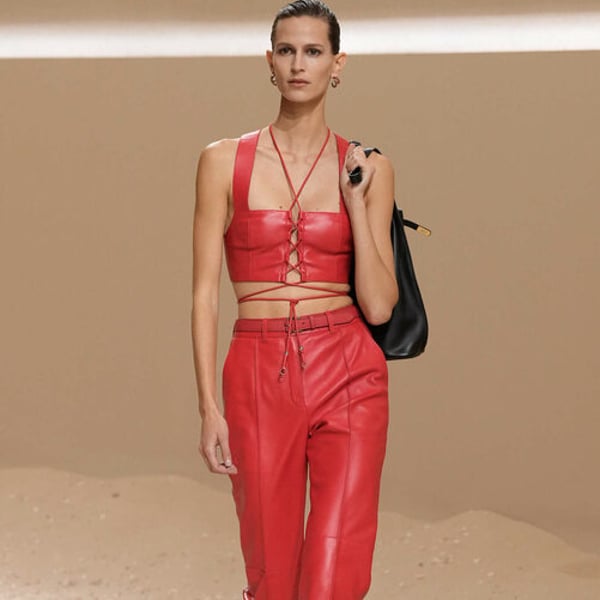
Hermes – Spring-Summer2026 – Womenswear – France – Paris – ©Launchmetrics/spotlight

A Goldman Sachs Group Inc. basket of European stocks most exposed to tariffs outperformed the broader market in October after trailing for most of the year. The basket, including companies like Legrand SA, BMW AG and Adidas AG, rallied about 6% as the earnings season unfolds, twice the gains of the Stoxx Europe 600 and three times those of domestically tilted equities. 

“In truth, the impact of tariffs has so far been somewhat negligible for European companies except some rare exceptions,” said Nicolas Domont, a fund manager at Optigestion in Paris.

Tariffs or not, the US has driven sales growth at a slew of the region’s companies, from Hermes International SCA and Unilever Plc to Galderma Group AG, ABB Ltd. and Haleon Plc. That’s setting the stage for next year when consensus expectations are for Stoxx 600 companies’ earnings per share to grow 12%, according to data compiled by Bloomberg Intelligence.

In the latest quarter — the first period when Trump’s tariffs were in place — several companies credited growth in the Americas for their ability to beat analysts’ estimates and raise their outlook.

Birkin bag maker Hermes racked up a whopping 14.1% jump in sales in the region that includes the US. Unilever credited strong North American demand for its better-than-expected sales. Swiss skincare giant Galderma raised its outlook for the year citing strong US sales.

“Tariffs are testing profit resilience worldwide — and so far, companies are managing to adapt,” wrote Bloomberg Intelligence equity strategist Gillian Wolff. “Europe’s exporters have trimmed expenses to offset higher energy prices and the bite of tariffs.”

Unilever is a case in point. Growth in North America for the maker of Hellmann’s mayonnaise was led by demand for personal care items such as Dove soap and premium products like K18 hair care and Nutrafol supplements. Unilever said it’s cutting costs to avoid pushing up prices and forcing consumers toward cheaper brands.

“We continue delivering significant volume growth in the US,” said Chief Executive Officer Fernando Fernandez.

President Donald Trump’s administration has slapped a 15% tariff on goods imported from the European Union, 10% from the UK and 39% from Switzerland, in addition to sectoral levies on industries like steel. 

European pharmaceutical companies like Novartis AG, GSK Plc and Roche Holding AG have been in talks with the US government on cutting drug prices and have pledged billions in investments for a reprieve on looming sectoral tariffs. UK peer AstraZeneca Plc struck a deal in October. 

Companies’ efforts to mitigate the impact of tariffs has forced investors to cover their shorts or jump back into exporters. The tariff issue has dropped off the radar and comes up less and less on earnings calls, Bloomberg analysis shows. Transcripts show EU companies are optimistic on the outlook, less worried about tariffs and positive on AI efficiency gains, a Barclays report on Friday said.

“We passed peak uncertainty in April when Trump announced tariffs which were well above expectations,” said Ariane Hayate, a fund manager at Edmond de Rothschild Asset Management. “What’s really reassuring is the speed at which companies have adapted to tariffs and have been able to announce shift of production to other countries or the US, like for the pharmaceutical companies, but also smaller consumer goods maker.” 

Cetaphil maker Galderma raised its full-year growth target on optimism about the US market, where it has committed to spend more than $650 million on manufacturing through 2030. Carmaker Stellantis reported a 13% jump in net revenue in the third-quarter aided by a recovery in North America, where the Jeep and Ram owner updated its offering and worked down inventory. It has pledged to invest $13 billion in the US over the next four years.

Purveyors of luxury, including LVMH Moët Hennessy Louis Vuitton SE and Gucci owner Kering SA reported growth in North America, suggesting a possible end in the downward spiral in the demand for high-end goods. Elsewhere, sales unexpectedly grew in North America for the UK’s Haleon, fueled by products like Sensodyne toothpaste and Tums antacid. Swiss automation technologies provider ABB saw orders soar on AI demand, and said it hasn’t seen any material impact on demand or profitability from US tariff-related uncertainties.

Granted, not all companies have been spared. Spirits makers like Remy Cointreau SA and Pernod Ricard SA, forced to make their Cognac in the region that gives the beverage its name, have signaled a weaker-than-expected US recovery. Tiremaker Michelin has warned that it sees its North American struggles lasting into next year, while French cosmetics maker L’Oreal reported weakness in the US. 

“There’s a narrative growing along the lines that the tariffs are manageable, that they won’t hurt that much but I think it’s too soon to tell,” said Gilles Guibout, head of European equities at AXA IM. “There was a very positive surprise on pharmaceuticals, for instance, but the dust hasn’t settled yet. These things take time to implement and to kick in. My take? To be continued! Let’s not forget that there’s also the FX impact on earnings that will gradually percolate through.”


Source link

Continue Reading

Fashion

Matalan’s Q3 and Christmas update shows return to sales growth

Published

on


Published


January 20, 2026

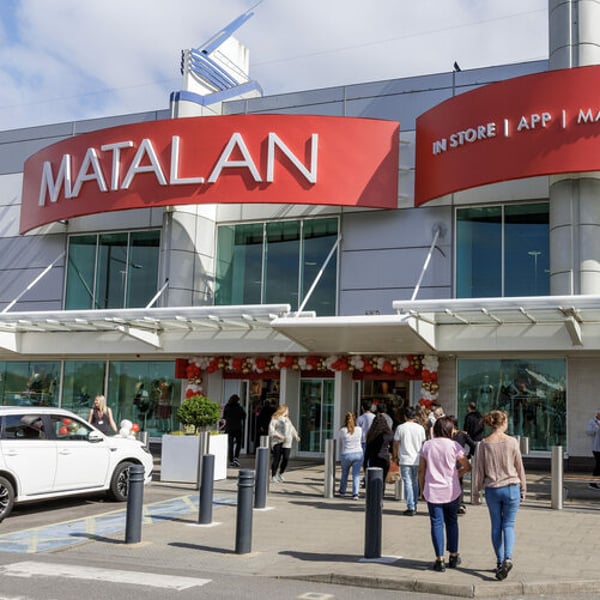
Matalan is the latest big-name UK retailer to report on the Golden Quarter as well as the narrower festive season and it appears to have done well late last year.

It said that in Q3 (the three months ended 28 November) EBITDA was up 38% year-on-year “reflecting sales growth and market share gains”.

The fashion and homewares retailer said that pre-IFRS16 EBITDA jumped to £27 million during the quarter on the back of like-for-like sales growth of 2%, coupled with its ongoing focus on margin and efficiencies. This builds on the strong momentum delivered in H1 2026, with pre-IFRS16 EBITDA up 53% to £61 million in the financial year to date.

Its digital performance was “very strong” in Q3, with like-for-like sales up 11% and Black Friday delivering its strongest ever online sales day outside of the pandemic. That reflects the firm’s heavy investment in this channel of late and with a new native app due to launch later this year alongside a refreshed loyalty scheme, it’s clearly expecting the outperformance to continue. 

But its stores are a key part of its investment programme too and in particular, during Q3, its refreshed stores outperformed the wider estate by 12%. The company didn’t detail how the stores performed overall but did say that it plans to upgrade 40 more locations in its next financial year.

As for the nine weeks up to 2 January, like-for-like sales rose 1%, which is below the 2% recorded for Q3 but coming against a backdrop in which many retailers reported falls, it’s not a bad result.

Categories including women’s outerwear and men’s formalwear and sportswear performed particularly well and the retailer said it gained market share across both women’s and men’s in the period, “reflecting the renewed product offer and significant improvements in brand perception”.

Overall, it “outperformed the wider market in October through to December, delivering year-on-year sales growth ahead of peers”.

Executive chair Karl-Heinz Holland said: “Our business transformation continues to deliver tangible results, with another strong quarter of EBITDA performance, alongside a return to sales growth. This reflects our relentless focus on delivering better quality, style and value, underpinned by sustained investment in product, stores and digital. This has enabled us to outperform the market, despite a challenging trading backdrop. Looking ahead, we look forward to welcoming our new CEO next month and remain confident in the business delivering sustainable profitable growth.”

Copyright © 2026 FashionNetwork.com All rights reserved.


Source link

Continue Reading

Fashion

Harrods buying chief hails Milan menswear’s ‘thoughtful luxury’

Published

on


Published


January 20, 2026

With fashion weeks having kicked off in earnest this month, the world’s top buyers are gathering their thoughts about what they expect affluent shoppers to snap up come AW26 collections arriving in-store and Simon Longland, director of fashion buying at London’s Harrods, is among them.

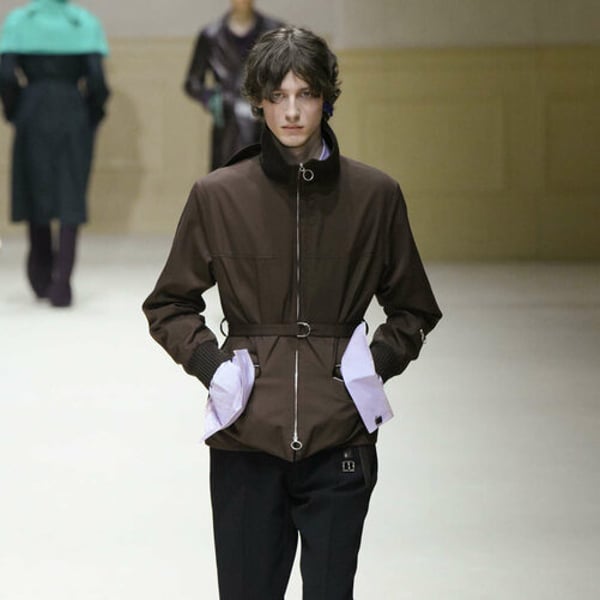
Prada – Fall-Winter2026 – 2027 – Menswear – Italie – Milan – ©Launchmetrics/spotlight

Just back from the Milan menswear shows, he highlighted the importance of timeless fashion.

“Milan menswear has always lived between two opposing forces: Fashion with a capital ‘F’, and quiet luxury rooted in sartorial tradition and timelessness,” he explained. 

“This season, more than ever, the balance of the schedule leaned firmly towards the latter. The result was a Milan season defined by quality, cut, cloth and craft. There was a palpable sense that product integrity and the final customer were front and centre. Less noise, fewer theatrics—but a stronger, more coherent message around what modern luxury menswear looks like today: thoughtful, considered, and built to last.”

He hailed big names including Polo’s Purple Label, Zegna, Prada, Brioni and Dunhill both for the impact of the shows or presentations and the looks they included.

Zegna – Fall-Winter2026 – 2027 – Menswear – Italie – Milan – ©Launchmetrics/spotlight

“This season, the strongest ‘shows’ were the ones that felt complete: a clear point of view, real product conviction, and a wardrobe that moves the customer forward,” he said. “Ralph Lauren’s return to Milan brought scale and theatre, but crucially it was backed by wearable, elevated classics that translate beautifully across Polo through Purple Label.

“Zegna delivered that modern luxury sweet spot—quiet confidence, investment dressing, and a proposition built on longevity and wardrobe building rather than novelty.

“And Prada was Prada in the best way: intellectually sharp, slightly disruptive, and refreshingly anti-‘power uniform’—a collection that challenged the idea of what contemporary menswear authority looks like.

Longland thought the best presentation was Brioni “because it understood the moment: craftsmanship, ease, and a sense of journey—luxury that doesn’t shout, it lasts”.

But he also liked Dunhill, calling it “a masterclass in mood and restraint—an incredibly precise take on British elegance, with the kind of tonal sophistication that customers immediately understand”.

Giorgio Armani – Fall-Winter2026 – 2027 – Menswear – Italie – Milan – ©Launchmetrics/spotlight

As for the season’s top trends so far. In tailoring, he noted “a confident split: either slouchy, relaxed tailoring (softened shoulders, easier proportions), or clean, slim, sharply tailored lines for the customer who wants refinement without volume. Prada and the broader conversation around modern tailoring really underlined this shift”.

He also thought co-ords and tonal dressing were significant with “head-to-toe dressing in shades of one colour now a key styling language—particularly in neutrals and ‘quiet’ hues. It reads modern, premium, and effortless”.

Colour-wise, Longland called out the colours of nature: greens, greys, browns—earthy, mineral, and outdoors-referenced tones “that feel calm, grounded, and timeless”.

And as for materials, leather nd suede were crucial and could be found “everywhere in a more refined register—often softer, more tactile, and less overtly aggressive. It’s about texture, depth and longevity rather than statement”.

On the key item front, Longland’s backing bomber jackets that have “continued to evolve—less ‘street’, more luxury wardrobe essential: cleaner finishes, elevated fabrics, and styling that works over tailoring as easily as with casual trousers”.

And he sees a jacket or coat in “beautifully supple suede, ideally in chocolate brown or charcoal” as a “must-have” for the season. Why? “It perfectly encapsulates the season’s mood—luxurious yet understated, timeless yet modern, and endlessly versatile within a contemporary wardrobe”.

Copyright © 2026 FashionNetwork.com All rights reserved.



Source link

Continue Reading

Fashion

Okkia, Le Béret Français, Aurora: spotlight on accessory brands at Who’s Next

Published

on


Published


January 20, 2026

The Who’s Next trade show, held in Hall 7 of the Parc des Expositions (Paris XV) from January 17 to 19, put accessory brands centre stage. Eyewear, jewellery of every kind, bags, mittens, and headwear – buyers were spoilt for choice. Among these brands, a few caught the eye of FashionNetwork.com.

Italian Okkia and its affordable eyewear

Founded in 2016, this Italian brand specializes in affordable eyewear. – Okkia

Founded in 2016, Okkia is an Italian brand offering affordable eyewear, from prescription frames to sunglasses. It is exhibiting at Who’s Next for the first time, with ambitious international plans. Its attractive pricing — €25 for prescription glasses, €27 for sunglasses and €40 for both — helped it sell one million units in 2025. Already widely distributed across Europe, the brand is also present in the United States, several Latin American countries, Turkey and the Maldives. It now aims to establish itself in countries such as Australia, where it is not yet present, and to strengthen its global footprint. This year will see the launch of two new lines for Okkia, as well as a collaboration with Italian designer Seletti.

Lumielle Aurora 1896 umbrellas and Tokyo Hat caps

Lumielle Aurora 1896 holds umbrella licences for a number of brands, including Agnès b.
Lumielle Aurora 1896 holds umbrella licences for a number of brands, including Agnès b. – Lumielle Aurora 1896

Japanese premium umbrella brand Lumielle Aurora 1896 marked its second appearance at the show, having made its debut last September. The brand is seeking a foothold in European stores — a strategy only recently set in motion — but is, for now, hampered by its pricing. Made in Japan from textiles produced in-house in the Niigata region, these umbrellas, with wooden or bamboo handles, have so far found limited traction in Europe. Lumielle Aurora 1896 has, therefore, developed a more affordable line, presented at the show alongside parasols for hot weather. Aurora has also owned Tokyo Hat since 2007, a brand of caps and other headwear featured across several stands. With a more contemporary offer, Tokyo Hat hopes to win over retailers with a younger clientele and a taste for creative fashion.

The timeless Le Béret Français and Le Bonnet Français

Le Béret Français regularly benefits from French lifestyle trends
Le Béret Français regularly benefits from French lifestyle trends – Le Béret Français

Le Béret Français and its recently acquired subsidiary, Le Bonnet Français, were also in attendance this January. Le Béret Français, which holds the Entreprise du Patrimoine Vivant (EPV) label, aims to maintain its positive growth trajectory, particularly buoyed in recent years by the Rugby World Cup in France and the Paris 2024 Olympic and Paralympic Games. With €1 million in annual sales, the company nevertheless faces strong competition from other brands, whose product quality is not always on a par with its own, made in Bayonne from French wool. Even so, Le Béret Français can boast sales to a wide range of partners, including department stores, milliners and even museums, whose end consumers are very diverse.

Who’s Next also boasted a broad line-up of exhibitors, including Naked Wolfe and its colourful shoes, Zen Collective and its Buddhist bracelets, and Hinterveld and its thick mohair scarves.

This article is an automatic translation.

Copyright © 2026 FashionNetwork.com All rights reserved.



Source link

Continue Reading

Trending

Copyright © Miami Select.