Connect with us

Business

What if 10,000 steps per day was never the magic number? Bombshell scientific study says you need far less for health benefits

Published

on


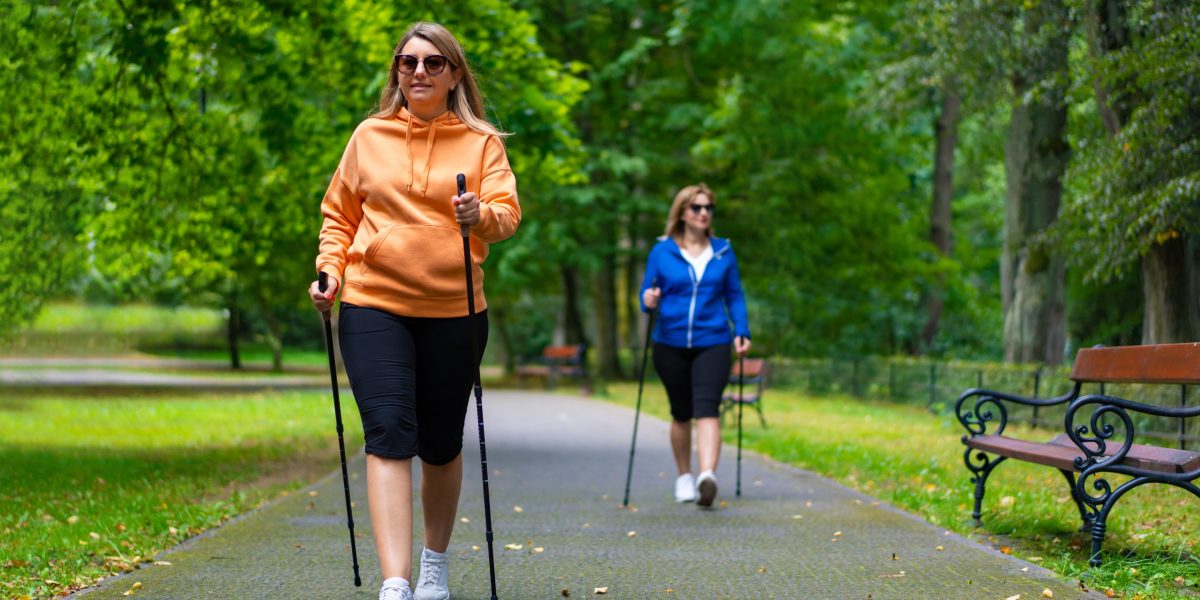
Are you a step-checker? Do you look at your phone, watch, or other activity tracker a few times a day, to see if you’ve hit the 10,000 steps mark yet? Do you feel guilty if your step count doesn’t ever get over, say, 7,000?

What if the 10,000-steps-per-day mark was just a publicity campaign from the 1960s that caught the public’s attention, and recent science indicates that 7,000 is the true mark that carries a health benefit with it? That is exactly the scenario that’s playing out.

The latest large-scale analysis, published in The Lancet Public Health and drawing from over 160,000 adults across 57 studies worldwide, challenges the fabled 10,000-step mark. Researchers not only concluded that walking 7,000 steps per day was in fact linked to dramatic improvements in longevity and protection against a wide array of diseases, but that going the extra 3,000 steps didn’t make that much of a difference after all.

Why 10,000 steps became ‘the goal’

For years, “10,000 steps” has been consecrated as the gold standard of daily fitness. But the origin of that benchmark wasn’t medical—it was marketing. Ahead of the 1964 Tokyo Olympics, a Japanese pedometer called the “manpo-kei,” which translates to “10,000-step meter,” launched a global fitness trend. That catchy round number stuck, becoming the default goal for millions using wearable trackers.

The 10,000 steps benchmark just seems to be one of those things that lodges in your head. Popular YouTubers and fitness influencers run “10,000 step challenges” encouraging followers to meet or exceed the daily target, often featuring “walk with me” workout sessions. It’s been granted official status by digital apps, with the number “10,000” now a default setting on devices such as Fitbit. Corporate wellness programs, social media challenges, and public health campaigns also routinely use the 10,000-step mark as a motivational goal and badge of accomplishment.

The bombshell findings

The new research poured cold water on the idea of 10,000 as a scientific minimum. Compared to the least active group (2,000 steps), those who managed 7,000 steps per day saw:

  • 47% decreased risk of premature death
  • 25% lower chance of cardiovascular disease
  • 38% reduced risk of dementia
  • 6% lower cancer risk
  • 22% lower incidence of depressive symptoms
  • 28% reduction in falls
  • 14% lower risk of developing Type 2 diabetes

What’s more, these massive benefits approached a plateau with 7,000 steps; walking all the way to 10,000 steps per day generated only small additional reductions in risk for most conditions. For some diseases—like heart disease—benefits increased slightly beyond 7,000, but for many others, the curve flattened.

“Although 10,000 steps per day can still be a viable target for those who are more active,” according to the abstract, “7,000 steps per day is associated with clinically meaningful improvements in health outcomes and might be a more realistic and achievable target for some.” The authors add that the findings should be interpreted in light of limitations, such as the small number of studies available for most outcomes, a lack of age-specific analysis and potential biases at the individual study level.

‘More is better’—but only up to a point

Walking more remains beneficial, particularly for those who are mostly sedentary. The study found the greatest jump in health benefits when moving from very low step counts (~2,000) up to 7,000 daily. For the general adult population, 7,000 steps—about three miles—delivers the bulk of the effect. For adults over 60, benefits plateau a bit earlier, around 6,000–8,000 steps, while younger adults may see the curve level off closer to 8,000–10,000.

The researchers also revealed that the pace of walking was far less important: just getting in the steps, regardless of speed, provided the protective benefits.

Rethinking the fitness message

This research could prompt a shake-up in public health messaging, which has long promoted aspirational but somewhat arbitrary targets. Fitness professionals and wearable device makers now have fresh evidence to advise clients and consumers that a daily goal of 7,000 is both realistic and powerfully protective. Then again, 10,000 steps is catchy.

For this story, Fortune used generative AI to help with an initial draft. An editor verified the accuracy of the information before publishing. 


Source link

Continue Reading

Business

Hero bystander who tackled Bondi gunman praised by Trump, Ackman

Published

on


A bystander who rushed and disarmed one of the Bondi Beach attackers has won praise from leaders around the world, including US President Donald Trump and hedge fund billionaire Bill Ackman, who announced a reward program for community heroes.

Extraordinary footage of the civilian’s actions began circulating on social media on Sunday, shortly after two men, later identified as a father and son, started shooting into a crowd gathered to celebrate the first day of Hanukkah. The massacre has left at least 16 people dead in the worst terrorist attack in Australia’s history. 

Read More: Sixteen People Killed in Bondi Beach Hanukkah Terror Attack 

In the mobile-phone video, which has not been verified by Bloomberg News, one of the attackers is standing near a tree and firing. A few meters away, a crouched man emerges from behind a parked car. He grabs the shooter from behind and wrestles the weapon from his hands. Local media named the bystander as Ahmed el Ahmed, a 43-year-old father-of-two from south Sydney. He was shot twice and is being treated in the hospital, according to reports.

He was also soon lauded for his feat. Trump said at the White House that Ahmed had saved many lives and expressed “great respect” for him. In Sydney, New South Wales Premier Chris Minns went further, describing Ahmed’s wrestle with the shooter as “the most unbelievable scene I’ve ever seen.”

“That man is a genuine hero and I’ve got no doubt there are many, many people alive tonight as a result of his bravery,” Minns said at a press conference late Sunday.

Australian Prime Minister Anthony Albanese also praised Ahmed, and other bystanders who helped treat victims in the immediate aftermath of the shooting. 

“People rushing towards danger to show the best of the Australian character,” Albanese told reporters Monday. “That’s who we are, people who stand up for our values.” 

Pershing Square Capital Management’s founder Ackman called Ahmed  “a brave hero” and said his hedge fund firm would establish a reward program for people who had carried out similar acts.

The top donor to a gofundme page set up for the “hero” who tackled the shooter is listed as William Ackman, who gave $99,999. More than $170,000 has been raised so far. 

Salesforce Inc. Founder and Chief Executive Officer Marc Benioff also expressed his gratitude for Ahmed in a post on X.


Source link

Continue Reading

Business

A ‘new era’ in the housing market is about to begin as affordability finally improves

Published

on


Next year should mark a shift in the housing market after years of largely being frozen in place, according to Mike Simonsen, chief economist at top residential real estate brokerage Compass.

Home sales flatlined amid unaffordable conditions after rising demand collided with tepid supply growth, pushing up home prices. Would-be buyers became so discouraged that demand cooled and remains slow.

Prices are now becoming more favorable for house hunters, a trend that should continue in 2026 and change the narrative in the housing market.

“In the next era, that story flips. So sales are starting to move higher, but prices are capped or maybe down. Incomes are rising faster than prices, and so affordability improves for the first time in a bunch of years,” Simonsen told CNBC on Friday. “It’s not a dramatic improvement, but it’s the start of the new era.” 

His view echoes a recent report from Redfin, which also cited stronger income and weaker homes prices as it predicted a “Great Housing Reset” in 2026.

In addition to potential buyers giving up on finding an affordable home, sellers have been giving up on finding someone willing to buy at the price they want.

As a result, the number of homes that were withdrawn from the market jumped this year. In June, these so-called delistings shot up 47% from a year earlier.

Simonsen said listing withdrawals tend to be owner-occupied homes, meaning they could be latent demand as well as supply. That’s because two transactions would be needed: owners want to buy a new home but must sell their current one.

“In an environment where conditions improve a little bit, we actually estimate that that’s a representation of shadow demand—people that want to move, people that have delayed moves for maybe four years now,” he said, adding that there are about 150,000 such homeowners.

His housing market outlook for a new era of improving affordability doesn’t depend on a steep drop in mortgage rates. In fact, a plunge might spur so much demand that prices would overheat.

Simonsen expects rates to stay in the low-6% range, allowing sales to grow while also keeping home prices in check as more inventory comes on the market.

The price environment is already showing auspicious signs for prospective buyers. More than half of U.S. homes have dropped in value over the last year, but homeowners can still sell with a net gain as values are up a median 67% since their home’s last sale, accordion to data from Zillow.

And a separate report fromZillow found that homebuyers are getting record-high discounts. While the typical individual discount remains $10,000, desperate sellers are increasingly offering multiple reductions as muted demand leaves homes on the market for longer. As a result, the cumulative price cut in October hit $25,000.

“Most homeowners have seen their home values soar over the past several years, which gives them the flexibility for a price cut or two while still walking away with a profit,” Zillow Senior Economist Kara Ng said in a statement last month. “These discounts are bringing more listings in line with buyers’ budgets, and helping fuel the most active fall housing market in three years. Patient buyers are reaping the rewards as the market continues to rebalance.”


Source link

Continue Reading

Business

Attacker who killed US troops in Syria was a recent recruit to security forces

Published

on


A man who carried out an attack in Syria that killed three U.S. citizens had joined Syria’s internal security forces as a base security guard two months earlier and was recently reassigned amid suspicions that he might be affiliated with the Islamic State group, a Syrian official told The Associated Press Sunday.

The attack Saturday in the Syrian desert near the historic city of Palmyra killed two U.S. service members and one American civilian and wounded three others. It also wounded three members of the Syrian security forces who clashed with the gunman, interior ministry spokesperson Nour al-Din al-Baba said.

Al-Baba said that Syria’s new authorities had faced shortages in security personnel and had to recruit rapidly after the unexpected success of a rebel offensive last year that intended to capture the northern city of Aleppo but ended up overthrowing the government of former President Bashar Assad.

“We were shocked that in 11 days we took all of Syria and that put a huge responsibility in front of us from the security and administration sides,” he said.

The attacker was among 5,000 members who recently joined a new division in the internal security forces formed in the desert region known as the Badiya, one of the places where remnants of the Islamic State extremist group have remained active.

Attacker had raised suspicions

Al-Baba said the internal security forces’ leadership had recently become suspicious that there was an infiltrator leaking information to IS and began evaluating all members in the Badiya area.

The probe raised suspicions last week about the man who later carried out the attack, but officials decided to continue monitoring him for a few days to try to determine if he was an active member of IS and to identify the network he was communicating with if so, al-Baba said. He did not name the attacker.

At the same time, as a “precautionary measure,” he said, the man was reassigned to guard equipment at the base at a location where he would be farther from the leadership and from any patrols by U.S.-led coalition forces.

On Saturday, the man stormed a meeting between U.S. and Syrian security officials who were having lunch together and opened fire after clashing with Syrian guards, al-Baba said. The attacker was shot and killed at the scene.

Al-Baba acknowledged that the incident was “a major security breach” but said that in the year since Assad’s fall “there have been many more successes than failures” by security forces.

In the wake of the shooting, he said, the Syrian army and internal security forces “launched wide-ranging sweeps of the Badiya region” and broke up a number of alleged IS cells. The interior ministry said in a statement later that five suspects were arrested in the city of Palmyra.

A delicate partnership

The incident comes at a delicate time as the U.S. military is expanding its cooperation with Syrian security forces.

The U.S. has had forces on the ground in Syria for over a decade, with a stated mission of fighting IS, with about 900 troops present there today.

Before Assad’s ouster, Washington had no diplomatic relations with Damascus and the U.S. military did not work directly with the Syrian army. Its main partner at the time was the Kurdish-led Syrian Democratic Forces in the country’s northeast.

That has changed over the past year. Ties have warmed between the administrations of U.S. President Donald Trump and Syrian interim President Ahmad al-Sharaa, the former leader of an Islamist insurgent group Hayat Tahrir al-Sham that used to be listed by Washington as a terrorist organization.

In November, al-Sharaa became the first Syrian president to visit Washington since the country’s independence in 1946. During his visit, Syria announced its entry into the global coalition against the Islamic State, joining 89 other countries that have committed to combating the group.

U.S. officials have vowed retaliation against IS for the attack but have not publicly commented on the fact that the shooter was a member of the Syrian security forces.

Critics of the new Syrian authorities have pointed to Saturday’s attack as evidence that the security forces are deeply infiltrated by IS and are an unreliable partner.

Mouaz Moustafa, executive director of the Syrian Emergency Task Force, an advocacy group that seeks to build closer relations between Washington and Damascus, said that is unfair.

Despite both having Islamist roots, HTS and IS were enemies and often clashed over the past decade.

Among former members of HTS and allied groups, Moustafa, said, “It’s a fact that even those who carry the most fundamentalist of beliefs, the most conservative within the fighters, have a vehement hatred of ISIS.”

“The coalition between the United States and Syria is the most important partnership in the global fight against ISIS because only Syria has the expertise and experience to deal with this,” he said.

Later Sunday, Syria’s state-run news agency SANA reported that four members of the internal security forces were killed and a fifth was wounded after gunmen opened fire on them in the city of Maarat al-Numan in Idlib province.

It was not immediately clear who the gunmen were or whether the attack was linked to the Saturday’s shooting.


Source link

Continue Reading

Trending

Copyright © Miami Select.