Connect with us

Politics

What happens to Donald Trump’s tariffs now that a federal appeals court has knocked them down?
Published

on


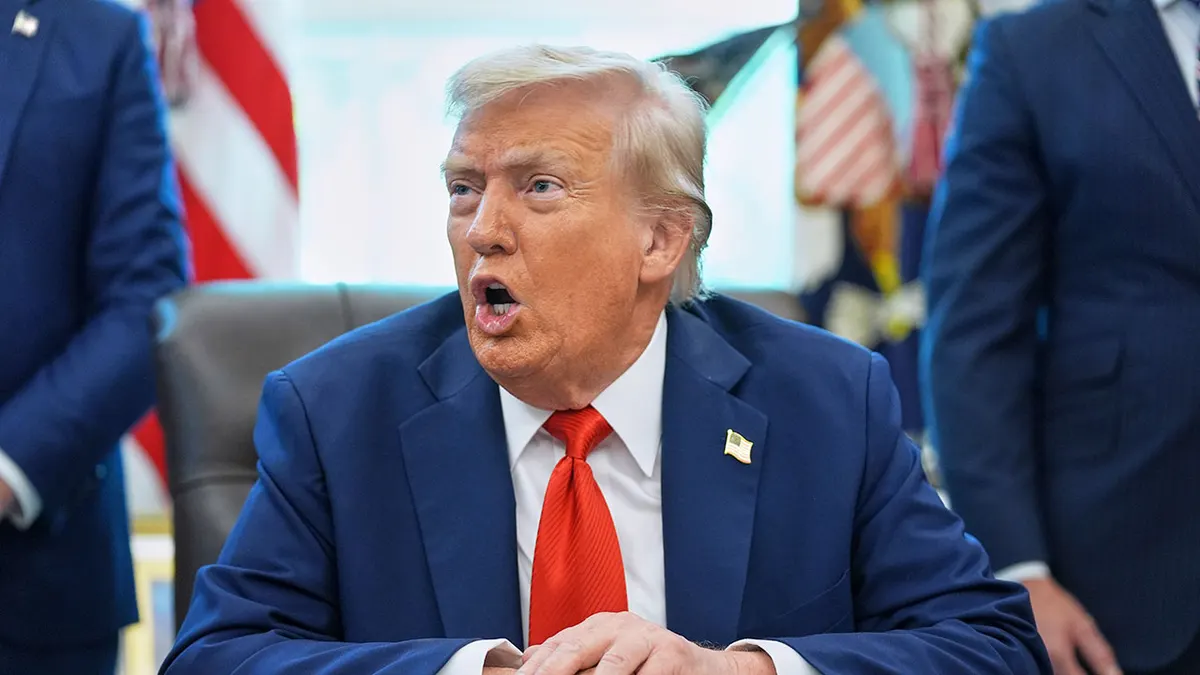
President Donald Trump has audaciously claimed virtually unlimited power to bypass Congress and impose sweeping taxes on foreign products.

Now a federal appeals court has thrown a roadblock in his path.

The U.S. Court of Appeals for the Federal Circuit ruled Friday that Trump went too far when he declared national emergencies to justify imposing sweeping import taxes on almost every country on earth. The ruling largely upheld a May decision by a specialized federal trade court in New York. But the 7-4 appeals court decision tossed out a part of that ruling striking down the tariffs immediately, allowing his administration time to appeal to the U.S. Supreme Court.

The ruling was a big setback for Trump, whose erratic trade policies have rocked financial markets, paralyzed businesses with uncertainty and raised fears of higher prices and slower economic growth.

The court’s decision centers on the tariffs Trump slapped in April on almost all U.S. trading partners and levies he imposed before that on China, Mexico and Canada.

Trump on April 2 — Liberation Day, he called it — imposed so-called reciprocal tariffs of up to 50% on countries with which the United States runs a trade deficit and 10% baseline tariffs on almost everybody else.

The president later suspended the reciprocal tariffs for 90 days to give countries time to negotiate trade agreements with the United States — and reduce their barriers to American exports. Some of them did — including the United Kingdom, Japan and the European Union — and agreed to lopsided deals with Trump to avoid even bigger tariffs.

Those that didn’t knuckle under — or otherwise incurred Trump’s wrath — got hit harder earlier this month. Laos got rocked with a 40% tariff, for instance, and Algeria with a 30% levy. Trump also kept the baseline tariffs in place.

Claiming extraordinary power to act without congressional approval, Trump justified the taxes under the 1977 International Emergency Economic Powers Act by declaring the United States’ longstanding trade deficits “a national emergency.”

In February, he’d invoked the law to impose tariffs on Canada, Mexico and China, saying that the illegal flow of immigrants and drugs across the U.S. border amounted to a national emergency and that the three countries needed to do more to stop it.

The U.S. Constitution gives Congress the power to set taxes, including tariffs. But lawmakers have gradually let presidents assume more power over tariffs — and Trump has made the most of it.

The court challenge does not cover other Trump tariffs, including levies on foreign steel, aluminum and autos that the president imposed after Commerce Department investigations concluded that those imports were threats to U.S. national security.

Nor does it include tariffs that Trump imposed on China in his first term — and President Joe Biden kept — after a government investigation concluded that the Chinese used unfair practices to give their own technology firms an edge over rivals from the United States and other Western countries.

The administration had argued that courts had approved then-President Richard Nixon’s emergency use of tariffs in the economic chaos that followed his decision to end a policy that linked the U.S. dollar to the price of gold. The Nixon administration successfully cited its authority under the 1917 Trading With Enemy Act, which preceded and supplied some of the legal language later used in IEEPA.

In May, the U.S. Court of International Trade in New York rejected the argument, ruling that Trump’s Liberation Day tariffs “exceed any authority granted to the President’’ under the emergency powers law. In reaching its decision, the trade court combined two challenges — one by five businesses and one by 12 U.S. states — into a single case.

On Friday, the federal appeals court wrote in its 7-4 ruling that “it seems unlikely that Congress intended to … grant the President unlimited authority to impose tariffs.”

A dissent from the judges who disagreed with Friday’s ruling clears a possible legal path for Trump, concluding that the 1977 law allowing for emergency actions “is not an unconstitutional delegation of legislative authority under the Supreme Court’s decisions,” which have allowed the legislature to grant some tariffing authorities to the president.

The government has argued that if Trump’s tariffs are struck down, it might have to refund some of the import taxes that it’s collected, delivering a financial blow to the U.S. Treasury. Revenue from tariffs totaled $159 billion by July, more than double what it was at the same point the year before. Indeed, the Justice Department warned in a legal filing this month that revoking the tariffs could mean “financial ruin” for the United States.

It could also put Trump on shaky ground in trying to impose tariffs going forward.

“While existing trade deals may not automatically unravel, the administration could lose a pillar of its negotiating strategy, which may embolden foreign governments to resist future demands, delay implementation of prior commitments, or even seek to renegotiate terms,” Ashley Akers, senior counsel at the Holland & Knight law firm and a former Justice Department trial lawyer, said before the appeals court decision.

The president vowed to take the fight to the Supreme Court.

“If allowed to stand, this Decision would literally destroy the United States of America,” he wrote on his social medial platform.

Trump does have alternative laws for imposing import taxes, but they would limit the speed and severity with which he could act. For instance, in its decision in May, the trade court noted that Trump retains more limited power to impose tariffs to address trade deficits under another statute, the Trade Act of 1974. But that law restricts tariffs to 15% and to just 150 days on countries with which the United States runs big trade deficits.

The administration could also invoke levies under a different legal authority — Section 232 of the Trade Expansion Act of 1962 — as it did with tariffs on foreign steel, aluminum and autos. But that requires a Commerce Department investigation and cannot simply be imposed at the president’s own discretion.

___

Republished with permission of the Associated Press.


Post Views: 0


Source link

Continue Reading

Politics

Darren Soto refuses to call for Sheila Cherfilus-McCormick’s resignation

Published

on


U.S. Rep. Darren Soto is refusing to say whether indicted U.S. Rep. Sheila Cherfilus-McCormick should vacate her seat in Congress.

Video obtained by Florida Politics shows Soto being confronted on Capitol Hill. “Will you call on Sheila Cherfilus-McCormick to resign?” the videographer asks.

Initially, Soto remains silent, but the questioner suggests that silence shows “support” for someone who “stole $5 million in health care funds for the most vulnerable.” The Kissimmee Democrat then responds but continues walking away from the camera. He then conflates a censure motion against U.S. Rep. Cory Mills, a New Smyrna Beach Republican, and Cherfilus-McCormick, a Miramar Democrat.

“Both Mills and Cherfilus-McCormick, both will have due process. Thank you,” Soto said.

Both Cherfilus-McCormick and Mills remain the subjects of ongoing House Ethics Committee investigations. But only Cherfilus-McCormick now faces criminal prosecution for alleged financial crimes.

A grand jury in November indicted Cherfilus-McCormick on charges she stole $5 million in disaster relief funds to finance her 2021 congressional campaign.

The indictment alleges that Cherfilus-McCormick and her brother, Edwin Cherfilus, secured funding intended for a COVID vaccine distribution program, but when overpayments were made, she routed the spending through several accounts that later donated the funds as campaign contributions.

Minority Leader Hakeem Jeffries said pursuant to House rules that Cherfilus-McCormick had to give up her ranking status on the Subcommittee on the Middle East and North Africa. Local Democrats have started to issue calls for the Miramar Democrat’s resignation. But there have been no calls from Democratic members of Congress.

U.S. Rep. Greg Steube, a Sarasota Republican, has said if she won’t resign, he will move for her expulsion.

The National Republican Congressional Committee (NRCC), which lists Soto as a target in 2026, slammed Soto’s unwillingness to criticize a fellow Democrat.

“Darren Soto’s refusal to call on Sheila Cherfilus-McCormick to resign is unacceptable,” said NRCC spokesperson Maureen O’Toole. “Floridians deserve a representative who fights for them, not his taxpayer-thieving colleague.”


Source link

Continue Reading

Politics

Lawmakers propose tough penalties for adults who involve minors in animal cruelty

Published

on


Bipartisan legislation filed this week would expand Florida’s criminal penalties for adults who involve children in acts of animal cruelty or expose them to violent offenses against animals.

Democratic Sen. Kristen Arrington and Republican Rep. Linda Chaney filed the legislation (SB 676, HB 559). The bills would add new crimes to state law that make it a third-degree felony for an adult to entice a minor to commit animal cruelty, or for an adult to commit animal cruelty in the presence of a minor. 

The lawmakers cite studies that show children who witness acts of animal cruelty experience an increase in mental health issues, along with an increased likelihood of engaging in violence themselves. By addressing the cycle of abuse early on, they say children can be shielded from additional trauma caused by witnessing violence.

The proposal would also create offenses for adults who involve minors in animal fighting or baiting, and for sexual activities with animals, while also ranking the new crimes on the state’s offense severity chart and increasing penalties for certain felony offenses. If approved, the act would take effect Oct. 1, 2026.

Arrington, of Kissimmee, said the goal is to strengthen protections for both children and animals.

“Exposing children to acts of animal cruelty not only harms animals but has a profound negative impact on children’s emotional development and wellbeing” Arrington said in a statement. “This bill is meant to protect both our youth and our animals, ensuring that those who would involve minors in such heinous acts face strict consequences.”

Chaney, of St. Pete Beach, said animal crimes committed in front of children are closely linked with other forms of family violence.

“Committing animal crimes in front of minors is a serious issue that often co-occurs with other forms of family violence and can have severe, long-term traumatic effects on the children involved” Chaney said. “We must do all we can to break generational cycles of violence. This bill can do that.”

Democratic Rep. Johanna López of Orlando signed on as a prime co-sponsor.

“I’m honored to join Senator Arrington and Representative Chaney in advancing reforms that protect the safety and mental health of our minors and ensure that those who abuse our children or our pets are held accountable,” López said.


Source link

Continue Reading

Politics

Florida delegation warns Donald Trump against new offshore drilling plan

Published

on


U.S. Rep. Vern Buchanan and the full Florida congressional delegation are urging President Donald Trump to keep offshore drilling away from the state’s coastlines, pressing him to maintain a moratorium he put in place in 2020.

Buchanan, co-Chair of the 30-member bipartisan delegation, joined U.S. Sen. Rick Scott and Sen. Ashley Moody in leading a letter asking Trump to uphold his executive order extending a ban on oil and gas leasing off Florida’s Gulf and east coasts through 2032.

“President Trump made the right call in 2020 when he protected Florida from offshore drilling, and we’re asking him to keep those safeguards in place,” Buchanan said. “Florida’s coastline is essential to our tourism-based economy, environment and military readiness. A single mistake offshore could cost our state billions of dollars. We cannot afford to lose even an inch of these critical protections.”

The Florida lawmakers sent the letter in response to a program proposed by the Department of the Interior’s Bureau of Ocean Energy Management, which would open part of the Eastern Gulf of America to new oil and gas drilling. The area overlaps with waters explicitly protected under Trump’s executive order.

In the letter, the delegation expressed strong opposition to any attempts to expand offshore oil and gas drilling off Florida’s coasts to protect “the incredible value Florida’s pristine coasts have to our state’s economy, environment, and military community.” They added that Trump’s 2020 action received overwhelming and bipartisan support.

Lawmakers also warn that the newly proposed leasing area falls inside the Gulf Test Range, a large military training zone used for advanced air and weapons systems testing. They describe the range as a critical national security asset.

“The Gulf Test Range remains an integral part of Department of War training to ensure mission readiness and is supported by multiple military bases in Florida’s Panhandle,” the lawmakers wrote. “Collectively, these bases employ tens of thousands of military and civilian personnel and are of critical importance to national security.”

The area is the largest multidomain military training and testing complex in the country, and the lawmakers stated that “protecting this range from encroachment, including oil exploration, is essential.” The letter says more than 50,000 jobs in the Panhandle depend directly on the military facilities tied to the range.

The delegation cites Eglin Air Force Base as a key example, noting it “supports 20,000 personnel, provides the country with $11 billion in economic impact every year, and currently boasts 123,000 square miles of water range, which would all have to be reduced in an instance of an encroachment of the Gulf Test Range.”

The delegation also points to the economic weight of Florida’s tourism industry, and its vulnerability to fallout from potential oil spills, arguing that the risks outweigh any short-term gains.

“Florida’s beaches alone generate more than $127.7 billion per year in tourism spending and support over 2.1 million tourism-related jobs,” lawmakers wrote. “Unfortunately, all these resources suffered devastating harm during the Deepwater Horizon oil spill of 2010. That disaster wiped billions of dollars from Florida’s industries and caused irreparable damage to our environment and coastal communities.”

“For these reasons, we urge you to uphold your existing moratorium and keep Florida’s coasts off the table for oil and gas leasing,” they added. “Florida’s economy, environment, and military readiness depend on this commitment.”

Every member of the Florida congressional delegation signed the letter, including Buchanan, Scott, Moody and U.S. Reps. Aaron Bean, Gus Bilirakis, Kat Cammack, Kathy Castor, Sheila Cherfilus-McCormick, Mario Díaz-Balart, Byron Donalds, Neal Dunn, Randy Fine, Lois Frankel, Scott Franklin, Maxwell Frost, Carlos Giménez, Mike Haridopolos, Laurel Lee, Anna Paulina Luna, Brian Mast, Cory Mills, Jared Moskowitz, Jimmy Patronis, John Rutherford, María Elvira Salazar, Darren Soto, Greg Steube, Debbie Wasserman Schultz, Daniel Webster and Frederica Wilson.


Source link

Continue Reading

Trending

Copyright © Miami Select.