The document, Charlie Scharf recalls, was 3,162 pages. It included 6,000 tasks; 28,000 people worked on it. This staggeringly long volume was the plan to save Wells Fargo, forged by Scharf and his team shortly after he took over as CEO in October 2019.
At the time, Wells had been laboring under a regulatory crackdown unleashed by the cataclysm that blackened the formerly burnished Wells name, the heavily publicized scandal revealing that the bank had bilked millions of customers by creating fake and unneeded accounts at its branches. That culminated in a draconian penalty imposed by the Federal Reserve: a hard limit on its total assets that essentially blocked Wells from raising the deposits that form the lifeblood of banking.
The process was grueling. Scharf recalls that every Monday morning, he would lead a two-hour meeting of the 15-member operating committee in which they laboriously worked through where their departments stood on reaching their goals. “Charlie would go around the table asking, ‘Why are you missing these dates? Why are we falling behind?’” relates one of the brain trust subject to the grillings. He’d relentlessly demand that executives who were lagging come back next week with a formula to course correct, and catch up. Those who couldn’t keep up didn’t last long.
In the early going, Scharf would get harshly worded emails from the regulators demanding more progress. “I just lived it all week, and on Friday afternoons I’d often get this official correspondence from regulators,” he recalls. “The language was jarring. I didn’t want to work on Friday night unless I had to. I wanted to take time with my family and decompress. So I would say, I’m not going to open these things until Saturday or sometimes Sunday.”
The task of saving the institution looked beyond daunting. Investors big and small took a dim view of its prospects. Warren Buffett, whose Berkshire Hathaway had been a big Wells investor for two decades, slammed the prior top management for “ignoring [the sales fiasco] when they found out about it,” and dumped his entire stake. From February 2018 to December 2020, its share price dropped by two-thirds, shaving its market cap from $322 billion to $88 billion. Calls in Congress for a breakup were rising; Sen. Elizabeth Warren (D-Mass.) demanded that the bank split into units that could more readily comply with banking norms, and Sen. Sherrod Brown (D-Ohio) trashed Wells as “too big to manage.”
Scharf admits that as a banker, he’d never faced anything remotely as tough as the mission at Wells. “I remember knowing what I was getting myself into, but it was much worse directionally than I thought … The regulatory pressure was beyond anything I’ve experienced, and so was the political pressure,” the CEO avows. Indeed, brought in to enact a turnaround, Scharf was facing rising odds that regulators could dismantle one of America’s most legendary financial institutions.
Scharf had been training for this job his whole life
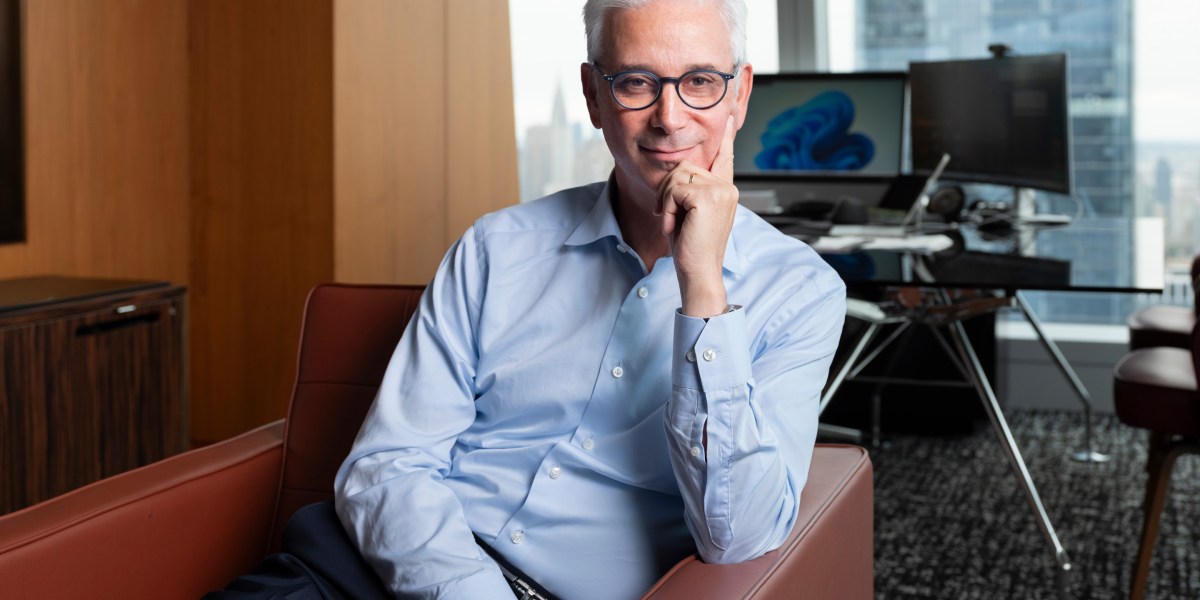
Scharf is perched on a couch in his office, framed by floor-to-ceiling windows overlooking the southward sweep of the Wall Street district where he worked as a teenager, the Statue of Liberty a copper-green miniature in the distance. He’s attired in jeans andtansneakers, his short white hair perfectly coiffed, sans his usual, virtually trademark owl-lens glasses.
The Wells Fargo rescue job suited Scharf for a basic reason: He’d been training for a task just like this one all his working life. He practically grew up in the Wall Street engine room. Scharf’s dad was a stockbroker who eventually worked for Sandy Weill at Smith Barney, and was still there when his son became the firm’s CFO in 1995. Starting at age 13, Charlie during the summers would commute with his father from the family home in Westfield, N.J., a tony suburb 20 minutes west of Newark Airport, to the elder Scharf’s brokerage house. “We’d get off the train at the World Trade Center, and he’d go to his building and I’d go to mine,” he recalls. The young Scharf’s various posts included such back-office positions as inputting data and working in the securities vault.
As a senior at Johns Hopkins University in Baltimore, Scharf started interviewing at prestigious financial firms in Manhattan when his father recommended an oddball choice that set his professional trajectory. “He said, ‘This amazing guy named Sandy Weill has built a great management team at this tiny company called Commercial Credit in Baltimore, and I don’t know what it is, but they’re going to do great things, and you should be with great people.’” His father had a cousin who knew Jamie Dimon’s dad and managed to get Charlie’s résumé to Dimon, the consumer finance purveyor’s CFO.
One day in March 1987, Scharf spent an afternoon at Commercial Credit, interviewing with Dimon and several other executives. “Before I left, Jamie comes to the waiting room and tells me, ‘We’re going to offer you a job.’ I later learned that by hiring me on the spot, he wanted to prove a point, that Commercial Credit was no longer a slow-moving company that hadn’t hired young people for years.” For his part, Dimon remembers that Scharf even as a youngster wasn’t easy to please. “I kept sending him around to different jobs, and almost everywhere he went he’d come back, and I’d say, ‘How are you doing?’ and he’d say, ‘This area is screwed up, this area is terrible,’ he was always pretty critical. So I said, ‘Okay, kid, you’re going to work for me as my assistant. I want to see what you’ve got.’”
The frat house vibe at Commercial Credit stunned the green recruit. “Neither the offices nor Jamie looked like anything out of corporate America,” marvels Scharf. The staff lounged on worn red velour couches, the fax machine was always on the blink, and the AC system was so old it hissed loudly, when it cooled at all. “People were walking around smoking, it was the era,” says Scott Powell, Wells’ COO and a fellow youngster at the firm in those days. Nicknamed “the Kid,” Dimon sported an unruly head of hair that matched his fireball personality. Remembers Scharf, Dimon would bark commands into “a giant, outdated squawk box like the one in Charlie’s Angels.” The Dimon and Weill means of communication, says Scharf, was to scream at each other until they reached consensus.
A series of roles with more responsibilities followed—including following Dimon to Bank One in Chicago after his famous falling out with Weill. Finally in 2012 Visa came calling and made Scharf its CEO, a role he excelled at before leaving suddenly to, as he says, to help a close family member navigate a difficult life journey, adding that “When CEOs say they left ‘for personal reasons,’ it usually means they were fired or fooling around. But for me, it really was personal reasons,” he says. “And I’ll never regret it.”
Scharf learned big-time from Dimon’s intensive, super-detailed, hands-on-all-the-levers management style, but it’s his ex-boss’s personal qualities that most impressed and influenced him. “What I came to realize through the years is that there’s a big difference between being a good manager and a good leader,” he avows. “Being a good leader means you inspire people by what you’re doing and how you do it, how you carry yourself, that they want to follow you into extremely tough jobs simply because they believe in you. That’s Jamie.”
While Dimon is highly theatrical, Scharf seldom raises his voice in meetings, even when he’s unhappy. “What he’s really good at is lowering the temperature to find solutions,” says someone who’s worked with Scharf.
Still, Scharf’s just as tough and blunt as Dimon. “He doesn’t waste time trying to make people feel good when he makes a tough decision. He moved people out quickly, with no anguish,” says someone who knows him well. A familiar refrain is that he will not shy away from “calling people on their BS.” Don’t look for flexibility if you’re not hitting profit and performance goals, say managers in his orbit. “Charlie is very measured,” says Fernando Rivas, head of corporate and investment banking at Wells, “but he’s uncompromising on outcomes and values.”
Observes a person who’s worked with Scharf: “The strange thing about him is, a lot of people are kind and nice on the surface but colder below. Charlie is just the opposite. On the surface he can be intimidating, but go a tiny bit below and you find a sweet, caring person.”
How Wells Fargo lost its way
The Wells Fargo he inherited, however, was a basket case. Having skirted the Global Financial Crisis with its mix of “Main Street, not Wall Street” basics for everyday Americans and their businesses—in fact, Wells greatly benefited from the meltdown via its emergency purchase of failing Wachovia—the bank by the close of 2012 boasted the highest market cap of any U.S. megabank.
Then the troubles began.
Post GFC, regulators wanted all banks to tighten up compliance. Prior Wells management proved totally incapable of instituting the broad infrastructure required to tightly manage risk. “It probably was hubris from avoiding the problems in the GFC,” says COO Powell. A House Financial Services Committee Staff Report from early 2020 reached the same conclusion, quoting an emergency hire helicoptered in from J.P. Morgan who said she found the controls “immature and inadequate,” and regulators skewered the managers in charge for showing “no sense of urgency” in fixing them. Wells had historically been a highly decentralized complex assembled from sundry mergers and acquisitions—management used the adage “80 horses pulling the stagecoach.”
The chief risk officer was unable to impose unified standards across the fiefdoms. “They were farming out all risk management to individual businesses,” and using manual processes that were a decade old, says Wells lead director Steve Black. “And they were in quicksand trying to fix it.” The House report refers to the then chief risk officer as vainly “attempting to cajole and persuade” the consumer chief to adhere to overall rules, and getting nowhere.
The “fake accounts” disaster—in which congressional investigations found that Wells deployed a high-pressure culture of “cross-selling” that rewarded branch bankers for opening multiple accounts that customers knew nothing about—cost Wells over $8 billion in fines. In its press release, the Justice Department skewered past management for “complete failure of leadership at multiple levels” and the “staggering size, scope and duration of Wells Fargo’s illicit conduct”; 5,000 alleged abusers were fired from 2011 to 2016. In 2017, regulators forced the CEO and head of the consumer bank to resign, and clawed back a total of $69 million in their compensation.
Scharf won the confidence of regulators, in part, by making himself thepoint person at Wells. “We had a formal meeting with all three regulators once a month, but I’d personally call the officials in charge of all three practically every week, often multiple times. I wanted them to see how seriously we were taking this, which was not the case before I arrived. I also wanted to set an example for the other executives, that I’m not going to ask them to spend more time with regulators unless I did it myself.”
To implement the changes, Scharf recruited a crack new team who’d installed and worked under the kinds of controls Wells needed. All but two of the operating committee’s 15 members are Scharf hires, many of whom won his trust earlier in his career, and the pair on the top team who worked at Wells when Scharf arrived now fill new roles. A key addition was COO Powell, whom Scharf worked with at Bank One and J.P. Morgan, and who’s a seasoned expert at installing just the kind of discipline Wells needed. Surprisingly, Scharf named as chief risk officer not an outsider, but a Wells veteran. Derek Flowers caught the CEO’s eye for his expert work as a credit risk manager in various divisions, and he’s proven a whiz, says Scharf, at the corporate CRO job that also encompasses operations and compliance. Flowers reports directly to Scharf and the board’s audit committee. “The best executives at Wells were not at the top but the mid and upper-mid level, and we promoted many of them, including Derek,” says Scharf. “And that builds confidence with the troops, because they know who the good people are.” Scharf also lavished resources on creating the intricate, extensive architecture required to satisfy the consent orders, and maintain the new superstructure. Today, Wells spends $2.5 billion more a year on risk management than when Scharf took charge (that’s about 3% of total expenses). Scharf has raised the number of risk managers stationed in business units by 10,000, an addition that doubled the total workforce monitoring credit, operations, and compliance.
For seven years, the ceiling that restricted holdings of deposits and securities to $1.95 trillion forced Wells to reject gigantic amounts of customer cash. “I’d estimate that we left $600 billion on the table,” reckons Scharf. In that span, J.P. Morgan, Bank of America, and Citi have respectively grown their balance sheets 58%, 40%, and 34%. As a result, net interest income at Wells, a huge revenue line for banks, pretty much treaded water while that metric jumped for its competitors.
But Scharf didn’t stand still. He developed an overarching strategy to grow promising franchises where Wells had way underinvested. The idea: Raise fee income—a category that wasn’t limited—to offset the decline or flattening in interest revenues in big swaths of the bank necessitated by the asset limit.
Keeping assets fixed per the caps required some unwelcome maneuvers, explains Rivas, the corporate and investment banking chief at Wells who long served as Scharf’s top M&A advisor, and whom the CEO recruited from a top job at J.P. Morgan. “Asking customers, ‘Will you please take your deposits elsewhere?’ is an unnatural thing for a bank to do,” declares Rivas.
Though Wells had long boasted that “we’re kitchen table, not league tables,” Scharf trained a spotlight on investment banking. Moving the C-suite from San Francisco to Manhattan helped. Most of all, the commercial bank—virtually tied for largest in the nation with J.P. Morgan—was serving scores of companies that needed advice in purchasing other family companies, for example, or in raising fresh equity or debt financing.
Then Scharf trained his sights on credit cards. “Pre-pandemic, Wells was way off base in the crucial premium credit card space; they weren’t showing any pulse,” says Brian Kelly, founder of the Points Guy travel site. One problem was that Wells had poor fraud detection models, so it was frequently turning down transactions it should have safely approved, greatly annoying especially wealthy clients, Scharf included. “I was at dinner in London with my wife and friends, and I go to pay, and my card gets rejected,” he recalls. In addition, Wells lacked the expertise to grant the high-net-worth crowd sufficiently generous lines of credit.
Scharf channeled big investments into the previously undernourished division, even green-lighting the comedic ad series featuring Steve Martin and Martin Short, and funding the IT upgrades that solved the credit lines problem, as well as finding the analytical sweet spot for accepting or declining charges. Though there have been stumbles—such as a Bilt cobranded card to pay for rent that flopped—even that gave Wells much-needed exposure to Gen Z. From 2020 to 2024 overall purchase volumes and card balances outstanding have both doubled. “Some people would say they’re crazy to compete with Amex and Chase, that have huge technology and interaction,” says Dimon. “But Wells has a competitive advantage, they have a huge client base of over 40 million customers, what I call a ‘warm market,’ so they should.”
Meanwhile, Scharf was targeting deep cuts in spending—seeking out from his previous experience places where “two layers,” one superfluous and bureaucratic, had been allowed to coexist within a giant corporation. “We saw it at Citigroup, at the former J.P. Morgan, at Travelers. At Wells, we had extra layers, the same work being done in two businesses that could have been centralized, including HR, legal, IT, and other areas,” he says.
Scharf demanded that all high-ranking executives have at least seven direct reports, double the previous number. Wells was swimming in unused real estate. In Minneapolis, Des Moines, and several other cities, its workforce was often spread across multiple small and often aging facilities. From 2019 to the close of 2024, the bank reduced its global footprint from 87 million square feet to 60.3 million, and shrank the office building count from 650 to 400, by concentrating employees in bigger, newer locations. When Scharf arrived, Wells had three-quarters of J.P. Morgan’s revenues but 6% more employees. Under Scharf, Wells’ headcount has declined by almost 25% to 210,000. He consciously downshifted in areas such as home loans, which became less profitable given higher capital requirements following the GFC, and held “reputational risk” he didn’t want should foreclosures spike.
Going forward, Scharf’s holy grail is return on tangible common equity or ROTCE, essentially the cents an enterprise gives shareholders for every dollar they invest. Last year, Wells hit 13.4%. That figure waxed Citigroup (7%), pretty much tied BofA, and fell well short of J.P. Morgan’s 20%. Several years ago, Scharf set a goal of 15% that then looked highly aspirational. But he’s almost there, hitting 14.4% on average for the first two quarters of 2025. For Scharf, getting to 15% is just a way station. He’s aiming to charge toward the industry-topping, J.P. Morgan–style summit.
The magnitude of the changes Scharf made became evident in Mayof this year, when he got one of the most important phone calls of his life. It was a congratulatory overture from a top Fed official whom he declines to name who delivered the news that the central bank would soon be lifting the limit on assets, effectively restoring full freedom of movement to an institution shackled for years. When the official announcement came on June 3, the CEO and several lieutenants gathered outside his office to sip Champagne and cheer the news. The air was thick with celebration, but also relief.
That’s not to say the job is done. John McDonald, an analyst at Truist Securities, likens Wells’ next act to this: “Wells had to lose weight, and Charlie got them on a diet. Now they’re at the gym and need to build muscle.”
Scharf has taken the stock from $52 when he started to $81 as of early October. Including strong dividends, Wells generated a 11.1% annual return since he took charge six years ago, well below J.P. Morgan’s 198.7% but practically matching BofA (11.2%) and beating Citi (9.2%), and a beat on the KBW Bank Index at 10.0%.
“If you look at where Wells was when he arrived and where it is now, not many people could have done what he did,” says Frank Bisignano, a colleague from J.P. Morgan and former CEO of payments colossus Fiserv who’s now commissioner of the Social Security Administration and chief executive officer of the IRS. “He was brave to take the job. You look at great coaches, they bring their coaching staffs with them. That’s what Charlie did at Wells, and it’s a sign of great leadership.”
Freed from the worst days of the Wells saga, Scharf is palpably grateful for the moments he has with his family, his daughter’s upcoming wedding, the weekends on Long Island in Remsenburg, a bayfront village well west of the Hamptons glamour zone, where he seldom runs into competitors and employees at the hotspots. He unwinds by practicing woodworking in his shop on the property, an activity he finds “soothing.” He prides himself on fashioning raised moldings and custom bookshelves. Dimon jokes that Scharf’s probably the only corporate chieftain who unwinds in a woodshop.
But his old mentor Dimon has high praise for the job Scharf has done. “The world is his oyster now that the asset cap is lifted and Wells can once again focus on growth. Charlie did an excellent job,” says this renowned truth-teller. But Dimon can’t resist adding one final bit of roasting for his friend and protégé of 30-plus years. “Though,” he says with a grin, “I probably would have wanted to do it faster.” Six thousand tasks later, Charlie Scharf did it on his own timeline. And the stagecoach is rolling again.
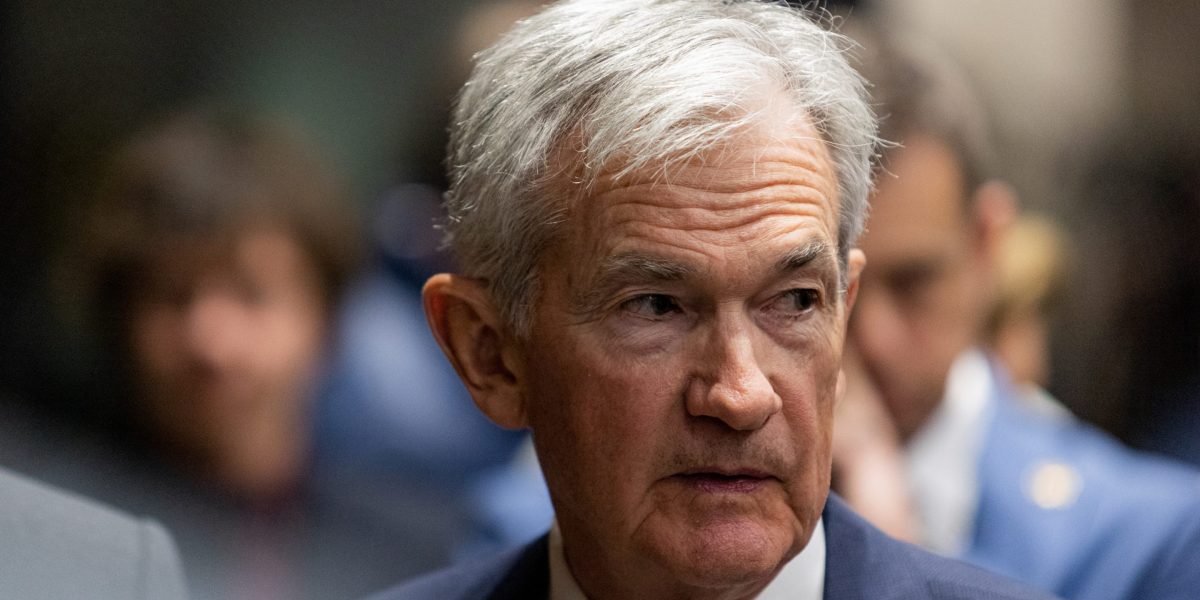
With the Federal Reserve split between increasingly hawkish and increasingly dovish policymakers, Chairman Jerome Powell is due to perform some serious log-rolling when the central bank meets this week.
Another rate cut is a near certainty after the Fed meeting ends on Wednesday, but the main question is what Powell will say about the prospects for more easing next month.
Wall Street expects a hawkish cut, meaning Powell is likely to avoid signaling a January cut to appease Fed hawks, after joining doves to lower rates this month.
“Chair Powell is facing the most divided committee in recent memory,” analysts at Bank of America said in a note on Friday. “Therefore, we think he will attempt to balance the expected rate cut with a hawkish stance at the press conference, just as he did in October.”
But at the same time, the Fed chief has also been insistent that policymakers are not on a pre-determined course and that rate moves depend on the data that come in.
As a result, BofA is doubtful that he can pull off a hawkish cut so easily, considering all the market-moving data that will come out between the two meetings, with some delayed due to the government shutdown.
The week after the Fed meeting, for example, jobs numbers for October and November, October retail sales, and the consumer price index for November will come out. And December readings for those indicators are likely to be released before the next meeting on Jan. 27-28.
“It will be difficult for Powell to send a credibly hawkish signal at the press conference,” analyst said.
BofA still sees a way for him to thread the needle. One option is for Powell to suggest that “significant further weakening” in the jobs data will be necessary to trigger a January cut.
Another option is to argue that 3.5%-3.75%—where benchmark rates would be if the Fed cuts again this week—isn’t restrictive after accounting for inflation, meaning the central bank is no longer weighing on the economy as much.
Similarly, JPMorgan chief U.S. economist Michael Feroli said he expects Powell to stress that after this week’s cut, rates will be close to neutral. So any additional easing would depend on meaningful deterioration in the labor market and not be predicated in risk management.
For now, Wall Street doesn’t expect a January cut, with 25% odds currently being priced in on CME Group’s FedWatch tool. But BofA thinks Powell will likely leave the door open for one.
“We wouldn’t be surprised if markets start pushing more aggressively for a Jan cut in the near term,” analysts predicted. “And the anticipation of this outcome might raise the probability of more dissents in Dec, since hawks might be inclined to dig their heels in instead of compromising.”
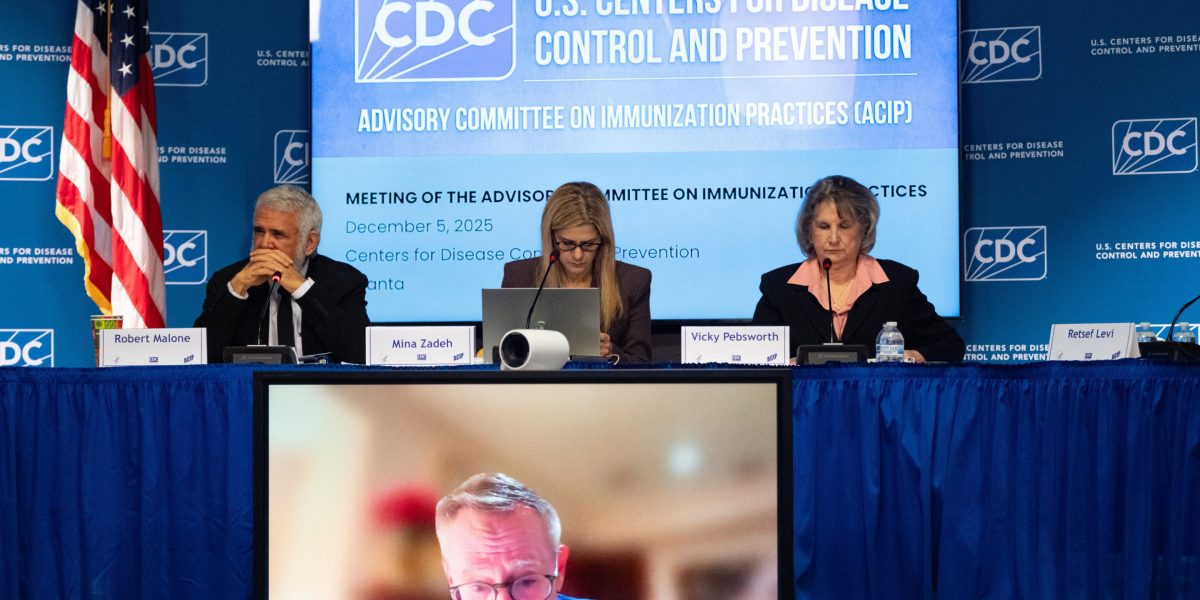
A federal vaccine advisory committee voted on Friday to end the longstanding recommendation that all U.S. babies get the hepatitis B vaccine on the day they’re born.
A loud chorus of medical and public health leaders decried the actions of the panel, whose current members were all appointed by U.S. Health Secretary Robert F. Kennedy Jr. — a leading anti-vaccine activist before this year becoming the nation’s top health official.
“This is the group that can’t shoot straight,” said Dr. William Schaffner, a Vanderbilt University vaccine expert who for decades has been involved with the Advisory Committee on Immunization Practices and its workgroups.
Several medical societies and state health departments said they would continue to recommend them. While people may have to check their policies, the trade group AHIP, formerly known as America’s Health Insurance Plans, said its members still will cover the birth dose of the hepatitis B vaccine.
For decades, the government has advised that all babies be vaccinated against the liver infection right after birth. The shots are widely considered to be a public health success for preventing thousands of illnesses.
But Kennedy’s advisory committee decided to recommend the birth dose only for babies whose mothers test positive, and in cases where the mom wasn’t tested.
For other babies, it will be up to the parents and their doctors to decide if a birth dose is appropriate. The committee voted 8-3 to suggest that when a family elects to wait, then the vaccination series should begin when the child is 2 months old.
President Donald Trump posted a message late Friday calling the vote a “very good decision.”
The acting director of the Centers for Disease Control and Prevention, Jim O’Neill, is expected to decide later whether to accept the committee’s recommendation.
The decision marks a return to a health strategy abandoned more than three decades ago
Asked why the newly-appointed committee moved quickly to reexamine the recommendation, committee member Vicky Pebsworth on Thursday cited “pressure from stakeholder groups,” without naming them.
Committee members said the risk of infection for most babies is very low and that earlier research that found the shots were safe for infants was inadequate.
They also worried that in many cases, doctors and nurses don’t have full conversations with parents about the pros and cons of the birth-dose vaccination.
The committee members voiced interest in hearing the input from public health and medical professionals, but chose to ignore the experts’ repeated pleas to leave the recommendations alone.
The committee gives advice to the director of the Centers for Disease Control and Prevention on how approved vaccines should be used. CDC directors almost always adopted the committee’s recommendations, which were widely heeded by doctors and guide vaccination programs. But the agency currently has no director, leaving acting director O’Neill to decide.
Hepatitis B is a serious liver infection that, for most people, lasts less than six months. But for some, especially infants and children, it can become a long-lasting problem that can lead to liver failure, liver cancer and scarring called cirrhosis.
In adults, the virus is spread through sex or through sharing needles during injection drug use. But it can also be passed from an infected mother to a baby.
In 1991, the committee recommended an initial dose of hepatitis B vaccine at birth. Experts say quick immunization is crucial to prevent infection from taking root. And, indeed, cases in children have plummeted.
Still, several members of Kennedy’s committee voiced discomfort with vaccinating all newborns. They argued that past safety studies of the vaccine in newborns were limited and it’s possible that larger, long-term studies could uncover a problem with the birth dose.
But two members said they saw no documented evidence of harm from the birth doses and suggested concern was based on speculation.
Three panel members asked about the scientific basis for saying that the first dose could be delayed for two months for many babies.
“This is unconscionable,” said committee member Dr. Joseph Hibbeln, who repeatedly voiced opposition to the proposal during the sometimes-heated two-day meeting.
The committee’s chair, Dr. Kirk Milhoan, said two months was chosen as a point where infants had matured beyond the neonatal stage. Hibbeln countered that there was no data presented that two months is an appropriate cut-off.
Dr. Cody Meissner also questioned a second proposal — which passed 6-4 — that said parents consider talking to pediatricians about blood tests meant to measure whether hep B shots have created protective antibodies.
Such testing is not standard pediatric practice after vaccination. Proponents said it could be a new way to see if fewer shots are adequate.
A CDC hepatitis expert, Adam Langer, said results could vary from child to child and would be an erratic way to assess if fewer doses work. He also noted there’s no good evidence that three shots pose harm to kids.
Meissner attacked the proposal, saying the language “is kind of making things up.”
Health experts say this could ‘make America sicker’
Health experts have noted Kennedy’s hand-picked committee is focused on the pros and cons of shots for the individual getting vaccinated, and has turned away from seeing vaccinations as a way to stop the spread of preventable diseases among the public.
The second proposal “is right at the center of this paradox,” said committee member Dr. Robert Malone.
Some observers criticized the meeting, noting recent changes in how they are conducted. CDC scientists no longer present vaccine safety and effectiveness data to the committee. Instead, people who have been prominent voices in anti-vaccine circles were given those slots.
The committee “is no longer a legitimate scientific body,” said Elizabeth Jacobs, a member of Defend Public Health, an advocacy group of researchers and others that has opposed Trump administration health policies. She described the meeting this week as “an epidemiological crime scene.”
Republican Sen. Bill Cassidy, a liver doctor who chairs the Senate health committee, called the committee’s vote on the hepatitis B vaccine “a mistake.”
“This makes America sicker,” he said, in a post on social media.
The committee heard a 90-minute presentation from Aaron Siri, a lawyer who has worked with Kennedy on vaccine litigation. He ended by saying that he believes there should no ACIP vaccine recommendations at all.
In a lengthy response, Meissner said, “What you have said is a terrible, terrible distortion of all the facts.” He ended by saying Siri should not have been invited.
The meeting’s organizers said they invited Siri as well as a few vaccine researchers — who have been vocal defenders of immunizations — to discuss the vaccine schedule. They named two: Dr. Peter Hotez, who said he declined, and Dr. Paul Offit, who said he didn’t remember being asked but would have declined anyway.
Hotez, of the Texas Children’s Hospital in Houston, declined to present before the group “because ACIP appears to have shifted its mission away from science and evidence-based medicine,” he said in an email to The Associated Press.
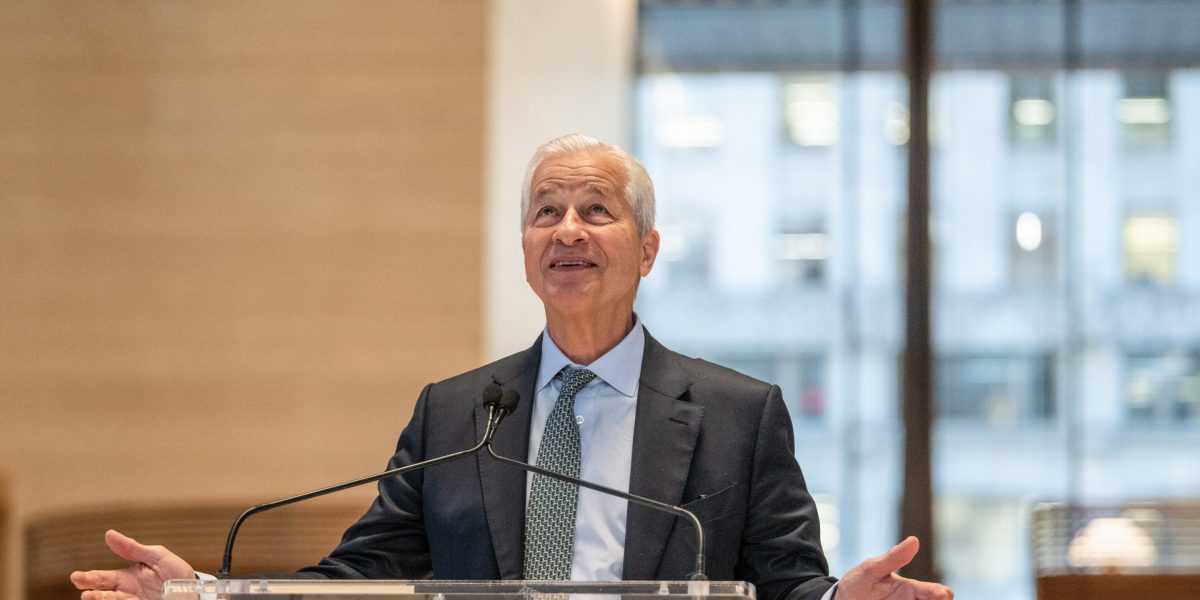
JPMorgan Chase CEO Jamie Dimon reiterated a nuanced and overall upbeat view about the effect of artificial intelligence on the economy.
In an interview with Fox News’ Sunday Morning Futures, the head of the world’s biggest bank acknowledged businesses have been cautious about hiring lately but said it’s not related to AI and doubted that the technology will dramatically reduce jobs in the next year.
“For the most part, AI is going to do great stuff for mankind, like tractors did, like fertilizers did, like vaccines did,” he said. “You know maybe one day we’ll be working less hard but having wonderful lives.”
Dimon added that AI still needs proper regulation to mitigate the downside risks, just like other innovations throughout history.
He also repeated his earlier warning that AI will eliminate jobs, but urged people to focus on uniquely human skills like critical thinking, emotional intelligence, and communication.
If AI sweeps through the economy so quickly that workers can’t adapt to new roles in time, Dimon suggested the public sector and private sector have roles to play.
“We—government and we the companies, society—should look at how do we phase it in a way that we don’t damage a lot of people,” he explained. “We should have done a little bit more on trade assistance years ago when you had a town that got damaged by the closure of a plant. And that you can do: you can retrain people, relocate people, income assistance, early retirement.”
Meanwhile, AI is also creating jobs in the near term as new infrastructure requires more construction and fiber optics, he pointed out.
The comments were his latest on AI in recent months. In November, Dimon predicted AI will help the developed world transition to a shorter workweek of just three and a half days sometime in the next 20-40 years.
And at the Fortune Most Powerful Women Summit in October, he said governments and companies must plan for an AI future to avoid a social backlash.
“It will eliminate jobs. People should stop sticking their heads in the sand,” he warned.





 Politics8 years ago