Connect with us

Business

Warren Buffett’s son says he didn’t know his dad was a billionaire until he was in his 20s

Published

on


Warren Buffett is synonymous with ambition, success, and fortune. The former Berkshire Hathaway CEO was once the world’s richest man, famously dethroning Bill Gates in 2008 with a $62 billion net worth, and held the spot for quite some time. 

But one of the people closest to him didn’t even know how wealthy and successful Buffett was: his own son, Peter Buffett. 

Peter, now 67, didn’t realize his own father’s status until he was in his 20s. The realization happened when Peter saw his dad’s name on the Forbes list of the richest Americans, according to a 2013 Forbes interview with both Peter and Warren Buffett.

“I’m not kidding. It was when I was in my 20s that my mom and I talked at some point, because there he was, on this list,” Peter said. “And we laughed about it, because we said, ‘Well, isn’t it funny? You know, we know who we are, but everybody’s treating us differently now.’” 

Peter is the youngest of Warren Buffett’s three children with his first wife, Susan Alice Buffett. Peter is an American musician, composer, author, and philanthropist who has won a regional Emmy Award, become a New York Times best-selling author, and served as co-chair of the NoVo Foundation. But Peter recalled that conversation with his mom, with little effect on his outlook or perception of his family.

“It was a fascinating switch, although not a huge one because we didn’t live in that world or a cultural framework where there was a lot of wealth being shown,” Peter said. “Our friends were as surprised as I was.”

Warren Buffett backed up his son, saying that by the time his children found out just how rich they were, they had already formed their own personalities and paths.

“The kids were formed by that time, and they knew who their friends were, and their friends were their friends because they liked ’em, and not because they were the rich kid on the block or anything of the sort,” Warren Buffett said. 

Warren Buffett’s net worth and outlook on money

While Warren Buffett may no longer be the world’s richest man, he is still very much a billionaire, worth about $145 billion, making him the 10th wealthiest person in the world.

Still, Buffett has never been much of one to brag about money—and it’s not how he defines success. 

“Greatness does not come about through accumulating great amounts of money, great amounts of publicity or great power in government,” Buffett wrote in his final Berkshire Hathaway shareholder letter published in November.

The 95-year-old “Oracle of Ohama,” known as one of the most successful investors of all time, also lives a very frugal life. He eats McDonald’s, drives a beat-up old car, and still lives in his modest Nebraska home, which he bought for just $31,500 in 1958. His license plate once read “THRIFTY.” Rather, he says he prioritizes helping others using his fortune, which he will ultimately pass down to his children, who will use it for their respective philanthropic organizations.

“When you help someone in any of thousands of ways, you help the world,” Buffett wrote. “Kindness is costless but also priceless. Whether you are religious or not, it’s hard to beat The Golden Rule as a guide to behavior…Keep in mind that the cleaning lady is as much a human being as the Chairman.”


Source link

Continue Reading

Business

Stablecoins could fix a broken international payments system.

Published

on


Every year, workers around the globe send approximately $900 billion to their families back home and, when it comes to helping them send that money, the market is suddenly up for grabs. The reason is the recent momentum behind stablecoins, which offer an easy way to move money across borders—and for a far cheaper price than legacy transfer systems, whose fees can reach as high as 6%.

Stablecoins, which are backed by reserves designed to peg their value to a fiat currency like the dollar, were long used by experienced crypto traders. Today, millions of ordinary people are using them too via digital wallets. All of this raises an intriguing business question: What companies are best poised to capitalize on the new stablecoin trend?

Will it be a legacy remittance player, like a Western Union or MoneyGram? Or will it be a crypto-native company, like a Kraken or Coinbase, or instead PayPal or one of the growing number of fintechs entering the stablecoin space?

While the emerging stablecoin industry is there for the taking, experts say that both legacy remittance players and newer entrants each possess their own set of advantages and challenges. 

A broken remittances system 

When people send money across borders, fees are steep. The World Bank found in a report earlier this year that the average fee for sending remittances was more than 6%. That cost can be grating over time, especially for low-income immigrants sending money back to developing countries. 

“People are spending extraordinary sums to send money abroad,” said Yesha Yadav, a law professor at Vanderbilt University who specializes in financial regulation. “This impacts how much the most cash-strapped and vulnerable people have in their pocket because some middle person is taking money for no good reason.”

This is where stablecoins could step in. Thanks to blockchain technology, these digital tokens can make international payments faster and at lower costs. The International Monetary Fund recently published an article about how this digital currency could improve payments and global finance. 

Stablecoins have also become a priority in the financial world since President Donald Trump signed the Genius Act in July. The legislation established a regulatory framework for the digital currency. Since then, major remittance players, like Western Union and PayPal, have developed their stablecoin offerings. 

The case for and against incumbents

When it comes to widespread adoption of stablecoins for remittances, traditional players, like Western Union, have the advantage of an existing customer base around the world. This type of company already has established regulation in different countries. That’s according to Nate Svensson, a senior equity research analyst at Deutsche Bank, who says that a company like Western Union has developed compliance internationally for decades, if not centuries. 

“I think [Western Union] has a lot of built in advantages relative to these nascent crypto players,” he said. 

Another analyst, Brett Horn from Morningstar, likewise suggested traditional remittance brands may hold the advantage in the race, citing their long history with clients. When asked about crypto startups who solely focus on remittances using stablecoins, he said, “A lot of times it sounds really good, but I think, frankly, [these startups] are waving away some real difficulties that they might have.”

On the other hand, crypto-native companies have an advantage in their familiarity with the technology and their ability to be nimble. The likes of Western Union, in contrast, may find it hard to move away from long-standing business practices that both the company and their customers know well. When it incorporates stablecoin transfers for remittances alongside its existing fiat transfer system, it essentially has two arms of its business competing with one another. 

“They’re competing with themselves, and that’s just a natural disincentive for things to change,” said Jessica Wachter, a professor of finance at The Wharton School, about legacy remittance players. “A startup would be basically all in on [stablecoins], whereas I’m not sure a [Western Union] would be all in on it.”

Besides legacy financial institutions and crypto startups, another kind of company is vying to win this fight—the bigger crypto companies. Kraken, for example, has an app where users can send and receive funds across more than a hundred countries. 

Regulation for this digital currency is still relatively new, as the Genius Act was only signed into law in July, and the development of the technology is still in its early stages. Yesha Yadav, the law professor at Vanderbilt University, thinks that stablecoins will become even more popular this year, as their consumer protection rules get firmed up.

“I think stablecoins have an enormous runway to expand their footprint,” she said.  


Source link

Continue Reading

Business

Logan Paul turned Pokémon, YouTube, and wrestling into millions. Here’s his advice

Published

on


Gen Z is coming of age in a job market defined by uncertainty. AI is reshaping work, entry-level opportunities feel fragile, and a growing number of young people are stuck on the sidelines— labeled as NEET, not in employment, education, or training.

Self-made millionaire and social media star Logan Paul has little sympathy for those who don’t help themselves.

“We’re in an interesting time where everyone wants to critique, but no one wants to build,” Paul told Fortune in an interview. “They all are just armchair quarterbacks yelling from the sidelines while there are doers out there who are creating, making, building, establishing, and I am that person.”

First rising to fame as a teenager on now-defunct video app Vine, Paul has parlayed internet fame into a sprawling business empire—in part by relentlessly turning personal interests into commercial ventures. 

He built his early audience alongside his brother, Jake, then expanded beyond content creation through partnerships with fellow creators like KSI and MrBeast. He eventually used his following to launch consumer brands like Prime and Lunchly. Most recently, Paul has pushed further into the mainstream, signing on as a full-time WWE star. His YouTube subscribers now exceed 23 million, in addition to nearly 27 million Instagram followers.

But Paul insists his success has had less to do with algorithms or viral luck—and more to do with his strategic team-building over the years.

“The people that you’re putting your trust into to help build with you is probably the most important decision that you’re going to make,” he said. “Both my successes and failures have come as a result of that.”

Paul hopes to profit millions from his rare Pokémon card—an asset class that’s soaring among young investors

Pokémon has captivated fans for nearly three decades. But in recent years, the franchise’s trading cards have evolved from childhood collectibles into serious financial assets

Over the past two decades, Pokémon cards have posted the largest long-term increase of any major trading card category—rising 3,261%—according to data provided last year to Fortune by Card Ladder. That performance outpaces even many of the market’s hottest stocks. 

Paul has watched that shift up close. An avid collector of Pokémon cards, he turned his early childhood passion into a high-profile investment in 2022, when he purchased a rare Pikachu Illustrator card for $5.3 million—often wearing it as a necklace, both as a flex and a brand statement.

Now, alongside auctioneer Ken Goldin, Paul has put the card up for auction, betting that nostalgia, fandom, and smart dealmaking can drive outsized returns. As of publication, bidding had already topped $6.3 million—the highest price ever reached for a card at auction. Paul hopes it ultimately sells for between $7 million and $12 million.

Paul encouraged young people to consider looking more at “fun” nontraditional asset classes like art, trading cards, and even fossils over traditional stocks to combine passion with income.

“With anything you invest in, there’s always a level of risk, but young people have a significant amount of both energy and time to be able to calculate risk and then mitigate that risk,” Paul said.

Even if his card falls short of his desired range, Paul said the outcome still proves his larger point: opportunity is everywhere, if you’re willing to give it a try.

“If you’re into something and you’re passionate about it, there’s a market for it,” Paul said. “And you can build around it as long as you lean into it.”

That philosophy, he argued, is especially relevant for Gen Z navigating a rapidly changing economy.

“If you don’t adapt, you die,” he said. “You’ve got to be able to change with the times and use the technology at your fingertips. And there’s plenty nowadays to accomplish the things that you want.”

Goldin echoed that sentiment, saying career success is less about financial upside than about personal engagement.

“It’s not about how much money you’re going to make in the career,” Goldin told Fortune. “It’s about, am I going to enjoy it? Am I challenged? Am I looking forward to it?”

Business leaders like Warren Buffett have long echoed Paul’s advice: who you work with matters

From auctioning with Goldin to building brands alongside MrBeast—and collaborating repeatedly with his brother Jake—Paul’s career reflects the belief that durable businesses are built sustainably with the right people in the room.

That idea is one many business leaders have championed. Microsoft cofounder Bill Gates, for example, has offered similar advice to young professionals.

“Surround yourself with people who challenge you, teach you, and push you to be your best self,” he wrote on X.

Berkshire Hathaway founder Warren Buffett has echoed this sentiment throughout his career.

“Don’t worry too much about starting salaries and be very careful who you work for because you will take on the habits of the people around you,” Buffett said at his final Berkshire Hathaway annual shareholder meeting last year. “There are certain jobs you shouldn’t take.”

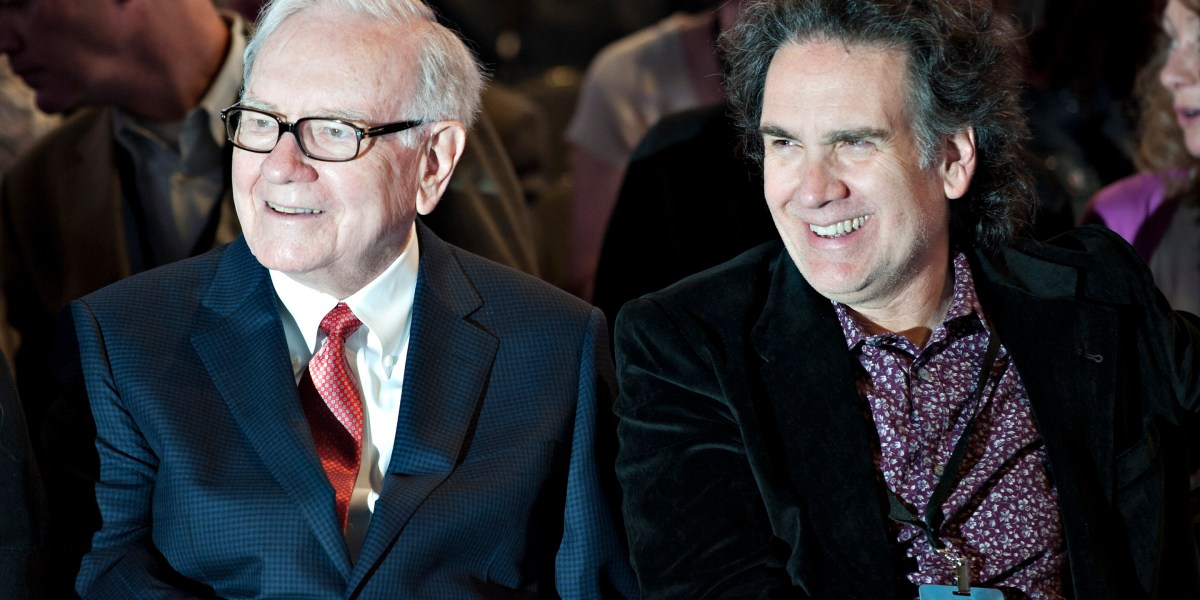
For Buffett, the importance of having the right partnerships was embodied with Charlie Munger—who served as vice chairman of Berkshire Hathaway from 1978 until he died in 2023. Buffett often described Munger as a “part older brother, part loving father,” crediting him with sharpening his thinking and challenging his assumptions. 

“Every time I’m with Charlie, I’ve got at least some new slant on an idea that causes me to rethink certain things,” Buffett said to CNBC.



Source link

Continue Reading

Business

Informatica CEO is a McKinsey alum—he says being ‘pushed around’ by smart peers helped him grow

Published

on


Consulting giant McKinsey & Co. not only has a reputation for rewarding its star employees with sky-high salaries—the organization is also a well-known stepping stone to the C-suite. Take a stroll through the office halls, and you’re sure to pass by a budding Fortune 500 CEO.

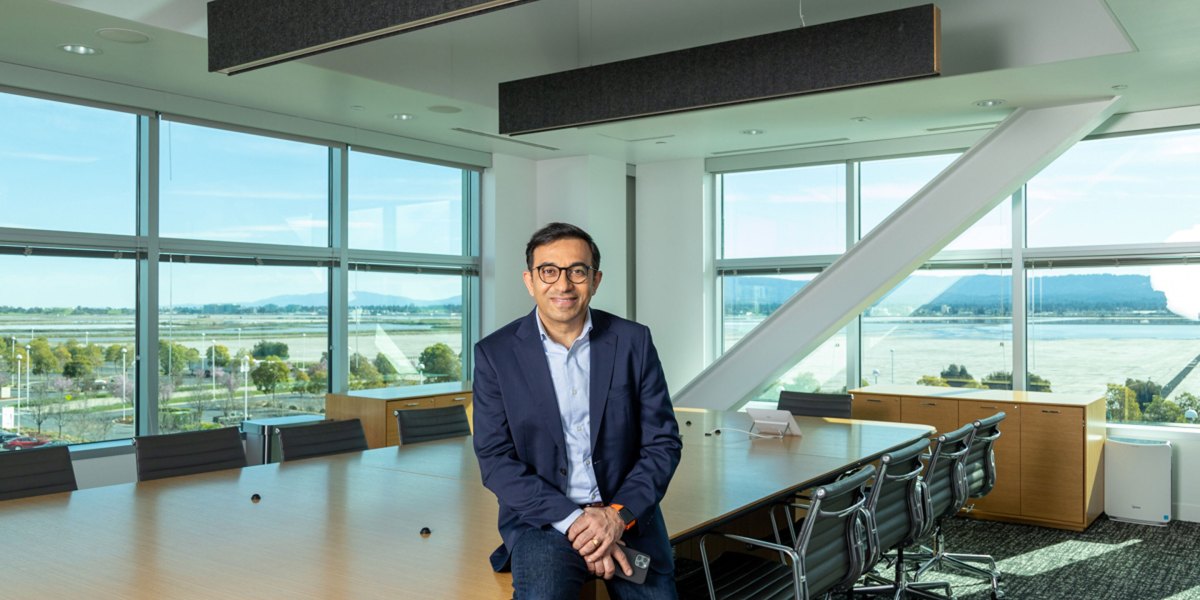
Just like Google’s Sundar Pichai and Doordash’s Tony Xu, Amit Walia, the CEO of $7.6 billion company Informatica, worked at McKinsey after receiving his MBA. And the experience—albiet daunting, and quite rigorous—set him up to thrive in his current role as chief executive. 

“McKinsey was a dream job for me when I went to business school, partly because I was an engineer before business school,” Walia tells Fortune. “And I thought, ‘Look, what a great place to be to learn about business in the broadest way—and, of course, the most intense way.’”

Walia spent nearly five years at the consulting company as a senior engagement manager. He stepped into the role after a couple of stints in management and tech; right after receiving his undergraduate degree, the entrepreneur served as a senior officer for Indian manufacturer Tata Steel, overseeing 20,000 employees at just 22 years old.

Walia then spent two years as a senior engineer at $78 billion business Infosys Technologies before taking the leadership track. He attended Northwestern’s Kellogg School of Management, another training hotbed for top executives, and took the McKinsey job with an MBA in his back pocket. The experience primed him to step into Informatica’s top role in 2020, but it was no cake walk. 

“You really get pushed into difficult situations [at McKinsey]…You have to always have a clear bent of mind to be very analytical, to really distill out the problem to its core. It’s a skill you learn, and that’s the hardest thing in a big job,” Walia continues. “You become a better person by being pushed around by the environment of a lot of other smart people.”

Confronting criticism and imposter syndrome—but growing as a future CEO

Most workers, regardless of title or industry, will doubt their professional chops at some point in their careers. And Walia noticed that even the sharpest business minds will second-guess themselves while working at McKinsey. 

“I always joke [that] I felt everybody over there feels like they’re an imposter, because you’re next to another smart person. So you push yourself, and you learn from everybody,” the Informatica CEO says. 

But McKinsey employees don’t have time to dwell on how they shape up to their peers. Walia says he was pushed into “complex environments” with 100 moving parts; the burgeoning business leaders are trained to hone in on what really matters, finding the core of the issue. And once the problem is brought into the light, he says McKinsey encourages “hypothesis-driven problem-solving” to remedy the situation—even when it’s ambiguous or something new, and there is no “right answer.” He constantly tested himself in the job, having to validate every decision he made. His McKinsey peers weren’t afraid to hold back with their critiques, and Walia soaked it all in. 

“It’s a very learning-based culture. You’re constantly learning, and you get [a] tremendous amount of feedback, which helps you become better all the time,” Walia explains. “I always say, ‘Feedback is a gift.’ It’s not to tell you what you’re not doing right, it should tell you what you could do better. Those are the few things that have helped me grow over time from my McKinsey experience.”

Why McKinsey is the biggest incubator of Fortune 500 CEOs 

McKinsey has a reputation as a standout employer when it comes to incubating the future mover-and-shakers of business. After all, the consulting giant has minted more Fortune 500 CEOs than any other organization in the world. 

Aside from Walia, Pichai, and Xu, other notable alumni including Citigroup leader Jane Fraser and Visa chief executive Ryan McInerney have roamed the office floors of the consulting giant. The company has played a hand in catapulting 18 sitting Fortune 500 CEOs, and 28 globally, to the top job, according to a 2025 analysis from Fortune editor Ruth Umoh. 

A dozen former and current McKinsey alumni told Umoh that the firm’s strategy is intentional, and echoing Amit’s experience, incredibly rigorous. The company cycles its staffers through industries, geographies, and departments, purposefully putting them out of their comfort zone. McKinsey also encourages a culture of constructive disagreement, where all employees—reguardless of seniority—have their assumptions and strategies challenged. 

“You start to believe that more is possible,” Liz Hilton Segel, a senior partner at McKinsey, told Fortune last year. “You build pattern recognition that comes from helping a client do something they didn’t think was even achievable—and that builds confidence you carry forever.”


Source link

Continue Reading

Trending

Copyright © Miami Select.