Connect with us

Business

Walmart worker falsely accused of celebrating Charlie Kirk’s death suspended from job, fears safety

Published

on


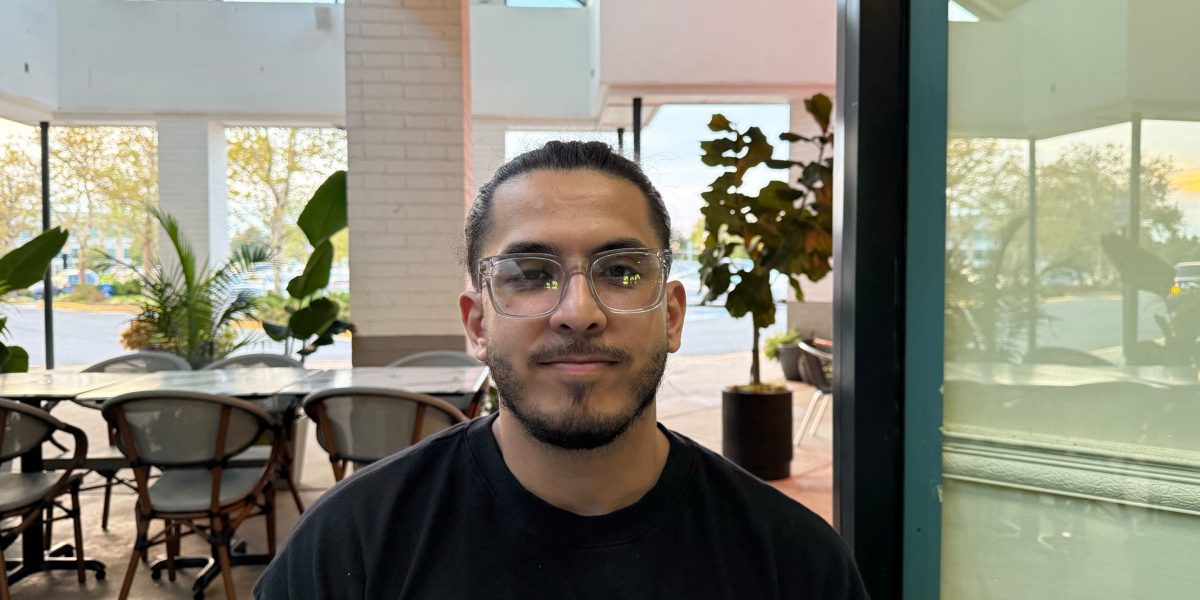
When his phone buzzed with an unknown caller late Friday afternoon, 30-year-old Ali Nasrati didn’t think much of it. Spam calls were common. But this caller left him a voicemail: Did you get fired yet?

Nasrati disregarded that voicemail as a practical joke, or some sort of scam.

“Being the person that I am, I don’t really get bothered by these kinds of things,” he told Fortune. 

But then, the texts came. From multiple different unknown numbers, they spelled out his name, his mother’s name, and his home address, followed by a chilling message: we’re on our way.” Random phone calls came that loudly and “vulgarly” insulted Nasrati and his Islamic faith.

Nasrati, shaken, drove home from his work as an IT specialist at the Virginia Walmart he had worked at since he was 25. On the way, he got another call: one he didn’t answer, wary of more abuse. But this time it was from Walmart corporate. The voicemail, which Fortune has reviewed, came from a corporate manager and said he was suspended with pay pending an “internal investigation,” and asked him to call back.

Since then, Nasrati has called and left multiple voicemails with his employer. He says none have been returned. Walmart declined to comment on the matter.

Back at home, Nasrati, trying to piece together what had happened, says he opened his laptop in disbelief. His work account had already been disabled. Frantically scanning online, the source of the harassment finally became clear: an X profile created under the handle @IslamAli911, filled with inflammatory posts celebrating the assassin of right-wing influencer Charlie Kirk, and plastered with his photo and full name. 

Nasrati said the account isn’t his, and he has never posted about Kirk, or politics at all, for that matter. He has his own X page, with mostly posts from a decade ago about soccer. 

But it didn’t matter. A right-wing page on X, called “Bad Hombre” with the handle @joma_gc, which had been posting the names and employer information of people deemed to be “celebrating” Kirk’s murder, had taken screenshots and posted pictures of the fake account, along with Nasrati’s name and workplace information, to over 180,000 followers. 

“It was insane,” Nasrati said. “This account was made in May, not by me, but they used my Instagram and LinkedIn photos and made it look like I was the one posting. And people believed it.”

The fallout was immediate. His phone rang nonstop with calls spewing Islamophobic slurs. Emails and texts told him to leave the country and that he better hide. Cars idled too long behind him on the road, and he found himself wondering if he was being followed. His mother and sister, shaken, refused to stay in their home, and he left with them to find another place to stay.

“I’ve always felt like an American first,” Nasrati said. “But this weekend, for the first time, I felt like an outsider in my own country.”

He raced to the police station to file reports, one against the account impersonating him for identity theft and others for defamation. There, the officers told him to report the account that had targeted him, which he says he has, along with about 200 of his friends and family. jhjhjjk

X, in an email reviewed by Fortune, told Nasrati that the account, @joma_gc, had not violated any X rules. The account that had impersonated him, after blowing up on @joma_gc, deactivated and removed all of its information from the page. 

X did not respond to Fortune’s request for comment. 

A coordinated campaign 

Nasrati’s case is just one amid a surge of cyber-targeting campaigns following Kirk’s assassination, with critics of the conservative activist increasingly singled out online. 

A site called Expose Charlie’s Murderers, which at the time of writing is down, briefly published the names of 41 people it accused of “supporting political violence online,” promising to turn its database of 30,000 submissions into a permanent archive before it was taken offline. 

Even those who denounced violence but voiced criticism of Kirk were included, according to Reuters, and some—like Canadian influencer Rachel Gilmore—say they’ve since endured death threats and sexualized harassment. 

Although the site was removed, many accounts on X have taken up the cause, from @joma_gc to right-wing media creator Chaya Raichik at @libsoftiktok. MSNBC hosts, public school teachers, healthcare workers, and employees at Office Depot and Microsoft have been fired for their posts, among others. An American Airlines pilot was even grounded and suspended for his posts. 

X bans posting someone’s private information without consent, but the policy makes an exception if the details are already public — like names, workplaces, or photos from LinkedIn or Instagram, all of which were used in Nasrati’s case. Impersonation, however, is a violation of X rules, according to the policy

Nasrati isn’t sure if he will get proper recourse from the authorities, or X, or his place of employment. All he wants Walmart to do is “clear his name” and help get him some sense of job and personal security. 

“What can I do in the future to not feel this way? There really isn’t anything I did wrong,” Nasrati said. “Do I have to disappear from social media, go off the grid, just to feel safe in my own home? It’s 2025: everyone has a social media presence. The fact that there’s nothing I can do to stop this from happening again is very scary.”


Source link

Continue Reading

Business

Banking on carbon markets 2.0: why financial institutions should engage with carbon credits

Published

on


The global carbon market is at an inflection point as discussions during the recent COP meeting in Brazil demonstrated. 

After years of negotiations over carbon market rules under Article 6 of the Paris Agreement, countries are finally moving on to the implementation phase, with more than 30 countries already developing Article 6 strategies. At the same time, the voluntary market is evolving after a period of intense scrutiny over the quality and integrity of carbon credit projects.

The era of Carbon Markets 2.0 is characterised by high integrity standards and is increasingly recognised as critical to meeting the emission reduction goals of the Paris Agreement.

And this ongoing transition presents enormous opportunities for financial institutions to apply their expertise to professionalise the trade of carbon credits and restore confidence in the market. 

The engagement of banks, insurance companies, asset managers and others can ensure that carbon markets evolve with the same discipline, risk management, and transparency that define mature financial systems while benefitting from new business opportunities.

Carbon markets 2.0

Carbon markets are an untapped opportunity to deliver climate action at speed and scale. Based on solutions available now, they allow industries to take action on emissions for which there is currently no or limited solution, complementing their decarbonization programs and closing the gap between the net zero we need to achieve and the net zero that is possible now. They also generate debt-free climate finance for emerging and developing economies to support climate-positive growth – all of which is essential for the global transition to net zero.

Despite recent slowdowns in carbon markets, the volume of credit retirements, representing delivered, verifiable climate action, was higher in the first half of 2025 than in any prior first half-year on record. Corporate climate commitments are increasing, driving significant demand for carbon credits to help bridge the gap on the path to meeting net-zero goals.

According to recent market research from the Voluntary Carbon Markets Integrity initiative (VCMI), businesses are now looking for three core qualities in the market to further rebuild their trust: stability, consistency, and transparency – supported by robust infrastructure. These elements are vital to restoring investor confidence and enabling interoperability across markets.

MSCI estimates that the global carbon credit market could grow from $1.4 billion in 2024 to up to $35 billion by 2030 and between $40 billion and $250 billion by 2050. Achieving such growth will rely on institutions equipped with capital, analytical rigour, risk frameworks, and market infrastructure.

Carbon Markets 2.0 will both benefit from and rely on the participation of financial institutions. Now is the time for them to engage, support the growth and professionalism of this nascent market, and, in doing so, benefit from new business opportunities.

The opportunity

Institutional capital has a unique role to play in shaping the carbon market as it grows. Financial institutions can go beyond investing or lending to high-quality projects by helping build the infrastructure that will enable growth at scale. This includes insurance, aggregation platforms, verification services, market-making capacity, and long-term investment vehicles. 

By applying their expertise and understanding of the data and infrastructure required for a functioning, transparent market, financial institutions can help accelerate the integration of carbon credits into the global financial architecture. 

As global efforts to decarbonise intensify, high-integrity carbon markets offer financial institutions a pathway to deliver tangible climate impact, support broader social and nature-positive goals, and unlock new sources of revenue, such as:

  • Leveraging core competencies for market growth, including advisory, lending, project finance, asset management, trading, market access, and risk management solutions.
  • Unlocking new commercial pathways and portfolio diversification beyond existing business models, supporting long-term growth, and facilitating entry into emerging decarbonisation-driven markets.
  • Securing first-mover advantage, helping to shape norms, gain market share, and capture opportunities across advisory, structuring, and product innovation.
  • Deepening client engagement by helping clients navigate carbon markets to add strategic value and strengthen long-term relationships.

Harnessing the opportunity

To make the most of these opportunities, financial institutions should consider engagements in high-integrity carbon markets to signal confidence and foster market stability. Visible participation, such as integrating high-quality carbon credits into institutional climate strategies, can help normalise the voluntary use of carbon credits alongside decarbonisation efforts and demonstrate leadership in climate-aligned financial practices.

Financial institutions can also deliver solutions that reduce market risk and improve project bankability. For instance, de-risking mechanisms like carbon credit insurance can mitigate performance, political, and delivery risks, addressing one of the core challenges holding back investments in carbon projects. 

Additionally, diversified funding structures, including blended finance and concessional capital, can lower the cost of capital and de-risk early-stage startups. Fixed-price offtake agreements with investment-grade buyers and the use of project aggregation platforms can improve cash flow predictability and risk distribution, further enhancing bankability.

By structuring investments into carbon project developers, funds, or the broader market ecosystem, financial institutions can unlock much-needed finance and create an investable pathway for nature and carbon solutions.

For instance, earlier this year JPMorgan Chase struck a long-term offtake agreement for carbon credits tied to CO₂ capture, blending its roles as investor and market facilitator. Standard Chartered is also set to sell jurisdictional forest credits on behalf of the Brazilian state of Acre, while embedding transparency, local consultation, and benefit-sharing into the deal. These examples offer promising precedents in demonstrating that institutions can act not only as financiers but as integrators of high-integrity carbon markets.

The institutions that lead the growth of carbon markets will not only drive climate and nature outcomes but also unlock strategic commercial advantages in an emerging and rapidly evolving asset class.

However, the window to secure first-mover advantage is narrow: carbon markets are now shifting from speculation to implementation. Now is the moment for financial institutions to move from the sidelines and into leadership, helping shape the future of high-integrity carbon markets while capturing the opportunities they offer.

The opinions expressed in Fortune.com commentary pieces are solely the views of their authors and do not necessarily reflect the opinions and beliefs of Fortune.


Source link

Continue Reading

Business

This CEO went back to college at 52, but says successful Gen Zers ‘forge their own path’

Published

on


Being a successful college dropout is worn like a badge of honor for many in the business world. After all, some of the wealthiest leaders—Mark Zuckerberg, Bill Gates, and Larry Ellison—never finished their degrees, and they’re proud of it.

Lauren Antonoff once wore that badge, too. After her apartment burned down as a student at University of California, Berkeley, and she missed finishing her diploma, she still managed to break into tech, spending nearly two decades at Microsoft and later serving as a senior executive at GoDaddy. After building a career without the credential she was supposed to have, Antonoff took pride in proving she didn’t need it.

But after 25 years in the industry, Antonoff became burdened by what she felt was “unfinished business.” So in 2022, during a rare career break, she was back in a UC Berkeley lecture hall—this time as a 52-year-old peer among classmates half her age. Antonoff’s schedule was filled with courses in rhetoric, political science, and even biotech.

Going back to school wasn’t ultimately revolutionary for her career, she admitted to Fortune, but it did sharpen her perspective on adaptivity and staying focused on long-term goals—even when life takes unexpected turns.

“There are probably some people who approach college from like, ‘I’m going to do the assignment and do what I’m told,’” she told Fortune. “But the students I think that really thrive are the ones who forge their own path.”

Now, as CEO of Life360—the family location app worth more than $5 billion—she sees clear parallels between navigating a classroom and navigating the C-suite.

“That’s a lot of what CEOs do is look at the range of possibilities, figure out what the options are, and pick a path,” she added. “And pick a path knowing that you can’t know the future, knowing that you don’t get to know if you’re right until after and being the ones to shoulder that responsibility.”

Forging your own path can sometimes be somewhat of a privilege and can take time, Antonoff admitted. But, she said, small steps can create momentum. 

“I’m a big believer in finding your way in the world,” Antonoff said. “That’s not just about getting a job; if you don’t have a job, start something. If you don’t have a job, go volunteer someplace. In my experience, being active and working on problems that you’re interested in—one thing leads to another.”

The secret to reach the ‘highest levels of success’

Growing up, Antonoff thought she knew exactly where her career was heading: civil rights law. At UC Berkeley, she planned to study rhetoric and political science and then make the jump to law school.

But after buying her first MacBook to write papers, she found an unexpected fascination in technology—and began asking questions. That curiosity led her to the Berkeley Mac User group, where she realized tech might be more than just a hobby.

Her advice for Gen Z echoes that early pivot.

“Do what you love,” she said. “I think it’s very hard to reach the highest levels of success if you don’t have the energy and the passion. I think when you are excited about something, it sort of fuels those creative juices and those insights that allow you to chart the future and bring people along with you.”

In December 2022, Antonoff finally walked across the stage and added one long-awaited line to her résumé: B.A., UC Berkeley. By the following May, she had been named COO of Life360—and within two years, CEO.


Source link

Continue Reading

Business

It’s a sequel, it’s a remake, it’s a reboot: Lawyers grow wistful for old corporate rumbles as Paramount, Netflix fight for Warner

Published

on


Corporate-law scholars say the bidding war for Warner Bros. Discovery has become a strange kind of legal nostalgia trip, dragging Paramount back to center stage for the first time in decadesand reviving vintage doctrines from Revlon to the “Cuban beer” defense as Netflix tries to lock up a once‑in‑a‑generation deal. What looks on the surface like a clean strategic bolt‑on for the world’s biggest streamer is, in the eyes of the experts who teach this stuff, a big-budget Hollywood legacy act, following in the footsteps of the takeover sagas that defined 20th-century Tinseltown.​

Anyone who lived through the 1989 takeover that resulted in the landmark lawsuit Paramount Communications v. Time battle hears an echo. Back then, Time Inc. was trying to merge with Warner Communications when Paramount tried to blow up the deal with a rich hostile bid for Time itself, triggering a bidding war and a landmark Delaware ruling on when, and how, boards can say no.​ Of course, Time Warner emerged as a media powerhouse, reigning for decades before a 2000 tie-up with AOL that many consider to be the most disastrous merger in corporate history.

Anthony Sabino, a veteran legal practitioner and professor at St. John’s University in Queens, N.Y., who teaches those cases, called today’s fight “a sequel, not a reboot,” with Paramount, which is competing with Netflix to buy WBD, once again in the eye of a takeover hurricane. He pointed out that Paramount also fronted the 1994 Paramount v. QVC clash—also ultimately decided in Delaware—where Barry Diller’s QVC was rebuffed in favor of Sumner Redstone’s Viacomin a bid to buy Paramount, cementing the modernempire that has since mutated into Paramount Global and, as of 2024, Paramount Skydance.

The same brands and some of the same power players, from John Malone to Redstone’s successors, are back on the call sheet, only this time the battleground is streaming instead of cable and print.​ Diller himself agreed, telling The New York Times by email earlier this week, “yes, it is turning into a repeat.”

But the rapid turn of events that saw Netflix strike a binding deal worth $72 billion in equity (and nearly $83 billion including debt), only to see Paramount go public with an all-but hostile bid worth $77.9 billion in equity (and $108 billion including debt) has also brought a cosmetics name into the conversation, famous to corporate lawyers: Revlon.

The Revlon element

Named after the 1986 Delaware decision in Revlon v. MacAndrews & Forbes, the Revlon doctrine “governs sort of how you should behave when you’re selling [a] company, and it says you can’t favor, you can’t think about anything other than shareholder value,” according to Columbia law professor Dorothy Lund. She explained that in that deal, the hostile takeover of cosmetics firm Revlon by the famed financier Ronald Perelman in the mid-1980s, the Revlon CEO had a “deep personal antipathy” for Perelman and structured a deal with a different private equity buyer. Ultimately, the Delaware Supreme Court ruled that the board of Revlon, like every other company, has a “heightened responsibility to be an auctioneer and thinking about getting the best value for shareholders,” Lund said, “and what you can’t do is play favorites. Everything that you have to do has to be done in service of shareholder value.”

The announcement of the Netflix deal on Dec. 5 implied that Warner had made the best choice for shareholders by choosing the big-red streamer, but Paramount’s announcement the next business day, with a potentially higher bid, put the Revlon precedent in play, both Sabino and Lund explained. Paramount’s subsequent regulatory filing revealed what it claimed was a pattern of minimal engagement from major Warner stakeholders, including CEO David Zaslav and the so-called “cable cowboy” John Malone, who serves as chair emeritus, having stepped down from the board earlier this year while retaining significant stock. (Malone backed Diller and QVC in their ultimately unsuccessful 1994 bid for Paramount, as both Malone and Diller discussed in separate memoirs released in 2025.)

While Lund said that she doesn’t personally think there’s a strong Revlon claim quite yet, “I think the board has to be really careful what they do in the coming weeks,” because the Warner Bros. Discovery board can’t appear to be playing favorites for personal reasons. “Now the tricky thing is going to be, clearly everybody’s got money left on the table, right?” Lund noted that Paramount has indicated that its $30-per-share offer is not its last and best offer, while Netflix also has room to go up. “Now the board is in this tricky position of trying to engineer this deal to get the most value for shareholders.” They might well be compelled under their Revlon duty to either go back to Netflix and say they need a higher bid or go back to Paramount and take its bid seriously.

Lund said that the two-way fight between Paramount and Netflix is almost a fact pattern ripped from one of her exam books, with Paramount’s David Ellison effectively accusing CEO David Zaslav and the Warner board of violating their Revlon duties by favoring a more complex, slower Netflix package over a simple all‑cash offer. Lund also raised the Paramount vs. Time precedent, which was essentially about the choice of a merger partner on cultural rather than financial grounds. “You can’t say, ‘Well, I just like the culture,” which was an argument in that deal where one bidder was seen as more likely to preserve the Time culture. Boards can discount a higher price only for concrete reasons like firmer financing or cleaner regulatory paths, not because they like a bidder’s vibe, in other words.​ This is on display between Netflix, Warner and Paramount, with Ted Sarandos and David Zaslav reported to be on friendly terms, and Paramount’s regulatory filings suggesting a frosty distance between Zaslav and Ellison.

The clash of personalities is part of why experts lick their lips over media megamergers. “These are media personalities,” Sabino said, “and these folks are very powerful individuals … these are fantastically successful folks. And they don’t like it when you say no.”

Paul Nary, an assistant professor of management who teaches M&A and tracks dozens of mega‑deals at the Wharton School of Business, said “this is like my equivalent of a Super Bowl.” He highlighted the strange appeal that media assets tend to have over time, citing the mix of egos and what are perceived to be “marquee assets.” Speaking to the likely legal challenges involving Revlon and Time that will likely emerge between these two offers, Nary said a valuation dispute will be key. He said the Netflix and Paramount offers are close to each other, “depending on how much you assess the equity components, how you assess the value of the spin-out and all of these other things.”

The value of the spin-out, a company to be known as Discovery Global, stands to be much debated over the coming months, maybe even in court, but at least one analyst has put a number on the assets that Paramount wants to buy—and Netflix doesn’t, explaining the valuation gap. Bank of America Research analyst Jessica Reif Ehrlich and her team released a note on Dec. 7, after the Netflix deal and before the Paramount offer, estimating Netflix’s deal as worth more than $30 per share to WBD shareholders. Ehrlich’s team calculated Discovery Global as being worth roughly $3 per share, which would make Netflix’s $27.75-per-share offer richer than Paramount’s. But if Discovery Global was worth $4 per share, then Paramount’s deal could be seen as richer.

Cuban beer, Jewish dentists, and Gulf cash

Sabino argued that this case promises to recall even some more esoteric defenses, deep cuts like thetitles buried inside the Netflix library. He mentioned the “Jewish dentist” defense—a case from the 1970s where opponents of a deal warned that Jewish clients might shun a dental‑supply firm if a Kuwait-based investment vehicle succeeded.​

There was also the less successful “Cuban beer” defense that Sabino characterized as a variation of “Jewish dentist.” It arose in 2008 when InBev, aglobal beer conglomerate based in Belgium, tried to acquire the iconic American beer company Anheuser-Busch. Through a subsidiary, InBev had operations in Cuba, and Anheuser-Busch tried to raise these as a concern as it attempted to keep its independence. Sabino told Reuters at the time that it was a “brilliant but desperate move,” and AB InBev was ultimately formed out of the historic $107 billion merger.

The connection to these deals, of course, is the Middle Eastern funding component of the Paramount bid for WBD. Valued at $24 billion, the Middle Eastern backing was facilitated in part by Jared Kushner, President Trump’s son-in-law, and Sabino said he expects someone to ask whether Americans will ultimately really want Middle Eastern sovereign funds holding big stakes in a Hollywood, even though David Ellison claims that those stakes won’t involve any governance rights. Analyst Rich Greenfield of LightShed Partners challenged Ellison about this directly on a conference call about Paramount’s bid: “Just wondering if you could give us any color on why they’re investing so much with no governance, right? Like what’s the — is there any rationale you can provide?”

Ellison responded to Greenfield that the compelling “industrial logic” would create a company generating a lot of cash flow immediately. “When you look at that from a returns perspective, it’s incredibly attractive to—obviously, to all shareholders. And from that standpoint, I think that’s why our partners obviously are here.”

Referring to the Middle Eastern and Kushner-adjacent aspects of this story being different from the legal textbooks, Lund said “there are aspects of this that feel like a throwback, and there’s aspects of this that just feel so 2025.”

“Under Revlon,” she said, “you have to think about what’s going to create shareholder value. You think that would be a politically neutral thing, right? But when you have a president that’s out there saying, I’ve got a perspective on this, and I’m going to be involved in this, and that’s going to affect regulatory clearance. Now, all of a sudden, you have to worry about that whole political aspect of it as a part of your Revlon duty. And that’s very new.” Lund said dealmakers are confronting political entanglements that they haven’t had to confront before.

Sabino, by contrast, downplayed the political aspect as “overblown,” arguing that both offers ultimately turn on money and law, not party ties. “I think politics has very little to do with it, okay? Because again, the bottom line is, this is business. This is about money, okay?” The president, Sabino added, is a “very energetic guy” who “says a lot of stuff.” At the end of the day, Sabino said, he thinks Revlon and Time and shareholder value will win out, with Sarandos, Ellison and Warner, regardless of their political persuasion, playing M&A hardball. “These folks are deadly serious.”

Editor’s note: The author worked for Netflix from June 2024 through July 2025.


Source link

Continue Reading

Trending

Copyright © Miami Select.