Connect with us

Business

Wall Street surges following strong profits as earnings season kicks off; UBS sees ‘bull market intact’

Published

on


Stocks are climbing on Wednesday following strong profit reports from some of the world’s biggest names in banking and technology.

The S&P 500 rose 0.8%, coming off a roller-coaster day where it careened between a sharp loss and modest gain. The Dow Jones Industrial Average was up 254 points, or 0.5%, as of 11:30 a.m. Eastern time, and the Nasdaq composite was 1.1% higher.

UBS Global Wealth Management released a research note on Wednesday morning, citing the trend that early-reporting companies “tend to have a good relationship with how the rest of earnings season plays out.” With a little less than 10% of the S&P 500 market cap reporting, the team led by David Lefkowitz, Head of US Equities, characterized the results as “decent,” with 80% beating sales estimates and just over 70% beating earnings-per-share estimates. That’s better than normal, UBS said, but so the scope of these beats is a little light as the median company is beating earnings by 2.2%, versus the historical average of 3.5%. 

Overall, UBS added, it sees third quarter earnings season as supportive of the bank’s view that “the bull market remains intact,” driven by the combination of durable earnings growth and Fed rate cuts.

Tech stocks helped lead the way on Wednesday, thanks in part to a profit report from ASML, which is a major supplier to the semiconductor industry. The Dutch company said it expects its revenue for 2025 to be 15% above last year’s, while next year’s should be at least as high as this year’s.

“On the market side, we have seen continued positive momentum around investments in AI,” CEO Christophe Fouquet said, “and have also seen this extending to more customers.” That’s key when worries have been high that a bubble may be forming in artificial-intelligence technology, with too much investment flowing in akin to the 2000 dot-com frenzy.

Outside of ASML’s 3.3% rise in Amsterdam, Broadcom rallied 3.4% on Wall Street, and Nvidia added 0.9%. The chip companies were two of the strongest forces lifting the S&P 500.

Also helping the market were several big banks. Bank of America climbed 5.2% after delivering a profit for the latest quarter that was stronger than analysts expected. CEO Brian Moynihan said every line of the bank’s business reported growth.

Morgan Stanley climbed 6.4% after likewise reporting a stronger profit than analysts expected. That followed better-than-expected profit reports from several banks the day before, including JPMorgan Chase and Wells Fargo.

They helped offset a 4% loss for PNC Financial. It reported a stronger-than-expected profit for the latest quarter, but it also gave a forecast for upcoming earnings that some analysts said was below expectations.

Abbott Laboratories sank 3.6% after its revenue for the latest quarter finished just shy of analysts’ expectations.

Companies are under pressure to deliver strong profits after their stock prices broadly surged 35% from a low in April. To justify those gains, which critics say made their stock prices too expensive, companies will need to show they’re making much more in profit and will continue to do so.

Corporate profit reports are also under more scrutiny than usual as investors hunt for clues about the health of the U.S. economy. That’s because the U.S. government’s latest shutdown is delaying important updates on the economy, such as the report on inflation that was supposed to arrive Wednesday.

The lack of such reports is making the job more difficult for the Federal Reserve, which is trying to figure out whether high inflation or a slowing job market is the bigger problem for the economy.

The Fed cut its main interest rate last month for the first time this year, and officials indicated more may be on the way in hopes of giving the job market a boost. But too low interest rates can push upward on inflation, which has already been stubbornly stuck above the Fed’s 2% target.

Comments from the Fed’s chair, Jerome Powell, on Tuesday may have hinted more cuts to rates may be on the way. In the bond market, the yield on the 10-year Treasury eased to 4.01% from 4.03% late Tuesday.

Also weighing on the market recently have been worries about escalating tensions between the United States and China. President Donald Trump has gone back and forth in his criticism of China, particularly about restrictions it’s placed on exports of rare earths, which are materials that are critical for the manufacturing of everything from consumer electronics to jet engines.

One big winner because of all the uncertainty has been gold, and its price rose 1.3% to top $4,200 per ounce. It’s up nearly 60% for the year so far as investors look to buy something that can offer protection from trade wars, real military wars and the prospect of higher inflation coming because of mountains of debt being amassed by the U.S. and other governments worldwide.

In stock markets abroad, indexes were mixed in Europe after a stronger finish in Asia.

South Korea’s Kospi jumped 2.7%, and France’s CAC 40 rose 2.1% for two of the world’s bigger moves.

___

AP Business Writers Matt Ott and Elaine Kurtenbach contributed.


Source link

Continue Reading

Business

Key questions to stay grounded in the AI frenzy

Published

on


Pop quiz: How do you know if you’re witnessing a real wave of technology transformation, and not just a tech flash in the pan? 

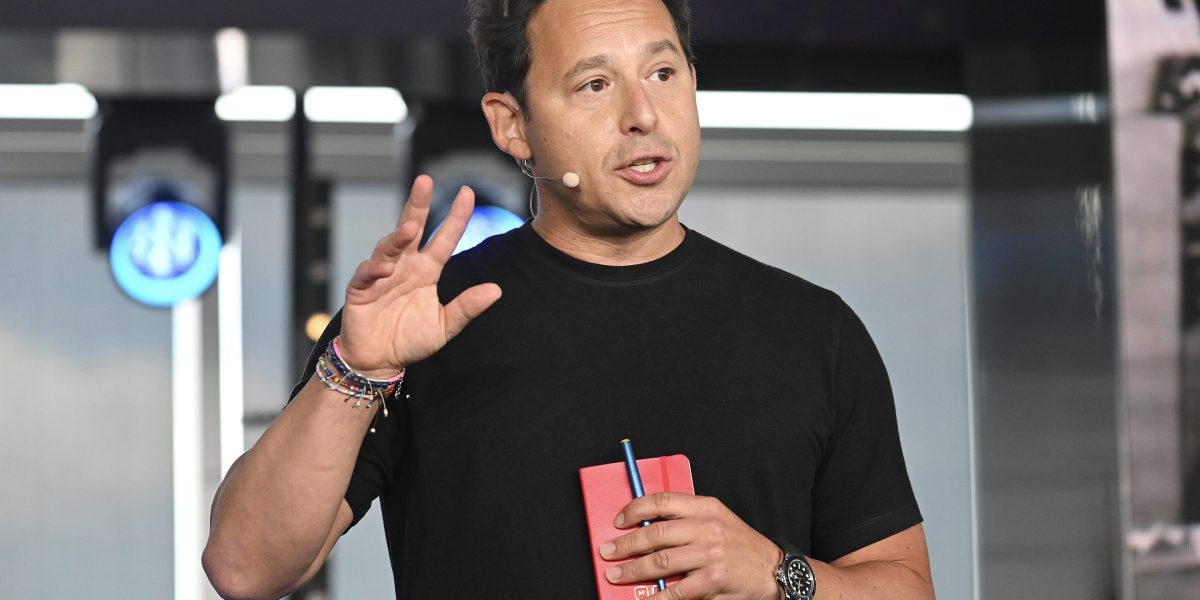
Answer: Look at the stack. In a true technology wave, the whole stack changes, not just one layer, says Kindred Ventures’ Steve Jang. And if you look at AI, he says, that’s exactly what’s going on: “Right now you’re seeing it all the way from chips all the way up through the application layer.”

Jang, Kindred’s founder and managing partner, was speaking at Fortune’s Brainstorm AI conference in San Francisco on Monday, on a panel to discuss how VCs are thinking about these bubbly times in the AI market. His point is that the angst over the AI bubble is kind of besides the point. What really matters is whether the underlying tech transformation is real or not. 

Sapphire Ventures partner Cathy Gao, who was also on the panel, said that valuations for some companies have clearly climbed far beyond any sort of fundamentals. But she also noted that the growth curves of certain companies right now “far outstrip the growth curves of companies we’ve ever seen before.”

To help sift through the hype in this environment and find the startups with real staying power, Gao said she uses a three-question test.

First, is the startup’s product a “feature” or a “workflow?” The stand-outs, she says, are “companies that are able to actually embed and fully overtake an existing workflow, while building significant switching costs.”

Second, is distribution built-in? People don’t want to learn how to use another tool, says Gao. The key qualities here are whether the tool is “integrated in usability and in all the other solutions that it needs to be in order for the workflow to be fully functional?”

And finally, does the company get stronger over time? This is called “compounding durability,” says Gao. “With every new user, does the solution get better, does it get cheaper, does it get faster?”

We’ll have more questions, and answers, at Brainstorm AI today. Watch the livestream here.

See you tomorrow,

Alexei Oreskovic
X:
@lexnfx
Email:alexei.oreskovic@fortune.com
Submit a deal for the Term Sheet newsletter here.

Joey Abrams curated the deals section of today’s newsletter.Subscribe here.

Venture Deals

UnconventionalAI, a San Francisco-based developer of chips and computer systems designed for AI, raised $475 million in seed funding. AndreessenHorowitz and Lightspeed led the round and were joined by Sequoia, LuxCapital, DCVC, FutureVentures, JeffBezos, and others.

Airwallex, a San Francisco and Singapore-based payments and banking platform for businesses, raised $330 million in Series G funding. Addition led the round and was joined by T. Rowe Price, Activant, Lingotto, and RobinhoodVentures.

BlueCurrent, a Hayward, Calif.-based developer of silicon solid-state batteries, raised $80 million in a Series D extension from Amazon, KochDisruptiveTechnologies, PiedmontCapital, RusheenCapitalPartners, and Allen& Company.

Crown, a São Paulo, Brazil-based stablecoin issuer, raised $13.5 million in Series A funding. Paradigm led the round.

ResembleAI, a Mountain View, Calif.-based security platform for enterprise AI, raised $13 million in funding from SonyInnovationFund, BerkeleyFrontierFund, ComcastVentures, CraftVentures, and others.

Scowtt, a Seattle Wash.-based AI-powered advertising optimization platform, raised $12 million in Series A funding. InspiredCapital led the round and was joined by LiveRampVentures, Angeles Investors, and AngelesVentures.

Equixly, a Verona, Italy-based agentic AI platform designed for API security testing, raised €10 million ($11.6 million) in Series A funding. 33NVentures led the round and was joined by existing investors.

Private Equity

ContextLogic agreed to acquire US Salt Parent Holdings, a Watkins Glen, N.Y.-based producer of evaporated salt products, from private equity funds managed by EmeraldLakeCapitalManagement for $907.5 million. 

Exits

BerkshirePartners agreed to acquire UnitedFlowTechnologies, an Irving, Texas-based provider of process and equipment solutions for water and wastewater systems, from H.I.G.Capital. Financial terms were not disclosed.


Source link

Continue Reading

Business

Shopify president says some of the greatest workers he knows only clock in 40-hour weeks

Published

on


There’s no question that the explosion of ChatGPT and other AI-powered technology has ushered in a new era of productivity, with some leaders even predicting that a four-day work week is closer than ever before. At the same time, the pressure is only intensifying on workers to maximize every advantage

And some business leaders have set extreme examples. Take Nvidia’s CEO, Jensen Huang. Just last week, he admitted that both he and his two children, who also work for the semiconductor manufacturer, work every day of the week—including holidays.

But not everyone believes the future belongs to the workaholics. In fact, some of the best workers Shopify President Harley Finkelstein knows stick to traditional work schedules.

“You don’t have to work 80 hours a week to perform well, to be a high performer,” he said on the Aspirewith Emma Grede podcast. “I know people that work 40 hours a week that are some of the greatest performers ever. They’re just incredibly efficient with their time.”

While most people will still face the occasional late night or weekend email, Finkelstein said real balance comes from tailoring your work rhythm to your life.

“I think this idea of work-life balance is a little bit of a misnomer. I think actually what we’re all searching for is like some sort of harmony,” he added. “There are some Saturdays where I have to work, and there are some Thursday afternoons that I go for a walk with my wife. That’s my version of harmony.”

Be a ‘Swiss army knife’—and work hard when the moment calls

For Finkelstein, hard work has long been part of his DNA. As a teenager with dreams of becoming a DJ, he couldn’t land gigs without experience, so he created his own opportunities.

Later, as a student at the University of Ottawa, he launched a side-gig selling T-shirts to cover rent and support his family. That venture brought him into contact with Tobias Lütke, who was then selling snowboards online using software he had built—software that would eventually become Shopify.

With a law degree, Finkelstein didn’t fit the stereotypical startup mold. But when Lütke invited him to join the fledgling company, he embraced what he later called a “Swiss army knife” role.

“Anything that needed to get done on the legal or business side? I would do it. I made my skills from law school extremely transferable,” he wrote on LinkedIn in 2022.

Even for Finkelstein, 80-hour workweeks weren’t uncommon in those early years. But once his family started to grow, he made adjustments to establish balance in what feels like “one big, meaningful pursuit.”

“Someone asked me how I know I’ve found mine. My answer? Because Monday mornings feel like Saturday mornings,” Finkelstein wrote. “Whatever your mission is, I hope you find the thing that makes Monday feel like Saturday. Because that’s when you know you’re building something that really matters.”

Fortune reached out to Finkelstein for further comment.

Work-life balance isn’t constant

Finkelstein’s view of work-life balance isn’t far from what many other high-performing leaders have argued: harmony isn’t fixed—it shifts with circumstance.

Cisco’s chief product officer Jeetu Patel, for instance, works 18-hour days, seven days a week. But even he insists that balance is possible as long as it is designed intentionally. For Patel, that means making sure his daughter can reach him anytime and never compromising his physical health.

“You have to figure out a way to make sure that it works for you, and you have to make sure that the people around you think that that’s okay,” Patel previously told Fortune. “You have to create that system for yourself. I don’t think anyone else can create it for you.”

Even former President Barack Obama echoed a similar idea earlier this year on The Pivot Podcast, noting that balance often comes in phases and that temporary imbalance can be a necessary part of achieving goals.

“If you want to be excellent at anything—sports, music, business, politics—there’s going to be times of your life when you’re out of balance, where you’re just working and you’re single-minded.”


Source link

Continue Reading

Business

Borrowing by AI companies represents a ‘mounting potential threat to the financial system’: Zandi

Published

on


Tech companies are issuing more debt now than before the dot-com crash as a rapid infrastructure buildout unfolds in the AI boom, Moody’s Analytics Chief Economist Mark Zandi said in a LinkedInpost on Sunday.

Even after adjusting for inflation, big tech companies are issuing more bonds than during the late 1990s. And the companies aren’t just refinancing existing debt—they’re taking on additional debt.

“While the increasingly aggressive (and creative) borrowing by AI companies won’t be their downfall, if they do fall short of investors’ expectations and their stock prices suffer, their debts could quickly become a problem,” Zandi wrote. 

“Borrowing by AI companies should be on the radar screen as a mounting potential threat to the financial system and broader economy.”

The 10 largest AI companies, including Meta, Amazon, Nvidia and Alphabet, will issue more than $120 billion this year, Zandi said in a LinkedIn analysis last week.

And this time is different from dot-com era debt issuance, as internet companies back then didn’t have a lot of debt, he pointed out. Instead, they were funded by stocks and venture capital.

“That’s not the case with the AI boom,” Zandi added.

Even though hyperscalers like Amazon, Google, Meta, and Microsoft could pay for the AI buildout with their profits, bond issuance is the “cheapest and cleanest” way to finance an infrastructure buildout of this scale, which will likely last more than a decade and be worth trillions of dollars, Shay Boloor, chief market strategist at Futurum Equities, told Fortune.

“These companies are a lot more comfortable issuing 10- to 40-year papers, for example, at very low spreads, because the market now views them as quasi-utility names—because they’re building all this infrastructure—not just a pure tech company anymore,” Boloor said.

He added that in the previous six months, tech companies have shown “proof in the pudding” that future demand for AI is booming.

Despite AI bubble concerns, Nvidia delivered a strong earnings report for its third quarter last month, saying its AI data center revenue increased by 66% from last year. 

Still, critics warn that the buildout may not keep up with how rapidly AI is developing.

Computer hardware, which makes up most AI data centers’ cost, may be more susceptible to becoming obsolete and replaced by more advanced technology during the AI boom as opposed to wireless and internet buildouts, much of which still runs today, George Calhoun, professor and director of the Hanlon Financial Systems Center at Stevens Institute of Technology, told Fortune.

“The cycle of innovation in the chip industry is much faster than for wireless technology or fiber optics,” he said explained. “There is a real risk that much of that hardware may become competitively disadvantaged by newer technologies in a much shorter timeframe,” before being fully paid off.

At the same time, big players in the AI boom—namely OpenAI—do not have the profits currently to cushion their massive investments at the moment, increasing their risk, Calhoun said.

“If OpenAI fails, the snowball effect of that is gonna be substantial,” Futuruum Equities’ Boloor said. Though larger tech companies won’t likely be impacted much by a potential OpenAI bust, companies that largely rely on its business like Oracle could, he added.

Still, Boloor is optimistic about the AI buildout, saying the main bottleneck for its success is U.S. energy capacity.

“I think that the risk is that trillions of dollars of AI capacity gets built faster than the North American grid can support it, which could slow realization,” he warned. 


Source link

Continue Reading

Trending

Copyright © Miami Select.