Connect with us

Business

Vulnerable Republican blasts choice to send health insurance spiking as ‘political malpractice’

Published

on


House Republican leaders are determined to push ahead with a GOP health care bill that excludes efforts to address the soaring monthly premiums millions of Americans will soon endure as pandemic-era tax credits for people who buy insurance through the Affordable Care Act expire at year’s end.

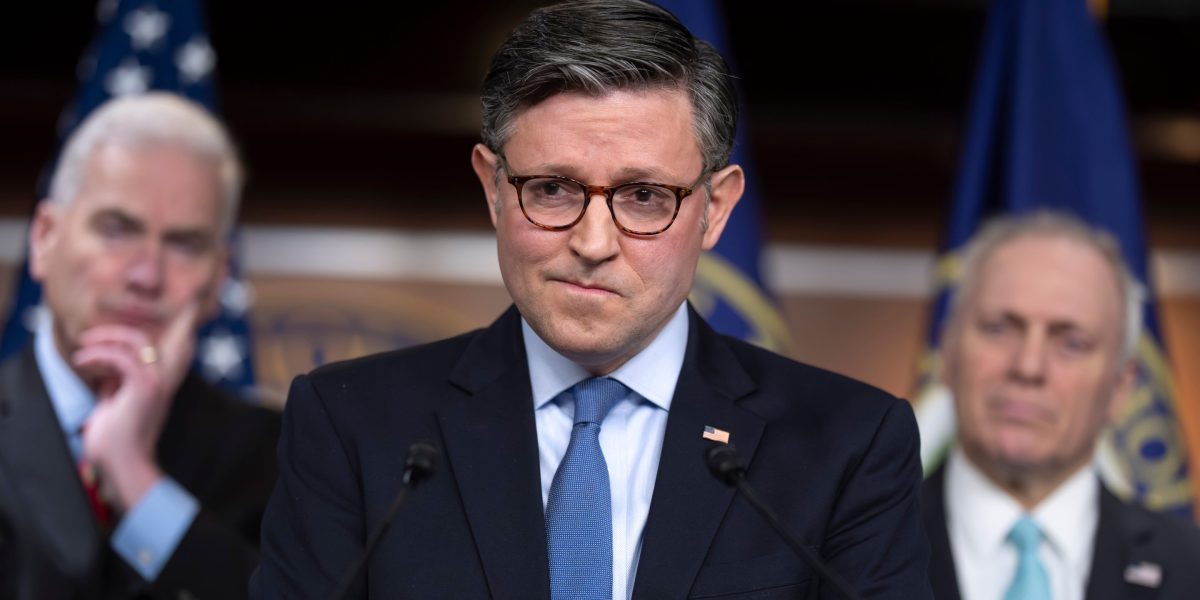
Speaker Mike Johnson had discussed the prospect of allowing more politically vulnerable GOP lawmakers a chance to vote on their amendment that would temporarily extend pandemic-era subsidies for ACA coverage. But after days of private talks, leadership sided with the more conservative wing of the conference, which has assailed the subsidies as propping up a failed ACA marketplace.

“We looked for a way to try to allow for that pressure release valve,” Johnson said Tuesday at the Capitol. “In the end, it was not — an agreement wasn’t made.”

The maneuvering surrounding the health care vote all but guarantees that many Americans will see substantially higher insurance costs in 2026. In the Senate, a bipartisan group was still trying to come up with a compromise to extend the subsidies, which fueled this year’s government shutdown. But senators made clear that any potential legislation would likely wait until January, after the holiday break.

Instead, House Republicans will pursue their 100-plus-page health care package that focuses on long-sought GOP proposals designed to expand insurance coverage options for small businesses and the self-employed. A test vote is expected Wednesday.

The Republicans’ package would clamp down on middlemen called pharmacy benefit managers who work to manage drug costs and process claims for insurance plans. The bill would also expand access to what’s referred to as association health plans, which would allow more small businesses and self-employed individuals to band together and purchase health coverage.

An analysis from the nonpartisan Congressional Budget Office and the Joint Committee on Taxation estimates the package would decrease the number of people with health insurance by an average of 100,000 per year over a 2027-2035 window, while reducing the federal deficit by $35.6 billion.

Failing to address expiring insurance subsidies ‘political malpractice’

Rep. Mike Lawler, R-N.Y., blasted the leadership’s decision to not allow for a vote to temporarily extend the health insurance subsidies, saying it amounted to “political malpractice.”

Lawler, who hails from a competitive district, noted that most people who get their health coverage through the Affordable Care Act live in states that President Donald Trump won and said the changes proposed for a temporary extension were “conservative reforms.” He also criticized Democratic leader Hakeem Jeffries for not pushing Democrats to support a pair of bipartisan extension efforts.

“You have two leaders who are not serious about solving this problem,” Lawler said of Johnson and Jeffries.

Still, the centrist Republicans indicated they would not try to block the Republican leadership’s measure from coming to a vote.

Johnson defended the House GOP’s bill, which includes priorities that Republicans have been working on for several years.

“We have a long list of things that we know will reduce premiums, increase access and quality of care,” Johnson said. “The Democrats have zero ideas, zero concepts and zero legislative plans on anything they’ll propose other than just subsidizing the broken system.”

Democrats said even if the bill passes the House, it will not pass the Senate, where it would need 60 votes and bipartisan support to advance. They said it was not a serious effort to address rising costs.

“Millions will be priced out of their coverage, and those who can still afford it will get less while paying more,” said Rep. Suzan DelBene, chair of the House Democratic campaign arm. “Republicans are ignoring the pain, the pain we’re seeing across the country for everyday Americans. And make no mistake, it is going to cost them the majority.”

GOP bill focuses on insurance options and cost-sharing

During Trump’s first term, his administration sought to expand access to association health plans that don’t have to offer the full menu of benefits required under current law. The option offers lower premiums for small businesses and self-employed people, but the policies are likely to cover fewer benefits. A federal judge who struck down the administration’s effort in 2018 said the plans were were “clearly an end-run” around consumer protections required by the Affordable Care Act, also known as Obamacare.

The House Republican plan would also restore government funding for cost-sharing reductions, or CSRs, a type of financial help that insurers give to low-income ACA enrollees on silver-level plans that reduces their share of costs like deductibles and copays.

From 2014 until 2017, the federal government reimbursed insurance companies for CSRs — but in 2017, the Trump administration stopped making those payments. To make up for the lost funds, insurance companies hiked premiums for silver-level plans — a complicated move that ended up increasing the financial assistance many enrollees get to help pay for premiums.

As a result, health analysts say that while restoring funding for CSRs would likely bring down silver-level premiums, it could also have the unwelcome ripple effect of increasing many people’s net premiums on bronze and gold plans.

The provisions related to pharmacy benefit managers require the middlemen to disclose certain data about their operations to group health plans, with the hope that more transparency would reduce prescription drug costs.

Senators revive talks of action in the new year

Almost two dozen Republicans and Democrats met late Monday to talk about a last-minute fix on the ACA tax credits after the Senate rejected two partisan health care bills last week. They emerged from the meeting discussing ways to end the stalemate, including a possible two-year extension of the subsidies with reforms that would narrow who could receive them. They also discussed adding some version of a GOP proposal to create new health savings accounts that would help people purchase insurance.

Maine Sen. Susan Collins, a Republican who led the bipartisan meeting, said the group would like to announce a proposal this week. But there were still significant unresolved issues, including whether to include stricter language on abortion funding. Disagreements over abortion were one of the main sticking points in earlier talks that derailed a compromise.

Senate Majority Leader John Thune said there’s a “potential pathway” to an agreement in January, but acknowledged, “we’re not going to pass anything by the end of this week.”

—-

Staff writers Mary Clare Jalonick and Ali Swenson contributed to this report.


Source link

Continue Reading

Business

Down Arrow Button Icon

Published

on


The Justice Department released thousands of files Friday about convicted sex offender Jeffrey Epstein, but the incomplete document dump did not break significant ground about the long-running criminal investigations of the financier or his ties to wealthy and powerful individuals.

The files included photographs of famous people who spent time with Epstein in the years before he came under suspicion, including some candid snapshots of Bill Clinton, who flew on Epstein’s jet and invited him to the White House in the years before the financier was accused of wrongdoing. But there was almost no material related to another old Epstein friend, President Donald Trump, aside from a few well-known images, sparing the White House from having to confront fresh questions about a relationship the administration has tried in vain to minimize.

The records, consisting largely of pictures but also including call logs, grand jury testimony, interview transcripts and other documents, arrived amid extraordinary anticipation that they might offer the most detailed look yet at nearly two decades worth of government scrutiny of Epstein’s sexual abuse of young women and underage girls. Yet the release, replete with redactions, seemed unlikely to satisfy the clamor for information given how many records had yet to be released and because some of the materials had already been made public.

Democrats and some Republicans seized on the limited release to accuse the Justice Department of failing to meet a congressionally set deadline to produce the files, while White House officials on social media gleefully promoted a photo of Clinton in a hot tub with a woman with a blacked-out face. The Trump administration touted the release as proof of its commitment to transparency, ignoring that the Justice Department just months ago said no more files would be released. Congress then passed a law mandating it.

In a letter to Congress, Deputy Attorney General Todd Blanche wrote that the Justice Department was continuing to review files in its possession, was withholding some documents under exemptions meant to protect victims and expected additional disclosures by the end of the year.

Trump, who was friends with Epstein for years before the two had a falling-out, tried for months to keep the records sealed.

But bowing to political pressure from fellow Republicans, Trump last month signed a bill giving the Justice Department 30 days to release most of its files and communications related to Epstein, including information about the investigation into his death in a federal jail. The law set a deadline for Friday.

Limited details about Trump

Trump is hardly glimpsed in the files, with the small number of photos of him appearing to have been in the public domain for decades. Those include two in which Trump and Epstein are posing with now-first lady Melania Trump in February 2000 at an event at his Mar-a-Lago resort.

Trump’s connection to Epstein is well-documented, but he has sought to distance himself from his former friend. He has said he cut off ties with Epstein after the financier hired young female employees from Mar-a-Lago and has repeatedly denied knowledge of his crimes.

The FBI and Justice Department abruptly announced in July that they would not be releasing any additional records, a decision that was supported by Trump. But the president reversed course once it became clear that congressional action was inevitable. He insisted the Epstein matter had become a distraction to the Republican agenda and releasing the records was the best way to move on.

The White House, meanwhile, has moved to shift focus away from Trump’s ties to Epstein, with Attorney General Pam Bondi last month saying that she had ordered a federal prosecutor to investigate Epstein’s connections to Trump’s political foes, including Clinton.

Neither Trump nor Clinton has ever been accused of wrongdoing in connection with Epstein, and the mere inclusion of someone’s name in the files from the investigation does not imply otherwise.

Among other prominent Epstein contacts is the former Prince Andrew, who appears in a photograph released Friday wearing a tuxedo and lying on the laps of what appear to be several women who are seated, dressed in formalwear. Pop star Michael Jackson also appears in multiple photos, including one showing him standing next to a smiling Epstein.

New photos of Clinton

Unlike Trump, Clinton is featured prominently in the files, though the records included no explanation of how the photographs of the former president related to any investigation or the context surrounding them.

Some photos showed him on a private plane, including one with a woman, whose face is redacted, seated alongside him with her arm around him. Another shows him in a pool with Epstein’s longtime confidant, British socialite Ghislaine Maxwell, and a person whose face was also redacted. He is also seen in a hot tub with a woman whose face was redacted.

This undated, redacted photo released by the U.S. Department of Justice shows Ghislaine Maxwell and former President Bill Clinton swimming with an unknown person.

U.S. Department of Justice via AP

Senior Trump White House aides took to X to promote the Clinton photos.

White House press secretary Karoline Leavitt wrote “Oh my!” and added a shocked face emoji in response to a photo of Clinton in the hot tub.

“They can release as many grainy 20-plus-year-old photos as they want, but this isn’t about Bill Clinton,” Clinton spokesman Angel Ureña said in a statement.

“There are two types of people here,” he said. “The first group knew nothing and cut Epstein off before his crimes came to light. The second group continued relationships after that. We’re in the first. No amount of stalling by people in the second group will change that.”

The Epstein investigations

After nearly two decades of court action, a voluminous number of Epstein records had already been public before Friday, including flight logs, address books, email correspondence, police reports, grand jury records, courtroom testimony and deposition transcripts.

Besides public curiosity about whether any of Epstein’s associates knew about or participated in the abuse, Epstein’s accusers have also sought answers about why federal authorities shut down their initial investigation into the allegations in 2008.

“Just put out the files,” said Marina Lacerda, who says she survived sexual assault by Epstein. “And stop redacting names that don’t need to be redacted.”

One of the few revelations in the documents was a copy of the earliest known concern about Epstein’s behavior — a report taken by the FBI of a woman in 1996 who believed photos and negatives she had taken of her 12-year-old and 16-year-old sisters for a personal art project had been stolen by Epstein. The documents don’t show what, if anything, the agency did with that complaint.

Police in Palm Beach, Florida, began investigating Epstein in 2005 after the family of a 14-year-old girl reported being molested at his mansion. The FBI joined the investigation. Authorities gathered testimony from multiple underage girls who said they’d been hired to give Epstein sexual massages.

Ultimately, prosecutors gave Epstein a deal that allowed him to avoid federal prosecution. He pleaded guilty to state prostitution charges involving someone under age 18 and was sentenced to 18 months in jail.

Epstein’s accusers spent years in civil litigation trying to get that plea deal set aside. One of those women, Virginia Giuffre, accused Epstein of arranging for her to have sexual encounters, starting at age 17, with other men, including billionaires, famous academics, politicians and Andrew Mountbatten-Windsor, then known as Britain’s Prince Andrew.

Mountbatten-Windsor denied ever having sex with Giuffre, but King Charles III stripped him of his royal titles this year.

Prosecutors never brought charges in connection with Giuffre’s claims, but her account fueled conspiracy theories about supposed government plots to protect the powerful. Giuffre died by suicide in April.

Federal prosecutors in New York brought new sex trafficking charges against Epstein in 2019, but he killed himself in jail after his arrest. Prosecutors then charged Maxwell, his longtime confidant, with recruiting underage girls for Epstein to abuse. She was convicted in 2021 and is serving a 20-year prison sentence.


Source link

Continue Reading

Business

Epstein files: Congressmen say massive blackout doesn’t comply with law and ‘exploring all options’

Published

on


The Justice Department’s extensive redactions to the Jeffrey Epstein files on Friday don’t comply with the law that Congress passed last month mandating their disclosure, according to Rep. Ro Khanna.

The California Democrat and Rep. Thomas Massie, R-Ky., led the effort on the legislation, which required that the DOJ put out its entire trove of documents by today.

But he blasted the document dump and singled out one file from a New York grand jury where all 119 pages were blacked out.

“This despite a federal judge ordering them to release that document,” Khanna said in a video posted on X. “And our law requires them to explain redactions. There’s not a single explanation. That entire document was redacted. We have not seen the draft indictment that implicates other rich and powerful men who were on Epstein’s rape island who either watched the abuse of young girls or participated in the abuse of young girls in the sex trafficking.”

He said Attorney General Pam Bondi has been “obfuscating for months” and called the files on Friday “an incomplete release with too many redactions.”

The Justice Department didn’t immediately respond to a request for comment.

In a separate X post, Massie agreed with Khanna, saying the DOJ “grossly fails to comply with both the spirit and the letter of the law” that President Donald Trump signed last month.

Deputy Attorney General Todd Blanche told Congress that the Justice Department had identified 1,200 victims of Epstein or their relatives and redacted materials that could reveal their identities, according to the New York Times.

Earlier on Friday, Blanche told Fox News that “several hundred thousand” pages would be released on Friday. “And then, over the next couple of weeks, I expect several hundred thousand more,” he added.

“Thomas Massie and are exploring all options,” Khanna warned. “It can be the impeachment of people at Justice, inherent contempt, or referring for prosecution those who are obstructing justice. We will work with the survivors to demand the full release of these files.”

Join us at the Fortune Workplace Innovation Summit May 19–20, 2026, in Atlanta. The next era of workplace innovation is here—and the old playbook is being rewritten. At this exclusive, high-energy event, the world’s most innovative leaders will convene to explore how AI, humanity, and strategy converge to redefine, again, the future of work. Register now.


Source link

Continue Reading

Business

The Epstein files are heavily redacted, including contact info for Trump, celebs, and bankers

Published

on


The highly anticipated Epstein files have so far landed with a thud as page after page of documents have been blacked out, with many nearly totally redacted.

While hundreds of thousands of documents have been released so far on the Justice Department’s site housing the information, there isn’t that much to see.

“Simply releasing a mountain of blacked out pages violates the spirit of transparency and the letter of the law,” Senate Minority Leader Chuck Schumer said in a statement. “For example, all 119 pages of one document were completely blacked out. We need answers as to why.”

That appeared to refer to a document titled “Grand Jury NY.” 

The data dump came late Friday, the deadline that Congress established last month for disclosing the trove of files, though other documents had already been released earlier by the DOJ, Congress and the Epstein estate.

One document listed thousands of names with their contact information redacted, including Donald Trump as well as Ivana and Ivanka Trump.

Numerous celebrities were also in that document, such as Rolling Stones singer Mick Jagger and the late pop idol Michael Jackson, who also appeared in photos with Epstein.

Former Senators John Kerry and George Mitchell were on the list as were Jes Staley, a former JPMorgan and Barclays executive, and Leon Black, a cofounder and former CEO of Apollo Global Management.

Appearing in the files doesn’t necessarily imply any wrongdoing as Epstein mingled in wider social circles and was ofter asked for charitable donations.

But Staley said he had sex with a member of Epstein’s staff, and Black was pushed out of Apollo over his Epstein ties, which Black maintains were for tax- and estate-planning services.

Numerous hotels, clubs and restaurants are listed too, plus locations simply described as “massage.” Banks included the now defunct Colonial Bank as well as Bear Stearns and Chemical Bank, which both eventually became part of JPMorgan.

Other entries fell under country categories like Brazil, France, Italy and Israel. Former Israeli prime ministers Ehud Olmert and Ehud Barak were on the list.


Source link

Continue Reading

Trending

Copyright © Miami Select.