Connect with us

Politics

Voters in Miami, Homestead and Surfside will consider 4 ballot questions each in November

Published

on


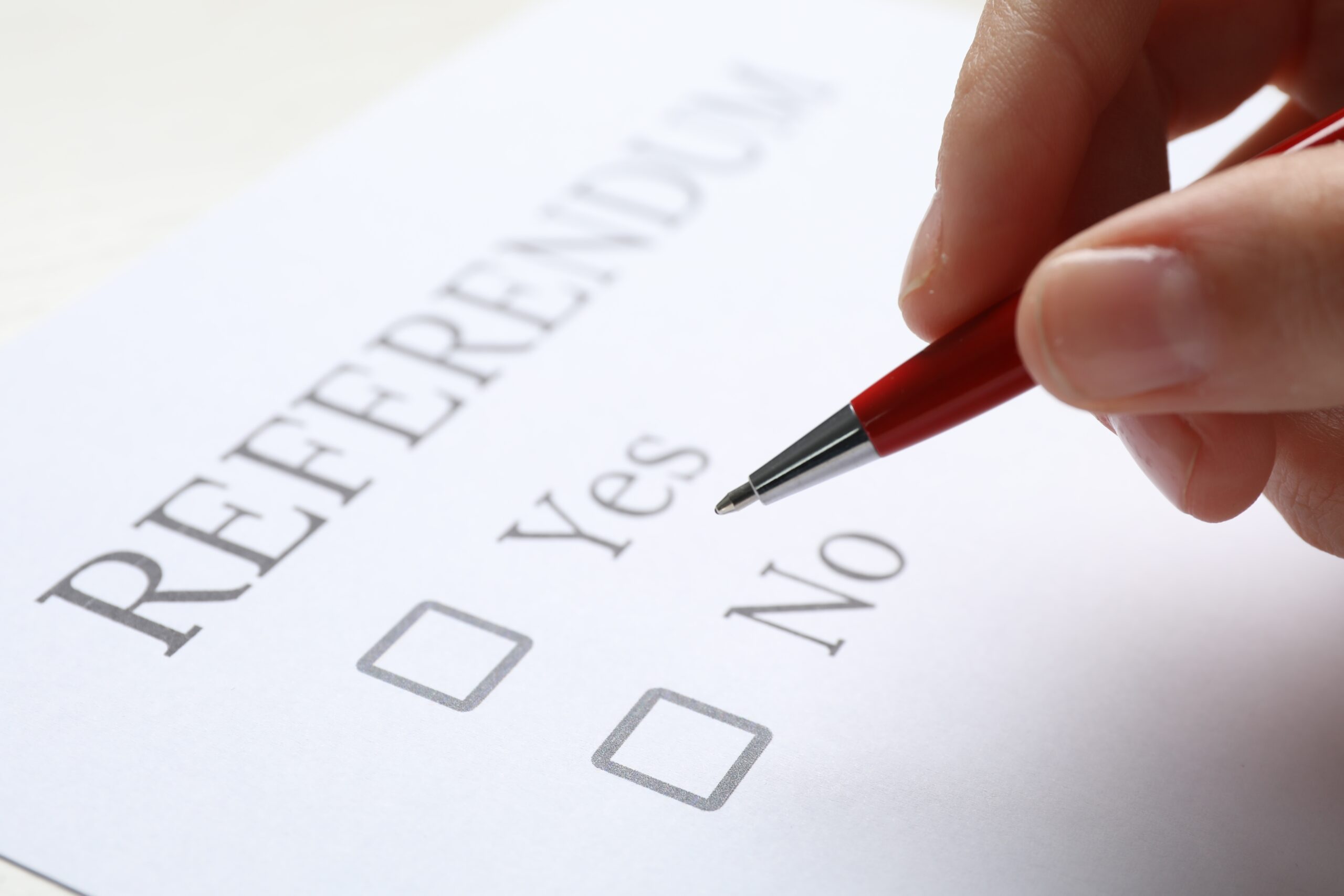
Voters in Miami, Homestead and Surfside will head to the polls Nov. 4 to weigh in on several proposed charter amendments that could substantially change how their governments operate.

Here’s a look at what each municipality is considering, with descriptions detailing what would happen if the ballot measure in question is approved:

Miami

In addition to deciding races for Mayor and Commission seats representing Districts 3 and 5, Miami voters will have a say in four ballot questions aimed largely at shifting power from City Hall to residents.

They include:

— Referendum 1: Would require the City Commission to appoint a Citizen Charter Review Commission within one year after every federal census to review Miami’s charter, hold public hearings and recommend changes for consideration.

— Referendum 2: Would allow the Miami Commission, by a four-fifths vote, to sell or lease non-waterfront city-owned property even if the city receives fewer than three bids, provided fair-market safeguards and voter approval rules for waterfront land remain in place.

— Referendum 3: Would prohibit the City Commission from drawing districts to favor or harm any candidate or incumbent, create a Citizens’ Redistricting Committee to draft maps after each census and establish rules for its appointment, duties and oversight.

— Referendum 4: Would impose lifetime term limits of two elections or appointments for Miami’s Mayor and City Commissioners, county prior service retroactively, and bars them from ever running again for the same office once that limit is reached.

Homestead

Homestead, too, has three offices up for grabs and four questions on the ballot, two addressing the terms of elected office in the city and the rest centered on bonding for local projects.

They include:

— Referendum 1: Would extend the Mayor’s consecutive term limits from eight to 12 years, aligning it with limits already applied to City Council members (12 consecutive years or a combined 12 years in either office).

— Referendum 2: Would change how vacant City Council seats are filled when at least one year remains in a term. Instead of electing whomever receives the most votes in a Special Election, a runoff election would be held between the top two candidates if no one wins a majority.

— Referendum 3: Would authorize the city to issue up to $36.4 million in general obligation bonds, repaid through property taxes, to build and improve city parks, with bonds maturing in no more than 30 years.

— Referendum 4: Allows the city to issue up to $39.6 million in general obligation bonds to fund roadway construction and improvements, also repaid through property taxes and capped at a 30-year maturity.

Surfside

Four more referendums are the only things on this year’s Surfside ballot, including one straw poll, one centered on continuing a storm-resiliency project and two focused on future spending.

They include:

— Referendum 1: Would approve continuing the town’s project to bury overhead electric and communication lines underground at an anticipated cost of $80 million.

— Referendum 2: A nonbinding question asking residents if they support creating a gated community in Surfside. The vote serves only as a gauge of public opinion.

— Referendum 3: Would amend the Town Charter to require a unanimous vote by all Town Commissioners before spending more than $2 million on any single project, purchase or investment, except in emergencies. The $2 million threshold would rise over time with inflation.

— Referendum 4: Would require a public referendum, with at least 60% voter approval, before Surfside can spend an amount equal to or greater than 20% of its prior year’s ad valorem tax revenue on any single project, purchase or investment.


Source link

Continue Reading

Politics

One Hope United ramps up gift drive for as many as 10K kids around Tampa

Published

on


Toy drive for children in the Tampa area runs through Dec. 12.

A tradition is turning to the Tampa area that promises to deliver holiday joy to thousands of children and their families this year.

One Hope United is gearing up with its Holiday Hope Express to sweep through the region. The event run by the nonprofit organization will continue through Dec. 12 and seeks to provide a gift drive that will end up providing holiday tidings to as many as 10,000 children and families. One Hope United is a foster care and adoption services agency for the Tampa Bay area.

The Holiday Hope Express is largely a toy drive for children. But One Hope United officials try to encourage employers in the Tampa Bay area to organize their own drives in their workplace or community and then deliver the gifts that are raised to central donation points for One Hope United.

Local businesses can also make monetary donations. They or their employees can go online to make the funding gifts.

“Every toy makes a difference,” said Damon Cates, President and CEO of One Hope United. “The Holiday Hope Express is a way for our community to come together and brighten the holidays for children who need it most.”

One Hope United provides resource support for businesses wanting to establish their own internal drives they can contribute the nonprofit. The Holiday Hope Express website provides resource support links such as the “Hope Conductor Toolkit” that explains how each company can start their own campaign for a toy drive.

The nonprofit provides support for social media campaigns, gift lists and flyers for advertising among other support material. One Hope United also advises local companies to wrap up their drives by Dec. 5 and then the goods will be delivered to the nonprofit by Dec. 12. They recommend a shopping budget for each child to range from $25 to $50.

The deliveries to One Hope United will take place at 6800 North Dale Mabry Highway, Suite 164, in Tampa. The so-called “Santa’s Helper” will be Kirby Dameron who will coordinate the delivery of the donated toys from 8 a.m. to 5 p.m. Mondays through Thursdays.


Source link

Continue Reading

Politics

U.S. Embassy in Panama heaps praise on that country for recent cocaine bust

Published

on


U.S. Drug Enforcement Administration agents provided info to help in the bust that ended with the arrest of 10 people.

Panamanian Air and Naval Service (SENAN) personnel are getting praise from the U.S. Embassy to the nation for a substantial drug bust.

The U.S. Embassy to the Central American nation issued a statement complimenting the Panamanian government for a huge drug seizure. The SENAN personnel seized more than 13 metric tons of cocaine during an operation that ended with the interdiction on Nov. 9.

Those SENAN operatives intercepted a tug boat in the Archipelago of Las Perlas. U.S. law enforcement agents provided support in the operation by sharing intelligence to the Panamanian government to help them in the interdiction. When it was over, 10 suspects were arrested in the operation. Those individuals came from Colombia, Ecuador, Nicaragua and Venezuela.

“We commend the professionalism, bravery, and dedication of the Panamanian officers who made this operation possible,” said Kevin Marino Cabrera, U.S. Ambassador to Panama.  “Their decisive action delivers a major blow to the criminal networks that profit from narcotrafficking and endanger communities across our hemisphere.  Panama’s leadership and cooperation are essential to ensuring a safer and more secure region.”

U.S. Drug Enforcement Administration (DEA) officials say the operation demonstrates the “seamless” collaboration between Panamanian law enforcement and U.S. agents. They estimate the operation amounts to 10% of the typical annual seizure by the U.S. and Panama in that country.

Embassy officials credited President Donald Trump’s administration for “defeating narcotrafficking networks in the Western Hemisphere.”

They also praised the partnerships such as the one with Panama for ensuring that criminal organizations are broken up.

“The United States remains steadfast in its commitment to supporting Panama’s efforts to strengthen security, uphold the rule of law and dismantle the networks that threaten both nations,” a news release said. “This operation sends a clear and powerful message: the U.S.-Panama partnership is strong, and together, we will continue working to ensure the safety and security of our people.”


Source link

Continue Reading

Politics

St. Petersburg will appraise Trop site after selecting proposal

Published

on


St. Petersburg will reappraise 86 acres of prime real estate, currently home to Tropicana Field, but not before selecting a new redevelopment proposal.

Some City Council members expressed dismay over the timeline on Thursday. The most recent valuation is over two years old, and Mayor Ken Welch announced plans to advance the proposal process in October.

Welch will delay the 30-day submission window’s launch until Jan. 4. However, in a memo sent to the Council on Wednesday, he doubled down on his decision not to reissue a formal request for proposals (RFP) – the genesis for the subsequent debate.

“To be really blunt, I think if we’re going to be serious about this, start counting votes now,” Council member Gina Driscoll said to the administration.

An aerial view of Ark Ellison Horus’ vision for the Historic Gas Plant District. Renderings provided.

“If I’m not comfortable with the process, I’m probably not going to be comfortable with the proposal that’s brought before us to vote on.”

She and multiple colleagues believe the city should have conducted a new appraisal in the time between the Tampa Bay Rays, now under new ownership, exiting a new stadium deal in March, and Welch’s Oct. 21 announcement that he would welcome additional proposals in mid-November.

Officials received an unsolicited $6.8 billion bid Oct. 3 from a group led by ARK Investment Management and Ellison Development. The city is acting pursuant to a state statute that mandates a 30-day window before selling property in a community redevelopment area (CRA).

Council member Lisset Hanewicz said an appraisal typically occurs before making a deal, “not after the fact.” City Development Administrator James Corbett noted that St. Petersburg spent two years negotiating redevelopment agreements with the Rays.

“I’m not going to wait for the appraisal until after we start negotiating a deal,” Corbett added. “It will be before that. I also want to time the appraisal where it’s not too dated.”

Council member Brandi Gabbard said several constituents have expressed concerns over the site’s unknown valuation. Ark Ellison Horus will pay the city “at least” $202 million for 94.5 acres.

The group believes its $2.1 million per-acre offer reflects the project’s “premier location and transformative potential.” The Rays planned to purchase 65 acres for $105 million – $1.6 million per acre – and offered $50 million in community benefits.

Gabbard is among those who want a formal RFP process and additional time. She also reminded her colleagues that they approved her Oct. 16 request for a Committee discussion on hiring the Urban Land Institute (ULI) to conduct an unbiased, professional study on the Gas Plant’s best uses.

Welch wrote that reissuing an RFP is neither necessary nor beneficial since the project’s 23 guiding principles, established in 2022 and “confirmed by subsequent community convenings,” remain unchanged. He also noted that developers previously had 60 days from the time of his announcement to submit proposals, and now have 105.

“I don’t understand this rush for a win right now,” Gabbard said.

The former Black community is home to Tropicana Field and a sea of surface parking lots. Image via Mark Parker.

Council member Mike Harting is “good” with not reissuing an RFP. He also credited Council member Richie Floyd for requesting additional time, and Welch for acquiescing.

Municipalities prioritize the “greater good” over profits, Harting continued, and the generational project will exponentially increase property tax collections. However, those benefits are hard to quantify.

“We’re not going to sell the property for what it’s valued at,” Harting said. “We’re going to sell it for less … And I get that, but I want to be comfortable with the logic … and what that looks like for the city.”

Council member Deborah Figgs-Sanders said she thinks about “that little girl whose church was totally destroyed” when the city displaced thousands of Black residents in the 1980s to build the stadium. She took issue with people who call the process rushed or believe officials should maximize their financial return.

“I can’t stand when people want to make decisions for other people like that – what’s best for other people?” Figgs-Sanders said. “I can’t place value on letting some of the descendants of the Gas Plant area finally see something done.”

She also questioned whether the ULI study would include locals who understand the area’s history and importance. No one understands the property’s worth better than the people who once called the Gas Plant home, Figgs-Sanders added.

Gabbard said the ULI group could include experts from throughout the region – the organization has a Tampa office – the state or beyond. Community partners would work with people who “understand very complex projects.”

Corbett said the city would launch its community benefits process once officials and the selected developer establish a term sheet. Welch wrote that jobs, housing, equitable economic development, resilience, green space and “meaningful recognition” of the Gas Plant community remain atop the priority list.

“The only material change from those principles is that the inclusion of a new stadium for the Tampa Rays, in partnership with Pinellas County, is no longer instrumental in planning the redevelopment,” states his memo. “Our unified work to include the Tampa Bay Rays in the long-term vision of the Historic Gas plant, and their subsequent abdication, have provided more clarity for our city and the property.”

Welch said he would no longer support offering Intown CRA tax-increment financing to help fund the project. “Any reconsideration by the new owners … regarding a future new stadium development would require other funding sources.”

Floyd withdrew his resolution that, if approved Thursday, would have urged Welch to launch a formal RFP and extend the submission deadline. However, he said it would be “harder” to approve a proposal while disagreeing with the process.

Ark Ellison Horus’ proposal would feature an elevated park that reconnects the Historic Gas Plant District and South St. Petersburg neighborhoods. Renderings provided.

___

Mark Parker reports via St. Pete Catalyst; republished with permission.


Source link

Continue Reading

Trending

Copyright © Miami Select.