
Politics
Vote to end government shutdown fails as Democrats hold firm on health care demands

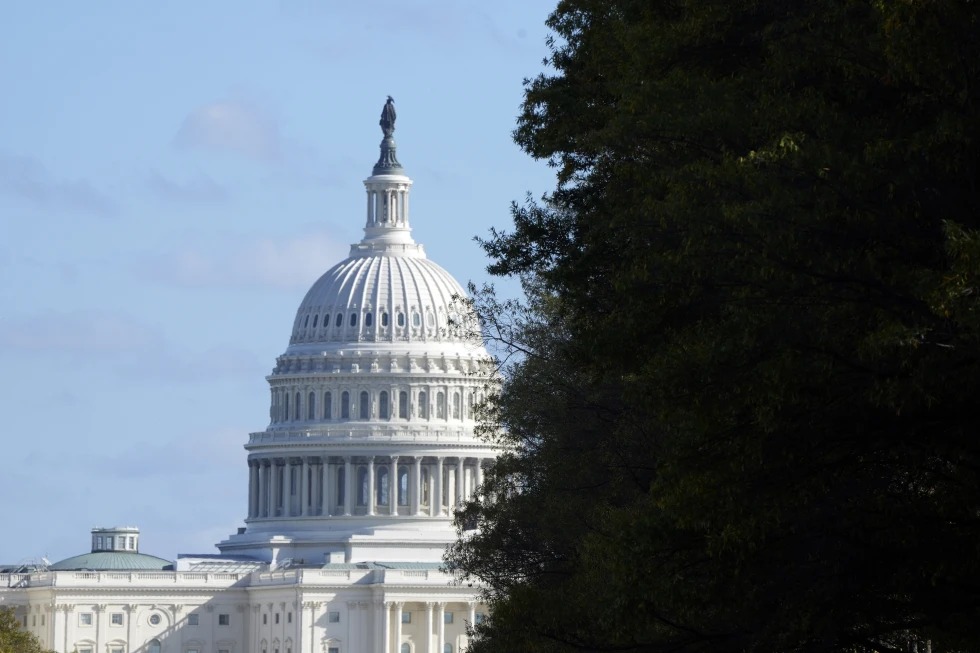
A vote to end the government shutdown hours after it began failed Wednesday, as Democrats in the Senate held firm to the party’s demands to fund health care subsidies that President Donald Trump and Republicans refuse to extend.
The tally showed cracks in the Democrats’ resolve, but the outcome also left no breakthrough. Blame was being cast on all sides on the first day of the shutdown. The White House and Congress failed to strike an agreement to keep programs and services open, throwing the country into a new cycle of uncertainty.
At issue are tax credits that have made health insurance through the Affordable Care Act more affordable for millions of people since the COVID-19 pandemic. The credits are set to expire at the end of the year if Congress doesn’t extend them — which would more than double what subsidized enrollees currently pay for health insurance premiums, according to a KFF analysis.
Democratic Rep. Jared Golden of Maine faulted leftwing groups for causing the government shutdown and said it’s hurting working people in his state.
Golden, a moderate Democrat, said in a statement that “hardball politics driven by the demands far-left groups” led to the shutdown. He said some Republicans have “reasonable concerns about tax credits going to high-income households” and there’s still time to broker a deal.
“There’s room and time to negotiate. But normal policy disagreements are no reason to subject our constituents to the continued harm of this shutdown,” Golden said.
Golden also said he felt the shutdown hands more power Trump.
Republicans supported a short-term measure to fund the government generally at current levels through Nov. 21, but Democrats blocked it, insisting the measure address their concerns on health care. They want to reverse the Medicaid cuts in Trump’s package of tax breaks and spending reductions from the summer and they want to extend tax credits that make health insurance premiums more affordable for millions of people who purchase through the marketplaces established by the Affordable Care Act.
Republicans called the Democratic proposal a nonstarter that would cost taxpayers more than $1 trillion.
Here’s what to know about the shutdown that began Wednesday:

What happens in the shutdown?
Now that a lapse in funding has occurred, the law requires agencies to furlough their “nonexcepted” employees. Excepted employees, who include those who work to protect life and property, stay on the job but do not get paid until after the shutdown ends.
The White House Office of Management and Budget begins the process with instructions to agencies that a lapse in appropriations has occurred and they should initiate orderly shutdown activities. That memo went out Tuesday evening.
The Congressional Budget Office estimates roughly 750,000 federal employees could be furloughed each day of the shutdown, with the total daily cost of their compensation at roughly $400 million.
What government work continues during a shutdown?
A great deal, actually.
FBI investigators, CIA officers, air traffic controllers and agents operating airport checkpoints keep working. So do members of the armed forces.
Those programs that rely on mandatory spending generally continue during a shutdown. Social Security payments still go out. Those relying on Medicare coverage can still see their doctors and health care providers can be reimbursed.
Veteran health care continues during a shutdown. Veterans Affairs medical centers and outpatient clinics will be open, and VA benefits will be processed and delivered. Burials will continue at VA national cemeteries.
Will furloughed federal workers get paid?
Yes. In 2019, Congress passed a bill enshrining into law the requirement that furloughed employees get retroactive pay once operations resume.
While they eventually will be paid, the furloughed workers and those who remain on the job may have to go without one or more of their regular paychecks, depending upon how long the shutdown lasts.
Service members would also receive back pay for missed paychecks once federal funding resumes.
Will I still get mail?
Yes. The U.S. Postal Service is unaffected by a government shutdown. It’s an independent entity funded through the sale of its products and services, not by tax dollars.
What closes during a shutdown?
All administrations get some leeway to choose which services to freeze or maintain in a shutdown.
The first Trump administration worked to blunt the impact of what became the country’s longest partial shutdown in 2018 and 2019. But on Tuesday, Trump threatened the possibility of increasing the pain that comes with a shutdown.
“We can do things during the shutdown that are irreversible, that are bad for them and irreversible by them,” Trump said of Democrats. “Like cutting vast numbers of people out, cutting things that they like, cutting programs that they like.”
Each federal agency develops its own shutdown plan. The plans outline which workers would stay on the job during a shutdown and which would be furloughed.
In a provocative move, Trump’s Budget Office threatened the mass firing of federal workers in a shutdown. An office memo said those programs that didn’t get funding through Trump’s bill this summer would bear the brunt of a shutdown.
Agencies should consider issuing reduction-in-force notices for those programs whose funding expires, that don’t have alternative funding sources and are “not consistent with the President’s priorities,” the memo said.
That would be a much more aggressive step than in previous shutdowns, when furloughed federal workers returned to their jobs once the shutdown was over. A reduction in force would not only lay off employees but eliminate their positions, which would trigger another massive upheaval in a federal workforce that’s already faced major rounds of cuts due to efforts from the Department of Government Efficiency and elsewhere in Trump’s Republican administration.
What agencies are planning
The Department of Health and Human Services will furlough about 41% of its staff out of nearly 80,000 employees, according to a contingency plan posted on its website.
As part of that plan, the Atlanta-based Centers for Disease Control and Prevention would continue to monitor disease outbreaks, while activities that will stop include research into health risks and ways to prevent illness.
Meanwhile, research and patient care at the National Institutes of Health would be upended. Patients currently enrolled in studies at the research-only hospital nicknamed the House of Hope will continue to receive care. Additional sick patients hoping for access to experimental therapies can’t enroll except in special circumstances, and no new studies will begin.
At the Food and Drug Administration, its “ability to protect and promote public health and safety would be significantly impacted, with many activities delayed or paused.” For example, the agency would not accept new drug applications or medical device submissions that require payment of a user fee.
The National Park Service plans to furlough about two-thirds of its employees while keeping parks largely open to visitors during the federal shutdown, according to a contingency plan released Tuesday night. The plan says “park roads, lookouts, trails, and open-air memorials will generally remain accessible to visitors.”
The plan also allows parks to enter into agreements with states, tribes or local governments willing to make donations to keep national park sites open. The park service has more than 400 sites, including large national parks such as Yellowstone and Grand Canyon, national battlefields and historic sites.
Sites could close if damage is being done to park resources or garbage is building up.
Many national parks including Yellowstone and Yosemite stayed open during a 35-day shutdown during Trump’s first term. Limited staffing led to vandalism, gates being pried open and other problems including an off-roader mowing down one of the namesake trees at Joshua Tree National Park in California.
For the Smithsonian Institution, museums, research centers and the National Zoo will remain open through at least Monday.
Nutritional assistance
The Supplemental Nutrition Assistance Program, also known as food stamps, will continue at least for the month of October.
The Department of Agriculture’s contingency plan says a nutrition program for women, infants and children, also known as WIC, has the ability to reallocate unused grant award funds from the previous budget year. The National WIC Association, an advocacy group, says it anticipates that the program has enough funding on hand to remain open for the short term, likely one week to two weeks.
Impact on the economy
Phillip Swagel, director of the Congressional Budget Office, said a short shutdown doesn’t have a huge impact on the economy, especially since federal workers, by law, are paid retroactively. But “if a shutdown continues, then that can give rise to uncertainties about what is the role of government in our society, and what’s the financial impact on all the programs that the government funds.”
“The impact is not immediate, but over time, there is a negative impact of a shutdown on the economy,” he added.
Markets haven’t reacted strongly to past shutdowns, according to Goldman Sachs Research. At the close of the three prolonged shutdowns since the early 1990s, equity markets finished flat or up even after dipping initially.
___
Republished with permission of The Associated Press.

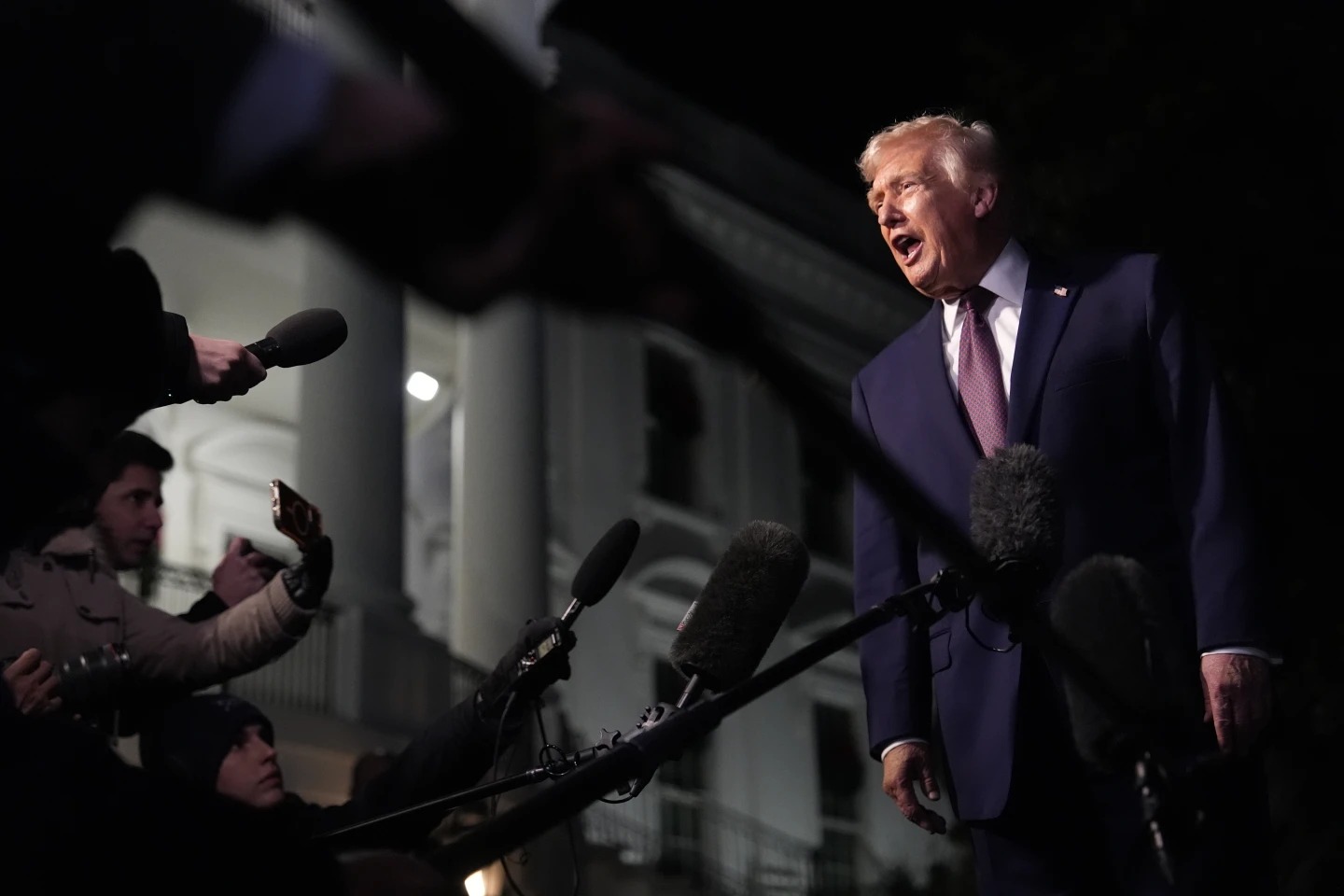
Exactly one year ago, Donald Trump was sworn in for his second term while promising the American public that help was on the way, particularly regarding affordability.
The issue had already been creating major challenges for lower- and middle-income earners across the nation. One year in, Trump continues to claim the nation is enjoying an “economic boom.” But the Democratic National Committee (DNC) wholly disagrees, especially for Floridians.
“The numbers don’t lie: Trump’s first year back in office has been a complete disaster for Florida families. Trump broke his promise to lower costs on Day One and instead has made life far more expensive for Florida families,” said Tim Hogan, the DNC’s senior advisor for messaging, mobilization and strategy.
“Because of Trump’s Big Ugly Bill and failed economic policies, unemployment in Florida is up, families are paying $1,060 more a year, and 1,500,000 Floridians will be kicked off their health care after Trump let premiums skyrocket. While Donald Trump may think affordability is a hoax, Florida families know better, which is why they are putting their trust in Democrats who will keep fighting to lower costs and protect health care.”
A DNC study last week found Florida is one of 26 states where unemployment has risen since Trump took office, at a 0.7-percentage-point increase. The $1,060 figure is the approximate amount Florida households are losing through higher costs related to Trump’s tariffs and his “One Big Beautiful Bill” package, which the DNC and other Democratic groups have taken to calling the “Big Ugly Bill.”
The same study estimated that expiring premium tax credits under the Affordable Care Act would lead to 1.5 million Floridians losing health coverage, one of the highest numbers in the nation behind only California.
But the DNC’s critique does not stop there. Democrats point to a Joint Economic Committee Minority report this month finding that families paid $310 more for groceries during Trump’s first year in office than they did in 2024.
The DNC’s own study found that working American families have lost $585 to inflation and that nearly 4.5 million Floridians who rely on the Affordable Care Act’s marketplace for health coverage are seeing premiums skyrocket, which the DNC attributes to Trump’s refusal to extend tax credits. It’s worth noting that while Trump opposed extending the credits, Congress declined to pass an extension.
Additionally, cuts under the One Big Beautiful Bill to the Supplemental Nutrition Assistance Program, colloquially known as food stamps, will mean more than 1.6 million Floridians lose some or all of their food benefits, according to the DNC analysis. The Harvard Kennedy School found that the legislation is cutting about $186 billion from the program over 10 years, a 20% cut that is the largest in the program’s history.
And what the DNC describes as failures seem to be also resonating with the American public, with new polling on Trump’s first year in office showing twice as many Americans say Trump is focused on the wrong priorities as the right ones. The AP-NORC poll also shows 60% of U.S. adults think Trump has done more to hurt than help the cost of living in his second term.

Meanwhile, the poll finds only 4 in 10 approve of Trump’s job performance. While Trump is far underwater in his approval rating, it has improved slightly since December, when his disapproval was at 61%, compared to 59% now. Even at his highest approval since March, Trump was still underwater, with 53% disapproving of his job performance.
Politics
New statewide insurance trust enters 2026 with sustained growth and millions more in taxpayer savings

The Florida Educator Health Trust (FLEHT) enters 2026 less than a year old, but already with significant progress under its belt.
Established to help Florida School Districts save on employee health plans without having to pass along benefit reductions, the program opened last June with just three counties on board, representing 1,671 public school employees in DeSoto, Hardee and Hendry counties.
By the end of December, the nonprofit health insurance program had eight counties enrolled, with the addition of Brevard, Charlotte, Okeechobee, Highlands and Polk counties, bringing its total public school employee representation to nearly 22,000 people.
As of mid-January, more School Boards have voted to join the program at various points throughout 2026, which will bring the total counties enrolled to 15.
“In an era of rising health insurance costs for employees, we set out to provide much-needed services to School Districts without compromising benefits to educators, and it is working,” said Ted Roush, a former Superintendent of Schools and FLEHT Executive Director.
“In only 6 months, we have shown demonstrable savings to the districts, and consequently to taxpayers, realizing savings in the millions of dollars. Our growth — going from three to 15 counties in our first year of full operation — will allow us to continue achieving significant economies of scale, saving taxpayers even more money while maintaining a high level of health insurance for district employees.”
“By harnessing the power of the group district membership, FLEHT is able to perform for the whole what is not possible individually in the insurance marketplace,” Roush added.
The FLEHT realizes savings for School Districts by bringing Districts together to deliver efficient health programs for employees.
Formerly known as the FSHIP program, it was established in 2009 by the Florida School Board Insurance Trust. The program transitioned to FLEHT under the Florida Association of District School Superintendents last year. The change was meant to align the needs of Florida educators.
The FLEHT under its new structure is overseen by an executive committee composed of Superintendents, with all member Districts represented with voting trustees.

Hernando County is expected to be the next School Board to enter into a participation agreement with FLEHT. Program officials estimate they will have as many as 20 School Districts on board by Spring Break season. The group also estimates it has saved taxpayers more than $12 million.
The program is responding to rising health care premiums across the U.S. While cost of living is already creating a challenge, at an estimated 17% increase, health care premiums have increased by 45%, according to the National Council on Teacher Quality.
In order to participate in FLEHT, School Boards must first adopt a participation agreement. The District must already be or become self-insured. From there, the District establishes a transition plan into FLEHT and then formally enters the program. Once a District is a member, its Superintendent becomes a member/trustee of the program.
The program estimates savings of 7%-12% when fully transitioning from a fully-insured health insurance plan to a self-insured FLEHT participant. Within one to three years, the program claims members will enjoy savings of up to 13%.


Gaurav Gupta launches first menswear flagship at DLF Emporio, Delhi

Red Hills Strategies announces promotions, additions to ‘Rockstar Roster’

Leaders at Davos are obsessing over how to use AI at scale
-

 Politics8 years ago
Congress rolls out ‘Better Deal,’ new economic agenda
-
Entertainment9 years ago
New Season 8 Walking Dead trailer flashes forward in time
-
Politics9 years ago
Poll: Virginia governor’s race in dead heat
-
Politics8 years ago
Illinois’ financial crisis could bring the state to a halt
-
Entertainment8 years ago
The final 6 ‘Game of Thrones’ episodes might feel like a full season
-
Entertainment9 years ago
Meet Superman’s grandfather in new trailer for Krypton
-
Business9 years ago
6 Stunning new co-working spaces around the globe
-
Tech8 years ago
Hulu hires Google marketing veteran Kelly Campbell as CMO