Connect with us

Business

Video games can teach designers deeper lessons than ‘high score streaks’ and gamification

Published

on


“Gamification” is one of software design’s hottest buzzwords. The idea is to leverage the mechanics of video games–points, high scores, win streaks and leaderboards–to keep users engaged over a longer period of time.

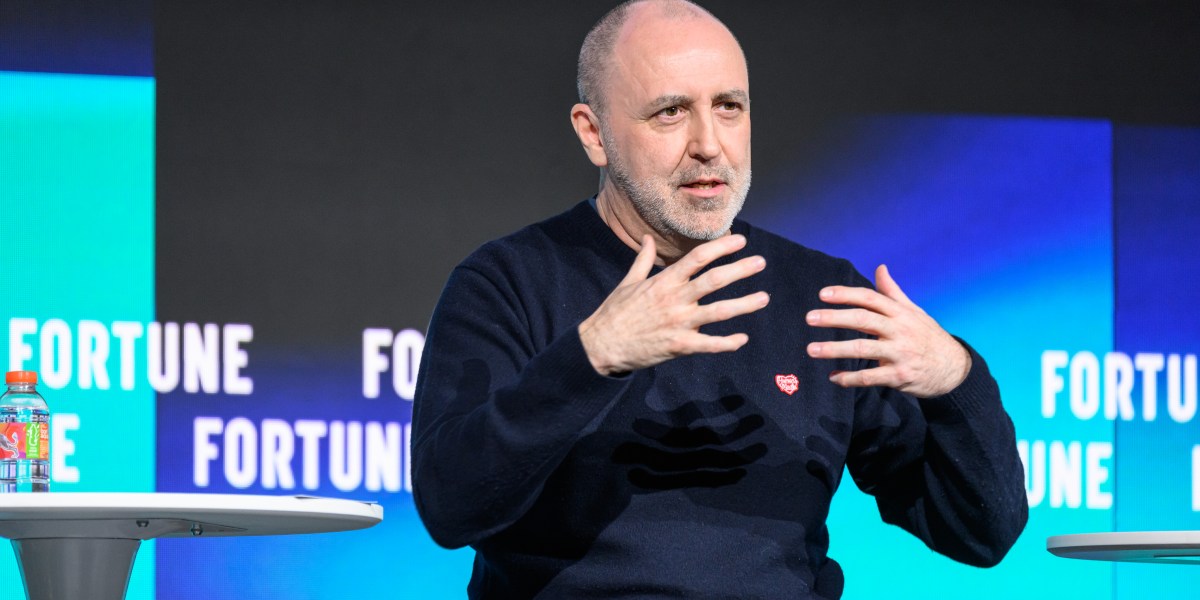
But Lee Schuneman, chief product officer at edtech firm Efekta Education Group and a former game designer, thinks that’s a simplistic way to think about how the video game industry can help other industries.

“Gamification tends to manifest itself as high score streaks,” Schuneman said Tuesday at Fortune’s Brainstorm Design conference in Macau. “All of these things are meaningful for certain social media products, but at the end of the day, if you’re there to learn, you have to put in the time and effort.”

Before moving to Efekta, Schuneman spent years working for UK video game studio Rare, developing games like 1997’s Diddy Kong Racing and 2002’s Star Fox Adventure.

Today, even as he cautions organizations about embracing simplistic form of gamification, he also makes the case that game design holds important lessons for education.

“[The key is] to keep you in the learning experience—the same as keeping you in a gaming experience—and find ways to keep you motivated as a student,” he said.

Schuneman said he’s now exploring how to integrate agentic AI into Efekta’s education service and “blending it with different gaming elements” to keep students engaged. A “huge shortage” of English-language and STEM teachers in the so-called Global South means there’s a huge need for AI tutors, he said.

Efekta has rolled out its AI learning assistant to 4 million students across Latin America.

‘The future of play’

Other panelists shared how the gaming industry was exploring the use of AI.

AI can “spark imagination about the future of play,” said Haiyan Zhang, the general manager and partner of gaming AI at Xbox. “Creators across the world [need] to think about what new things that they can do with gaming through the use of AI, and I think that will really help us drive this new capability.”

Zhang cited a hypothetical example: game preservation.

Researchers found that to introduce arcade classics like Pac-Man, Dig Dug or Q*bert to new audiences, designers need to take the essence of each game and create new experiences.

“There is now capability for AI to learn the back catalog of games, to allow new generations to experience these games in new ways,” Zhang said.

Beta Liu, an AI lead from NetEase Games, shared how the Chinese company was using the new technology in one of its flagship products: Sword of Justice, an MMORPG (massively multiplayer online role-playing game) centering on wuxia, a genre of Chinese fiction about martial artists in ancient China.

What sets the game apart is its AI engine, which spawns countless non-player characters (NPCs) with unique storylines and characteristics. The NPCs don’t just dole out quests, but remember players’ decisions and act accordingly after.

Since its launch in China in 2023, the game—set in the late Northern Song Dynasty and powered by DeepSeek’s technology—has garnered millions of players. On Nov. 7, NetEase launched Sword of Justice in global markets.

“AI is not only a tech buzzword, but also [powers] their [players’] companion and their creation tools in our game,” explained Liu. For example, he noted, players can animate their characters to follow popular social media trends, like dances or China’s famed micro-dramas.

Ultimately, game designers hope that AI will help “elevate the player experience,” said Zhang of Xbox.

Two months ago, Xbox introduced an AI co-pilot on mobile and PC. Players can boot it up while they game, and ask it questions about how to win a boss battle or what active missions there are.

“That might seem like a super simple idea, but I think it really brings gaming to life, and [encapsulates] what gaming is about,” she added. “We want to make gaming even more fun, [and] even more exciting.”


Source link

Continue Reading

Business

Mark Zuckerberg renamed Facebook for the metaverse. 4 years and $70B in losses later, he’s moving on

Published

on


In 2021, Mark Zuckerberg recast Facebook as Meta and declared the metaverse — a digital realm where people would work, socialize, and spend much of their lives — the company’s next great frontier. He framed it as the “successor to the mobile internet” and said Meta would be “metaverse-first.”

The hype wasn’t all him. Grayscale, the investment firm specializing in crypto, called the Metaverse a “trillion-dollar revenue opportunity.” Barbados even opened up an embassy in Decentraland, one of the worlds in the metaverse. 

Five years later, that bet has become one of the most expensive misadventures in tech. Meta’s Reality Labs division has racked up more than $70 billion in losses since 2021, according to Bloomberg, burning through cash on blocky virtual environments, glitchy avatars, expensive headsets, and a user base of approximately 38 people as of 2022.

For many people, the problem is that the value proposition is unclear; the metaverse simply doesn’t yet deliver a must-have reason to ditch their phone or laptop. Despite years of investment, VR remains burdened by serious structural limitations, and for most users there’s simply not enough compelling content beyond niche gaming.

A 30% budget cut 

Zuckerberg is now preparing to slash Reality Labs’ budget by as much as 30%, Bloomberg said. The cuts—which could translate to $4 billion to $6 billion in reduced spend—would hit everything from the Horizon Worlds virtual platform to the Quest hardware unit. Layoffs could come as early as January, though final decisions haven’t been made, according to Bloomberg. 

The move follows a strategy meeting last month at Zuckerberg’s Hawaii compound, where he reviewed Meta’s 2026 budget and asked executives to find 10% cuts across the board, the report said. Reality Labs was told to go deeper. Competition in the broader VR market simply never took off the way Meta expected, one person said. The result: a division long viewed as a money sink is finally being reined in.

Wall Street cheered. Meta’s stock jumped more than 4% Thursday on the news, adding roughly $69 billion in market value.

“Smart move, just late,” Craig Huber of Huber Research told Reuters. Investors have been complaining for years that the metaverse effort was an expensive distraction, one that drained resources without producing meaningful revenue.

Metaverse out, AI in

Meta didn’t immediately respond to Fortune’s request for comment, but it insists it isn’t killing the metaverse outright. A spokesperson told the South China Morning Post that the company is “shifting some investment from Metaverse toward AI glasses and wearables,” point­ing to momentum behind its Ray-Ban smart glasses, which Zuckerberg says have tripled in sales over the past year.

But there’s no avoiding the reality: AI is the new obsession, and the new money pit.

Meta expects to spend around $72 billion on AI this year, nearly matching everything it has lost on the metaverse since 2021. That includes massive outlays for data centers, model development, and new hardware. Investors are much more excited about AI burn than metaverse burn, but even they want clarity on how much Meta will ultimately be spending — and for how long.

Across tech, companies are evaluating anything that isn’t directly tied to AI. Apple is revamping its leadership structure, partially around AI concerns. Microsoft is rethinking the “economics of AI.” Amazon, Google, and Microsoft are pouring billions into cloud infrastructure to keep up with demand. Signs point to money-losing initiatives without a clear AI angle being on the chopping block, with Meta as a dramatic example.

On the company’s most recent earnings call, executives didn’t use the word “metaverse” once.


Source link

Continue Reading

Business

Robert F. Kennedy Jr. turns to AI to make America healthy again

Published

on


HHS billed the plan as a “first step” focused largely on making its work more efficient and coordinating AI adoption across divisions. But the 20-page document also teased some grander plans to promote AI innovation, including in the analysis of patient health data and in drug development.

“For too long, our Department has been bogged down by bureaucracy and busy-work,” Deputy HHS Secretary Jim O’Neill wrote in an introduction to the strategy. “It is time to tear down these barriers to progress and unite in our use of technology to Make America Healthy Again.”

The new strategy signals how leaders across the Trump administration have embraced AI innovation, encouraging employees across the federal workforce to use chatbots and AI assistants for their daily tasks. As generative AI technology made significant leaps under President Joe Biden’s administration, he issued an executive order to establish guardrails for their use. But when President Donald Trump came into office, he repealed that order and his administration has sought to remove barriers to the use of AI across the federal government.

Experts said the administration’s willingness to modernize government operations presents both opportunities and risks. Some said that AI innovation within HHS demanded rigorous standards because it was dealing with sensitive data and questioned whether those would be met under the leadership of Health Secretary Robert F. Kennedy Jr. Some in Kennedy’s own “Make America Health Again” movement have also voiced concerns about tech companies having access to people’s personal information.

Strategy encourages AI use across the department

HHS’s new plan calls for embracing a “try-first” culture to help staff become more productive and capable through the use of AI. Earlier this year, HHS made the popular AI model ChatGPT available to every employee in the department.

The document identifies five key pillars for its AI strategy moving forward, including creating a governance structure that manages risk, designing a suite of AI resources for use across the department, empowering employees to use AI tools, funding programs to set standards for the use of AI in research and development and incorporating AI in public health and patient care.

It says HHS divisions are already working on promoting the use of AI “to deliver personalized, context-aware health guidance to patients by securely accessing and interpreting their medical records in real time.” Some in Kennedy’s Make America Healthy Again movement have expressed concerns about the use of AI tools to analyze health data and say they aren’t comfortable with the U.S. health department working with big tech companies to access people’s personal information.

HHS previously faced criticism for pushing legal boundaries in its sharing of sensitive data when it handed over Medicaid recipients’ personal health data to Immigration and Customs Enforcement officials.

Experts question how the department will ensure sensitive medical data is protected

Oren Etzioni, an artificial intelligence expert who founded a nonprofit to fight political deepfakes, said HHS’s enthusiasm for using AI in health care was worth celebrating but warned that speed shouldn’t come at the expense of safety.

“The HHS strategy lays out ambitious goals — centralized data infrastructure, rapid deployment of AI tools, and an AI-enabled workforce — but ambition brings risk when dealing with the most sensitive data Americans have: their health information,” he said.

Etzioni said the strategy’s call for “gold standard science,” risk assessments and transparency in AI development appear to be positive signs. But he said he doubted whether HHS could meet those standards under the leadership of Kennedy, who he said has often flouted rigor and scientific principles.

Darrell West, senior fellow in the Brooking Institution’s Center for Technology Innovation, noted the document promises to strengthen risk management but doesn’t include detailed information about how that will be done.

“There are a lot of unanswered questions about how sensitive medical information will be handled and the way data will be shared,” he said. “There are clear safeguards in place for individual records, but not as many protections for aggregated information being analyzed by AI tools. I would like to understand how officials plan to balance the use of medical information to improve operations with privacy protections that safeguard people’s personal information.”

Still, West, said, if done carefully, “this could become a transformative example of a modernized agency that performs at a much higher level than before.”

The strategy says HHS had 271 active or planned AI implementations in the 2024 financial year, a number it projects will increase by 70% in 2025.


Source link

Continue Reading

Business

Construction workers are earning up to 30% more in the data center boom

Published

on


Big Tech’s AI arms race is fueling a massive investment surge in data centers with construction worker labor valued at a premium. 

Despite some concerns of an AI bubble, data center hyperscalers like Google, Amazon, and Meta continue to invest heavily into AI infrastructure. In effect, construction workers’ salaries are being inflated to satisfy a seemingly insatiable AI demand, experts tell Fortune.

In 2026 alone, upwards of $100 billion could be invested by tech companies into the data center buildout in the U.S., Raul Martynek, the CEO of DataBank, a company that contracts with tech giants to construct data centers, told Fortune.

In November, Bank of Americaestimated global hyperscale spending is rising 67% in 2025 and another 31% in 2026, totaling a massive $611 billion investment for the AI buildout in just two years.

Given the high demand, construction workers are experiencing a pay bump for data center projects.

Construction projects generally operate on tight margins, with clients being very cost-conscious, Fraser Patterson, CEO of Skillit, an AI-powered hiring platform for construction workers, told Fortune.

But some of the top 50 contractors by size in the country have seen their revenue double in a 12-month period based on data center construction, which is allowing them to pay their workers more, according to Patterson.

“Because of the huge demand and the nature of this construction work, which is fueling the arms race of AI… the budgets are not as tight,” he said. “I would say they’re a little more frothy.”

On Skillit, the average salary for construction projects that aren’t building data centers is $62,000, or $29.80 an hour, Patterson said. The workers that use the platform comprise 40 different trades and have a wide range of experience from heavy equipment operators to electricians, with eight years as the average years of experience.

But when it comes to data centers, the same workers make an average salary of $81,800 or $39.33 per hour, Patterson said, increasing salaries by just under 32% on average.

Some construction workers are even hitting the six-figure mark after their salaries rose for data center projects, according to The Wall Street Journal. And the data center boom doesn’t show any signs it’s slowing down anytime soon.

Tech companies like Google, Amazon, and Microsoft operate 522 data centers and are developing 411 more, according to The Wall Street Journal, citing data from Synergy Research Group. 

Patterson said construction workers are being paid more to work on building data centers in part due to condensed project timelines, which require complex coordination or machinery and skilled labor.

Projects that would usually take a couple of years to finish are being completed—in some instances—as quickly as six months, he said.

It is unclear how long the data center boom might last, but Patterson said it has in part convinced a growing number of Gen Z workers and recent college grads to choose construction trades as their career path.

“AI is creating a lot of job anxiety around knowledge workers,” Patterson said. “Construction work is, by definition, very hard to automate.”

“I think you’re starting to see a change in the labor market,” he added.


Source link

Continue Reading

Trending

Copyright © Miami Select.