
Business
Venture Global didn’t disrupt the energy sector by making friends. VG is in its ‘slander’ era with aims to dominate the industry
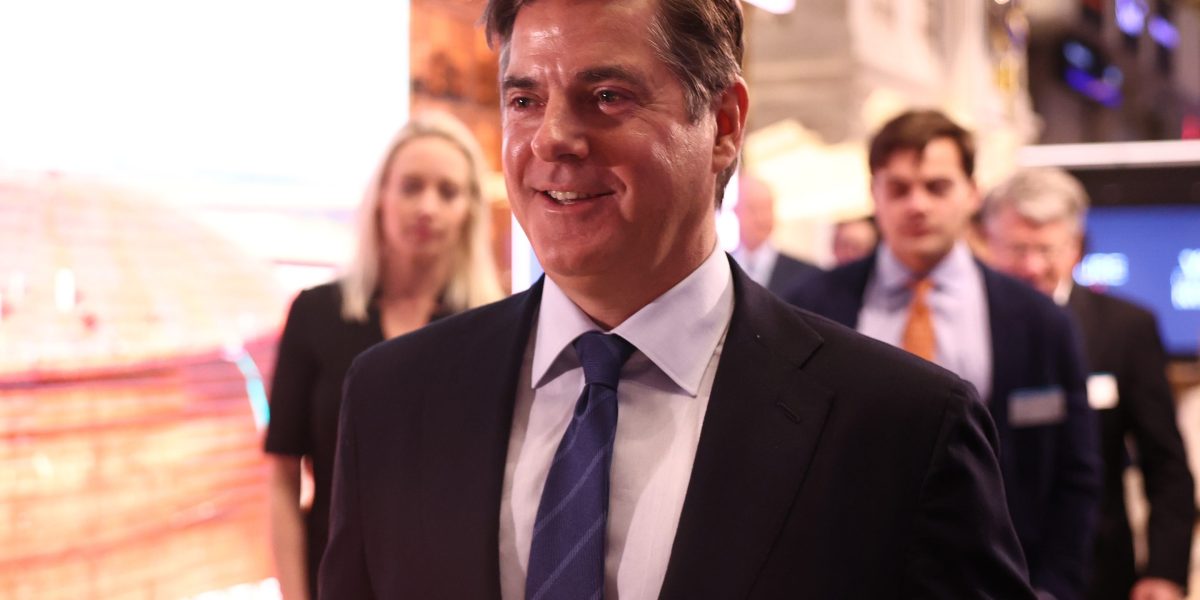
By the beginning of this year, the world’s leading gas exporter, the United States, grew the capacity to ship nearly 100 million metric tons of liquefied natural gas per year—incredibly rapid growth for a U.S. industry that only started exporting a decade ago.
By 2030, a little-known startup, Venture Global, is projected to exceed that volume all by itself. It only began shipping three years ago. The oil and gas outsiders at Venture Global are doing so by upending project design norms, upsetting the Big Oil hierarchy, and dominating the nascent gas export industry.
The business of exporting natural gas—it needs to be liquefied to be shipped overseas in tankers—has taken off thanks to the nation’s ongoing shale gas boom, the world’s growing power needs, and the desire to rely less on Russian gas. Liquefied natural gas (LNG) is the biggest sector of U.S. oil and gas growth, responding to more gas demand than even the burgeoning AI data center construction surge. Just from 2024 to 2028, North America’s LNG export capacity should more than double, according to the U.S. Department of Energy.
The pace of Venture Global’s growth is staggering. Its speed has shocked virtually every industry analyst. It has no plans to slow down through the early 2030s. Even cofounder and CEO Mike Sabel is surprised by what he has built: The company has exceeded his expectations on timelines and production capacity. Not bad for a company founded by leaders with only ancillary energy experience.
“The markets for years convinced themselves that we would fail, and they didn’t need to react to us, and that was helpful to us,” Sabel told Fortune, highlighting Venture Global’s Arlington, Virginia headquarters far away from the energy epicenter in Houston. “We were out of sight and out of mind.”
Now, Venture Global is on pace to surpass U.S. LNG export pioneer and leader Cheniere Energy in capacity before the end of the decade, Sabel and analysts said.
Gleefully embracing its “disruptor” status, Venture Global has grown despite upsetting the industry. Big Oil giant Shell accused Venture Global of deceit—not disruption—in a contract dispute. And, in an overambitious initial public offering early this year, the company sought a market valuation approaching $110 billion—double that of Cheniere—while riding the pro-fossil fuel, Trump inauguration wave—only for its market cap to plunge to a low of $17 billion in early April.
Still, Venture Global won its arbitration fight against Shell in August. Shell, BP, and others had accused Venture Global of unfairly profiting on cargo sales before fulfilling their long-term contracts—and the stock has more than doubled since its low, bringing it to a market cap over $36 billion.
“We’re following the trajectory of the disruptors in lots of industries. First, you’re ignored. Then you get ridiculed by the incumbents and those that criticize people with new ideas,” Sabel said. “Then, as you start to impact the incumbents, they slander you, which is the phase we’re in now. Eventually they figure out they’re losing, and they try to figure out how to compete. The commercial strategy of a lot of competitors in the market is to say mean things about us, hoping that slows us down, which it hasn’t.”
Venture Global’s main differentiator is building smaller, modular LNG facilities—called liquefaction “trains”—at its massive, U.S. Gulf Coast plants at Calcasieu Pass and Plaquemines in southwestern and southeastern Louisiana, respectively. Whereas a rival might build four huge trains, VG’s new Plaquemines campus will soon count 36 modular trains when it’s completed.
These cost-efficient facilities can come online more quickly, one at a time, while construction goes on, turning on revenue streams faster, Sabel said. “This has largely been about the realization that we developed a new way to do this, and that it changes the competitive landscape.”
Energy analyst Jack Weixel, of East Daley Analytics, said Venture Global is demonstrating a “remarkable turnaround” from its Calcasieu Pass startup and arbitration issues, as well as from President Biden’s temporary LNG permitting moratorium last year.
“They’re very much looking at this like an assembly line. Just the sheer number of facilities coming online is incredible,” Weixel said. “They were pretty bold right out of the gate. They had some stumbles, but they persevered. They’re just out there hustling.”
From Sri Lanka to Haiti to Louisiana
The hustle dates back over 15 years ago to Sabel and his cofounding partner, Bob Pender, considering building natural gas facilities throughout the world from Sri Lanka to Haiti before homing in on exporting from the U.S.
Sabel, an investment banker and entrepreneur, says he was lunching at a Washington, D.C., restaurant when a Sri Lankan waiter he’d befriended pushed the idea of developing a coal plant after the end of his native country’s civil war.
Sabel was intrigued and, through a lawyer friend, he met Bob Pender, then a partner at Hogan Lovells, who brought expertise in project financing to the table.
“[My wife] was happy to let me go over to Sri Lanka in the middle of a civil war,” Sabel said with a laugh. Sabel made the trek and quickly realized the greater need in Sri Lanka and worldwide was for regasification facilities that receive the LNG and covert it back into gas for power generation.
Following the 2010 Haiti earthquake, Pender served as legal consultant to the Interim Haiti Recovery Commission. Sabel and Pender saw an opportunity for Haiti to reduce its dependence on pricy, heavy fuel oil for power by building smaller-scale gas facilities.
“While we were looking at smaller-scale loads potentially going to Haiti, it got us thinking about smaller-scale sources of liquefaction, which led us to look at smaller-scale development projects in the U.S.,” Sabel said.
Thus Venture Global was born via the idea of going big by going smaller. Pender remains executive co-chairman with Sabel today.
When Venture Global submitted its federal permitting applications for its Calcasieu Pass project in 2015, the industry was largely dismissive of the unknown outsider whose project, they assumed, had little chance of ever becoming a reality.
“We compete in a commodity market. Everyone produces the same product, so it’s really about cost and speed of production,” Sabel said. “Think of building a commercial office tower, but you figure out how you can start leasing the floors from the bottom up as you go. By the time you get to the top floor, you’ve earned a substantial amount of revenue that defrays the cost of construction.”
Development and contracting took time—offering cheaper, long-term deals to foreign buyers—but the first LNG came online from Calcasieu Pass in early 2022, just as Russia invaded Ukraine, sending global gas prices skyrocketing.
Venture Global benefited not only from the timing, but also because it takes years to develop these massive projects. When competitors finally saw that Venture Global was legit, Sabel said, the company had three projects underway in Calcasieu Pass, Plaquemines—which is mostly online today—and CP2. The $15 billion, first phase of CP2 just began construction near to Calcasieu Pass and is slated to start producing LNG in 2027.
“By the time they (rivals) realize—wait a minute—we’re not failing, we’d grabbed all this other market share,” Sabel said. “Well, now we’re not the little startup we were a few years ago.”
Conflicts and victories
While Venture Global’s Calcasieu Pass first began shipping small cargoes in early 2022 when prices spiked, it didn’t complete final commissioning and begin fulfilling contract obligations until April of this year.
There’s the rub. For three years, Venture Global sold its LNG for heavier profits while the final trains were completed before selling to contracted customers at cheaper prices. Customers alleged this was a manipulation—the company could have sold at the cheaper, contracted level from the get-go, they have claimed.
That said, Venture Global suffered pandemic-related supply chain and construction issues, hurricane delays, and power supply problems during the same timeframe, Sabel said. Venture Global couldn’t fulfill all its contracts until the LNG plant was finished, he argued.
But Shell, BP, Spanish energy major Repsol, and others filed for arbitration over the dispute. While the others are still pending, Venture Global believes it set a winning precedent with a victory in the Shell arbitration.
Even if Venture Global upset some in the industry, its lower-cost approach is allowing it to offer cheaper contracts that keep bringing in new customers from China to Europe.
Then, early this year Venture Global went public with its massive, eyebrow-raising valuation.
Rystad Energy LNG analyst Mathieu Utting believes it was a calculated move.
“We thought it was a little bit strategic just to put it out there at a very, very high number and then let it come back down, because it seemed like the number that they ended up at, they were still very happy with,” Utting said. “But it was definitely a little bit bizarre.”
Regardless, Sabel isn’t satisfied with the stock price, even though it is on the rise.
“We’re very unhappy with how the stock has performed, and we expect—as people watch us execute and exceed what we said we were going to do—that it will right-size,” Sabel said.
“Maybe every CEO in history has said that,” he added, turning from serious to laughter.
The debate on Venture Global’s future now turns to bulls versus bears. When the Biden administration implemented an LNG permitting moratorium, it was largely about environmental concerns along the Gulf Coast. But the argument also focused on the wave of construction leading to a global gas glut and cratering prices.
Utting believes a glut is on its way starting in 2030 and lasting until 2035 or so—right when VG is largely finished ramping up its incredible wave of growth. China’s shrinking LNG imports are of the utmost concern.
Venture Global and Weixel, of East Daley, are much more bullish, arguing that global demand will keep rising faster than many expect with electrification, AI, and coal-to-gas power switching.
Venture Global is already near the capacity to export 40 MTPA (million tonnes per annum) of LNG between its Calcasieu Pass and Plaquemines facilities. The CP2 project would add another 28 MTPA.
A subsequent, smaller CP2 expansion would bring yet another 10 MTPA, and a planned Plaquemines expansion prior to 2030 would tack on about 25 MTPA. That would all total over 102 million metric tons of annual capacity by 2030 if all goes as planned, Sabel said.
Finally, a CP3 project is in development for another 30 MTPA after 2030, he said.
For comparison, current industry leader Cheniere aims to grow to about 75 MTPA near 2030—big growth, but not keeping pace with Venture Global’s plans.
“This is like Barry Bonds and Mark McGwire going at it,” Weixel said, comparing them to the retired, home run hitters.
Sabel prefers comparing VG to another sport.
“We have the esprit de corps of a small-town football team. No one wants to let down their teammates,” he said. “We to this day still feel like the underdog that a lot of people are rooting against, and it makes us come together to prevail.”