Connect with us

Business

Venezuela rumored to hold $60B Bitcoin ‘shadow reserve’

Published

on


When Bitcoin first launched in 2009, many investors dismissed the currency as a fringe concept and even as a scam. (Charlie Munger, Warren Buffett’s former right-hand man at Berkshire Hathaway, memorably called it “stupid and evil.”) But the asset has skyrocketed in value in recent years and President Donald Trump labeled the currency “digital gold” after signing an executive order to create a strategic bitcoin reserve last January. Now, reports allege that Venezuela has bought into that “digital gold,” holding a “shadow reserve” nearly double that of the U.S.

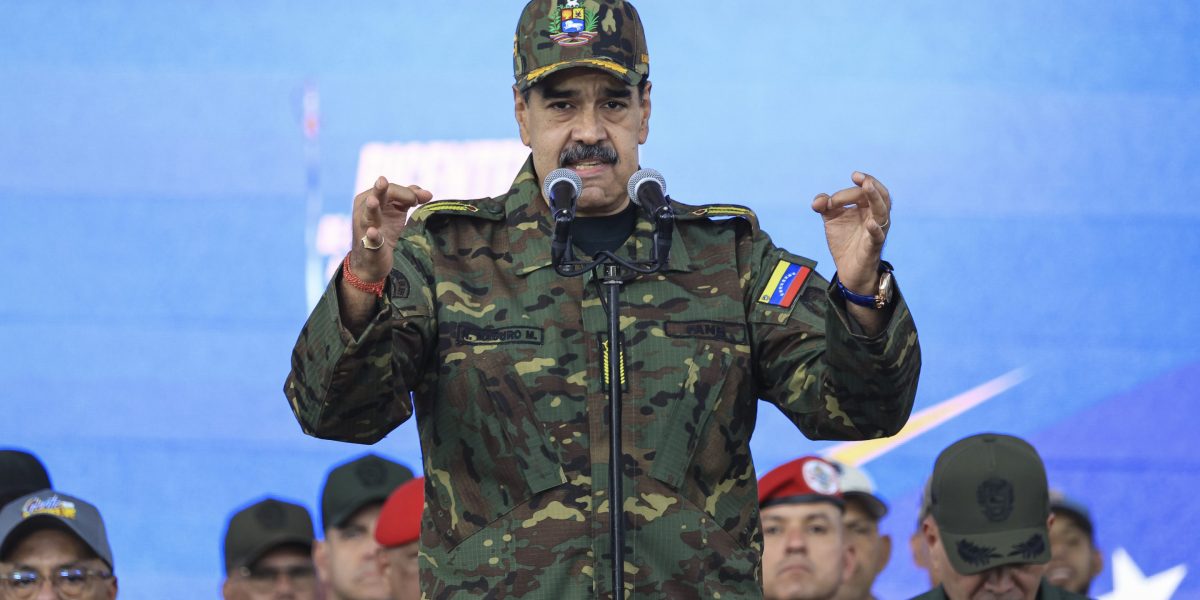
Digital publication Project Brazen reported Saturday that Venezuela could hold an estimated $60 billion worth of Bitcoin. Additional intelligence reports allege that ousted Venezuelan President Nicolas Maduro and his associates accrued Bitcoin via three channels: a gold swap overseen by Venezuelan Interior Minister Alex Saab in 2018, oil revenue priced in Bitcoin, and by seizing crypto mining equipment from miners in the country.  

Sanctions have walled off the country’s access to financial markets for years, and experts allege that they may have motivated Venezuelan leaders to invest in cryptocurrencies to sidestep the barrier.

Bitcointreasuries.net puts Venezuela’s holdings at 240 bitcoin, worth nearly $22 million. The website sourced the data from a 2022 Forbes article that cited research from a blockchain analytics firm. The total is a far cry from the estimated U.S. holdings of 328,372, currently worth $30 billion, though the claim positions Venezuela’s holdings at nearly double the U.S. and one of the biggest holders of bitcoin globally.

Some are raising their eyebrows

The claims of Venezuela’s shadow Bitcoin holdings have predictably garnered skeptics, including digital asset financial services company Ledn Co-founder Mauricio di Bartolemo, who grew up in Venezuela and whose family has mined crypto there since 2014.

Di Bartolemo finds no credibility in any of the three alleged sources of bitcoin income: the gold swap, oil exchange or mining equipment seizures. “This to me does not align with anything in the public record,” di Bartolemo told Fortune. “There’s so much corruption, embezzlement and missing money that I don’t believe that any meaningful amount would have accrued.”

He outlined his full argument in a Coindesk op-ed piece titled “Don’t hold your breath for Venezuela’s bitcoin.” Though he notes that his family’s crypto mining materials were seized by the government in 2018 and returned five years later in a worn down condition, signaling heavy use of the equipment.

Di Bartolemo says that stablecoins have grown in popularity in Venezuela amid rampant inflation. Many Venezuelans send remittances to their families using stablecoins as the currency has a better exchange rate differential than liquid cash.

The claim’s impact

It is near impossible to track how much crypto the Venezuelan government holds, given the decentralized and clandestine properties of the asset. However, if true, the claims could potentially reshape global Bitcoin markets.

While most of the U.S. government’s crypto holdings were accrued through law enforcement seizures, the rise of crypto as a state-controlled asset entered the mainstream last year after President Trump signed the executive order to create a national Bitcoin reserve to bolster the U.S’s position in digital assets, at no cost to taxpayers. 

Now that the U.S. is in effective control of Venezuela, with ambiguous statements from Trump that the U.S. “is going to run” the country, it is unclear what will happen to any Bitcoin reserves that do exist. Real or fake, the claim demonstrates the currency’s growing geopolitical significance and the Trump administration’s willingness to advance its interest in the digital assets industry.


Source link

Continue Reading

Business

Wife of Renee Good, the Minnesota woman killed in ICE shooting: ‘We had whistles. They had guns’

Published

on


The wife of Renee Good, the woman shot and killed in her car by a federal immigration agent in Minneapolis, says the couple had stopped to support their neighbors on the day of the shooting and described the mother of three as leaving a legacy of kindness.

“We had whistles. They had guns,” Becca Good said in a written statement Friday that was provided to Minnesota Public Radio.

The statement was her first public comment about the death of Renee Good, 37, who was killed Wednesday after three Immigration and Customs Enforcement officers surrounded her Honda Pilot SUV on a snowy street a few blocks from the couple’s home. Video taken by bystanders show an officer approaching the SUV stopped across the middle of the road, demanding the driver open the door and grabbing the handle.

The vehicle begins to pull forward and a different ICE officer standing in front of it pulls his weapon and immediately fires at least two shots at close range, jumping back as the vehicle moves toward him.

Trump administration officials have painted Renee Good as a domestic terrorist who tried to run over an officer with her vehicle. State and local officials in Minneapolis, as well as protesters, have rejected that characterization.

Becca Good has not responded to calls and messages from The Associated Press. Her statement provided no further detail about the day of the shooting and instead focused on memorializing her wife.

The couple had only recently moved to Minneapolis and were raising Renee Good’s 6-year-old son from a previous marriage.

Becca said Renee was a Christian who “knew that all religions teach the same essential truth: we are here to love each other, care for each other, and keep each other safe and whole.”

She thanked the people all across America and the world who had reached out in support of their family.

“Renee sparkled. She literally sparkled,” Becca Good wrote. “I mean, she didn’t wear glitter but I swear she had sparkles coming out of her pores. All the time. You might think it was just my love talking but her family said the same thing. Renee was made of sunshine.”

Far from the worst-of-the-worst criminals President Donald Trump said his immigration crackdown would target, Good was a U.S. citizen born in Colorado who apparently was never charged with anything beyond a single traffic ticket.

In social media accounts, she described herself as a “poet and writer and wife and mom.” She said she was currently “experiencing Minneapolis,” displaying a pride emoji on her Instagram account. A profile picture posted to Pinterest shows her smiling and holding a young child against her cheek, along with posts about tattoos, hairstyles and home decorating.

Her ex-husband, who asked not to be named out of concern for the safety of the two now-teenage children he had with Renee Good while they were married, told the AP on Wednesday that he had never known her to participate in a protest of any kind.

Becca Good said the couple, who had previously lived in Kansas City, Missouri, had settled in Minneapolis after an “extended road trip.” She said people they encountered in the Twin Cities had provided a strong sense that “they were looking out for each other.”

“We were raising our son to believe that no matter where you come from or what you look like, all of us deserve compassion and kindness,” Becca wrote. “I am now left to raise our son and to continue teaching him, as Renee believed, that there are people building a better world for him. That the people who did this had fear and anger in their hearts, and we need to show them a better way.”


Source link

Continue Reading

Business

Bessent’s visit to Minnesota comes with more vows to crack down on fraud as tensions flare with state, Somalia government

Published

on


The Treasury Department is taking a closer look at financial transactions between Minnesotan residents and businesses and Somalia as the federal government ramps up its immigration crackdown in the state, Treasury Secretary Scott Bessent told reporters on Friday during a visit to the state.

Bessent said his agency has launched a series of actions to combat fraud in the state and has launched investigations into four businesses that people use to wire money to family members abroad to do more to scrutinize transactions. He did not name the businesses.

His visit to the state coincides with protests in Minneapolis after an Immigration and Customs Enforcement officer fatally shot a woman in a residential neighborhood south of downtown on Wednesday, leading to a clash between federal and local leaders.

President Donald Trump has targeted the Somali diaspora in the Democratic-led state with immigration enforcement actions and has made a series of disparaging comments about the community, directing Bessent to uncover more fraud. The Treasury first announced last month that it would begin targeting money service businesses, focusing on remittances to Somalia.

The department’s actions have been prompted in part by a series of fraud cases, including a nonprofit called Feeding Our Future accused of stealing coronavirus pandemic aid meant for school meals. Prosecutors have put the losses from that case at $300 million.

Gov. Tim Walz, before he ended his bid to serve a third term this week, said that fraud will not be tolerated in Minnesota and that his administration “will continue to work with federal partners to ensure fraud is stopped and fraudsters are caught.” Walz, who came under heavy criticism from Republicans who said his administration should have caught the Feeding Our Future fraud earlier, said he was “furious” with “criminals that preyed on the system that was meant to feed children.”

The founder of Feeding our Future, Aimee Bock, was charged with multiple counts involving conspiracy, wire fraud and bribery and was convicted in March while maintaining her innocence.

Bessent declined to comment on specific investigations but said he had met with several financial institutions on Friday to ask them to do more to prevent fraud. The department has not disclosed which institutions Bessent spoke with.

Key Treasury actions include Financial Crimes Enforcement Network investigations into Minnesota-based money services businesses, enhanced transaction reporting requirements for international transfers from Hennepin and Ramsey counties, and alerts to financial institutions on identifying fraud tied to child nutrition programs.

“Treasury will deploy all tools to bring an end to this egregious unchecked fraud and hold perpetrators to account,” Bessent told reporters on Friday.

Bessent’s announcement was met with some criticism. Nicholas Anthony, a policy analyst at the libertarian Cato Institute, said Bessent is “building a legacy of financial surveillance and control.”

“The announcement that he is stopping Americans from sending their money abroad and increasing surveillance under the Bank Secrecy Act should be condemned,” Anthony said.

Some Somali leaders said last month they had received anecdotal reports about community members being detained by federal agents but had no details. Those leaders and allies including Walz and Minneapolis Mayor Jacob Frey have vowed to protect the community.

During a speech on Thursday about the Republican Trump administration’s economic agenda at the Economic Club of Minnesota, Bessent referred to the alleged fraud, without mentioning the Somali community that his department is targeting.

“I am here this week to signal the U.S. Treasury’s unwavering commitment to recovering stolen funds, prosecuting fraudulent criminals, preventing scandals like this from ever happening again, and investigating similar schemes state by state,” Bessent said.


Source link

Continue Reading

Business

Telluride Ski Resort begins to reopen after striking ski patrollers accept a contract

Published

on


Telluride Ski Resort in southwestern Colorado began to reopen Friday after a vote by striking ski patrollers to accept a contract and return to work.

The resort shut down Dec. 27 after the Telluride Professional Ski Patrol Association rejected a company pay proposal. The resort remained closed except for beginner carpets and a lift serving two beginner runs that were staffed this week by managers and temporary ski patrollers.

With help from artificial snowmaking and a foot (30 centimeters) of recent snowfall, more lifts and runs will open starting this weekend, resort officials said in a statement.

“We are confident that this last offer represented a fair compromise,” resort representative Steve Swenson said in the statement.

Neither the resort nor the ski patrol union divulged details of the deal endorsed by the union with a Thursday vote. Negotiations had been ongoing since June.

The union sought pay increases from $21 to $28 an hour for new patrollers and from as little as $30 to almost $50 for the most experienced ones.

“While we are ultimately very disappointed to not address our broken wage structure, we are immensely proud of our efforts that have led to this financial movement. We are even prouder of the recognition and implementation of our supervisors into the unit,” read a union statement on social media Thursday.

Ski patrollers elsewhere in the Rocky Mountain region have been unionizing. Some argue for more pay on the grounds that the cost of living in ski towns is high and that they are responsible for safety.

Patroller duties include attending to injured skiers and the controlled release of avalanches with explosives when nobody is in range.

An almost two-week ski patrol strike a year ago closed many runs and caused long lift lines at Utah’s Park City Mountain Resort. That strike ended when Colorado-based Vail Resorts acceded to demands including a $2-an-hour base pay increase and raises for senior ski patrollers.

Join us at the Fortune Workplace Innovation Summit May 19–20, 2026, in Atlanta. The next era of workplace innovation is here—and the old playbook is being rewritten. At this exclusive, high-energy event, the world’s most innovative leaders will convene to explore how AI, humanity, and strategy converge to redefine, again, the future of work. Register now.


Source link

Continue Reading

Trending

Copyright © Miami Select.