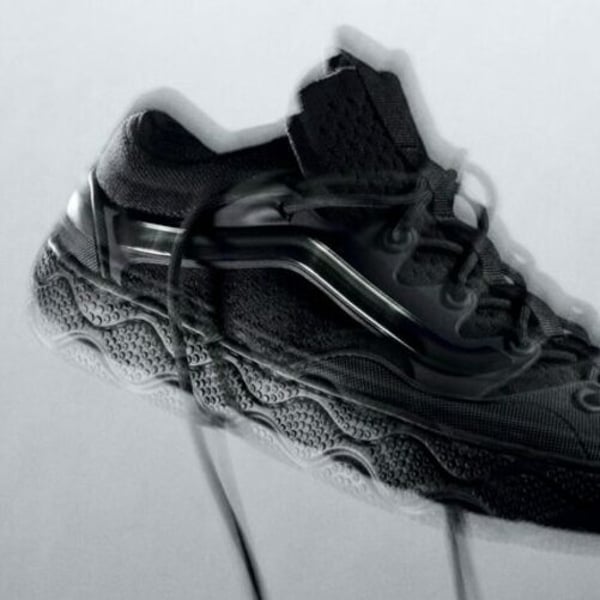
Vans is responding to a 14% drop in sales during the first quarter of the 2025–2026 financial year by closing stores and reworking its product and brand strategy. VF Corp’s chief executive officer, Bracken Darrell, who joined the group in June 2023, has launched a company-wide restructuring plan called “Reinvent” to restore growth across the portfolio—including at Vans.
The Old Skool 36 FM from the OTW line was launched last April – Vans
The California-born skate label has started transforming its operations, beginning with retail. Over the past two years, the brand has closed 140 of its least profitable retail locations, representing 20% of its global footprint. VF Corp attributes 40% of Vans’ revenue decline to this move, but Darrell says the closures have already improved profitability. The company did not disclose financial figures.
Refining the retail experience
The brand is updating its stores to go beyond downsizing. Vans is redesigning layouts to improve product segmentation and enhance the focus on footwear. In the U.S., 90% of full-price locations now feature a new format that separates men’s and women’s assortments while showcasing new styles more clearly.
Key flagship locations have seen positive results. The pilot store on Fifth Avenue in New York is reportedly outperforming the network average, and the London store is up 15%, with average selling prices 35% higher—an early sign of success for Vans’ shift toward premium positioning.
Rebuilding product momentum
Under brand president Sun Choe—appointed in June 2024—Vans is shifting its product development strategy. The company reports renewed interest in classic models such as the Vans Authentic and plans to launch a collaboration with Valentino this fall.
Creative teams now operate with greater flexibility, and new products are already emerging. Recent launches include the Super Lowpro, the Cable Skate, and refreshed designs in the premium OTW (Off The Wall) range, designed to connect the brand’s heritage with new innovation.
Sun Choe was appointed Brand Director at Vans last June. – Vans
“Today, the premium segment represents a small part of Vans, but it shows how sensitive this business is to new products. New products are coming soon,” said Bracken Darrell.
Reconnecting with culture
Vans is also updating its marketing approach to regain cultural relevance. While VF Corp has not released full details of its revised strategy, Darrell has described previous campaigns as ineffective and signaled a new direction in how the brand communicates with its audience.
The brand marked a major step by reviving the Warped Tour in 2024 after a five-year break. This iconic skate and punk music event, once central to Vans’ identity, returned with three sold-out concerts in Long Beach, California. The shows drew nearly 170,000 attendees and created strong engagement on social media. Vans has already opened ticket pre-orders for the 2026 edition.
This article is an automatic translation. Click here to read the original article.
Retail giant Next has been a major acquirer of brands in recent years and a report claims that premium footwear chain Russell & Bromley is now on its shopping list.
Billie Piper for Russell & Bromley
Next either owns or has majority stakes in Reiss, FatFace, Joules, Cath Kidston, Made, Laura Ashley’s homewares and more. But while it has a big war chest for acquisitions, it’s not the only company targeting Russell & Bromley.
Sky News reported that the 145-year-old family-owned footwear and accessories is courting investors and Next is one of several parties in talks with Russell & Bromley’s advisers about a deal. None of the other potential buyers have been identified.
Russell & Bromley confirmed this autumn that it had appointed advisory specialist Interpath to look at funding options for the business.
In October, CEO Andrew Bromley said: “We are currently exploring opportunities to help take Russell & Bromley into the next phase of our ‘Re Boot’ vision. Since the announcement of the ‘Re Boot’ earlier this year we have made significant progress, positioning us well to build on our momentum and continue along our journey. We are looking forward to working with our advisory team to secure the necessary investment to accelerate our expansion plans.”
The company has stores and concessions in the UK and Ireland and is led by Bromley, who’s from the fifth generation of his family to run the chain.
Earlier this year, he oversaw the launch of a five-year turnaround plan focused on “refining the brand proposition, elevating the product offering, streamline operations and fuel market expansion at pace”.
In September, the change of approach could be seen when the company launched a quirky campaign fronted by pop star-turned-actress Billie Piper. It was overseen by creative director Daniel Beardsworth-Shaw (who joined as the brand’s first CD in 2024) and was an unusual move for the label that’s not previously been known for its celebrity ambassadors or surreal campaign concepts.
In its last accounts, covering 2023, the company reported turnover down to just under £40 million from almost £45 million. EBITDA was a loss of £3.2 million after a narrower loss of £404,000 the year before. And the loss after tax was £6.9 million, also wider than the loss in the prior year of £4.6 million. The company didn’t share any details about what had gone wrong.
Those accounts were filed in early November 2024 and its next filing (covering 2024) is due before the end of this year.
Whether Next or another business buys it or takes a stake (it’s unclear which option the controlling family favours) will clearly have big impact on its future direction. Next already has a strong track record in the premium sector in which Russell & Bromley operates with its stewardship of Reiss.
Next declined to comment on the Sky News story, and both Russell & Bromley and Interpath couldn’t be reached.
Rebag’s Clair report, which studies the value retention of bags on the resale firm’s platform, said Hermès has reclaimed the top position in 2025, reaching an average 138% value retention—a 38% year-over-year increase.
Rebag
The New York-based Rebag’s report also said that a ten-year analysis of Birkin data shows resale values have surged 92% since 2015, outpacing Hermès’ own retail price growth of 43%.
Behind Hermès, Goyard logged 132% retention in 2025, up 28% from 2024; The Row recorded 97% value retention, while Miu Miu climbed to 104% average retention, according to the report.
In fine jewellery, Van Cleef & Arpels extended its lead, with 112% retention led by the Sweet Alhambra collection, while in the watches category, Rolex remained steady at 104%, with standout models like the Submariner Hulk reaching 244% of their original retail price. Comparatively, Cartier witnessed 87% retention.
Louis Vuitton x Takashi Murakami‘s return boosted search demand and pushed top styles above 130% resale value, the report added, while renewed interest in Balenciaga‘s Le City, Celine‘s Phantom, and Chloé‘s Paddington saw an increased demand for early-2000s bags.
Rebag’s 2025 Clair Report, which analyses millions of data points across the primary and secondary markets to reveal the brands, styles, and investment opportunities shaping the luxury landscape, said that global tariff shifts and changing consumer behaviours have made 2025 a “defining year for luxury resale.”
“Higher primary prices pushed more consumers to the secondary market, reaffirming its stability. The 2025 Clair Report highlights the brands demonstrating lasting long-term value,” said Charles Gorra, CEO and founder of Rebag.
In June, Rebag reported its launch on Luxury Stores at Amazon, bringing its pre-loved designer handbags, jewelry, watches, and more to the platform.
Lululemon Athletica’s CEO shake-up has put the spotlight on the once-dominant yoga pants maker’s race to wrest back younger and affluent shoppers from rivals and revive its sagging U.S. business.
Calvin McDonald – Reuters
Its shares, which have halved in value this year, rose 10% on Friday following the departure of CEO Calvin McDonald after about seven years in the role.
An athleisure pioneer known for its premium yoga apparel, Lululemon lost ground as newer rivals such as Alo Yoga and Vuori weaned away its core younger shoppers with trendier styles, marketing campaigns and celebrity partnerships.
Meanwhile, established players like Nike and Gap also entered the market with lower-priced styles.
Lululemon “caught the perfect wave in fashion, becoming the trend for the last five years,” said Brian Mulberry, senior client portfolio manager at Zacks Investment Management.
“But as its core customers graduate college and face tighter budgets, affordability is a challenge and a new outfit at Lulu can cost as much as a month’s groceries.”
Lululemon sells a range of yoga, running and training apparel such as Align yoga pants priced at $108 and men’s joggers at $128.
The slow refresh to core styles and product missteps, such as its decision to pull its $98 “Breezethrough” leggings from shelves last year, have led to heavy discounting to clear aged inventory.
At an earnings call late on Thursday, company executives said the board is “focused on a leader with experience and growth and transformation”.
“It’s understandable to think that a strategic overhaul with a new leader at the helm will be a positive, but this opens the door to more questions as to what direction the board will go with a replacement,” said Jay Woods, chief market strategist at Freedom Capital Markets.
Lululemon is the latest global consumer company facing leadership churn as macroeconomic uncertainty fuels increasingly divergent spending patterns.
Lululemon is making efforts to speed up product development, launch fresh styles and drive company-wide efficiencies to offset cost inflation and protect margins.
The company beat third-quarter results, lifted by strong China sales, but issued a weaker-than-expected holiday forecast as higher promotions and increased spending on marketing weigh on margins.
Founder Chip Wilson, who is also Lululemon’s largest independent shareholder, in a statement on Friday slammed the board for “poor succession planning” and value erosion.
He called for an urgent CEO search led by new, independent directors with deep company knowledge to restore a product-first focus. Lululemon did not immediately respond to a Reuters request for comment on Wilson’s statement.
The company’s forward price-to-earnings multiple, a common benchmark for valuing stocks, is 14.66, compared to 31.26 for Nike and Abercrombie & Fitch‘s ratio of 10.8, according to LSEG data.
“The main challenge I foresee for the new leadership is not how consumers see Lulu, but how does it see itself?” said Mulberry.