Connect with us

Business

Vance on woman shot and killed by ICE: ‘a tragedy of her own making’

Published

on


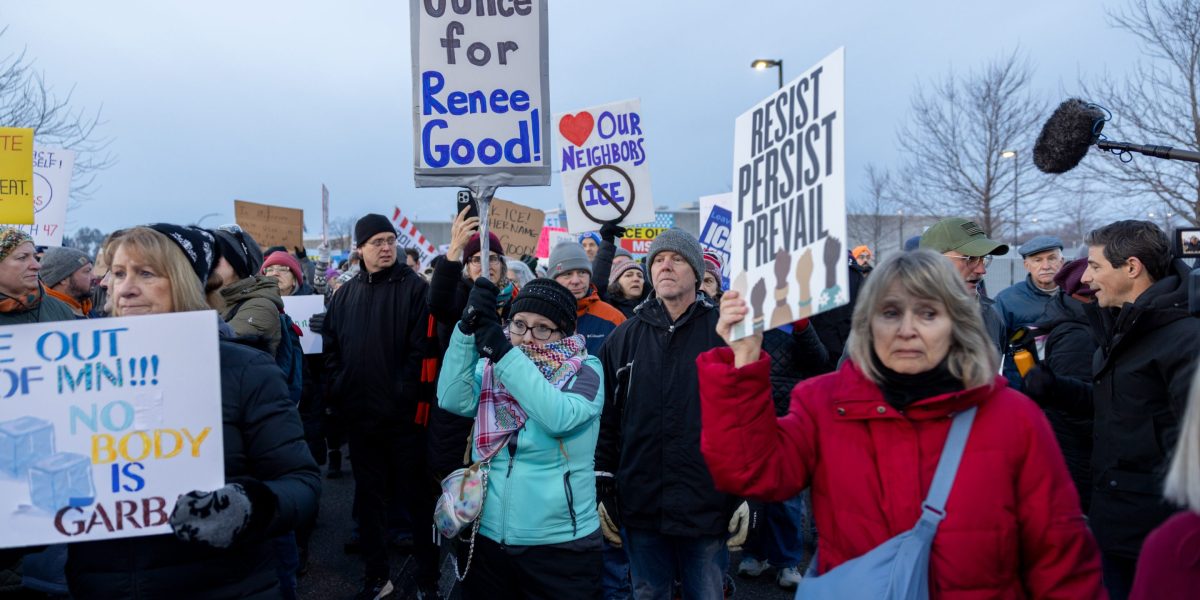
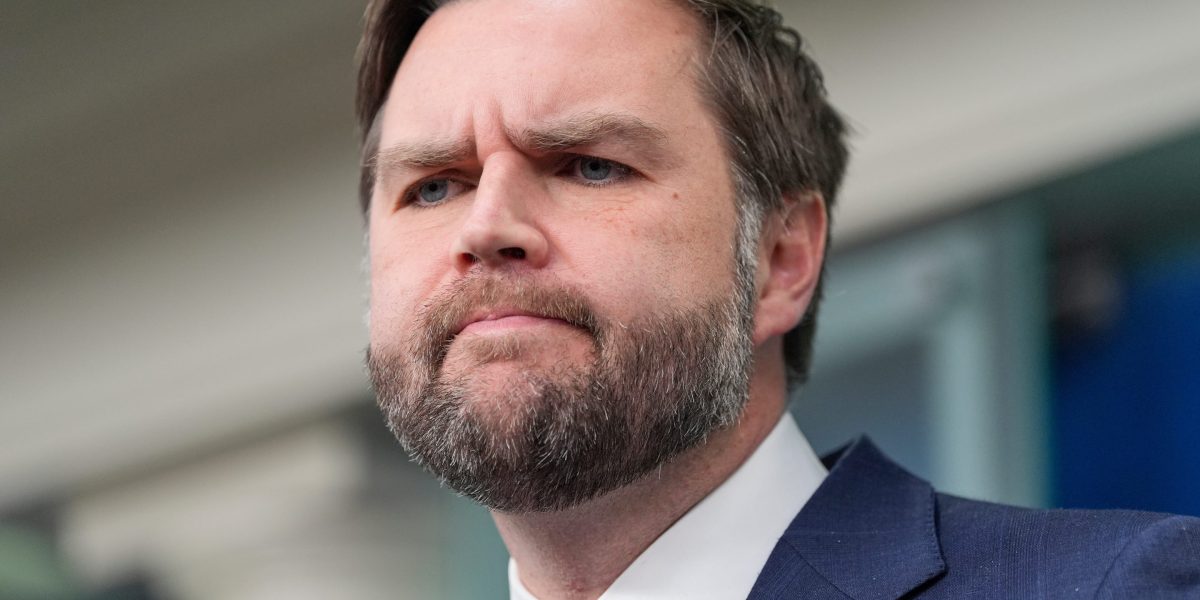
Vice President JD Vance on Thursday blamed a federal immigration officer’s fatal shooting of a Minneapolis woman on “a left-wing network,” Democrats, the news media and the woman who was killed as protests related to her death expanded to cities across the country.

The vice president, who made his critiques in a rare appearance in the White House briefing room and on social media, was the most prominent example yet of the Trump administration quickly assigning culpability for the death of 37-year-old Renee Good while the investigation is still underway. Good was shot and killed by an ICE officer while she tried to drive away on a snowy residential street as officers were carrying out an operation related to the administration’s immigration crackdown.

Vance said at the White House that he wasn’t worried about prejudging the investigation into Good’s killing, saying of the videos he’d seen of the Wednesday incident, “What you see is what you get in this case.”

Vance said he was certain that Good accelerated her car into the officer and hit him. It isn’t clear from the videos if the vehicle makes contact with the officer. Minneapolis Mayor Jacob Frey said Wednesday that video of the shooting shows arguments that the officer was acting in self-defense were “garbage.”

The vice president also said part of him felt “very, very sad” for Good. He called her “brainwashed” and “a victim of left-wing ideology.”

“I can believe that her death is a tragedy, while also recognizing that it’s a tragedy of her own making and a tragedy of the far left who has marshaled an entire movement — a lunatic fringe — against our law enforcement officers,” Vance said.

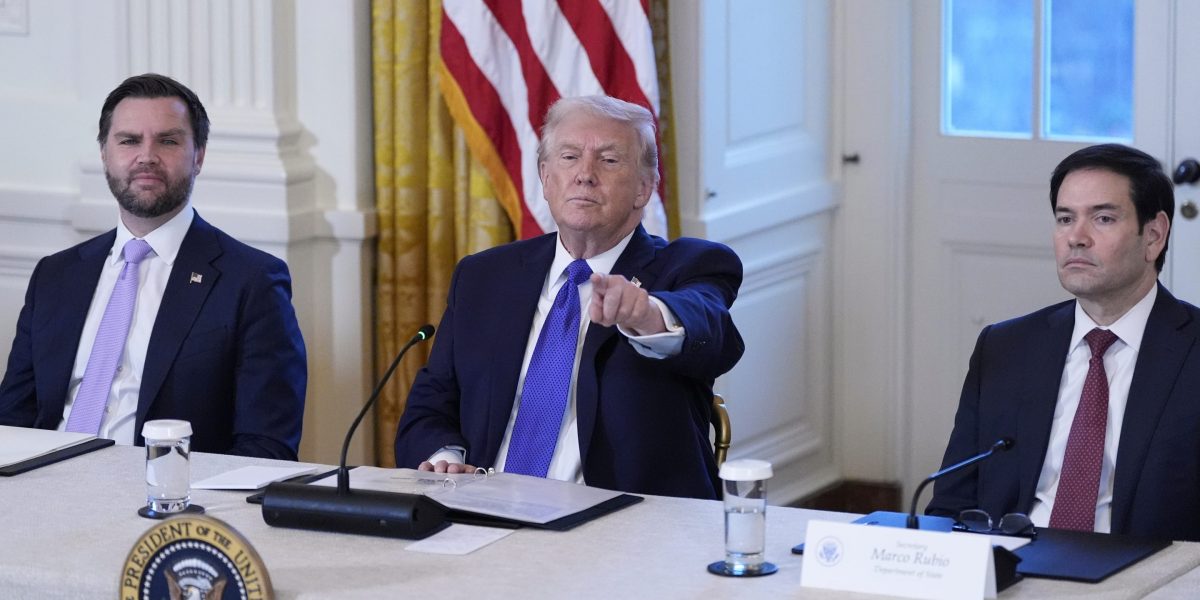
His defense of the officer, at times fiery, came as Homeland Security Secretary Kristi Noem and President Donald Trump likewise said the officer’s actions were a justified act of self-defense. Trump said Good “viciously ran over” the ICE officer, though video footage of the event contradicts that claim.

Trump has made a wide-ranging crackdown on crime and immigration in Democratic cities a centerpiece of his second term in office. He has deployed federal law enforcement officials and National Guard troops to support the operations and has floated the idea of invoking the Insurrection Act to try to stop his opponents from blocking his plans through the courts.

Trump officials made it clear that they were rejecting claims by Democrats and officials in Minnesota that the president’s move to deploy immigration officers in American cities had been inflammatory and needed to end.

“The Trump administration will redouble our efforts to get the worst of the worst criminal, illegal alien killers, rapists and pedophiles off of American streets,” White House press secretary Karoline Leavitt said Thursday before Vance spoke.

She called Good’s killing “a result of a large, sinister left-wing movement.”

Vance was selected as Trump’s running mate last year partly for his ability to verbally spar, especially with the media. He opened his remarks by condemning headlines he saw about the shooting, at times raising his voice and decrying the “corporate media.”

“This was an attack on law and order. This was an attack on the American people,” Vance said.

He accused journalists of falsely portraying Good as “innocent” and said: “You should be ashamed of yourselves. Every single one of you.”

“The way that the media, by and large, has reported this story has been an absolute disgrace,” he added. “And it puts our law enforcement officers at risk every single day.”

When asked what responsibility he and Trump bore to defuse tension in the country over the incident, Vance said their responsibility was to “protect the people who are enforcing law and protect the country writ large.”

“The best way to turn down the temperature is to tell people to take their concerns about immigration policy to the ballot box,” he said.

Vance also announced that the administration was deputizing a new assistant attorney general to prosecute the abuse of government assistance programs in response to growing attention to fraud in childcare programs in Minnesota.

He said the prosecutor will focus primarily on Minnesota, and will be nominated in coming days. Vance added that Senate Majority Leader John Thune told him he’d seek a prompt confirmation.

___

Associated Press writers Konstantin Toropin, Will Weissert and Jonathan J. Cooper contributed to this report.


Source link

Continue Reading

Business

Trump order says Venezuelan oil money is being held by US for ‘governmental and diplomatic purposes’

Published

on


President Donald Trump’s new executive order on Venezuelan oil revenue is meant to ensure that the money remains protected from being used in judicial proceedings.

The executive order, made public on Saturday, says that if the funds were to be seized for such use, it could “undermine critical U.S. efforts to ensure economic and political stability in Venezuela.”

The order comes amid caution from top oil company executives that the tumult and instability in Venezuela could make the country less attractive for private investment and rebuilding.

“If we look at the commercial constructs and frameworks in place today in Venezuela, today it’s uninvestable,” said Darren Woods, CEO of ExxonMobil, the largest U.S. oil company, during a meeting convened by Trump with oil executives on Friday.

During the session, Trump tried to assuage the concerns of the oil companies and said the executives would be dealing directly with the U.S., rather than the Venezuelan government.

Venezuela has a history of state asset seizures, ongoing U.S. sanctions and decades of political uncertainty.

Getting U.S. oil companies to invest in Venezuela and help rebuild the country’s infrastructure is a top priority of the Trump administration after the dramatic capture of now-deposed leader Nicolás Maduro.

The White House is framing the effort to “run” Venezuela in economic terms, and Trump has seized tankers carrying Venezuelan oil, has said the U.S. is taking over the sales of 30 million to 50 million barrels of previously sanctioned Venezuelan crude, and plans to control sales worldwide indefinitely.

“I love the Venezuelan people, and am already making Venezuela rich and safe again,” Trump, who is currently in southern Florida, wrote on his social media site on Saturday. “Congratulations and thank you to all of those people who are making this possible!!!”

The order says the oil revenue is property of Venezuela that is being held by the United States for “governmental and diplomatic purposes” and not subject to private claims.

Its legal underpinnings are the National Emergencies Act and the International Emergency Economic Powers Act. Trump, in the order, says the possibility that the oil revenues could be caught up in judicial proceedings constitutes an “unusual and extraordinary threat” to the U.S.


Source link

Continue Reading

Business

As U.S. debt soars past $38 trillion, corporate bond flood is a growing threat to Treasury supply

Published

on


As the Treasury Department looks to ensure investors continue absorbing the fresh supply of debt it must sell, growing competition from companies issuing their own bonds could send rates higher, according to Apollo Chief Economist Torsten Slok.

In a note on Saturday, he pointed out that Wall Street estimates for the volume of investment grade debt that’s on the way this year reach as high as $2.25 trillion.

That’s as the AI boom increasingly sends companies, including hyperscalers and adjacent firms, to the bond market to fund massive investments in data centers and other infrastructure.

“The significant increase in hyperscaler issuance raises questions about who will be the marginal buyer of IG paper,” Slok said. “Will it come from Treasury purchases and hence put upward pressure on the level of rates? Or might it come from mortgage purchases, putting upward pressure on mortgage spreads?”

With U.S. debt topping $38 trillion, the federal government has already borrowed $601 billion in the first three months of the 2026 fiscal year, which began in October 2025, according to the latest data from the Congressional Budget Office.

That’s $110 billion less than the deficit during the same period a year earlier as tariffs helped revenue outpace spending. But the Supreme Court could strike down President Donald Trump’s global tariffs soon, and this year’s tax season should see a surge of refunds to account for new tax cuts under the One Big Beautiful Bill Act.

Meanwhile, Trump has vowed to boost defense spending to $1.5 trillion a year from $1 trillion, threatening to further deepen federal budget deficits.

And despite the Federal Reserve’s series of rate cuts this past autumn, Treasury yields remain about where they were in early September, suggesting the government will not see much relief on debt-servicing costs that are also contributing to the overall tally of red ink.

“The bottom line is that the volume of fixed-income products coming to market this year is significant and is likely to put upward pressure on rates and credit spreads as we go through 2026,” Slok said.

Apollo

To make sure there’s sufficient demand among bond investors, Treasury yields must remain attractive relative to the competition. Failure to draw enough investors raises the risk of so-called fiscal dominance, or when a central bank must step into to finance widening deficits.

That’s what former Treasury Secretary Janet Yellen warned of last weekend, during a panel hosted by the American Economic Association.

“The preconditions for fiscal dominance are clearly strengthening,” she said, noting debt is on a steep upward trajectory toward 150% of GDP over the next three decades.

At the same time, he holders of U.S. debt have shifted drastically over the past decade, tilting more toward profit-driven private investors and away from foreign governments that are less sensitive to prices.

That threatens to turn the U.S. financial system more fragile in times of market stress, according to Geng Ngarmboonanant, a managing director at JPMorgan and former deputy chief of staff to Yellen during her tenure at Treasury.

Foreign governments accounted for more than 40% of Treasury bond holdings in the early 2010s, up from just over 10% in the mid-1990s, he wrote in a New York Times op-ed last month. This reliable bloc of investors allowed the U.S. to borrow vast sums at artificially low rates.

“Those easy times are over,” he warned. “Foreign governments now make up less than 15% of the overall Treasury market.”


Source link

Continue Reading

Business

ICE shooting that killed Renee Good sets up budget standoff ahead of shutdown deadline

Published

on


The killing of Renee Good by an Immigration and Customs Enforcement agent in Minnesota has sparked a potential funding battle just as the federal government faces another shutdown deadline on Jan. 30.

Democrats in Congress are considering ways to rein in President Donald Trump’s immigration crackdown after the fatal shooting, and legislation to fund the Department of Homeland Security could be one vehicle for it.

Sen. Chris Murphy, the ranking Democrat on the subcommittee that oversees the DHS budget, plans to introduce legislation that would require agents to have warrants for arrests, ban them from wearing masks during enforcement operations, limit the use of guns by ICE during civil actions, and restrict the Border Patrol to the border.

He is trying to gather enough Democrats who will demand guardrails on DHS in exchange for their votes to pass a spending bill for the department, sources told Axios.

“Democrats cannot vote for a DHS budget that doesn’t restrain the growing lawlessness of this agency,” Murphy said in a post on X on Wednesday.

At least one Republican, Sen. Sen. Lisa Murkowski from Alaska, has called for policy changes, saying the shooting in Minnesota “was devastating, and cannot happen again.”

“The videos I’ve seen from Minneapolis yesterday are deeply disturbing,” she said in a statement. “As we mourn this loss of life, we need a thorough and objective investigation into how and why this happened.”

Some Democrats in the House, where Republicans hold a razor-thin majority that has gotten narrower, have also said legislation for DHS appropriations should be used as leverage.

And Rep. Adriano Espaillat, a member of the House Appropriations Committee, suggested at a news conference Friday that Democrats should take an even more aggressive stance.

“I was of the belief that perhaps we could reform ICE. Now I am of the belief that it has to be dismantled as an entity,” he said. “This unaccounted for violence is part of its culture. And so we must dismantle it and build it from the ground up again.”

But after the longest government shutdown ever last fall took a heavy toll on the economy and social services, top Democrats like Senate Minority Leader Chuck Schumer have signaled they want to avoid another one a few months later.

Still, House Speaker Mike Johnson admitted on Friday he’s concerned Democrats’ targeting of immigration enforcement funding could interfere with overall negotiations on government appropriations.

“We should not be limiting funding for Homeland Security at a dangerous time,” Johnson said, according to Politico. “We need officials to allow law enforcement to do their job. Immigration and Customs Enforcement is a critically important function of the government. It is a top concern for Americans, as demonstrated by the last election cycle.”


Source link

Continue Reading

Trending

Copyright © Miami Select.