Connect with us

Business

Valerie Health raises $30 million Series A to scale “AI front offices” for physicians

Published

on


The intersection of AI and healthcare has been getting massive attention from investors—and rightfully so, says Peter Shalek. 

“I think this is truly a once-in-a-lifetime moment,” said Shalek, cofounder and CEO of Valerie Health. “Software, at its best, takes complexity away from the end user that benefits their customers. It creates new experiences, and that hasn’t happened in the last 30 years… Over the next ten years, the experience of going to the doctor will change.” 

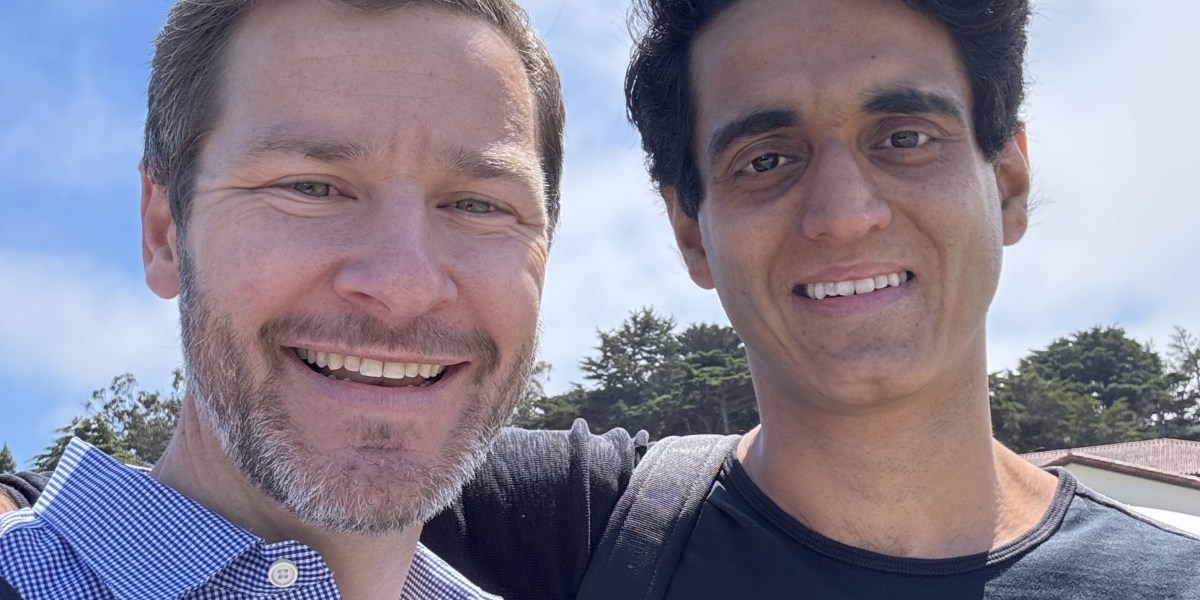
To meet the moment, Shalek—who co-founded digital mental health startup Joyable, which was sold to AbleTo—teamed up with Nitin Joshi, cofounder of Uber Health and Stripe engineering leader to start Valerie Health in 2023. Valerie, Shalek says, is “an AI front office” for independent doctors’ offices. 

“All the space that sits between the patient and provider, we’re taking that over and automating as much as possible,” Shalek said. “We automate referrals, we automate faxes, we automate scheduling. But over time, we’re building out a comprehensive platform that can really manage the entire workflow from front to back.”

Valerie Health—named with Shalek and Joshi’s children’s initials—has raised its $30 million Series A, led by Redpoint Ventures, Fortune has exclusively learned. General Catalyst, Primary Ventures, BoxGroup, and Karman Ventures participated in the round, along with 406 Ventures and Waybury Capital. Angels included executives from One Medical, Oscar, Main Street Health, and DoorDash. Valerie has now raised $39 million.  

“The future of healthcare is personalized and proactive,” said Meera Clark, partner at Redpoint Ventures. “Think about the ability to shift an appointment time or get that next appointment on the books—imagine a system has context to reach out to me and schedule based on my preferences, knows my healthcare needs, and knows my risk profile, what I might need to be screening for. You really need a foundation in place to be that proactive and personalized, and Valerie is laying that foundation.”

To Shalek, this isn’t just about a tech-enabled future, it’s the hope for better healthcare overall.

“We live in the U.S., with the best medical care in the world,” said Shalek. “We have incredible therapeutics, incredible diagnostics, incredible surgical capabilities—and yet, we have very mediocre average healthcare. The gap is about getting patients the right care that they need. It’s about democratizing healthcare, not just care for the healthiest and wealthiest people, which is too often what happens.”

See you tomorrow,

Allie Garfinkle
X:
@agarfinks
Email:alexandra.garfinkle@fortune.com
Submit a deal for the Term Sheet newsletter here.

Allie Garfinkle curated the deals section of today’s newsletter.Subscribe here.

Venture Deals

Link Cell Therapies, South San Francisco, Calif.-based oncology cell therapy company, launched from stealth with $60 million in Series A funding. Johnson & Johnson Innovation led the round, and was joined by Samsara BioCapital, Sheatree Capital, and Wing Venture Capital

AIR, an AI-powered credit intelligence startup, raised $6.1 million in seed funding. The round was co-led by Work-Bench Ventures and Lerer Hippeau.

Auxira Health, Columbia, Md.-based virtual cardiology company, raised $7.8 million in seed funding. Route 66 Ventures and Abundant Venture Partners led the round, and were joined by DigiTx Partners, American Heart Association Ventures, Ensemble Innovation Ventures, and City Light Capital.

– Soverli, a Zurich, Switzerland-based smartphone cybersecurity company, raised $2.6 million in pre-seed funding. Founderful led the round and was joined by the ETH Zurich Foundation and Venture Kick.

Private Equity

Godspeed Capital agreed to make a strategic investment in NextPoint Group, a Herndon, Va-based technology solutions provider for the intelligence and defense communities. Financial terms weren’t disclosed.

IPOs

Wealthfront, a Palo Alto, Calif.-based financial platform, is going public today with an offering of 34.6 million shares priced at $14 a share. 

Funds + Funds of Funds

Lightspeed Venture Partners, a Menlo Park, Calif.-based multi-stage venture capital firm, raised $9 billion in capital across six vehicles. 

Dragoneer Investment Group, a San Francisco-based investment firm, raised $4.3 billion for its seventh venture capital fund. 

Exits

Freshworks agreed to acquire FireHydrant, a New York-based AI-enabled incident management startup. Financial terms weren’t disclosed.

NVIDIA agreed to acquire SchedMD, a Lehi, Utah-based developer of open-source workload management system Slurm.

Fortune AIQ: The year in AI–and what’s ahead

Businesses took big steps forward on the AI journey in 2025, from hiring Chief AI Officers to experimenting with AI agents. The lessons learned—both good and bad–combined with the technology’s latest innovations will make 2026 another decisive year. Explore all of Fortune AIQ, and read the latest playbook below: 

The 3 trends that dominated companies’ AI rollouts in 2025.

2025 was the year of agentic AI. How did we do?

AI coding tools exploded in 2025. The first security exploits show what could go wrong.

The big AI New Year’s resolution for businesses in 2026: ROI.

Businesses face a confusing patchwork of AI policy and rules. Is clarity on the horizon?


Source link

Continue Reading

Business

Trump turns on CBS, Kushner pulls out and Paramount’s hostile bid for Warner Bros. shows signs of collapse

Published

on


Paramount’s hostile bid for Warner Bros. showed signs of unraveling just moments after President Donald Trump aired fresh grievances about the flagship newsmagazine 60 Minutes. Just hours after Trump’s latest lashed out at CBS News, accusing the Paramount-owned network of treating him “far worse” since its new ownership took over earlier this year, Jared Kushner pulled his Affinity Partners private equity firm out of the Warner bid, as reports swirled that the Looney Tunes studio planned to reject the star-topped mountain. 

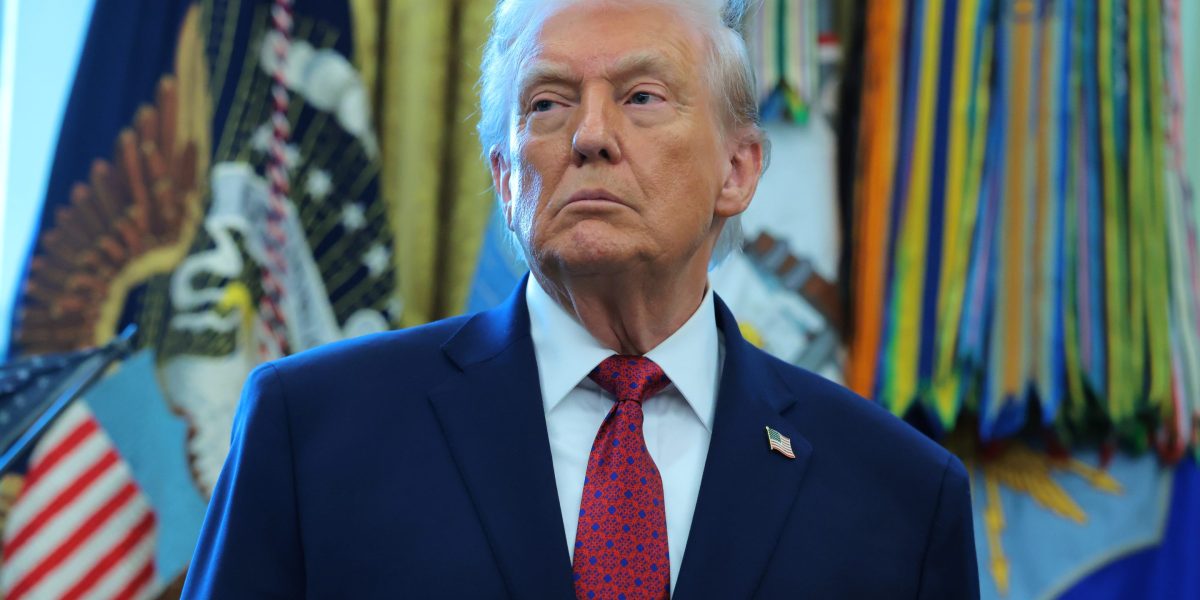
“For those people that think I am close with the new owners of CBS, please understand that 60 Minutes has treated me far worse since the so-called ‘takeover,’ than they have ever treated me before,” Trump said. “If they are friends, I’d hate to see my enemies!”

Paramount had entered the bidding for Warner, with its $77.9 billion offer for all of Warner Bros. Discovery coming one working day after Netflix’s $72 billion offer for the studio and HBO Max, as a seeming friend of the White House.

CEO David Ellison has repeatedly highlighted his ties to Trump, with his father Larry a longtime Trump donor (and second-richest man alive). CBS News, under Ellison, recently installed Bari Weiss, owner of independent news organization The Free Press and a prominent critic of progressive media culture, in a senior editorial role, a move widely read in Hollywood and Washington as gestures toward an anti-“woke” White House. Kushner’s participation, as son-in-law to the President, reinforced that impression. His roughly $200 million equity commitment via his firm functioned, some analysts said, as a political signal as much as a financing tool.

Trump’s outburst disrupted that calculus. By openly distancing himself from Paramount and criticizing its flagship news division, the president stripped the bid of its most implicit advantage: the perception of regulatory goodwill. Almost immediately after Trump’s post circulated, Affinity announced it was exiting the deal, citing a shift in “investment dynamics” amid competition from Netflix. Now, reports indicate that Warner Bros. plans to reject Paramount’s hostile bid over financing concerns. 

Trump’s public remarks have continuously scrambled assumptions about his supposed friendships, or loyalties. He confirmed to reporters at the Kennedy Center, the weekend after Netflix’s bid, that he had met with Co-CEO Ted Sarandos, who he called a “fantastic man.” Later, he said that neither Paramount nor Netflix were “great friends” of his. As the corporate takeover saga unfolds, who will be revealed next as friend or enemy?

Join us at the Fortune Workplace Innovation Summit May 19–20, 2026, in Atlanta. The next era of workplace innovation is here—and the old playbook is being rewritten. At this exclusive, high-energy event, the world’s most innovative leaders will convene to explore how AI, humanity, and strategy converge to redefine, again, the future of work. Register now.


Source link

Continue Reading

Business

Kushner’s Affinity withdraws from Warner Bros. takeover battle

Published

on


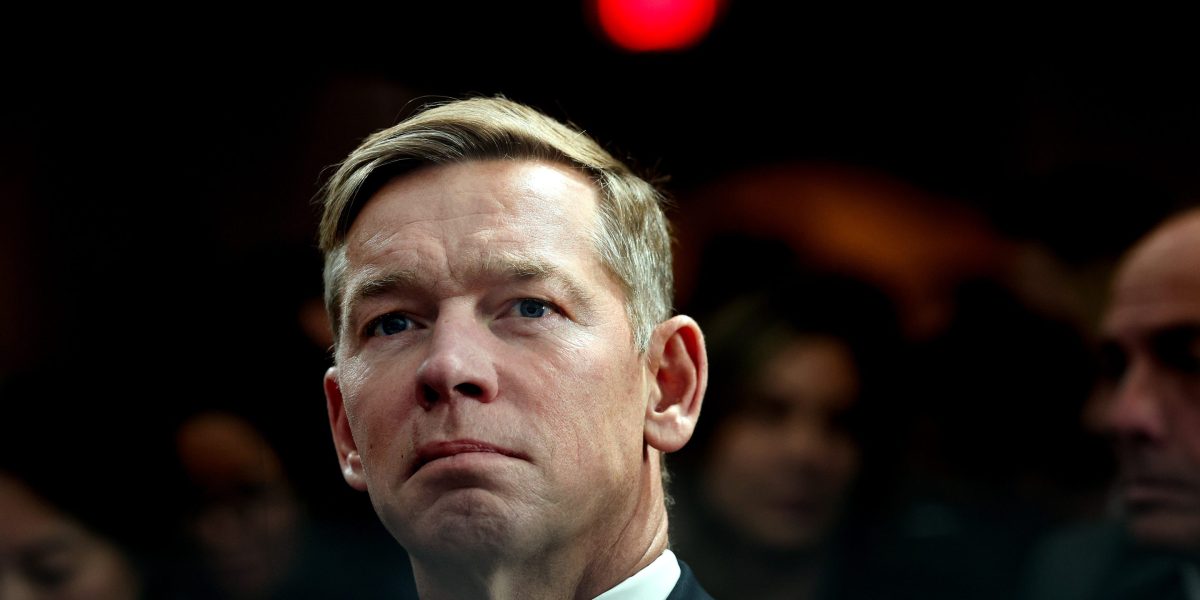
Jared Kushner’s Affinity Partners is exiting from the takeover battle for Warner Bros. Discovery Inc. 

The private equity firm this month emerged as a participant in Paramount Skydance Corp.’s hostile bid for Warner Bros., which valued the media and entertainment company at $108.4 billion including debt. Paramount is seeking to scupper Netflix Inc.’s agreed $82.7 billion deal for Warner Bros.

Affinity was helping to finance Paramount’s move. It now believes the dynamics ​of an investment have changed since it became involved in the process in October, a representative for the firm said.

“With ​two ​strong competitors ​vying to secure ​the future ​of this ​unique American ​asset, ​Affinity ​has ​decided no longer to pursue ​the opportunity,” the firm said. “We ​continue to ​believe ​there is a strong strategic rationale for Paramount’s offer.”

Warner Bros. is planning to reject Paramount’s offer due to concerns about financing and other terms, people familiar with the matter said Tuesday. Affinity’s investment in the bid is about $200 million in equity, Bloomberg News has reported. 

The battle for Warner Bros. stands to reshape the entertainment industry regardless of which bidder emerges victorious. With the company’s films and TV shows, Netflix would wield tremendous new power over the content offered to online audiences. Paramount, meanwhile, aims to marry two legacy Hollywood studios to counter the influence of Netflix, Walt Disney Co. and Amazon.com Inc.

Both bids raise significant antitrust concerns — something underscored by multibillion-dollar breakup fees the parties have offered. Netflix and Paramount have each been laying the groundwork to win over the White House, with US President Donald Trump having indicated he will weigh in on the approval process for a sale of Warner Bros. Kushner is Trump’s son-in-law.

Paramount’s offer is being bankrolled by a list of influential Middle Eastern investors, including Saudi Arabia’s Public Investment Fund and the Qatar Investment Authority, as well as a little-known group from Abu Dhabi called L’imad Holding Co. Kushner has strong ties to the Middle East. He founded Affinity in 2021 with funding from sovereign wealth funds from the region. 

This week, Bloomberg News reported that Affinity dropped plans for a hotel in Serbia after tensions around the project culminated in the indictment of a government official who helped clear a path for its development.

This story was originally featured on Fortune.com


Source link

Continue Reading

Business

As millions of Gen Zers face unemployment, McDonald’s CEO dishes out some tough love career advice for navigating the market: ‘You’ve got to make things happen for yourself’

Published

on


Instead, the 57-year-old executive is offering some blunt advice for aspiring young professionals: whether the market is hot or cold, no one is going to give you a handout. Your career is yours to build, and the onus is on you to make it happen.

“Remember, nobody cares about your career as much as you do,” Kempczinski said in a recent Instagram video. “You’ve got to own it, you’ve got to make things happen for yourself.”

At a time when many young workers are grasping at their networks for a leg up, the risks of falling behind are real: millions of young people are now classified as NEET—not in employment, education, or training. Against that backdrop, Kempczinski warned there’s no guarantee anyone will always have your back—or ensure you reach your career goals. 

Kempczinski knows firsthand that careers rarely unfold as planned. He once dreamed of becoming a professional soccer player, not a CEO. When it became clear early on that his athletic capability wasn’t up to star-level, he took his future into his own hands: turning lessons learned from washing dishes at 16 at First Watch into a three-decade-long career across companies like Procter & Gamble and PepsiCo before he was tapped to lead McDonald’s in 2019.

Keeping an open mind could be a career changer

Instead of expecting stability, one of the biggest paths to long-term success is embracing the chaos with curiosity—and a willingness to say yes when opportunities arise, according to Kempczinski.

“ To be a yes person is way better than to be a no person,” he told LinkedIn CEO Ryan Roslansky. “So as those career twists and turns happen, the more that you’re seen as someone who’s willing to say yes and to go do something, it just means you’re gonna get that next call.”

For Loreal’s Chief Human Resource Officer Stephanie Kramer, saying yes to things—even if they were unglamorous and “junior” looking, like grabbing coffee—was pivotal to her success.

“At the beginning of my career, I often credit it with the ability to say yes to the very, very little things,” Kramer recently told Fortune. “Who’s going to make the copies and going to get the coffee? Me. Who is going to be there early to set up the meeting? Me. Who is going to go watch which door consumers go in to determine what the best bay or window is for Saks Fifth Avenue that we want to have? Me.”

And the benefits of keeping an open mind early on may be more relevant now than ever, as opportunities have become slimmer for recent graduates. 

In the U.K., more than 1.2 million applications were submitted for just under 17,000 open graduate roles in 2023 and 2024, according to the Institute of Student Employers. And back stateside, lawmakers have warned that joblessness among recent graduates could hit 25% in the next two to three years as AI reshapes entry-level work.

Fortune reached out to Kempczinski for further comment.

The endless pursuit of knowledge—no matter what life throws at you

The emphasis on staying curious—even when plans change—is a theme echoed by other top executives.

Bank of America CEO Brian Moynihan has long credited asking questions and continuously learning as central to both the bank’s success and his own decade-plus tenure at the helm of a Fortune 500 company.

“You lose your curiosity, and you are on your way out of this company,” Moynihan told Fortune in 2017.

He echoed that message just last week, saying his top leadership advice remains simple: “You have to keep learning, you have to be curious, you have to read a lot,” he told The Master Investor podcast.

That mindset has also shaped the unconventional career path of Life360 CEO Lauren Antonoff. 

She once planned to become a civil rights lawyer, but an unexpected curiosity sparked by her first MacBook in college pulled her toward technology. She ultimately climbed the corporate ladder in tech—even without finishing her degree.

“I’m a big believer in finding your way in the world,” Antonoff recently told Fortune. “That’s not just about getting a job; if you don’t have a job, start something. If you don’t have a job, go volunteer someplace. In my experience, being active and working on problems that you’re interested in—one thing leads to another.”

This idea that careers aren’t built by waiting for someone to tell you what to do is exactly the message Kempczinski wanted to send to Gen Z. Staying curious and being willing to step through doors before you know exactly where they lead is often the key to long-term success.


Source link

Continue Reading

Trending

Copyright © Miami Select.