Connect with us

Politics

UWF Ph.D. student develops AI program to track and map impacts of wildfires

Published

on


The UWF AI mapping systems can help first responders handle fast-moving wildfires and assist in the recovery process.

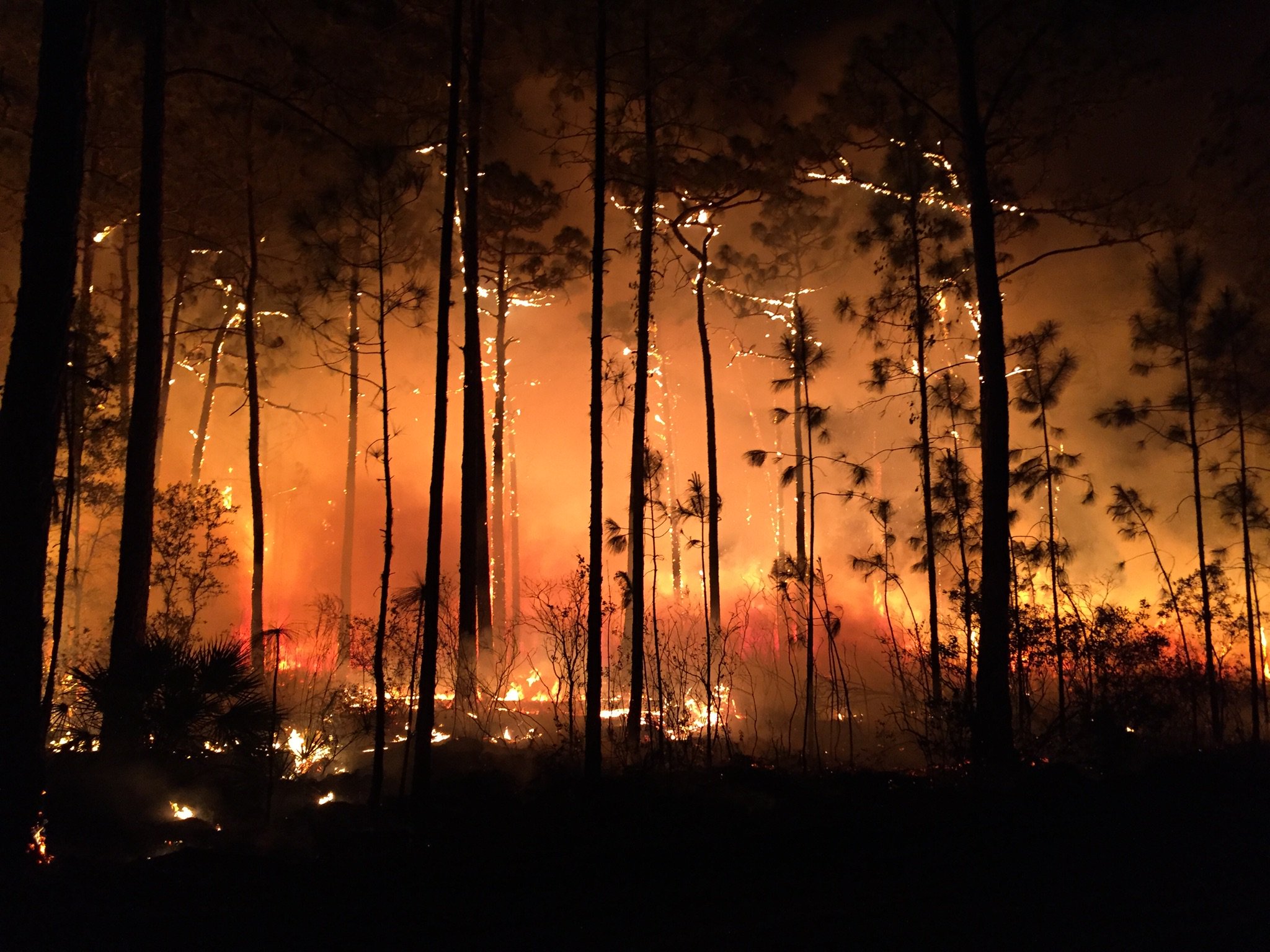
University of West Florida researchers are now using artificial intelligence to track data that will improve how damage from wildfires is mapped.

UWF Ph.D. student Valeria Martin has introduced what’s being called CalFireSeg-50, a dataset that was formulated from satellite imagery and data from 50 of the largest wildfires in California between 2019 and 2023, said a UWF news release.

Martin conducted her research with assistance from Brent Venable, UWF Director of the Intelligent Systems and Robotics Doctoral Program at UWF, and Derek Morgan, UWF Associate Professor of Earth and Environmental Sciences. They collected satellite images and provided the examples to AI, which developed recognition of fire-damaged areas. Then, using the images, the AI developed mapping systems.

“By pairing satellite data with deep-learning models, we can detect wildfire damage with high accuracy,” Martin said. “The insights from this work can support emergency response, environmental monitoring and long-term recovery planning.”

The AI programming helps develop models to indicate where fires might burn the hottest. That data helps emergency responders understand how wildfires burn and spread while pinpointing areas of priority. The AI imagery and maps also help analyze damage and track vegetation patterns across land after a blaze in the recovery phase.

“This project showcases how advanced GeoAI techniques can meaningfully support environmental monitoring,” Venable said. “Valeria’s exceptional work demonstrates the power of interdisciplinary research and reflects the innovative spirit of the Intelligent Systems and Robotics doctoral program.”

Martin’s research is gaining more attention and observation. She presented the Findings of her research at the 13th annual Association for Computing Machinery Special Interest Group on Spatial Information conference that took place in Minneapolis in November.


Source link

Continue Reading

Politics

Ashley Moody, Rick Scott diverge on rescheduling pot

Published

on


Florida’s U.S. Senators are split on President Donald Trump potentially rescheduling cannabis.

While Rick Scott signed a letter opposing the move with GOP colleagues, Ashley Moody did not.

“Rescheduling marijuana to a Schedule III drug will undermine your strong efforts to Make America Great Again and to usher in America’s next economic Golden Age. The only winners from rescheduling will be bad actors such as Communist China, while Americans will be left paying the bill,” the letter claims.

The Senators argue that changing cannabis’ classification would harm America’s attempts to reindustrialize, would have health consequences, and would give a “massive tax break” to companies in the space.

“While supporters of rescheduling argue that extending tax benefits to marijuana businesses will create economic growth, the costs of workplace and vehicular accidents caused by increased marijuana usage far exceeds any perceived benefits—not to mention the moral costs of marijuana advertising that could reach kids.”

Scott has called marijuana a “gateway drug” and says his own brother died after a lifetime struggle with drugs that began with it, so his opposition to relaxed laws continues.

While Attorney General, Moody opposed legalization initiatives in Florida. However, rumors are that the White House is considering rescheduling to Schedule III, which would permit medical research but wouldn’t immediately make it more commercially available.

12.17.2025-Letter-on-Marijuana-Rescheduling-


Source link

Continue Reading

Politics

Florida military installations to divvy up nearly $1B in federal funding act

Published

on


10 military installations in the Sunshine State will get a cut of the funding approved by Congress.

U.S. Sen. Ashley Moody is touting approval by Congress of the National Defense Authorization Act (NDAA), which will bring nearly a billion dollars in funding for several military installations in Florida.

The measure passed along bipartisan lines in the Senate and covers defense funding for the next fiscal year. It authorizes about $900 billion in total for defense spending across the U.S. The House signed off on the measure last week.

The act earmarks about $851 million for Florida installations. It will also fund expanded shipbuilding and prioritize development of the “Golden Dome” missile defense system.

“The passage of this year’s NDAA is a victory for the strengthening of our national security and Florida’s military bases. It is vital for the protection of our great nation that our military has the resources needed to deter evil and stay mission ready. Sadly, just this week we lost two National Guardsmen and an interpreter far too soon at the hands of an apparent ISIS attack in Syria. My heart breaks for their families’ unimaginable loss. It is a stark reminder that we must continue our efforts to secure peace through a robust national defense,” Moody said in a news release Wednesday.

“Florida is proud to be the home of three combatant commands, including SOUTHCOM, CENTCOM and SOCOM, as well as 21 military installations which all play a highly important role in the United States’ military strategy. I will always fight for their interests, because a strong military is essential for a strong nation.”

Ten different military installations in Florida will get a partial cut of the funding including, Cape Canaveral Space Force Station, Eglin Air Force Base, Homestead Air Reserve Base, Hurlburt Field, MacDill Air Force Base, Marine Corps Support Facility Blount Island, Naval Air Station Key West, Naval Air Station Pensacola, Naval Air Station Whiting Field and Tyndall Air Force Base.

Florida is home to more than 90,000 active military personnel in the state, and about 1.5 million military veterans reside here.


Source link

Continue Reading

Politics

New College Foundation announces $1M gift for ‘Socratic Stage’ program

Published

on


The New College Foundation has announced a $1 million donation from Dr. Michael C. and Ling Z. Markovitz to establish a new campus program centered on debate, classical learning and public discourse.

The donation, made directly to the New College Foundation, will help the college establish the Markovitz Socratic Stage, a signature forum dedicated to revitalizing civil discourse, classical learning and the free exchange of ideas on campus.

“We believe deeply in the power of ideas — and the courage it takes to explore them openly,” Michael said in a statement. “New College is leading a movement to bring back real dialogue, real debate, and real education. We are honored to support this mission and help build a program where students learn to think for themselves, speak with conviction, and engage with the world in meaningful ways.”

The donation will support a series of debates, lectures and discussion-based events meant to bring together students, faculty, visiting scholars and community members for debates, dialogues, books discussions, lecture series, public forums, intellectual events open to the community, and student-centered opportunities.

The program will be integrated into New College’s Logos/Techne curriculum and is expected to launch as a recurring campus initiative open to the public.

College President Richard Corcoran called the gift a “defining moment” for the institution, saying it aligns with New College’s emphasis on classical education and intellectual freedom.

“Michael and Ling Markovitz have made a profound and visionary commitment to New College,” he said. “Their gift strengthens our mission to revive rigorous classical education and restore the humanities as a force for intellectual freedom. The Markovitz Socratic Stage will impact generations of students by giving them a place to think deeply, debate boldly, and seek truth fearlessly.”


Source link

Continue Reading

Trending

Copyright © Miami Select.