Connect with us

Business

US vaccine advisers end decades-long recommendation for all babies to get hepatitis B shot at birth

Published

on


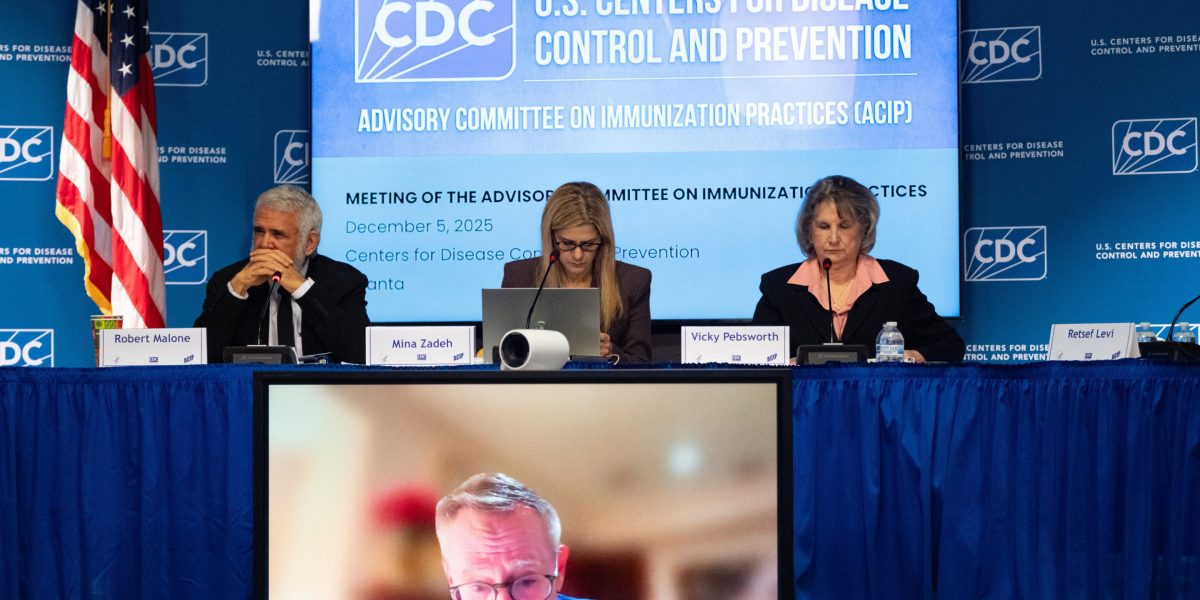
A federal vaccine advisory committee voted on Friday to end the longstanding recommendation that all U.S. babies get the hepatitis B vaccine on the day they’re born.

A loud chorus of medical and public health leaders decried the actions of the panel, whose current members were all appointed by U.S. Health Secretary Robert F. Kennedy Jr. — a leading anti-vaccine activist before this year becoming the nation’s top health official.

“This is the group that can’t shoot straight,” said Dr. William Schaffner, a Vanderbilt University vaccine expert who for decades has been involved with the Advisory Committee on Immunization Practices and its workgroups.

Several medical societies and state health departments said they would continue to recommend them. While people may have to check their policies, the trade group AHIP, formerly known as America’s Health Insurance Plans, said its members still will cover the birth dose of the hepatitis B vaccine.

For decades, the government has advised that all babies be vaccinated against the liver infection right after birth. The shots are widely considered to be a public health success for preventing thousands of illnesses.

But Kennedy’s advisory committee decided to recommend the birth dose only for babies whose mothers test positive, and in cases where the mom wasn’t tested.

For other babies, it will be up to the parents and their doctors to decide if a birth dose is appropriate. The committee voted 8-3 to suggest that when a family elects to wait, then the vaccination series should begin when the child is 2 months old.

President Donald Trump posted a message late Friday calling the vote a “very good decision.”

The acting director of the Centers for Disease Control and Prevention, Jim O’Neill, is expected to decide later whether to accept the committee’s recommendation.

The decision marks a return to a health strategy abandoned more than three decades ago

Asked why the newly-appointed committee moved quickly to reexamine the recommendation, committee member Vicky Pebsworth on Thursday cited “pressure from stakeholder groups,” without naming them.

Committee members said the risk of infection for most babies is very low and that earlier research that found the shots were safe for infants was inadequate.

They also worried that in many cases, doctors and nurses don’t have full conversations with parents about the pros and cons of the birth-dose vaccination.

The committee members voiced interest in hearing the input from public health and medical professionals, but chose to ignore the experts’ repeated pleas to leave the recommendations alone.

The committee gives advice to the director of the Centers for Disease Control and Prevention on how approved vaccines should be used. CDC directors almost always adopted the committee’s recommendations, which were widely heeded by doctors and guide vaccination programs. But the agency currently has no director, leaving acting director O’Neill to decide.

In June, Kennedy fired the entire 17-member panel earlier this year and replaced it with a group that includes several anti-vaccine voices.

Hepatitis B and delaying birth doses

Hepatitis B is a serious liver infection that, for most people, lasts less than six months. But for some, especially infants and children, it can become a long-lasting problem that can lead to liver failure, liver cancer and scarring called cirrhosis.

In adults, the virus is spread through sex or through sharing needles during injection drug use. But it can also be passed from an infected mother to a baby.

In 1991, the committee recommended an initial dose of hepatitis B vaccine at birth. Experts say quick immunization is crucial to prevent infection from taking root. And, indeed, cases in children have plummeted.

Still, several members of Kennedy’s committee voiced discomfort with vaccinating all newborns. They argued that past safety studies of the vaccine in newborns were limited and it’s possible that larger, long-term studies could uncover a problem with the birth dose.

But two members said they saw no documented evidence of harm from the birth doses and suggested concern was based on speculation.

Three panel members asked about the scientific basis for saying that the first dose could be delayed for two months for many babies.

“This is unconscionable,” said committee member Dr. Joseph Hibbeln, who repeatedly voiced opposition to the proposal during the sometimes-heated two-day meeting.

The committee’s chair, Dr. Kirk Milhoan, said two months was chosen as a point where infants had matured beyond the neonatal stage. Hibbeln countered that there was no data presented that two months is an appropriate cut-off.

Dr. Cody Meissner also questioned a second proposal — which passed 6-4 — that said parents consider talking to pediatricians about blood tests meant to measure whether hep B shots have created protective antibodies.

Such testing is not standard pediatric practice after vaccination. Proponents said it could be a new way to see if fewer shots are adequate.

A CDC hepatitis expert, Adam Langer, said results could vary from child to child and would be an erratic way to assess if fewer doses work. He also noted there’s no good evidence that three shots pose harm to kids.

Meissner attacked the proposal, saying the language “is kind of making things up.”

Health experts say this could ‘make America sicker’

Health experts have noted Kennedy’s hand-picked committee is focused on the pros and cons of shots for the individual getting vaccinated, and has turned away from seeing vaccinations as a way to stop the spread of preventable diseases among the public.

The second proposal “is right at the center of this paradox,” said committee member Dr. Robert Malone.

Some observers criticized the meeting, noting recent changes in how they are conducted. CDC scientists no longer present vaccine safety and effectiveness data to the committee. Instead, people who have been prominent voices in anti-vaccine circles were given those slots.

The committee “is no longer a legitimate scientific body,” said Elizabeth Jacobs, a member of Defend Public Health, an advocacy group of researchers and others that has opposed Trump administration health policies. She described the meeting this week as “an epidemiological crime scene.”

Republican Sen. Bill Cassidy, a liver doctor who chairs the Senate health committee, called the committee’s vote on the hepatitis B vaccine “a mistake.”

“This makes America sicker,” he said, in a post on social media.

The committee heard a 90-minute presentation from Aaron Siri, a lawyer who has worked with Kennedy on vaccine litigation. He ended by saying that he believes there should no ACIP vaccine recommendations at all.

In a lengthy response, Meissner said, “What you have said is a terrible, terrible distortion of all the facts.” He ended by saying Siri should not have been invited.

The meeting’s organizers said they invited Siri as well as a few vaccine researchers — who have been vocal defenders of immunizations — to discuss the vaccine schedule. They named two: Dr. Peter Hotez, who said he declined, and Dr. Paul Offit, who said he didn’t remember being asked but would have declined anyway.

Hotez, of the Texas Children’s Hospital in Houston, declined to present before the group “because ACIP appears to have shifted its mission away from science and evidence-based medicine,” he said in an email to The Associated Press.


Source link

Continue Reading

Business

The workforce is becoming AI-native. Leadership has to evolve

Published

on


One of the most insightful conversations I have had recently about artificial intelligence was not with policymakers or peers. It was with a group of Nokia early-careers talents in their early 20s. What stood out was their impatience. They wanted to move faster in using AI to strengthen their innovation capabilities. 

That makes perfect sense. This generation began university when ChatGPT launched in 2022. They now account for roughly half of all ChatGPT usage, applying it to everything from research to better decision-making in knowledge-intensive work. 

Some people worry that AI-driven hiring slowdowns are disproportionately impacting younger workers. Yet the greater opportunity lies in a new generation of AI-native professionals entering the workforce equipped for how technology is transforming roles, teams, and leadership.

Better human connectivity 

One of the first tangible benefits of generative AI is that it allows individual contributors to take on tasks once handled by managers. Research by Harvard Business School found that access to Copilot increased employee productivity by 5% in core tasks. As productivity rises and hierarchies flatten, early-career employees using AI are empowered to focus on outcomes, learn faster, and contribute at a higher level.

Yet personal productivity is not the real measure of progress. What matters most is how well teams perform together. Individual AI gains only create business impact when they align with team goals and that requires greater transparency, alignment, and accountability.

At Nokia, we ensure that everyone has clear, measurable goals that support their teams’ objectives. Leaders need to be open about their goals to their managers and to their reports. And everyone means everyone. Me included. That way goals are not only about recognition and reward. They become an ongoing dialogue between leaders and their teams. It’s how we’re building a continuous learning culture that thrives on feedback and agility, both essential in the AI era. 

Humans empowered with AI, not humans versus AI

AI’s true power lies in augmenting human skills. Every role has a core purpose – whether in strategy, creativity, or technical problem-solving – and AI helps people focus on that. 

During the COVID-19 pandemic, more than 60 chatbots were deployed in 30 countries to handle routine public health queries, freeing up healthcare workers to focus on critical patient care. Most health services never looked back. 

The same pattern applies inside companies. Some of the routine tasks given to new hires are drudge work and not a learning experience. AI gives us a chance to rethink the onboarding, training, and career development process.

Take an early-career engineer. Onboarding can be a slow process of documentation and waiting for reviews. AI can act as an always-on coach that gives quick guidance and helps people ramp up. Mentors then spend less time on the basics and more time helping engineers solve real problems. Engineers can also have smart agents testing their designs, ideas, and simulating potential outcomes. In this way, AI strengthens, rather than substitutes, the human connection between junior engineers and their mentors and helps unlock potential faster.

Encourage experimentation and entrepreneurship 

During two decades of the Internet Supercycle (1998-2018), start-ups created trillions of dollars in economic value and roughly half of all new jobs in OECD countries

As AI lowers the barriers to launching and scaling ventures, established companies must find new ways to encourage experimentation, nurture innovation through rapid iterations, and give employees the chance to commercialize and scale their ideas.

There is a generational shift that increases the urgency: more than 60% of Gen Z Europeans hope to start their own businesses within five years, according to one survey. To secure this talent, large organizations must provide the attributes that make entrepreneurship attractive. Empowering people with agility, autonomy, and faster decision-making creates an edge in attracting and keeping top talent.

At Nokia, our Technology and AI Organization is designed to strengthen innovation capabilities, encourage entrepreneurial thinking, and give teams the support to turn ideas into real outcomes.

More coaching, less managing 

Sporting analogies are often overused in business as the two worlds don’t perfectly align, yet the evolution of leadership in elite football offers useful lessons. Traditionally, managers oversaw everything on and off the pitch. Today, head coaches focus on building the right team and culture to win. 

Luis Enrique, the manager of Paris-St. Germain football club, last season’s UEFA Champion’s League winner, exemplifies this shift. He transformed a team of stars into a star team, while also evolving his coaching style, elevating both individual and collective potential.

Of course, CEOs must switch between both roles (as I said, the worlds don’t perfectly align) – setting vision and strategy while also cultivating the right team and culture to succeed. AI can help leaders do both with more focus. It gives us quicker insight into what is working, what is not, and where teams need support.

I have been testing these tools with my own leadership team. We are using generative AI to help us evaluate our decisions and to understand how we work together. It has revealed patterns we might have missed, and it has helped us get to the real issues faster. It does not replace judgment or experience. It supports them.

Yet the core of leadership does not change. AI cannot build trust. It cannot set expectations. It cannot create a culture that learns, improves, and takes responsibility. That still comes from people. And in a world shaped by AI, the leaders who succeed will be the ones who coach, who listen, and who help teams move faster with confidence.

Nokia’s technology connects intelligence around the world. Inside the company, connecting intelligence is about how people work together. It means giving teams the tools, support and culture they need to grow and perform with confidence. Connecting intelligence is how teams win.

The opinions expressed in Fortune.com commentary pieces are solely the views of their authors and do not necessarily reflect the opinions and beliefs of Fortune.


Source link

Continue Reading

Business

Procurement execs often don’t understand the value of good design, experts say

Published

on


Behind every intricately designed hotel or restaurant is a symbiotic collaboration between designer and maker.

But in reality, firms want to build more with less—and even though visions are created by designers, they don’t always get to see them to fruition. Instead, intermediaries may be placed in charge of procurements and overseeing the financial costs of executing designs.

“The process is not often as linear as we [designers] would like it to be, and at times we even get slightly cut out, and something comes out on the other side that wasn’t really what we were expecting,” said Tina Norden, a partner and principal at design firm Conran and Partners, at the Fortune Brainstorm Design forum in Macau on Dec. 2.

“To have a better quality product, communication is very much needed,” added Daisuke Hironaka, the CEO of Stellar Works, a furniture company based in Shanghai. 

Yet those tasked with procurement are often “money people” who may not value good design—instead forsaking it to cut costs. More education on the business value of quality design is needed, Norden argued.

When one builds something, she said, there are both capital investment and a lifecycle cost. “If you’re spending a bit more money on good quality furniture, flooring, whatever it might be, arguably, it should last a lot longer, and so it’s much better value.”

Investing in well-designed products is also better for the environment, Norden added, as they don’t have to be replaced as quickly.

Attempts to cut costs may also backfire in the long run, said Hironaka, as business owners may have to foot higher maintenance bills if products are of poor design and make.

AI in interior and furniture design

Though designers have largely been slow adopters of AI, some luminaries like Daisuke are attempting to integrate it into their team’s workflow.

AI can help accelerate the process of designing bespoke furniture, Daisuke explained, especially for large-scale projects like hotels. 

A team may take a month to 45 days to create drawings for 200 pieces of custom-made furniture, the designer said, but AI can speed up this process. “We designed a lot in the past, and if AI can use these archives, study [them] and help to do the engineering, that makes it more helpful for designers.” 

Yet designers can rest easy as AI won’t ever be able to replace the human touch they bring, Norden said. 

“There is something about the human touch, and about understanding how we like to use our spaces, how we enjoy space, how we perceive spaces, that will always be there—but AI should be something that can assist us [in] getting to that point quicker.”

She added that creatives can instead view AI as a tool for tasks that are time-consuming but “don’t need ultimate creativity,” like researching and three-dimensionalizing designs.

“As designers, we like to procrastinate and think about things for a very long time to get them just right, [but] we can get some help in doing things faster.”


Source link

Continue Reading

Business

Binance has been proudly nomadic for years. A new announcement suggests it’s chosen an HQ

Published

on


For years, Binance has dodged questions about where it plans to establish a corporate headquarters. On Monday, the world’s largest crypto exchange made an announcement that indicates it has chosen a location: Abu Dhabi, the capital of the United Arab Emirates.

In its announcement, Binance reported that it has secured three global financial licenses within Abu Dhabi Global Market, a special economic zone inside the Emirati city. The licenses regulate three different prongs of the exchange’s business: its exchange, clearinghouse, and broker dealer services. The three regulated entities are named Nest Exchange Limited, Nest Clearing and Custody Limited, and Nest Trading Limited, respectively.

Richard Teng, the co-CEO of Binance, declined to say whether Abu Dhabi is now Binance’s global headquarters. “But for all intents and purposes, if you look at the regulatory sphere, I think the global regulators are more concerned of where we are regulated on a global basis,” he said, adding that Abu Dhabi Global Market is where his crypto exchange’s “global platform” will be governed.

A company spokesperson declined to add more to Teng’s comments, but did not deny Fortune’s assertion that Binance appears to have chosen Abu Dhabai as its headquarters.

Corporate governance

The Abu Dhabi announcement suggests that Binance, which has for years taken pride in branding itself as a company with no fixed location, is bowing to the practical considerations that go with being a major financial firm—and the corporate governance obligations that entails.

When Changpeng Zhao, the cofounder and former CEO of Binance, launched the company in 2017, he initially established the exchange in Hong Kong. But, weeks after he registered Binance in the city, China banned cryptocurrency trading, and Zhao moved his nascent trading platform. Binance has since been itinerant. “Wherever I sit is going to be the Binance office,” Zhao said in 2020.

The location of a company’s headquarters impacts its tax obligations and what regulations it needs to follow. In 2023, after Binance reached a landmark $4.3 billion settlement with the U.S. Department of Justice, Zhao stepped down as CEO and pleaded guilty to failing to implement an effective anti-money laundering program.

Teng took over and promised to implement the corporate structures—like a board of directors—that are the norm for companies of Binance’s size. Teng, who now shares the CEO role with the newly appointed Yi He, oversaw the appointment of Binance’s first board in April 2024. And he’s repeatedly telegraphed that his crypto exchange is focused on regulatory compliance.

Binance already has a strong footprint in the Emirates. It has a crypto license in Dubai, received a $2 billion investment from an Emirati venture fund in March, and, that same month, said it employed 1,000 employees in the country. 


Source link

Continue Reading

Trending

Copyright © Miami Select.