Connect with us

Business

US national debt: Telsa CEO Elon Musk says AI and robotics will solve crisis but lead to deflation

Published

on


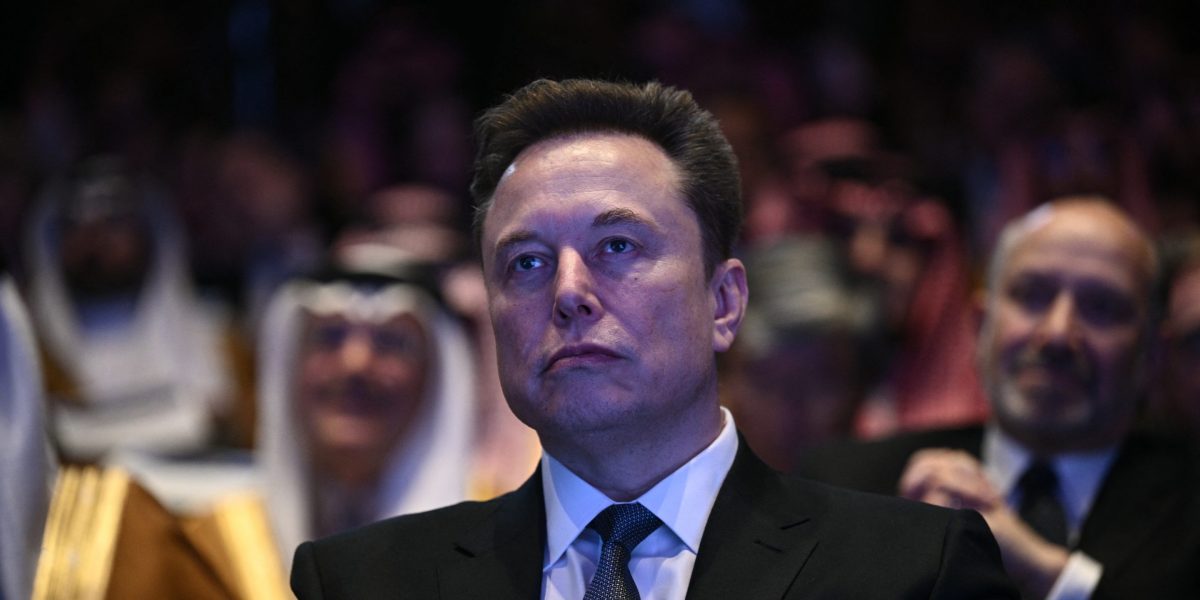
Tesla CEO Elon Musk describes his foray into the world of politics as a “very interesting side quest.” The world’s richest man ploughed hundreds of millions into President Trump’s election campaign, barrelled into the capital and set off administrative hand grenades with the Department of Government Efficiency (DOGE). He then promptly fell out of favor with the White House and was dismissed back to Texas.

The separation between Trump and Musk was a break up pretty much everyone saw coming. It came in part due to the Oval Office’s “One Big, Beautiful Bill Act,” which the tech titan said undermined the cost-cutting work of DOGE. Musk is one of many business leaders concerned by America’s spending habits, with national debt now totalling more than $38 trillion.

Economists aren’t necessarily worried by the level of national debt—nations actually need it to underpin the bond market and keep the global economy moving—but they are worried about the interest payments on the debt, and how this impacts the all-important debt-to-GDP ratio. This ratio indicates how fast a country’s economy is growing and as a result, its ability to be able to repay the debt or keep up with interest payments on the borrowing.

And those payments are rocketing: As of October 2025, it costs $104 billion to maintain the debt, which is 15% of total federal spending in fiscal year 2026. Total interest paid on the debt for FY 2025 was $1.22 trillion.

To rebalance the debt-to-GDP ratio and avoid even higher borrowing rates, a nation can either reduce its spending or stimulate its economy to rebalance the books. Musk seems to think that the latter is the best option, via a new age of growth unlocked by AI.

“As long as civilization keeps advancing, we will have AI and robotics at very large scale,” Musk told Nikhil Kamath’s podcast in an episode aired yesterday. “I think that’s pretty much the only thing that’s going to solve the U.S. debt crisis.”

He added: “Currently the U.S. debt is insanely high and the interest payments on the debt exceed the entire military budget of the United States, just the interest payments, and that’s—at least in the short term—going to continue to increase.”

Musk may be referring to the fact that in 2024, the Committee for a Responsible Budget reported that borrowing costs exceeded defense and medicaid payments for the first time.

A deflation issue

“I think actually the only thing that can solve the debt situation is AI and robotics,” Musk continued, before making a caveat that the increased output in goods and services as a result of the transformative technology would likely lead to “significant deflation.”

He explained: “If you have AI and robotics, and a dramatic increase in the output of goods and services, probably you will have deflation. That seems likely because you simply won’t be able to increase the money supply as fast as you increase the output of goods and services.”

Some economists agree with Musk, though perhaps to a less extreme degree. Ron Insana, a senior advisor at Schroders, wrote in a column way back in 2023 that “with every technological advancement, workers are displaced and costs for specific goods and services decline as a consequence.” Likewise, in August this year BlackRock’s senior managing director, Rick Rieder wrote AI may prove to be a “force that pushes unit costs down and output up. In economic terms: disinflationary growth. In investment terms: higher returns on equity, expanding margins, and a re-rating of productivity leaders.”

That said, the takes are generally of the opinion that AI may be disinflationary (a slowing of price rises) as opposed to deflationary (an outright decrease in the price levels).

Musk added the productivity gains needed to offset the current inflation rate of 3% are not there yet, but they’re not far off either. He added: “If you say ‘How long would it take us to get there?’ I think it’s three years. In three years or less, my guess is goods and services output will exceed the rate of inflation … like money supply growth. Maybe after those three years, you have deflation and then interest rates go to zero, and then the debt is a smaller problem than it is.”


Source link

Continue Reading

Business

Americans are paying nearly all of the tariff burden as international exports die down, study finds

Published

on


After nearly a year of promises tariffs would boost the U.S. economy while other countries footed the bill, a new study shows almost all of the tariff burden is falling on American consumers. 

Americans are paying 96% of the costs of tariffs as prices for goods rise, according to research published Monday by the Kiel Institute for the World Economy, a German think tank. 

In April 2025 when President Donald Trump announced his “Liberation Day” tariffs, he claimed: “For decades, our country has been looted, pillaged, raped, and plundered by nations near and far, both friend and foe alike.” But the report suggests tariffs have actually cost Americans more money.

Trump has long used tariffs as leverage in non-trade political disputes. Over the weekend, Trump renewed his trade war in Europe after Denmark, Norway, Sweden, France, Germany, the United Kingdom, the Netherlands, and Finland sent troops for training exercises in Greenland. The countries will be hit with a 10% tariff starting on Feb. 1 that is set to rise to 25% on June 1, if a deal for the U.S. to buy Greenland is not reached. 

On Monday, Trump threatened a 200% tariff on French wine, after French President Emmanuel Macron refused to join Trump’s “Board of Peace” for Gaza, which has a $1 billion buy-in for permanent membership. 

“The claim that foreign countries pay these tariffs is a myth,” wrote Julian Hinz, research director at the Kiel Institute and an author of the study. “The data show the opposite: Americans are footing the bill.” 

The research shows export prices stayed the same, but the volume has collapsed. After imposing a 50% tariff on India in August, exports to the U.S. dropped 18% to 24%, compared to the European Union, Canada, and Australia. Exporters are redirecting sales to other markets, so they don’t need to cut sales or prices, according to the study.

“There is no such thing as foreigners transferring wealth to the U.S. in the form of tariffs,” Hinz told The Wall Street Journal

For the study, Hinz and his team analyzed more than 25 million shipment records between January 2024 through November 2025 that were worth nearly $4 trillion.They found exporters absorbed just 4% of the tariff burden and American importers are largely passing on the costs to consumers. 

Tariffs have increased customs revenue by $200 billion, but nearly all of that comes from American consumers. The study’s authors likened this to a consumption tax as wealth transfers from consumers and businesses to the U.S. Treasury.   

Trump has also repeatedly claimed tariffs would boost American manufacturing, butthe economy has shown declines in manufacturing jobs every month since April 2025, losing 60,000 manufacturing jobs between Liberation Day and November. 

The Supreme Court was expected to rule as soon as today on whether Trump’s use of emergency powers to levy tariffs under the International Emergency Economic Powers Act was legal. The court initially announced they planned to rule last week and gave no explanation for the delay. 

Although justices appeared skeptical of the administration’s authority during oral arguments in November, economists predict the Trump administration will find alternative ways to keep the tariffs.


Source link

Continue Reading

Business

Selling America is a ‘dangerous bet,’ UBS CEO warns as markets panic

Published

on


Investors are “selling America” in spades Tuesday: The 10-year Treasury yield is at its highest point since August; the U.S. dollar slid; and the traditional safe-haven metal investments—gold and silver—surged once again to record highs.

The CEO of UBS Group, the world’s largest private bank, thinks this market is making a “dangerous bet.”

“Diversifying away from America is impossible,” UBS Group CEO Sergio Ermotti told Bloomberg in a television interview at the World Economic Forum in Davos, Switzerland, on Tuesday. “Things can change rapidly, and the U.S. is the strongest economy in the world, the one who has the highest level of innovation right now.” 

The catalyst for the selloff was fresh escalation from U.S. President Donald Trump, who has threatened a 10% tariff on eight European allies—including Germany, France, and the U.K.—unless they cede to his demands to acquire Greenland.

Trump also threatened a 200% tariff on French wine and Champagne to pressure French President Emmanuel Macron to join his Board of Peace. Trump’s favorite “Mr. Tariff” is back, and bond investors are unhappy with the volatility.

But if investors keep getting caught up in the volatility of day-to-day politics and shun the U.S., they’ll miss the forest for the trees, Ermotti argued. While admitting the current environment is “bumpy,” he pointed to a statistic: Last year alone, the U.S. created 25 million new millionaires. For a wealth manager like UBS, that is 1,000 new millionaires a day. To shun that level of innovation in U.S. equities for gold would be a reactionary move that ignores the long-term innovation of the U.S. economy. 

“We see two big levers: First of all, wealth creation, GDP growth, innovation, and also more idiosyncratic to UBS is that we see potential for us to become more present, increase our market share,” Ermotti said. 

But if something doesn’t give in the standoff between the European Union and Trump, there could be potential further de-dollarization, this time, from Europe selling its U.S. bonds, George Saravelos, head of FX research at Deutsche Bank, wrote in a note Sunday. Indeed, on Tuesday, Danish pension funds sold $100 million in U.S. Treasuries, allegedly owing to “poor” U.S. finances, though the pension fund’s chief said of the debacle over Greenland: “Of course, that didn’t make it more difficult to take the decision.” 

Europe owns twice as many U.S. bonds and equities as the rest of the world combined. If the rest of Europe follows Denmark’s lead, that could be an $8 trillion market at risk, Saravelos argued. 

“In an environment where the geo-economic stability of the Western alliance is being disrupted existentially, it is not clear why Europeans would be as willing to play this part,” he wrote. 

Back in the U.S., the markets also sold off as the Nasdaq and S&P both fell 2% Tuesday, already shedding the entirety of Greenland’s value on Trump’s threats, University of Michigan economist Justin Wolfers noted. Analysts and investors are uneasy, given the history of Trump declaring a stark tariff before negotiating with the country to take it down, also known as the “TACO”—Trump always chickens out—effect. Investors have been “burnt before by overreacting to tariff threats,” Jim Reid of Deutsche Bank noted. That’s a similar stance to the UBS bank chief: If you react too much to headlines, you’ll miss the great innovation that’s pushed the stock market to record highs for the past three years.

“I wouldn’t really bet against the U.S.,” he said.


Source link

Continue Reading

Business

Trump added $2.25 trillion to the national debt in his first year back in charge, watchdog says

Published

on


Trump’s first year back in the White House closed with the U.S. national debt roughly $2.25 trillion higher than when he retook the oath of office, showing how fast Washington’s red ink is piling up even amid DOGE hype and promises to pay it down. Over the calendar year 2025, the growth in the national debt was even higher, some $2.29 trillion.

The acceleration in borrowing, with the national debt standing at $38.4 trillion and growing as of January 9, is sharpening warnings from budget watchdogs and Wall Street alike that the country’s fiscal path is becoming a growing vulnerability for the economy.​ The total national debt has grown by $71,884.09 per second for the past year, according to Congressman David Schweikert’s Daily Debt Monitor.

Over the 12 months from the close of trading on Jan. 17, 2025, to the end of day Jan. 15, 2026, the federal government added approximately $2.25 trillion to the national debt, according to calculations shared exclusively with Fortune by the Peter G. Peterson Foundation. That period roughly captures President Donald Trump’s first year back in office, as it is the last business day before last year’s Inauguration Day and the most recent day for which data are available. The jump from $37 trillion to $38 trillion in just two months between August and October was particularly notable, with the Peterson Foundation calculating at the time that it was the fastest rate of growth outside the pandemic. Michael A. Peterson, CEO of the nonpartisan watchdog dedicated to fiscal sustainability, told Fortune at the time that “if it seems like we are adding debt faster than ever, that’s because we are.”

As for how these figures compare to recent presidencies, the Peterson Foundation provided calculations (below) for each calendar year over the last quarter-century, revealing that President Joe Biden owns the highest year of national debt growth outside the pandemic, with almost $2.6 trillion in 2023. President Trump far and away holds the record, with nearly $4.6 trillion of national-debt growth occurring during the pandemic year of 2020, when massive federal spending occurred in the form of economic relief measures.

Trump and Biden together own the top five highest-debt-incurring years, two for Trump and three for Biden, across five of the last six years. While the figures are not adjusted for inflation, by and large, Trump and Biden have roughly doubled the rate of debt accumulation under President Barack Obama and tripled, even quadrupled the rate of growth under President George W. Bush, depending on which term you’re looking at. To be sure, both Bush and Obama presided over the aftermath of the Great Recession of 2008, with experts still debating whether their fiscal responses were large enough.

Interest costs explode

The surge in debt is landing just as interest costs on that debt become one of Washington’s fastest‑growing expenses. The specific line item for net interest in the federal budget totaled $970 billion for fiscal year 2025, but the Congressional Budget Office (CBO) calculated that, including spending for net interest payments on the public debt, this broke the $1 trillion barrier for the first time. The Committee for a Responsible Federal Budget, another nonpartisan watchdog, projects $1 trillion per year in interest payments from here on out.

Trump has repeatedly argued that his ambitious tariff program will be enough to tame the debt burden, casting duties on imports as a kind of magic revenue source for Washington. Treasury data show tariffs are bringing in significantly more money than before—likely in the $300 billion to $400 billion‑a‑year range—but even optimistic projections suggest those sums only cover a fraction of annual interest costs and an even smaller slice of total federal spending.​ As Trump retreated from many of his tariff threats—before the January 2026 spike that he threatened in relation to his desire for U.S. possession of Greenland—the CBO calculated that $800 billion of projected deficit reduction had also vanished.

At the same time, the administration has promised to share some of that tariff revenue directly with households through a proposed $2,000 “dividend” for every American, a pledge that independent analysts estimate could cost around $600 billion per year and further widen the deficit unless offset elsewhere. Economists say that the combination—more borrowing, high interest rates, and new permanent commitments—risks locking in structural deficits that keep the debt rising faster than the overall economy.​

Markets and America’s ‘Achilles’ heel’

Financial markets are taking notice. As Washington auctions hundreds of billions of dollars in new Treasury securities each week, yields on longer‑term notes and bonds have moved higher, reflecting both tighter monetary conditions and investor unease about the sheer volume of U.S. borrowing. Recent analysis from Deutsche Bank and others has described America’s mounting debt load as an “Achilles heel” that could leave the dollar and broader economy more vulnerable to shocks, particularly as geopolitical tensions and tariff fights escalate.​

Those worries are amplified by the prospect of future recessions or emergencies that could force the government to borrow even more heavily on top of today’s already‑elevated baseline. Rating agencies and international lenders have not sounded any immediate alarm about U.S. solvency, but they have increasingly highlighted fiscal risks in their outlooks, pointing to widening deficits and a political system that has struggled to impose discipline.​

Voters are paying attention

If there is one thing Americans still broadly agree on, it is that the debt problem matters. Recent polling sponsored by the Peterson Foundation found that roughly 82% of voters say the national debt is an important issue for the country, even as they remain divided over which programs to cut or taxes to raise.

Trump first won office vowing to erase the national debt over time; a decade later, after his return to power, that figure has instead climbed to record highs. As the administration prepares for another year of governing—and another season of fiscal showdowns on Capitol Hill—the question is shifting from whether the debt is growing too fast to how long the world’s largest economy can keep outrunning its own balance sheet.

For this story, Fortune journalists used generative AI as a research tool. An editor verified the accuracy of the information before publishing.


Source link

Continue Reading

Trending

Copyright © Miami Select.