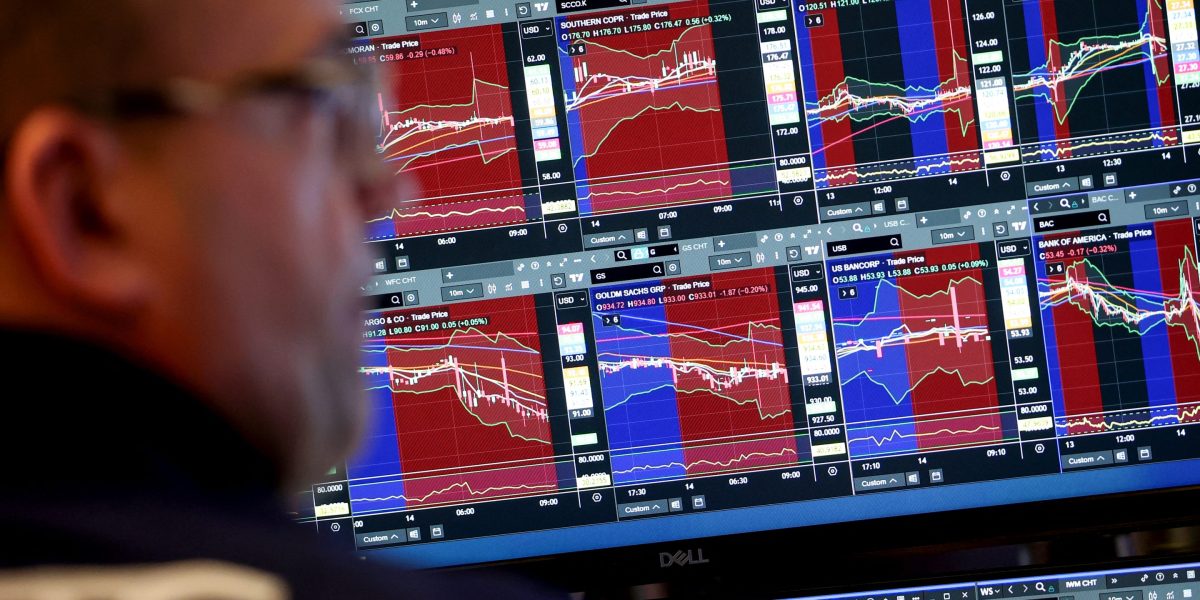
Massive budget deficits have sent U.S. debt soaring past $38 trillion, but they have also become the primary driver of corporate profits and stock valuations, according to Research Affiliates.
In a recent note, Chris Brightman, who is a partner, senior advisor, and board member at the firm, and Alex Pickard, senior vice president for research, traced the historical trend between the deficit and how earnings are recycled to inflate asset prices.
“In the financialized U.S. economy, each dollar of deficit spending may flow into a dollar of corporate profit,” they wrote.
Annual budget deficits have reached $2 trillion, with debt-servicing costs alone hitting $1 trillion. As federal spending exceeds revenue by wider margins, the Treasury Department must issue greater volumes of bonds.
Much of the money the government raises by selling debt goes into consumers’ pockets, primarily via entitlement payments, which eventually boost profits, according to Research Affiliates.
But for decades, companies largely didn’t invest those profits to expand their capacity. Due to intense global competition, especially from China, returns from U.S domestic production were kept low. And even the money that is invested wound up replacing depreciated capacity rather than expanding it.
As a result, companies returned much of their capital to shareholders in the form of buybacks and dividends, which were plowed back into financial markets, often in price-insensitive passive funds that inflate valuations, the report argued.
“Mandated to remain fully invested, these funds then recycle the inflows to purchase stocks in proportion to their market capitalization indifferent to valuation, thus bidding up prices without any change in fundamentals,” Brightman and Pickard wrote.
They pointed to a real-world experiment that reinforces their thesis. During the late 1990s, the federal government briefly erased its budget deficit and actually boasted a surplus.
That came as the booming economy helped lift revenue while cuts to federal welfare programs limited spending. During this period, corporate profits fell too, they added.
This dependence on federal deficits has left financial markets increasingly fragile, the report warned, as corporate earnings have shifted away from relying on returns from private investment.
“Reversion to a healthier macroeconomic environment of declining deficit spending and greater net investment may cause sharp declines in both corporate profits and valuation multiples and likely trigger a financial crisis with politically toxic consequences,” Brightman and Pickard concluded.
“Ironically, the more palatable option may be to remain on the current path until a financial crisis imposes on us the discipline that we are unwilling to impose on ourselves.”
Changing U.S. debt market
Despite surging revenue from President Donald Trump’s tariffs, debt continues to pile up, drawing alarm bells from Wall Street heavyweights like JPMorgan CEO Jamie Dimon and Bridgewater Associates founder Ray Dalio.
Meanwhile, Trump plans to grow defense spending by 50%, pushing it to $1.5 trillion a year and blowing up the debt even more.
At the same time, the holders of U.S. debt have shifted drastically over the past decade, tilting more toward profit-driven private investors and away from foreign governments that are less sensitive to prices.
That threatens to turn the U.S. financial system more fragile in times of market stress, according to Geng Ngarmboonanant, a managing director at JPMorgan and former deputy chief of staff to Treasury Secretary Janet Yellen.
Foreign governments accounted for more than 40% of Treasury holdings in the early 2010s, up from just over 10% in the mid-1990s, he wrote in a New York Times op-ed last month. This reliable bloc of investors allowed the U.S. to borrow vast sums at artificially low rates. Now, they make up less than 15% of the overall Treasury market.
To be sure, the federal budget deficit isn’t the only driver of growth. The AI boom has set off a massive investment wave, spurring demand for chips, data centers, and construction materials.
But so-called AI hyperscalers are also turning to the bond market to raise capital for annual expenditures of hundreds of billions of dollars. And their debt issuance represents more competition to the Treasury Department, which is looking to ensure investors continue absorbing the fresh supply of debt it must sell.
In a note last week, Apollo Chief Economist Torsten Slok pointed out that Wall Street estimates for the volume of investment grade debt that’s on the way this year reach as high as $2.25 trillion.
“The significant increase in hyperscaler issuance raises questions about who will be the marginal buyer of IG paper,” he said. “Will it come from Treasury purchases and hence put upward pressure on the level of rates? Or might it come from mortgage purchases, putting upward pressure on mortgage spreads?”
The Trump administration’s announcement on Friday of an indefinite pause on the collection of defaulted federal student loan debt, including through the Treasury Offset Program, at least temporarily extends a program that began more than half a decade ago, as a temporary pandemic measure under the first Trump Administration. It has since been extended through both bipartisan legislation and administrative action during the Biden administration.
The student-debt relief will likely come as relief to many members of Gen Z, who, as Fortune‘s Jacqueline Munis recently reported, average $94,000 in student-loan debt, driving them into “disillusionomics.” Other pundits, notably Kyla Scanlon, have riffed on the concept of “financial nihilism,” as coined by entrepreneur Demetri Kofinas, to describe how Gen Z’s crushing anxiety over their own futures—be it artificial intelligence, the $38 trillion national debt, or any other long-running financial emergency—drive them to destructive behaviors.
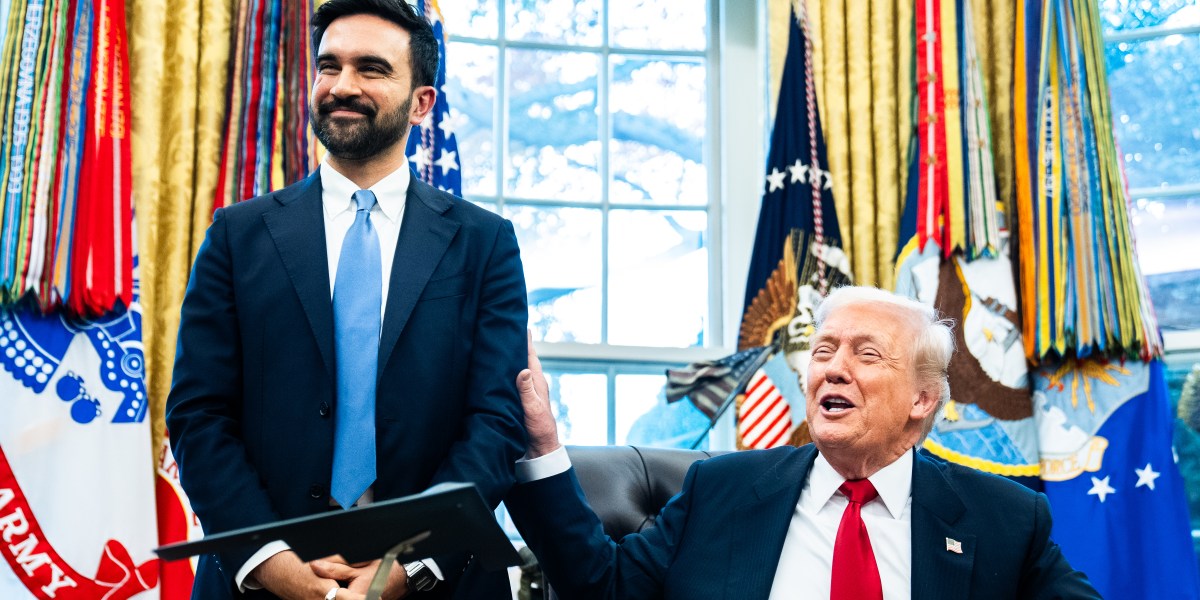
Trump, for his part, has been scrambling to address voter concerns about “affordability,” and has been reportedly in close contact, even texting back and forth in what the New York Post calls a “bromance,” with the bard of affordability himself: New York City Mayor Zohran Mamdani.
In the opinion of the Committee for a Responsible Federal Budget, though, the nonpartisan watchdog that stresses sustainability in fiscal policy, there is no excuse for this development.
CRFB President Maya MacGuineas called the decision “beyond ridiculous,” coming six years removed from the Covid pandemic that first put a stop to student-debt collections.
“This is an incoherent political giveaway, doubling down on the debt cancelation from the Biden era,” she wrote. “We’re not in a pandemic or financial crisis or deep recession. There’s no justification for emergency action on student debt, and no good reason the for the President to back down on efforts to actually begin collecting debt payments again.”
CRFB estimated that Trump’s pivot away from collections would cost about $5 billion a year in lost revenue.
A new pause, old playbook
Until now, Trump’s second-term team had been moving in the opposite direction, restarting the Treasury Offset Program in May 2025 and preparing to resume wage garnishment for borrowers in default. The new policy abruptly reverses that trajectory by restoring and extending a freeze that critics say was supposed to be temporary and tied to the COVID crisis, not a permanent fixture of higher-education finance.
MacGuineas argued that by blocking collections, the administration risks undermining “historic cost-saving reforms” to the federal student loan program that Congress approved this year to put the system on a more sustainable footing with a “fair repayment system.” She warned that taxpayers will end up paying more while borrowers could ultimately face larger balances, and the wider economy could feel upward pressure on interest rates and inflation.
Clash over Congress’s role
At the heart of the fight is who should shape the future of student lending: Congress or the president acting alone. Lawmakers this year enacted significant reforms meant to trim long-term costs and cement a more predictable repayment framework, and the CRFB credits the Trump administration with implementing those changes “with fiscal costs in mind” until now.
“The student loan program isn’t supposed to be a tool to stimulate the economy or buy votes,” MacGuineas argued, “it’s a way to help millions of students access college.” The White House should work with Congress to reform the collection of defaulted loans if that’s what it really wants to do, “But loans are supposed to be repaid, and the Administration should start collecting,” she added.
The action came just days after Trump took another page out of Mamdani’s democratic socialist playbook, suggesting a 10% cap on credit card interest rates. His former communications director, Anthony Scaramucci, suggested that this “hard-left” move could only have come from one place: his text message bromance with the princeling of Gotham.
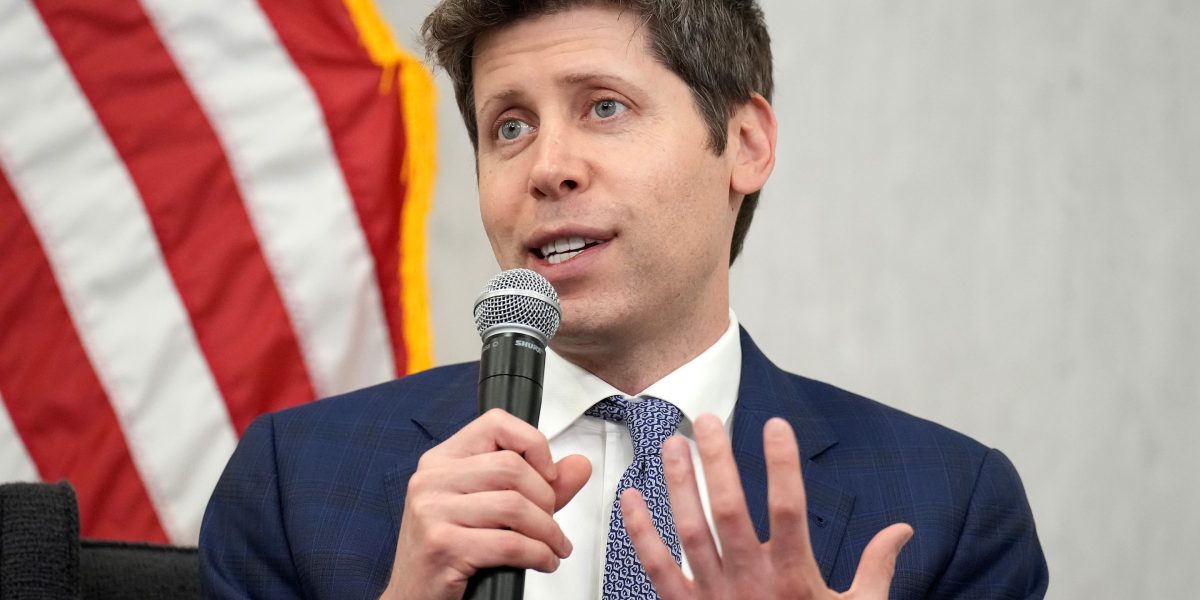
Two days after Googleinsisted there are no current plans for ads in its Gemini AI app, OpenAI announced Friday that it is starting to test ads in ChatGPT.
OpenAI CEO of applications Fidji Simo said in a blog post that ads will begin appearing at the bottom of the chatbot’s answers for free users and for Go subscribers (who pay $8 a month) in the U.S. in the coming weeks, opening an important new source of revenue for the high-flying startup which has been valued by investors at $500 billion.
It’s a moment many in tech have long viewed as inevitable: Running frontier AI models is brutally expensive, burning through staggering amounts of computing power, electricity, and GPUs. Advertising’s revenue stream is hard to resist. OpenAI expects to generate “low billions” of dollars in revenue this year, and more each year thereafter, the FT reported on Friday citing an unnamed person “close to the company.”
While Google has so far held back from putting ads in its standalone Gemini chatbot app, the company has incorporated ads into the AI Overviews that appear in its online search results, a move viewed as essential as the company seeks to extend its $265 billion a year advertising business into the AI age.
OpenAI said in its blog post that the forthcoming ads will be clearly labeled, and that users’ conversations with ChatGPT would be kept private. “You need to know that your data and conversations are protected and never sold to advertisers,” the company said. “We need to keep a high bar and give you control over your experience so you see truly relevant, high-quality ads—and can turn off personalization if you want.” In addition, it said that ads will not influence ChatGPT’s answers, which it said “are optimized based on what’s most helpful to you.”
OpenAI emphasized that subscriptions remain its long-term priority, and said that the $20 per month Plus and $200 per month Pro subscriptions, as well as the Business Enterprise version of the product, will remain ad-free. “Our enterprise and subscription businesses are already strong, and we believe in having a diverse revenue model where ads can play a part in making intelligence more accessible to everyone,” the company wrote.
Still, the company doubled down on tying the introduction of ads with its overall mission to ensure that advanced general intelligence, or AGI, “benefits all of humanity,” Simo wrote.
In a separate blog post on Friday, OpenAI said that “ads support our commitment to making AI accessible to everyone by helping us keep ChatGPT available at free and affordable price points.”
The Nobel Prize medal has always carried a symbolic weight far beyond its gold content, but in recent years it has also become a mirror for political anxieties, presidential legacies, and staggering wealth.
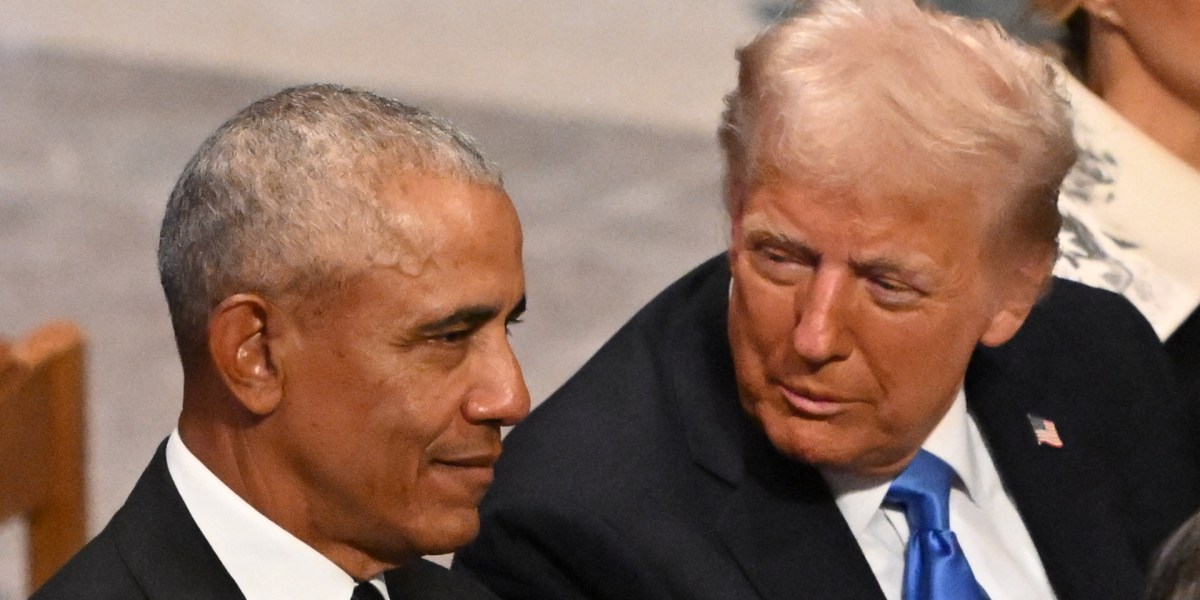
Some critics argue that the Nobel Committee embarrassed Barack Obama by honoring him too early in his presidency, but the Norway-based awarding panel seems determined to keep Donald Trump away from the honor.
And while the Peace Prize remains tightly controlled, the physical medals themselves have fetched up to $103.5 million at auction, underscoring how the committee may say whatever it wants, but these prizes can go to the highest bidder.
When Obama accepted the Nobel Peace Prize in 2009, less than a year into his first term, he said he was humbled and undeserving of it. The committee cited his “extraordinary efforts to strengthen international diplomacy.” But his subsequent decisions to send more troops to Afghanistan and wage a bombing campaign via drone would darken the glow of Oslo’s optimism. Even Geir Lundestad, the former Nobel secretary, wrote in his memoir, Secretary of Peace, that he regretted the decision: “Even many of Obama’s supporters believed that the prize was a mistake. In that sense the committee didn’t achieve what it had hoped for.”
Obama’s successor has been reportedly desirous of the same honor, with reports attributing his lust for Nobel glory as the reason that he slapped India with a shocking 50% tariff, as Prime Minister Narendra Modi disagreed with Trump’s claim that he deserved the Nobel for stopping a war between India and Pakistan.
Similarly, Trump’s apparent desire for a Nobel plays a role in the fate of Venezuela. Opposition leader Maria Corina Machado, (who was recently in hiding and fearing for her life from the Maduro regime, won the prize in 2025 but gave it to Trump while meeting him at the White House on Thursday.
Despite receiving the award, he gave no indication about plans for holding elections in the country, and the White House reiterated Trump’s assessment that Machado lacks the support to lead Venezuela. Instead, Trump favors Delcy Rodriguez, who was sworn in as interim president.
The Nobel Committee waded in to clarify that Machado cannot give Trump her prize, but Machado told reporters that she did so anyway.
The episodes illustrate a core quirk of Nobel protocol: the title is immovable, but the tangible benefits are entirely in the laureate’s hands.
The Nobel rules leave no room for that kind of pass-the-parcel prestige: the committee alone decides recipients, and prizes cannot be transferred, re-awarded, or post‑facto reassigned for political convenience. After decades of criticism over premature or politically fraught awards, the institution has grown more cautious, keen to avoid any appearance that a Peace Prize could be used to launder reputations already hardened in the public mind.
Yet while the committee guards its symbolic authority, the open market has been less restrained. Over the last decade, Nobel medals have quietly evolved into some of the most spectacular lots on the global auction circuit. The watershed moment came in 2022, when Russian journalist Dmitry Muratov’s Nobel Peace Prize medal was sold to benefit Ukrainian child refugees, blasting past all expectations to raise an unprecedented $103.5 million.
Other medals have followed a different script, revealing more mundane – and more American – realities. Physicist Leon Lederman’s medal was sold to help cover his medical expenses, prompting outcries about the dysfunction of the U.S. health system. “Only in America,” wrote Sarah Kliff of the Physicians for a National Health Program.
The Nobel Committee cannot stop any of this. It cannot undo Obama’s early‑term Peace Prize, and it cannot engineer or block a future prize simply to manage how history will judge an American president. It also cannot prevent laureates from turning their medals into liquid capital, even when the hammer price reaches nine figures.





 Politics8 years ago