
Politics
Under pressure — SNAP judgement — Arctic blast — no brainer — Nigeria
Premium pressure
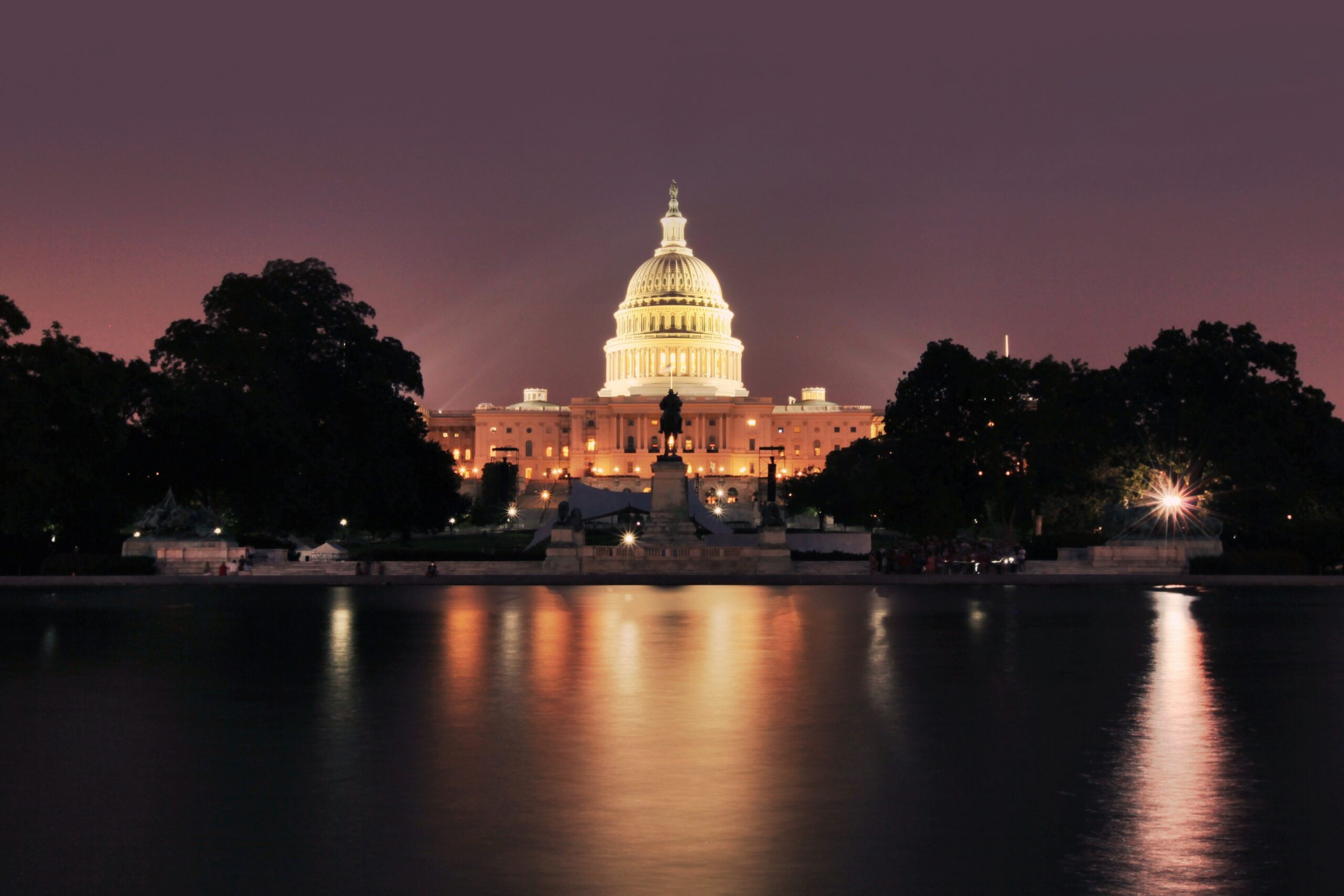
A federal government shutdown, as of today, reached a sullen milestone, tying for the most extended stoppage in history.
Like the record-long shutdown that lasted from December 2018 into the new year, this standoff has now run for 35 days, and at a moment when Republican President Donald Trump enjoys GOP control of the House and Senate. But as was the case then, Republicans pointed to a recalcitrant Democratic minority for the lack of an endgame.
Rep. Aaron Bean voiced frustration as Democrats demanded an extension of subsidies for Affordable Care Act-obtained insurance plans. As notices of higher premiums reached consumers at the start of November, the Fernandina Beach Republican said not to blame his caucus.
“Let’s be clear: Republicans are not to blame for premium increases. That’s a political talking point, not a fact. What’s driving up health care costs isn’t the expiration of this short-term COVID-era subsidy — it’s the broken system underneath. Americans are paying more, and a temporary tax credit only masks the problem; it doesn’t fix it,” he said.
“Democrats may want to distract from the real issues, but I won’t. I’m focused on real solutions — market-driven reforms that lower costs, increase transparency, and give families more control over their health care. That’s the path forward, not more finger-pointing and failed quick fixes.”
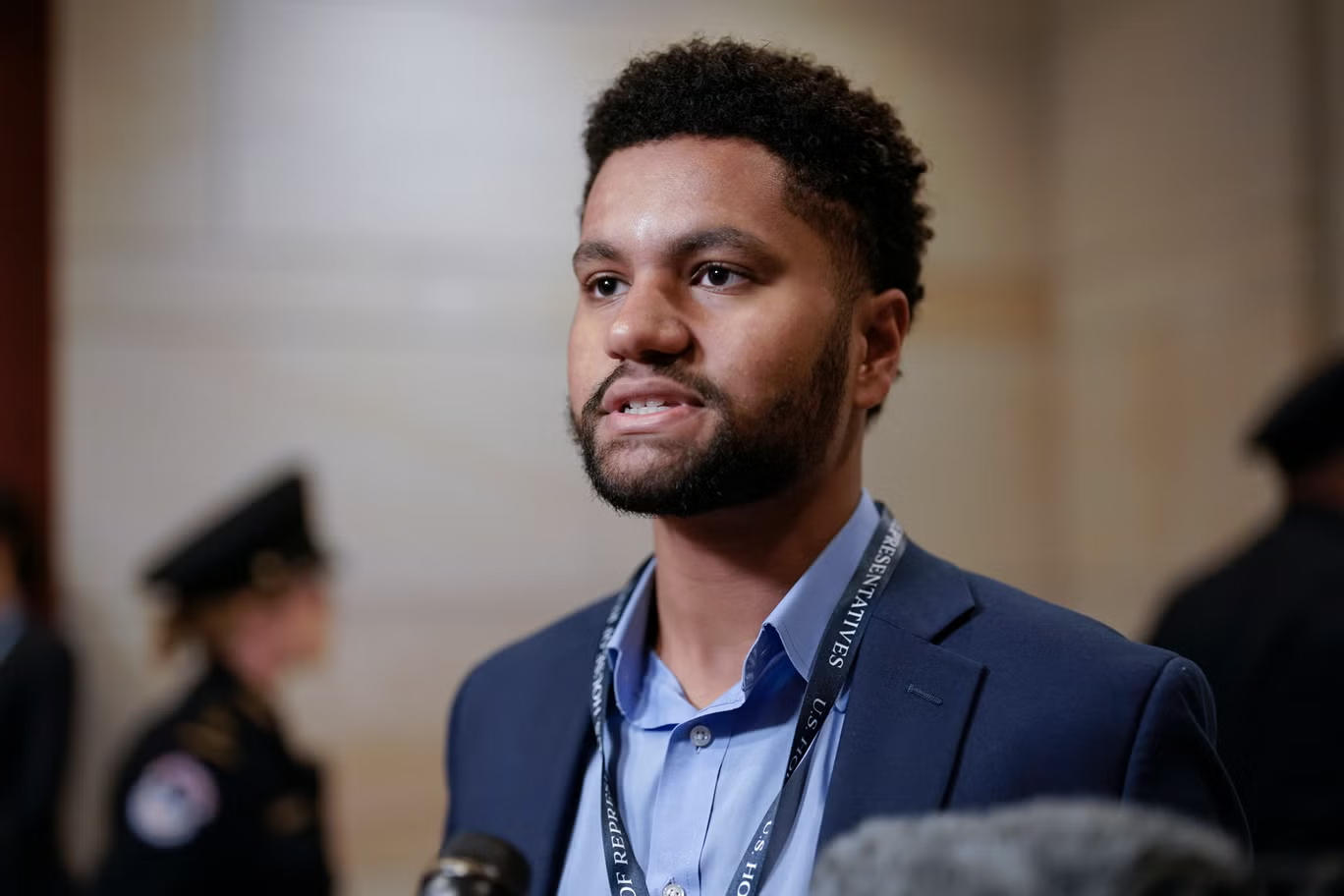
But at a Central Florida news conference, Rep. Maxwell Frost, an Orlando Democrat, said his party cannot be blamed for the shutdown.
“Republicans in the Senate could essentially end the filibuster and pass it themselves. Why haven’t they done that yet?” he said. “They don’t need our votes. I’m not going to vote for a bill that’s going to rip away health care from 189,000 of my constituents. It’s not why I ran for Congress. I’m not going to do that. If they want to pass a bill that’s going to rip away health care from 25 million Americans, do it on your own.”
In the House, of course, Republicans did pass a budget resolution that does nothing to extend subsidies but passed with nearly every Democrat voting against it. But in the Senate, it takes 60 votes to advance measures. Over more than a dozen votes; Republicans have yet to secure enough Democratic support to send a budget out for Trump’s signature.
But the Republicans representing Florida in the upper chamber have shown little hunger for making concessions to Democrats to win votes, either.
“Democrats shut down the government because they hate President Trump and want to waste more of YOUR dollars after putting the nation on the path for an unsustainable $38 trillion in debt,” posted Sen. Rick Scott, a Naples Republican. He urged passage of a fiscally conservative budget bill.
“Any new continuing resolution must extend past Jan. 15 to avoid a Christmas omnibus loaded with earmarks. My friends in the House want to extend a CR at least until March 31. Any spending bills we eventually pass should be closely aligned with the President’s proposed budget to deliver for the American people and bring fiscal sanity back to the nation.”
SNAP judgment
The shutdown hit another pain point with the start of November, with the administration saying it could not afford to continue funding the Supplemental Nutrition Assistance Program (SNAP). While two judges ordered the administration to release funding for food assistance, the Agriculture Department said that even raiding an emergency fund would only allow half the expected benefits.
Democrats questioned the legality of only partially following judges’ orders. Rep. Kathy Castor accused Trump of outright glee at withholding funds.

“On his way to his Mar-a-Lago resort today, the President seemed to relish withholding food aid,” the Tampa Democrat said. “While this is consistent with the massive cuts to food assistance passed last Summer in the Big Ugly bill ($186 billion) to fund tax breaks for the ultra-wealthy, it stands out as one of the more callous and cruel actions of his presidency. Over 3 million Florida children, seniors and families rely on SNAP, and many are also bracing for huge health care cost increases.”
Rep. Debbie Wasserman Schultz criticized Republicans for keeping Congress out of Session rather than addressing the issues with health insurance or with SNAP.
“America faces a dire Republican health care crisis and now, despite having the power to avoid it, President Trump has plunged America into a potential hunger crisis,” Wasserman Schultz said. “Rather than sit down with Democrats to negotiate a plan to get us out of this mess, Trump is intentionally making it as painful as possible.”
But Rep. Mike Haridopolos, an Indian Harbour Beach Republican, said the executive branch cannot be held responsible for brinkmanship in Congress.
“Paychecks for our military and federal workers, SNAP benefits, and the government services that YOU paid for with your taxes are all being used as hostages,” he told CNN.
“This isn’t about health care. It’s not about the budget. It’s about Democrats trying to rewrite laws they couldn’t pass and reverse reforms they couldn’t defeat at the ballot box.”

Arctic blast
Scott voiced outrage after learning that investigators of the Jan. 6 Capitol riot targeted him. Now, the Naples Republican wants the Department of Justice, headed by longtime ally Attorney General Pam Bondi, to investigate why.
Scott sent a letter to Bondi requesting a full investigation into the “gross abuse of power” while Democrat Joe Biden was President.

“Yesterday, I learned that my own cellphone records were subpoenaed, and that Jack Smith and Judge James Boasberg prohibited my phone carrier from notifying me,” the Senator wrote.
“The Biden administration’s secretive surveillance of Congress not only represents a violent assault on our constitutional separation of powers, but it also appears to be in clear violation of federal law. 2 U.S.C. § 6628 states that ‘any provider for a Senate office … shall not be barred, through operation of any court order or any statutory provision, from notifying the Senate office of any legal process seeking disclosure of Senate data.’ And ‘Senate office’ is defined broadly in the statute to ‘includ[e] a Senator’ and even one of his interns.”
Now, Scott wants Smith, the Special Counsel investigating whether President Donald Trump broke the law when he tried to overturn the 2020 election, to be disbarred, and for Boasberg to be impeached.
Of note, Scott was one of seven Republican Senators after the 2020 election to vote against certifying votes cast for Biden, as Trump alleged the election was stolen. There was no evidence that the election was stolen, and Scott later said Biden won “fair and square.”
‘No-brainer’
The National Taxpayers Union is heralding one of Sen. Ashley Moody’s first bills this year as a “no-brainer.” When the group cheered its “Top 10 Bipartisan Bills for Taxpayers,” the Stop Secret Spending Act (S 872) made the cut.
That’s a bill Moody co-introduced with Republican Sens. Joni Ernst of Iowa, James Lankford of Oklahoma and Bernie Moreno of Ohio and Democratic Sen. Gary Peters of Michigan. The bill would require public disclosure of spending currently denoted as “Other Transaction Agreements” and mandate that it be itemized on USASpending.gov. Such expenditures accounted for $18 billion in spending last year and some $40 billion between Fiscal Years 2020 to 2022, according to the Government Accountability Office.

“Since coming to Washington nine months ago, it has become increasingly apparent why people get so frustrated with Congress — and I cannot blame them. There are major spending problems here in the swamp,” Moody said.
“We are over $38 trillion in debt, and solutions must be implemented to curb this reckless addiction to spending other people’s money. The Stop Secret Spending Act is a bipartisan answer to ending these backdoor deals that are exacerbating Washington’s fiscal insanity. Thank you to the National Taxpayers Union for the recognition of our bipartisan bill on your ‘No Brainers’ list. My colleagues and I are willing to work together, across the aisle, to tackle this issue once and for all, save taxpayer dollars and put this country back on the right financial path.”

Willing away drilling
Amid reports that the administration may reopen most of the U.S. shoreline to offshore oil drilling, Scott and Moody want Congress to put in statute that Florida is off-limits.
Scott introduced the American Shores Protection Act, which would codify a drilling moratorium at the Gulf and Atlantic coasts that Trump ordered during his first term.

“As Floridians, we know how vital our beautiful beaches and coastal waters are to our state’s economy, environment, and way of life,” Scott said. “It’s why I have fought for years to keep drilling off Florida’s coasts and worked closely with President Trump during his first term to ensure they remain protected with the President’s moratorium, which bans oil drilling through 2032. I am proud to put these efforts into law with the American Shores Protection Act. I will always work to keep Florida’s shores pristine and protect our natural treasures for generations to come.”
Of course, the bill hits the hopper as Trump’s administration says drilling is “on the table” on the Atlantic coast.
But Moody expressed Florida’s solidarity with the ban Scott wants enacted into federal law.
“As a fifth-generation Floridian, preserving our state’s natural beauty is deeply important to me and the millions of those who call the Sunshine State home — as well as those who come to visit and vacation,” she said.
“It is my mission to protect our state’s coastline for the next generation. Florida has made significant efforts to conserve its incredible natural resources, and I will continue this fight at the federal level. I appreciate my colleagues’ support as we work together to ensure oil drilling stays off our beaches and pass the American Shores Protection Act.”
Road warriors
As the federal government prioritizes road and infrastructure projects, Rep. Jimmy Patronis wants military needs factored into the equation.
The Fort Walton Beach Republican just filed the Road Warrior Act, which would direct the Transportation Department to rank the three top priority projects for each state and rank them based on national security needs. That can include first-responder access, disaster evacuation routes, or the movement of military personnel.

“After years of putting America’s military last, I’m determined to work hard alongside President Trump to put America’s military first,” Patronis said.
“This bill will deliver safer, more efficient roadways, which will support mission success. As a member of the Transportation and Infrastructure Committee, I am committed to eliminating wasteful spending and making certain that every dollar goes toward projects that truly matter, ensuring our infrastructure serves those who serve us.”

Heritage brush-off
A civil war on the political right included Rep. Randy Fine, one of the delegation’s newest members, using a Republican Jewish Coalition Summit speech to slam conservative figures.
Besides calling podcaster Tucker Carlson the “most dangerous antisemite in America,” he slammed the Heritage Foundation for remarks defending the pundit for platforming White nationalist Nick Fuentes. Fine told Jewish donors he would cancel an upcoming appearance at a Heritage event over the remarks.

“They will have no future in my office, and I will be calling on all of my colleagues on the Republican side to do the same,” the Atlantis Coast Republican said.
He also slammed GOP colleagues in the House, specifically Reps. Thomas Massie of Kentucky and Marjorie Taylor Greene of Georgia.
“Some days, some days I marvel at their stupidity, other days, at their evil,” he said. “It makes my stomach crawl that I have to sit in the same room with them. So now we have to choose, will we ignore these embarrassments to our party? Will we pretend they don’t matter or that they don’t exist? Will we make the same mistakes that Democrats made so many years ago? I know what I’m going to choose.”
Star gazing
Rep. Anna Paulina Luna says a passing comet could hold information on visiting phenomena from space.
“This information is of great importance to advancing our understanding of interstellar visitors and their interaction with our solar system,” Luna wrote in a letter to acting NASA Administrator Sean Duffy.
The Pinellas Republican sent the letter Oct. 31, demanding the release of more data and imagery obtained on 3I/ATLAS — the comet that passed within about 130 million miles of Earth over the weekend.

The astrological event has generated interest in the space community for weeks after the Mars Reconnaissance Orbiter found signs the comet may have ice at its nucleus, as reported by The New York Times. The comet also appears to be composed chiefly of nickel.
The potential presence of water in the astral body has fueled significant scientific speculation, and observations have led NASA to conclude that the comet originated outside of Earth’s solar system. But Luna, who long held an interest in unidentified flying objects, pointedly phrased her letter as an inquiry about alien origins.
“I encourage NASA to fund additional observations of 31/ATLAS by the Juno mission near Jupiter, utilizing all available instruments, including its radio sensors. Observations from this vantage point could yield valuable insights into the object’s composition, trajectory, and possible interaction with the solar environment,” Luna wrote.

Keeping lights on
If federal workers can’t pay their power bills on time, Florida Power & Light confirmed it won’t turn off the lights.
Rep. Sheila Cherfilus-McCormick, a Miramar Democrat, said she pressed FPL CEO Armando Pimentel on whether federal workers would face blackout conditions if they couldn’t pay for electricity.

“Federal workers are a critical component of communities across Florida, and it is imperative that these individuals and their families are taken care of during these difficult times,” She wrote. “Given your company’s dedication to the people of Florida, I am respectfully requesting that your company suspend the collection of payments for utilities for Florida’s federal workers for the duration of the government shutdown.”
The utility wrote back to her, promising leniency.
“Rest assured, we are going to give federal employees time to pay their bills,” Pimentel wrote. He said FPL had a program to help workers.
“This process is part of an ongoing commitment by all FPL employees to do the right thing for our customers and communities. We have already granted numerous payment extensions to affected customers, and, for reference, we provided similar support during the last government shutdown in 2018.”
Anti-Christian scourge
Reports of persecution of Christians in Nigeria prompted Trump last week to designate the African nation as a Country of Political Concern. Rep. Mario Díaz-Balart, a Hialeah Republican who chairs the House National Security, Department of State, and Related Programs Subcommittee, said that was the right choice.
In the request, Díaz-Balart was joined by congressional appropriators, including House Appropriations Committee Chair Tom Cole, an Oklahoma Republican, and Legislative Branch Subcommittee Vice Chair Riley Moore, a West Virginia Republican.

“Nigeria is the most dangerous nation on Earth to follow Christ. For simply practicing their faith, Christians are actively being kidnapped, attacked, and slaughtered. With President Trump announcing he will be redesignating Nigeria as a Country of Particular Concern, the United States is making clear in one resolute voice: religious persecution will not be tolerated. The scourge of anti-Christian violence and oppression of other religious minorities by radical Islamic terrorists is an affront to religious freedom. This is a critical step in mobilizing leadership and attention to confront evil extremism,” the statement reads.
“The House Appropriations Committee will continue standing with the Trump administration by advancing policies that protect the freedom to live according to one’s faith without fear of violence and retribution. Defending religious liberty worldwide is both a moral duty and a vital American interest. We pray other world leaders will follow and join the global effort to stop extremist violence before more innocent lives are lost.”

On this day
Nov. 4, 1845 — “Congress sets national Election Day” via A Daily Dose of History — Congress passed an Act establishing a nationwide presidential Election Day on the Tuesday after the first Monday in November. Before that law was enacted, states were allowed to choose their presidential and vice-presidential electors at any time within the 34 days before the first Wednesday in December, so that Election Day varied among the states, with it occurring as early as late October in some states and early December in others. Concerned about the effect that returns from earlier voting states could have on voters in later states, Congress set a uniform date for the presidential election.
Nov. 4, 1777 — “George Washington learns of effort to discredit him” via History.com — In a letter that General Washington received, he was informed that a conspiracy was afoot to discredit him with Congress and have him replaced by General Horatio Gates. Thomas Conway, who would be made inspector general of the United States less than two months later, led the effort; as such, it became known as the Conway Cabal. Conway served admirably under Major General John Sullivan at the battles of Brandywine, in September, and Germantown, in October, before becoming involved in an unconfirmed conspiracy to remove Washington from command of the Continental Army.

Happy birthday
Best wishes to Rep. Frederica Wilson, who turns 83 on Wednesday, Nov. 5.
___
Peter Schorsch publishes Delegation, compiled by Jacob Ogles, edited and assembled by Phil Ammann and Ryan Nicol.