Connect with us

Politics

Uncertainty over federal food aid deepens as the shutdown fight reaches a crisis point
Published

on


The crises at the heart of the government shutdown fight in Washington were coming to a head Saturday as the federal food assistance program faced delays and millions of Americans were set to see a dramatic rise in their health insurance bills.

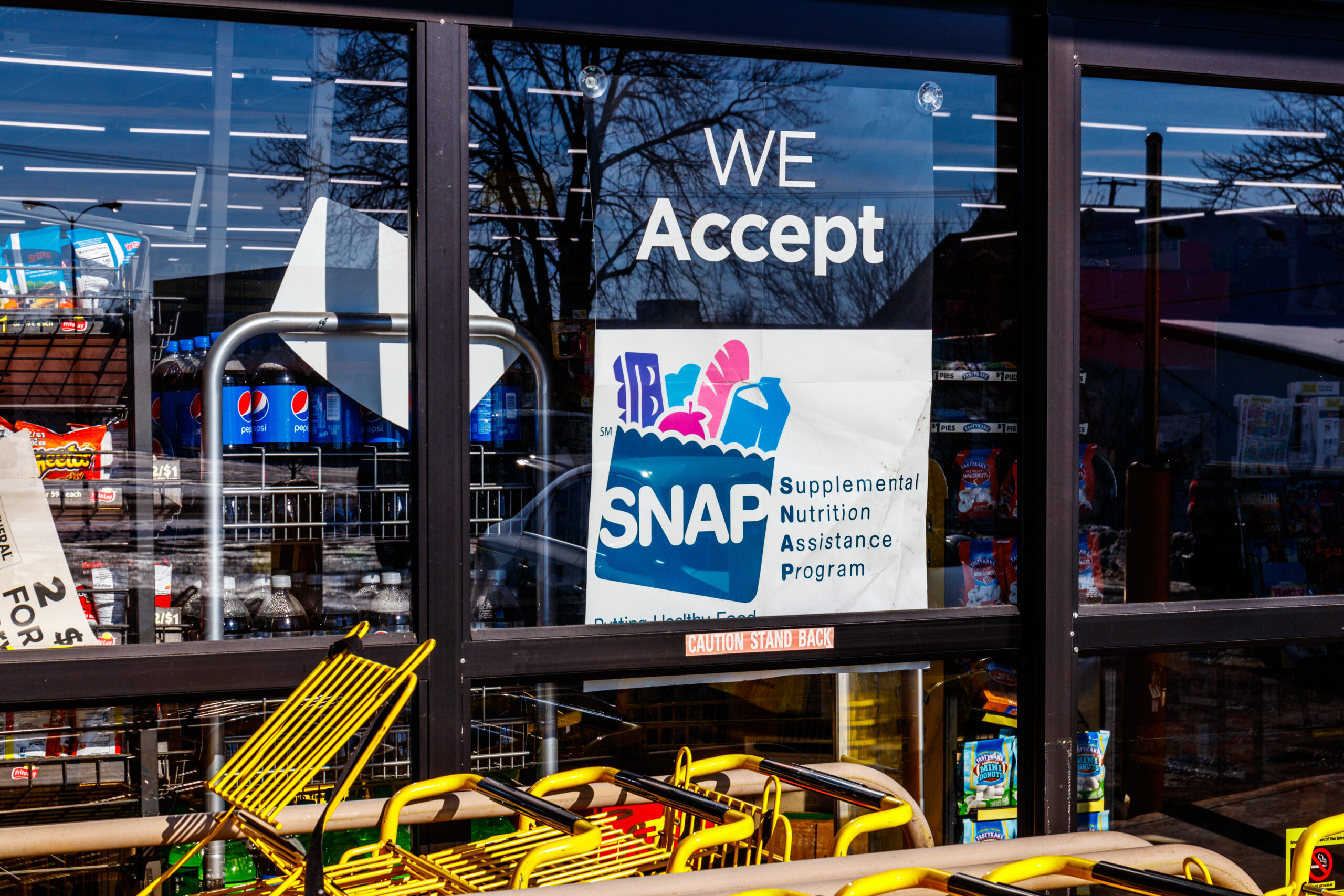
The impacts on basic needs — food and medical care — underscored how the impasse is hitting homes across the United States. The Trump administration’s plans to freeze payments to the Supplemental Nutrition Assistance Program on Saturday were halted by federal judges, but the delay in payouts will still likely leave millions of people short on their grocery bills.

It all added to the strain on the country, with a month of missed paychecks for federal workers and growing air travel delays. The shutdown is already the second longest in history and entered its second month on Saturday, yet there was little urgency in Washington to end it, with lawmakers away from Capitol Hill and both parties entrenched in their positions.

The House has not met for legislative business in more than six weeks, while Senate Majority Leader John Thune closed his chamber for the weekend after bipartisan talks failed to achieve significant progress.

Thune said he is hoping “the pressure starts to intensify, and the consequences of keeping the government shut down become even more real for everybody that they will express, hopefully new interest in trying to come up with a path forward.”

The stalemate appears increasingly unsustainable as Republican President Donald Trump demands action and Democratic leaders warn that an uproar over rising health insurance costs will force Congress to act.

“This weekend, Americans face a health care crisis unprecedented in modern times,” Senate Democratic leader Chuck Schumer of New York said this week.

The Department of Agriculture planned to withhold payments to the food program on Saturday until two federal judges ordered the administration to make them. Trump said he would provide the money but wanted more legal direction from the court, which will not happen until Monday.

The program serves about 1 in 8 Americans and costs about $8 billion per month. The judges agreed that the USDA needed to at least tap a contingency fund of about $5 billion to keep the program running. But that left some uncertainty about whether the department would use additional money or only provide partial benefits for the month.

Benefits will already be delayed because it takes a week or more to load SNAP cards in many states.

“The Trump administration needs to follow the law and fix this problem immediately by working closely with states to get nutritional assistance to the millions who rely on it as soon as possible,” House Democratic leader Hakeem Jeffries of New York said in a statement following the ruling.

Republicans, in responding to Democratic demands to fund SNAP, say the program is in such a dire situation because Democrats have repeatedly voted against a short-term government funding bill.

“We are now reaching a breaking point thanks to Democrats voting no on government funding, now 14 different times,” House Speaker Mike Johnson said at a news conference Friday.

The annual sign-up period for the Affordable Care Act health insurance also begins Saturday, and there are sharp increases in what people are paying for coverage. Enhanced tax credits that help most enrollees pay for the health plans are set to expire next year.

Democrats have rallied around a push to extend those credits and have refused to vote for government funding legislation until Congress acts.

Sen. Patty Murray spoke on the Senate floor this week about constituents who she said face premium increases of up to $2,000 a month if the credits expire.

“I am hearing from families in my state today who are panicked,” she said. “The time to act is now.”

If Congress does not extend the credits, subsidized enrollees will face cost increases of about 114%, or more than $1,000 per year, on average, health care research nonprofit KFF found.

In the days before the start of open enrollment, Democratic politicians across the country warned that the cost increases would hit their constituents hard.

In Wisconsin, for example, families on the ACA’s silver plan could see premium increases of roughly $12,500 to $24,500 annually depending on their location. Sixty-year-old couples could face increases ranging from nearly $19,900 to $33,150 annually.

“No matter what the percentage is, it’s a hell of a lot,” Gov. Tony Evers said.

Some Republicans in Congress have been open to the idea of extending the subsidies, but they also want to make major changes to the health overhaul enacted while Democrat Barack Obama was president.

Thune has offered Democrats a vote on extending the benefits, but has not guaranteed a result.

Federal workers have now gone a month without a full paycheck, and the wear on the workforce is showing.

Major unions representing federal employees have called for an end to the shutdown, putting more pressure on Democrats to back off their health care demands. The president of the union representing air traffic controllers was the latest to urge Congress to pass legislation reopening the government so federal workers can get paid, and then lawmakers can engage in bipartisan negotiation on health care.

In a statement Friday, Nick Daniels, president of the National Air Traffic Controllers Association, said that financial and mental strain was increasing on the workforce, “making it less safe with each passing day of the shutdown.”

___

Republished with permission of the Associated Press.


Source link

Continue Reading

Politics

Eileen Higgins to campaign in Miami with Ruben Gallego ahead of Special Election for Mayor

Published

on


Former Miami-Dade Commissioner Eileen Higgins will continue her early voting push with several appearances across Miami alongside U.S. Sen. Ruben Gallego of Arizona on Sunday.

“As Miamians turn out for Early Voting, Commissioner Higgins will highlight her vision for restoring trust at City Hall, ending corruption, and delivering a city government that works for residents,” her campaign said.

“The day will feature a canvass launch, Early Vote stops, and a volunteer phone bank to mobilize voters ahead of the Dec. 9 election.”

Higgins, who is running to be Miami’s first woman Mayor, will make her first stop at 10:30 a.m. at the Mision Nuestar Senñora de la Altagracia church, located at 1179 NW 28th St., followed by a visit to Christ Episcopal Church at 3481 Hibiscus St. an hour later.

Then at 1 p.m., Higgins and Gallego will participate in a get-out-the-vote event in Hadley Park at 1350 NW 50th Street.

They’ll end the day’s tour with a phone bank stop at 4 p.m., the address for which, Higgins’ campaign said, can be obtained upon RSVP.

Higgins, who served on the County Commission from 2018 to 2025, is competing in a runoff for the city’s mayoralty against former City Manager Emilio González. The pair topped 11 other candidates in Miami’s Nov. 4 General Election, with Higgins, a Democrat, taking 36% of the vote and González, a Republican, capturing 19.5%.

To win outright, a candidate had to receive more than half the vote. Miami’s elections are technically nonpartisan, though party politics frequently still play into races.

Gallego, a freshman Democratic Senator, served in the U.S. House from 2015 to 2025 and as a member of the Arizona House from 2011 to 2014. He is a second-generation American, with a Colombian mother and a Mexican father, and the first Latino elected to represent Arizona in the U.S. Senate.


Source link

Continue Reading

Politics

Winner and Loser of the Week in Florida politics — Week of 11.30.25

Published

on


Florida’s political class doesn’t agree on much these days, but this week produced a rare moment of full-spectrum alignment. Every member of Florida’s congressional delegation — all 28 House members and both U.S. Senators — signed onto a single message to the White House urging President Donald Trump to keep offshore drilling away from Florida’s coasts.

That kind of unanimity is almost unheard of in the state’s modern political era, but it’s been the consistent position of leaders in both parties here in Florida.

The show of solidarity is rooted in a simple political reality: drilling off Florida’s shores remains a third-rail issue for voters across the ideological spectrum. Tourism, the state’s largest economic engine, depends on pristine coastlines. Military leaders have long warned that operations in the Gulf Test Range would be disrupted by new rigs. And coastal residents — Republican and Democrat alike — still remember how the imagery of the Deepwater Horizon disaster reshaped public opinion.

And nobody running in Florida in 2026 wants to be caught on the wrong side of this issue.

With national energy policy in flux and Trump weighing moves that could open new waters for exploration, Florida lawmakers acted preemptively, positioning themselves as a single block drawing a bright line. It also signals that the delegation intends to preserve the long-standing de facto moratorium that has held for decades, regardless of who controls Washington next year.

Now, it’s onto our weekly game of winners and losers.

Winners

Honorable mention: Tourism. Florida’s tourism sector heads into the holidays with the swagger of an industry that keeps beating its own benchmarks.

The latest statewide report shows Florida drew more visitors in 2024 than in any previous year on record. Domestic travel remains the backbone of the industry, but international tourism — which lagged behind for years — finally roared back, helping push total visitation into uncharted territory.

Local indicators back up the statewide spike. Orange County’s tourist development tax reports continue climbing, with October’s haul marking yet another year-over-year increase. The stronger the tourist development tax numbers, the more room Orange County has to invest.

For tourism executives, the trajectory validates years of capital investment, marketing overhauls, and infrastructure upgrades. And for political leaders, particularly those who have staked their credibility on Florida’s economic climate, the industry’s performance provides a powerful proof point.

Plenty of sectors nationwide are wobbling as 2026 approaches. Florida tourism isn’t one of them.

Almost (but not quite) the biggest winner: Alex Andrade. For months, the Pensacola Republican has argued that the Gov. Ron DeSantis administration improperly siphoned $10 million in Medicaid settlement funds into the Hope Florida Foundation — money that was then routed into political efforts aligned with the Governor and now-Attorney General James Uthmeier.

The administration pushed back hard, insisting the diverted money wasn’t actually Medicaid-related and therefore wasn’t subject to federal pass-through requirements. But a new repayment from the state to the federal government shows Andrade had it right from the beginning.

Fresh financial records reveal the Agency for Health Care Administration (AHCA) calculated its federal repayment using the full $67 million Centene settlement — including the disputed $10 million the state insisted wasn’t Medicaid money at all. Florida has now paid back 57% of the entire settlement, amounting to $38 million, exactly what it would owe if every dime belonged to Medicaid.

That directly undermines the state’s original defense and aligns precisely with what Andrade’s investigation uncovered: the $10 million that went to Hope Florida should have stayed in the Medicaid program.

The repayment also adds a striking new twist to a scandal that has already damaged the Governor’s Office, fueled a grand jury probe, raised red flags about political interference in Medicaid dollars, and helped derail Casey DeSantis’ once-serious positioning for 2026.

For Andrade, who repeatedly pressed AHCA for answers and was stonewalled at every turn, this is a confirmation that his instincts, his oversight work and his insistence on accountability were justified.

The biggest winner: Rick Scott. Scott is riding high after a policy summit that managed to seize the spotlight as Washington still grapples with several issues before the close of 2025.

The event showcased ideological discipline, message testing and a reminder of Scott’s continued push to establish himself as one of the most effective architects of the GOP’s internal conversations.

The agenda ranged widely — health care, space, finance, foreign policy, party identity — but the through line was Scott’s effort to present himself as a central bridge between Senate Republicans, national conservatives and Florida’s rising stars.

The summit generated a steady drip of headlines. A pollster told attendees that Americans have soured on the Affordable Care Act, giving Scott and his allies fresh fodder for long-standing arguments about the law’s durability. Members of Congress used the forum to sketch out what an alternative might look like, offering a substantive policy moment at a time when the party often struggles to define next steps.

There were also unmistakably political flashes. Byron Donalds used the gathering to continue Republicans’ critiques against Cory Mills’ scandals. Randy Fine issued stern warnings about rising antisemitism. And members of the House Freedom Caucus emphasized the value of having Scott as their conduit to the upper chamber.

All of it underscored the same point: Scott convened a room full of people who matter, and they showed up ready to continue pushing the conservative conversation forward.

Losers

Dishonorable mention: Trajector Medical. A recent investigative report is painting the company as a predatory “claims-shark” exploiting disabled veterans.

According to the latest reporting, Trajector Medical has been charging veterans as much as $20,000 for help with disability benefits — even though such assistance is legally supposed to be free.

The price tag comes tied to promises of help filing claims, but veterans who relied on the firm describe an entirely different reality: pre-filled application forms submitted on their behalf without their explicit involvement, vague “medical-evidence packets” of questionable origin, and invoices that pop up only after the U.S. Department of Veterans Affairs (VA) increases a veteran’s disability rating.

The company uses a software tool — reportedly dubbed “CallBot” — to monitor clients’ benefit status through the VA hotline. When the system detects a payment increase, it automatically bills the veteran. One veteran NPR interviewed said he was charged $17,400 after his VA rating rose, even though he’d done much of the paperwork himself.

Federal law prohibits entities from charging for assistance in preparing or filing initial VA disability claims, which means Trajector’s business model appears to run entirely contrary to that protection. The company, however, says those restrictions don’t apply because it only does a limited amount of work during the process.

The VA had previously sent the company warning letters in 2017 and 2022 demanding it stop offering paid assistance — but Trajector apparently ignored those warnings and kept operating.

And it appears other companies like it are engaged in similar practices.

Disabled veterans, many of whom rely on VA benefits for basic medical care and financial stability, report feeling misled, exploited and trapped by aggressive billing practices. Former employees of Trajector also admit the firm drifted away from its original mission of helping vets and turned into a profit-driven debt-collection operation.

In a state like Florida — with a large veteran population — a company that claims to help veterans but instead levies steep, legally dubious fees is about as far from “serving those who served” as you can get.

Almost (but not quite) the biggest loser: Jay Collins. A few weeks ago, Collins’ issue was donor confidence due to Ken Griffin’s refusal to buy into DeSantis’ pitch to back Collins, showing he couldn’t land the kind of marquee support a DeSantis-aligned Lieutenant Governor was supposed to lock down effortlessly.

Now Collins is grappling with a problem even more glaring: the Governor himself can’t be counted on to show up for him.

Collins’ latest telephone town hall was supposed to feature DeSantis — a show of strength for a candidate who needs one badly. Instead, Collins got stood up. Again. And this wasn’t a minor scheduling hiccup. As Florida Politics reported, DeSantis’ schedule throughout the day Wednesday was plenty open during the time of the call.

It leaves one wondering how committed the Governor really is to lifting Collins in the 2026 field. Collins desperately needs a visible, unmistakable show of support from DeSantis to compensate for weak polling, slow fundraising and a late entry that already left him miles behind Byron Donalds. When your entire path to viability rests on the idea that the sitting Governor is clearing a lane for you (and we’re not even sure that would be enough), getting publicly ghosted undercuts the whole premise.

You can survive donor skepticism. You can sometimes survive weak early numbers. But surviving your own patron repeatedly failing to show up? That’s a much harder lift.

The biggest loser: Black bears. The hunt is on, with the state moving forward with a revived bear hunt that began Saturday.

Wildlife officials continue to insist the hunt is a management tool, citing increased human–bear encounters and steady population growth.

But environmental groups and community activists argue the data doesn’t justify an organized kill, especially as development pressures, shrinking habitats and inadequate trash management drive most conflicts.

Whatever the policy rationale, the optics are difficult to ignore. Florida spent decades pulling its black bear population back from the brink. Conservation efforts worked, numbers rebounded, and the species again became a fixture in Panhandle forests and Central Florida greenways.

Lawmakers eager to show they’re taking action have leaned hard into the hunt as a symbol of decisive wildlife policy. The bears, once again, are on the losing end of a fight they never chose.


Source link

Continue Reading

Politics

Carlos G. Smith files bill to allow medical pot patients to grow their own plants

Published

on


Home cultivation of marijuana plants could be legal under certain conditions.

Medical marijuana patients may not have to go to the dispensary for their medicine if new legislation in the Senate passes.

Sen. Carlos G. Smith’s SB 776 would permit patients aged 21 and older to grow up to six pot plants.

They could use the homegrown product, but just like the dispensary weed, they would not be able to re-sell.

Medical marijuana treatment centers would be the only acceptable sourcing for plants and seeds, a move that would protect the cannabis’ custody.

Those growing the plants would be obliged to keep them secured from “unauthorized persons.”

Chances this becomes law may be slight.

A House companion for the legislation has yet to be filed. And legislators have demonstrated little appetite for homegrow in the past.


Source link

Continue Reading

Trending

Copyright © Miami Select.