Connect with us

Politics

Uncertainty over federal food aid deepens as the shutdown fight reaches a crisis point
Published

on


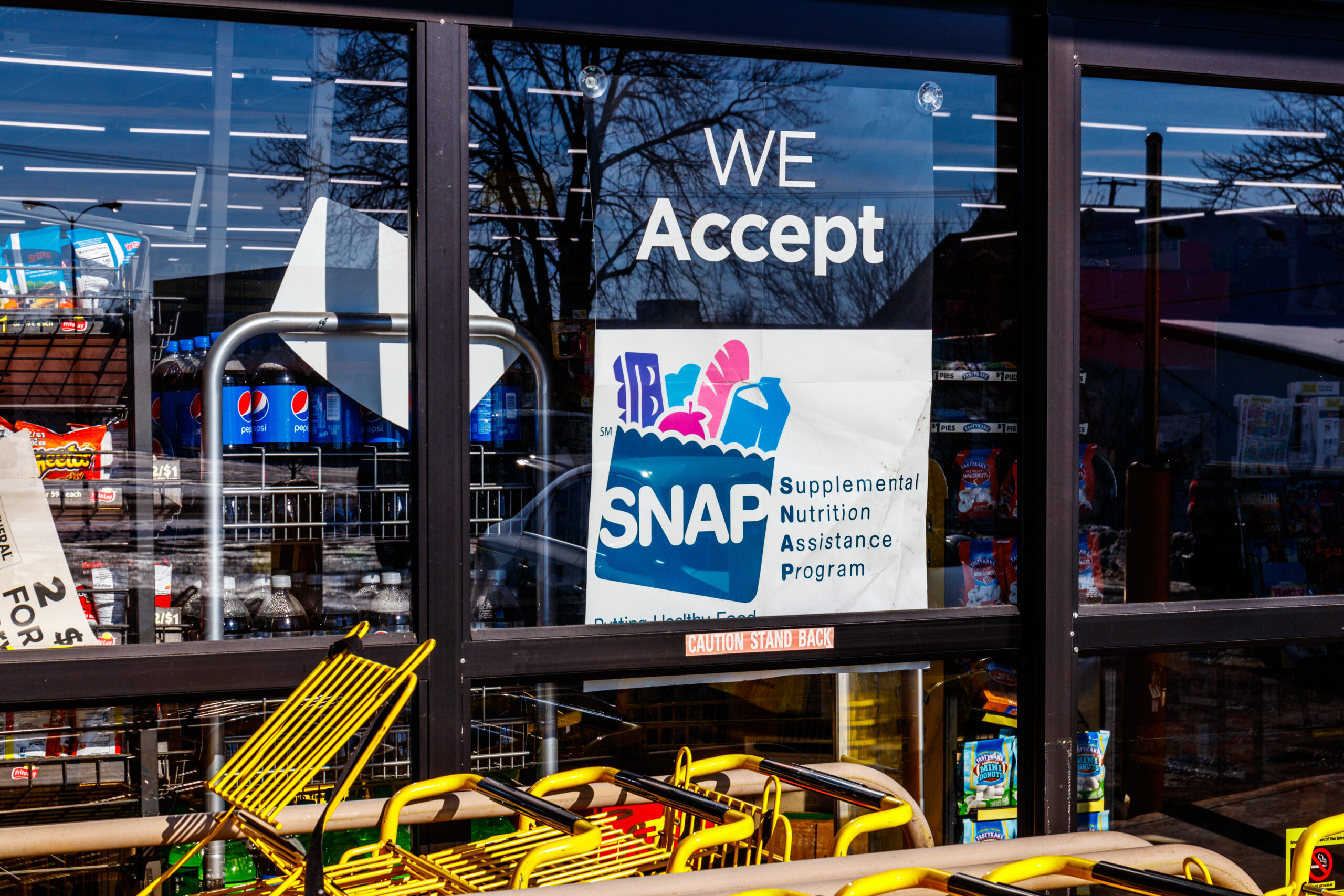
The crises at the heart of the government shutdown fight in Washington were coming to a head Saturday as the federal food assistance program faced delays and millions of Americans were set to see a dramatic rise in their health insurance bills.

The impacts on basic needs — food and medical care — underscored how the impasse is hitting homes across the United States. The Trump administration’s plans to freeze payments to the Supplemental Nutrition Assistance Program on Saturday were halted by federal judges, but the delay in payouts will still likely leave millions of people short on their grocery bills.

It all added to the strain on the country, with a month of missed paychecks for federal workers and growing air travel delays. The shutdown is already the second longest in history and entered its second month on Saturday, yet there was little urgency in Washington to end it, with lawmakers away from Capitol Hill and both parties entrenched in their positions.

The House has not met for legislative business in more than six weeks, while Senate Majority Leader John Thune closed his chamber for the weekend after bipartisan talks failed to achieve significant progress.

Thune said he is hoping “the pressure starts to intensify, and the consequences of keeping the government shut down become even more real for everybody that they will express, hopefully new interest in trying to come up with a path forward.”

The stalemate appears increasingly unsustainable as Republican President Donald Trump demands action and Democratic leaders warn that an uproar over rising health insurance costs will force Congress to act.

“This weekend, Americans face a health care crisis unprecedented in modern times,” Senate Democratic leader Chuck Schumer of New York said this week.

The Department of Agriculture planned to withhold payments to the food program on Saturday until two federal judges ordered the administration to make them. Trump said he would provide the money but wanted more legal direction from the court, which will not happen until Monday.

The program serves about 1 in 8 Americans and costs about $8 billion per month. The judges agreed that the USDA needed to at least tap a contingency fund of about $5 billion to keep the program running. But that left some uncertainty about whether the department would use additional money or only provide partial benefits for the month.

Benefits will already be delayed because it takes a week or more to load SNAP cards in many states.

“The Trump administration needs to follow the law and fix this problem immediately by working closely with states to get nutritional assistance to the millions who rely on it as soon as possible,” House Democratic leader Hakeem Jeffries of New York said in a statement following the ruling.

Republicans, in responding to Democratic demands to fund SNAP, say the program is in such a dire situation because Democrats have repeatedly voted against a short-term government funding bill.

“We are now reaching a breaking point thanks to Democrats voting no on government funding, now 14 different times,” House Speaker Mike Johnson said at a news conference Friday.

The annual sign-up period for the Affordable Care Act health insurance also begins Saturday, and there are sharp increases in what people are paying for coverage. Enhanced tax credits that help most enrollees pay for the health plans are set to expire next year.

Democrats have rallied around a push to extend those credits and have refused to vote for government funding legislation until Congress acts.

Sen. Patty Murray spoke on the Senate floor this week about constituents who she said face premium increases of up to $2,000 a month if the credits expire.

“I am hearing from families in my state today who are panicked,” she said. “The time to act is now.”

If Congress does not extend the credits, subsidized enrollees will face cost increases of about 114%, or more than $1,000 per year, on average, health care research nonprofit KFF found.

In the days before the start of open enrollment, Democratic politicians across the country warned that the cost increases would hit their constituents hard.

In Wisconsin, for example, families on the ACA’s silver plan could see premium increases of roughly $12,500 to $24,500 annually depending on their location. Sixty-year-old couples could face increases ranging from nearly $19,900 to $33,150 annually.

“No matter what the percentage is, it’s a hell of a lot,” Gov. Tony Evers said.

Some Republicans in Congress have been open to the idea of extending the subsidies, but they also want to make major changes to the health overhaul enacted while Democrat Barack Obama was president.

Thune has offered Democrats a vote on extending the benefits, but has not guaranteed a result.

Federal workers have now gone a month without a full paycheck, and the wear on the workforce is showing.

Major unions representing federal employees have called for an end to the shutdown, putting more pressure on Democrats to back off their health care demands. The president of the union representing air traffic controllers was the latest to urge Congress to pass legislation reopening the government so federal workers can get paid, and then lawmakers can engage in bipartisan negotiation on health care.

In a statement Friday, Nick Daniels, president of the National Air Traffic Controllers Association, said that financial and mental strain was increasing on the workforce, “making it less safe with each passing day of the shutdown.”

___

Republished with permission of the Associated Press.


Source link

Continue Reading

Politics

No quick fix to inflation for Donald Trump

Published

on


President Donald Trump’s problems with fixing the high cost of living might be giving voters a feeling of déjà vu.

Just like the president who came before him, Trump is trying to sell the country on his plans to create factory jobs. The Republican wants to lower prescription drug costs, as did Democratic President Joe Biden. Both tried to shame companies for price increases.

Trump is even leaning on a message that echoes Biden’s claims in 2021 that elevated inflation is simply a “transitory” problem that will soon vanish.

“We’re going to be hitting 1.5% pretty soon,” Trump told reporters Monday. ”It’s all coming down.”

Even as Trump keeps saying an economic boom is around the corner, there are signs that he has already exhausted voters’ patience as his campaign promises to fix inflation instantly have gone unfulfilled.

Voters are growing frustrated with Trump on inflation

Voters in this month’s elections swung hard to Democrats over concerns about affordability. That has left Trump, who dismisses his weak polling on the economy as fake, floating half-formed ideas to ease financial pressures.

He is promising a $2,000 rebate on his tariffs and said he may stretch the 30-year mortgage to 50 years to reduce the size of monthly payments. On Friday, Trump scrapped his tariffs on beef, coffee, tea, fruit juice, cocoa, spices, bananas, oranges, tomatoes and certain fertilizers, saying they “may, in some cases” have contributed to higher prices.

But those are largely “gimmicky” moves unlikely to move the needle much on inflation, said Bharat Ramamurti, a former deputy director of Biden’s National Economic Council.

“They’re in this very tough position where they’ve developed a reputation for not caring enough about costs, where the tools they have available to them are unlikely to be able to help people in the short term,” Ramamurti said.

Ramamurti said the Biden administration learned the hard way that voters are not appeased by a president saying his policies would ultimately cause their incomes to rise.

“That argument does not resonate,” he said. “Take it from me.”

How inflation hit Biden’s presidency

Biden inherited an economy trying to rebound from the coronavirus pandemic, which had shut down schools and offices, causing mass layoffs and historic levels of government borrowing. In March 2021, he signed into law a $1.9 trillion relief package. Critics said that was excessive and could cause prices to rise.

As the economy reopened, there were shortages of computer chips, kitchen appliances, autos and even furniture. Cargo ships were stuck waiting to dock at ports, creating supply chain issues. Russia’s invasion of Ukraine in early 2022 pushed up energy and food costs, and consumer prices reached a four-decade high that June. The Federal Reserve raised its benchmark interest rates to cool inflation.

Biden tried to convince Americans that the economy was strong. “Bidenomics is working,” Biden said in a 2023 speech. “Today, the U.S. has had the highest economic growth rate, leading the world economies since the pandemic.”

His arguments did little to sway voters as only 36% of U.S. adults in August 2023 approved of his handling of the economy, according to a poll at the time by The Associated Press-NORC Center for Public Affairs Research.

Trump might be his own worst enemy on inflation

Republicans made the case that Biden’s policies made inflation worse. Democrats are using that same framing against Trump today.

Here is their argument: Trump’s tariffs are getting passed along to consumers in the form of higher prices; his cancellation of clean energy projects means there will be fewer new sources of electricity as utility bills climb; his mass deportations made it costlier for the immigrant-heavy construction sector to build houses.

Biden administration officials note that Trump came into office with strong growth, a solid job market and inflation declining close to historic levels, only for him to reverse those trends.

“It’s striking how many Americans are aware of his trade policy and rightly blame the turnaround in prices on that erratic policy,” said Gene Sperling, a senior Biden adviser who also led the National Economic Council in the Obama and Clinton administrations.

“He is in a tough trap of his own doing — and it’s not likely to get easier,” Sperling said.

Consumer prices had been increasing at an annual rate of 2.3% in April when Trump launched his tariffs, and that rate accelerated to 3% in September.

The inflationary surge has been less than what voters endured under Biden, but the political fallout so far appears to be similar: 67% of U.S. adults disapprove of Trump’s performance, according to November polling data from AP-NORC.

“In both instances, the president caused a non-trivial share of the inflation,” said Michael Strain, director of economic policy studies at the American Enterprise Institute, a center-right think tank. “I think President Biden didn’t take this concern seriously enough in his first few months in office and President Trump isn’t taking this concern seriously enough right now.”

Strain noted that the two presidents have even responded to the dilemma in “weirdly, eerily similar ways” by playing down inflation as a problem, pointing to other economic indicators and looking to address concerns by issuing government checks.

White House bets its policies can tame inflation

Trump officials have made the case that their mix of income tax cuts, foreign investment frameworks tied to tariffs and changes in enforcing regulations will lead to more factories and jobs. All of that, they say, could increase the supply of goods and services and reduce the forces driving inflation.

“The policies that we’re pursuing right now are increasing supply,” Kevin Hassett, director of Trump’s National Economic Council, told the Economic Club of Washington on Wednesday.

The Fed has cut its benchmark interest rates, which could increase the supply of money in the economy for investment. But the central bank has done so because of a weakening job market despite inflation being above its 2% target, and there are concerns that rate cuts of the size Trump wants could fuel more inflation.

Time might not be on Trump’s side

It takes time for consumer sentiment to improve after the inflation rate drops, according to research done by Ryan Cummings, an economist who worked on Biden’s Council of Economic Advisers.

His read of the University of Michigan’s index of consumer sentiment is that the effects of the postpandemic rise in inflation are no longer a driving factor. These days, voters are frustrated because Trump had primed them to believe he could lower grocery prices and other expenses, but has failed to deliver.

“When it comes to structural affordability issues — housing, child care, education, and health care — Trump has pushed in the wrong direction in each one,” said Cummings, who is now chief of staff at the Stanford Institute for Economic Policy Research.

He said Trump’s best chance of beating inflation now might be “if he gets a very lucky break on commodity prices” through a bumper harvest worldwide and oil production continuing to run ahead of demand.

For now, Trump has decided to continue to rely on attacking Biden for anything that has gone wrong in the economy, as he did on Monday in an interview with Fox News’ “The Ingraham Angle.”

“The problem was that Biden did this,” Trump said.

____

Republished with permission of the Associated Press.


Source link

Continue Reading

Politics

Jessica Baker House bill proposes change to gang member criteria

Published

on


Social media and artistic expression would be enough for legal purposes.

Legislation in the Florida House seeks to update the legal threshold for being a member of a street gang.

Rep. Jessica Baker’s HB 429 would make a number of changes to statute.

Among them would be considering an admission of gang membership on social media to be sufficient for the purposes of prosecution.

As the law currently stands, social media isn’t contemplated.

Baker’s bill also would allow the attestation of a spouse that someone is in a gang to be enough for the purposes of prosecutors.

Additionally, if the suspect has “authored any communication indicating criminal gang affiliation, criminal gang-related activity, or acceptance of responsibility for the commission of any crime by the criminal gang,” that is also sufficient under the proposed language.

Similarly, “criminal gang-related language on social media, including language used in a post, caption, comment, reply, thread, direct message, private message, meme, reel, username, screen name, handle, or e-mail address” or participation in “any recording that promotes or describes criminal gang activity, regardless of whether the activity actually took place” suffices.

That could conceivably include rap music, where emcees often depict very specific actions that may or may not happened.


Source link

Continue Reading

Politics

FLHSMV and FHP promote safe driving during holidays

Published

on


With Thanksgiving and Christmas quickly approaching, state agencies urge motorists to take extra care on the roads.

To that end, the Florida Department of Highway Safety and Motor Vehicles (FLHSMV), and its division, the Florida Highway Patrol (FHP) are launching the “Arrive Alive” campaign to target reckless, negligent, and distracted driving and to encourage drivers to buckle up for safety.

“Reckless and impaired driving are not just violations of the law—they are threats to the lives of every Floridian on the road,” said FLHSMV Executive Director Dave Kerner. “This holiday season, we are reminded that every decision behind the wheel carries consequences. Let us all choose patience over aggression, responsibility over risk, and remember that arriving alive means protecting not only yourself, but everyone sharing Florida’s roads—today and every day.”

“Our troopers see firsthand the devastating aftermath of drivers that choose distraction, unlawful speed or impairment over safety,” said FHP Colonel Gary Howze. “This holiday season, your Florida Troopers will be out in full force to ensure our roadways are as safe as possible. Enforcement alone is not enough though—every driver has a personal responsibility to others to make smart, responsible decisions. Staying alert, obeying traffic laws, and respecting others on the road are the basics to ensuring Floridians can ARRIVE ALIVE and celebrate a joyful holiday with loved ones.”


Source link

Continue Reading

Trending

Copyright © Miami Select.