Britain’s finance ministry said on Friday that finance minister Rachel Reeves plans to raise around 500 million pounds ($655 million) a year by removing an exemption from tariffs for imports of individual goods costing under 135 pounds.
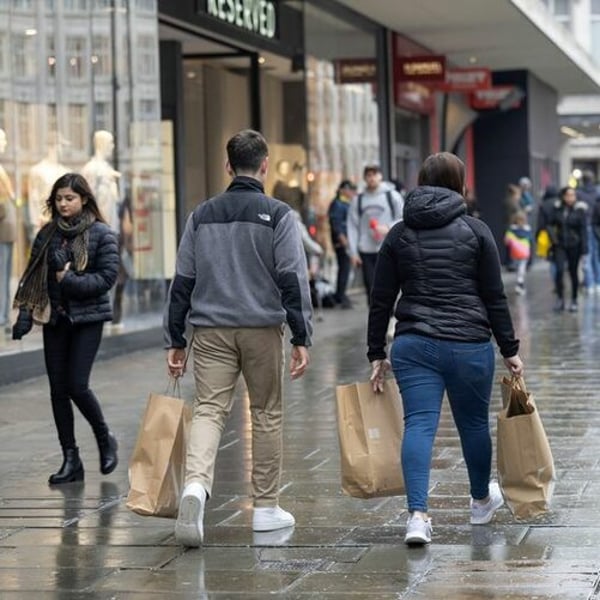
Shoppers on a UK high street – REUTERS/ Anna Gordon
Reeves has pledged not to increase the cost of living for British households in her annual budget on November 26, but retailers such as clothing chain Next and rival Primark-owner Associated British Foods have lobbied against what they see as unfair competition from overseas stores.
While major retailers must pay tariffs on many goods they import in bulk, Britons who buy similar items direct from online retailers, often based in China, do not have to pay tariffs if they cost below a certain amount. “It’s time to make sure our local shops can compete fairly with overseas sellers and keep driving growth and good jobs across the UK,” Reeves said in a statement.
The finance ministry said that Reeves planned to scrap the exemption for imports of low-value items in her budget and launch a consultation on how to implement the new customs arrangements. “Any impact on consumer prices will be modest,” the finance ministry said.
Reeves’ actions follow in the footsteps of US President Donald Trump– who scrapped tariff exemptions on imports worth under $800 in August- and the EU is bringing forward similar plans for imports worth under 150 euros ($172.65).
“This move closes a loophole that has disadvantaged British business, damaged British high streets and allowed proper safety standards to be ignored and we hope it is implemented rapidly,” ABF chief executive George Weston said in a statement alongside the finance ministry announcement.
To coincide with Milan Fashion Week, the S|STYLE 2025- Denim Lab is setting up at Fondazione Sozzani for an edition devoted to the future of sustainable denim and water management in the textile industry. Led by the S|STYLE Sustainable Style platform, founded in 2020 by independent journalist and curator Giorgia Cantarini, this initiative forms part of an ongoing programme of research and experimentation into responsible innovations applied to contemporary fashion.
Designers brought together for the S|STYLE 2025 – Denim Lab project – Denim Lab
The exhibition, open to the public on September 27 and 28, features a site-specific art installation by Mariano Franzetti, crafted from recycled and regenerative denim. Conceived as an immersive experience, it brings fashion design, technological innovation and artistic expression into dialogue.
Water: a central issue in fashion sustainability
Developed in collaboration with Kering‘s Material Innovation Lab (MIL), the Denim Lab brings together a selection of young international designers invited to create a denim look using low-impact materials and processes. They benefit from technical support and access to textiles developed with innovative technologies aimed at significantly reducing water consumption, chemical use, and the carbon footprint of denim production.
This edition places water at its core, an essential issue for a fabric whose production has traditionally demanded substantial volumes of water, from cotton cultivation through to dyeing and finishing. Denim therefore serves as an emblematic testing ground, both familiar and closely associated with the environmental challenges facing the fashion industry.
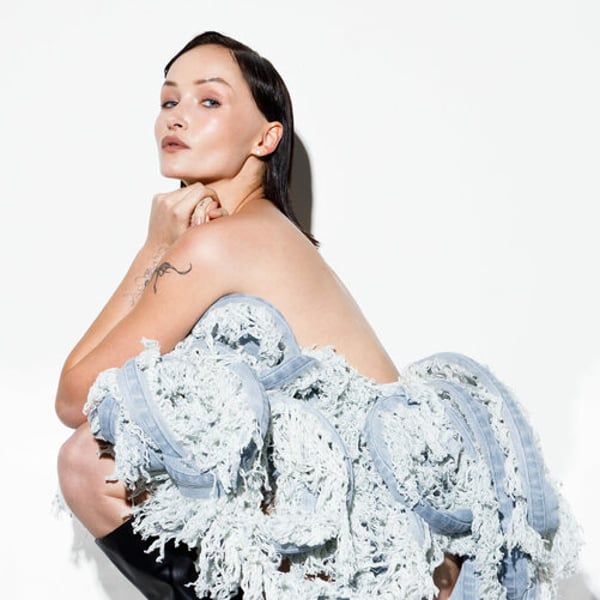
Outfit created for the Denim Lab by designer Gisèle Ntsama, one of the participants – Maison Gisèle
The fabrics were developed by PureDenim Srl, a specialist in low-impact dyeing techniques, while treatments and finishes were applied by Tonello Srl, a recognised leader in sustainable washing and finishing technologies. The selected designers, from Europe, Asia, and Africa, each offer a distinctive interpretation of denim, blending formal exploration, textile innovation and reflection on the contemporary uses of clothing.
Next has won the bidding race to take over the Russell & Bromley premium footwear business, ending almost a century-and-a-half of family ownership.
Russell & Bromley
Working with bidding partner and stock clearance specialist Retail Realisation, it’s set to takeover the 147-year-old retailer under a pre-pack administration deal.
Crucially, it means 33 of the company’s standalone stores/outlets and nine concessions (many of them in Fenwicks branches) are likely to eventually close.
The extent of the challenges Russell & Bromley faced can be seen from the fact that this is only a £2.5 million cash deal. Next is also paying £1.3 million for some of the retailer’s current stock with Retail Realisation handling the clearance of the rest.
Assuming the deal gets court approval on Wednesday afternoon, Next will own the intellectual property and just three of the stores.
Those stores are in London’s Chelsea and Mayfair, as well as the Bluewater shopping centre in Kent. Interestingly, that Bluewater store is just a stone’s throw away from the former House of Fraser branch that this year will reopen as a Next megastore.
The remaining stores and concessions will continue to trade for “as long as [they] can” as Interpath’s Will Wright and Chris Pole “assess options for them”. Russell & Bromley currently has around 440 employees.
A source close to another bidder, Auralis, told The Times it was disappointing that its offer, which aimed to safeguard jobs and stores, wasn’t given greater priority by those running the sale.
Russell & Bromley CEO Andrew Bromley called the sale decision a “difficult” one but insisted it’s “the best route to secure the future for the brand… we would like to thank our staff, suppliers, partners and customers for their support throughout our history”.
So what are Next’s plans now. That’s not clear. There had been a lot of attention focused on its likelihood of closing the store chain in the run-up to the sale but on Wednesday, Next said that it will “build on the legacy” of the business and “provide the operational stability and expertise to support Russell & Bromley’s next chapter”.
Next had also been reported to be eyeing a similar deal for LK Bennett, but Sky News reported that it has stepped away from this.
It remains one of the most acquisitive retailers on the UK high street, however, and in recent years has bought brands such as Cath Kidston, Joules, FatFace, Made and Seraphine. It also has deals to handle other key brands in the UK market such as Gap, Victoria’s Secret and Laura Ashley.
Global asset management firm GoldenTree will buy a chunk of a $1 billion bankruptcy financing for luxury retailer Saks Global, Bloomberg News reported on Tuesday, citing people familiar with the matter.
A Neiman Marcus store, part of the Saks business – Neiman Marcus
GoldenTree, which is founded by billionaire Steve Tananbaum, has committed to buy a roughly $200 million portion of the so-called debtor-in-possession financing, according to the report.
Saks Global and GoldenTree did not immediately respond to Reuters requests for comment.
The high-end US department store conglomerate filed for Chapter 11 bankruptcy protection on January 13, after a debt-laden takeover.