Expect consumer spending on Boxing Day to possibly fall short of the sales event’s previous two years as concerns over the cost of living weigh heavily on decision-making, says to the Barclays Consumer Spend report.
Image: Sandra Halliday
But fashion does remain the top shoppers’ choice with beauty not far behind.
Some 69% say cost pressures will impact their spending this year, up from 47% in 2024.
UK consumers are expecting to spend £3.6 billion this time, lower than the £4.6 billion predicted in 2024 and £4.7 billion in 2023. The good news is that the average shopper intends to increase their budget by £17 compared to 2024. That said, there’ll be fewer consumers taking part at 26% down from 28% a year ago.
As mentioned, clothes, footwear and accessories all remain top this year, chosen by 37% after the category saw subdued spending in 2025.
Third is beauty products (20%), behind food and drink (27%), but ahead of homewares (20%) and discounted Christmas items (19%) ranked next.
Meanwhile, nearly half (44% ) say they plan to shop at some point during the Christmas sales period, and for this group, the January sales are the most popular time to do so, chosen by 89%.
The growth of artificial intelligence (AI) is now having an increasing influence with shoppers embracing AI and other smart tools in their hunt for deals.
And AI’s also having an influence on where consumers shop, with the report noting its use “demonstrates a renewed enthusiasm for the experience of shopping in-store”.
Demand for in-store shopping remains strong, continuing to be a Boxing Day tradition for many sales fans, as 49% of those who will browse the Boxing Day sales plan to visit shops in-person.
Those hitting the high street say they prefer to see and touch items before they buy (42%), that they like the human interaction (27%) and that they view the sales as a nice Christmas activity (26%.
People also say they would be even more inclined to visit the shops if they were offered in-store-only discounts (29%), easier access (24%), or free items with purchases (21%).
As for shopping digitally, the survey says that convenience is key with online shopping now being supported by the use of AI tools.
Online shopping remains the preference for 40%, and AI is “transforming how people seek out deals online”. Some 37% say they use AI and/or smart tools when shopping, rising to 53% for those aged 18-34.
These shoppers are turning to AI and smart tools to research products (43%), compare prices and deals (34%), generate gift ideas (31%) and set up personalised alerts (25%).
For many, the technology “provides reassurance and efficiency” with 72% saying it saves time by narrowing down the best deals, while two thirds (65%) trust AI to help find discounts. However, 50% do worry that AI tools may encourage overspending.
However, in light of growing cost-of-living concerns, a quarter (25% will only buy what they consider to be essentials in the sales. For those shopping for beauty and skincare specifically, 45% will use the sales to pick up their go-to products at lower prices, while 33% will be searching for premium beauty brands at a discount.
Karen Johnson, head of Retail at Barclays, said: “Boxing Day is still a pivotal moment for retailers, fuelled by Christmas nostalgia, but it has evolved to reflect modern consumer demands. This year, we’re likely to see a balanced blend of online convenience, experiential retail and increasingly mindful purchasing.”
Silver hit $75 for the first time on Friday, with gold and platinum too striking record highs, as speculative bets, expectations for more US rate cuts, and rising geopolitical tensions powered precious metals.
Silver jewelry displayed in New York City in Manhattan, New York City, U.S., October 15, 2025 – REUTERS/Jeenah Moon
Spot gold rose 0.8% to $4,515.73 per ounce, as of 0818 GMT, after touching a record $4,530.60 earlier. US gold futures for February delivery climbed 0.9% to $4,545.10. Spot silver jumped 3.8% to $74.68 per ounce, after touching an all-time high of $75.14.
“Momentum-driven and speculative players have been powering the rally in gold and silver since early December, with thin year-end liquidity, expectations of prolonged US rate cuts, a weaker dollar, and a flare-up in geopolitical risks combining to push precious metals to fresh record highs,” said Kelvin Wong, senior market analyst at OANDA.
“Looking ahead into the first half of 2026, gold could move towards the $5,000 level, while silver has the potential to reach around $90,” said Wong.
Gold staged a strong rally this year, recording its biggest annual gain since 1979, fuelled by Federal Reserve policy easing, geopolitical uncertainty, strong central bank demand, rising ETF holdings, and ongoing de-dollarisation. Meanwhile, gold discounts in India hit a more than six-month high as record prices curbed retail buying, while China’s discounts retreated from last week’s five-year peak.
Silver soared 158% year-to-date, outpacing gold’s nearly 72% gain, on structural deficits, its listing as a US critical mineral, and robust industrial demand. With traders pricing in two US rate cuts next year, non-yielding assets like gold are likely to remain well-supported in a low-interest-rate environment.
On the geopolitical front, the US is focusing on enforcing a “quarantine” of Venezuelan oil for the next two months. On Thursday, it struck Islamic State militants in northwest Nigeria over attacks on local Christian communities.
Spot platinum rose 5.8% to $2,349.65 per ounce, after touching an all-time high of $2,448.25 earlier, while palladium climbed 7% to $1,801.25, following a three-year high in the previous session. All precious metals were headed for weekly gains.
Platinum and palladium, widely used in automotive catalytic converters, have surged on tight supply, tariff uncertainty, and rotation from gold investment demand, with platinum up roughly 160% and palladium more than 90% year-to-date. “Platinum prices are being supported by strong industrial demand, and stockists in the US have been covering positions amid sanctions-related concerns, which is helping keep prices elevated,” said Jigar Trivedi, senior research analyst at Reliance Securities, based in Mumbai.
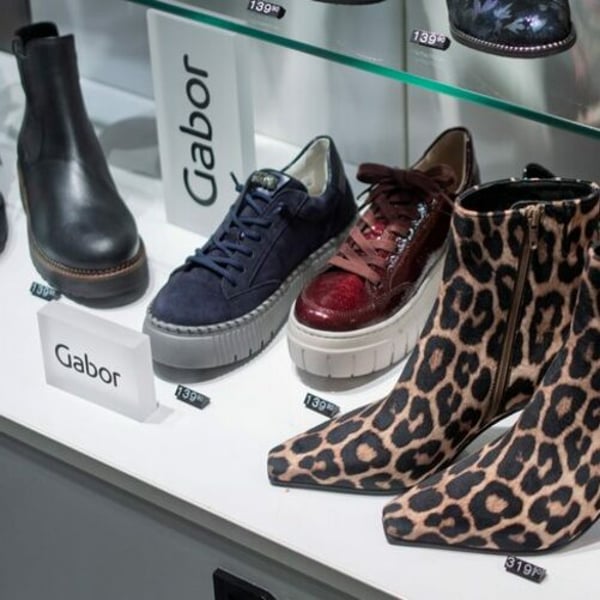
The Swiss investor Arklyz has acquired the German shoe brand Gabor. The company, based in Stans on Lake Lucerne, did not disclose the purchase price. All regulatory approvals have been obtained, according to the press release.
shutterstock
Previously owned by the eponymous founding family and headquartered in Rosenheim, the shoemaker is best known for its women’s footwear. The company is now wholly owned by Arklyz. The Gabor brand will be retained, and the current management team will remain in place.
Arklyz is an investment holding company founded in 2018 that is primarily active in the sports, clothing, and footwear sectors. Arklyz also acquired a German shoe brand last year: Lloyd, based in Sulingen, Lower Saxony.
Headquarters in Bavaria, production abroad
The precursor to today’s Gabor Shoes was a shoe workshop founded in 1919 in what is now Polish Upper Silesia; the company has been based in Rosenheim since 1966. According to the company’s website, Gabor is one of Europe’s largest shoe manufacturers.
In 2023, the company employed just under 2,630 people. Of these, only 366 were based in Germany; the majority worked in two shoe factories in Slovakia and Portugal. According to the German company register, Gabor posted a net profit of 13.4 million euros in 2023, with revenue totalling 282 million euros.
This article is an automatic translation. Click here to read the original article.
Thermore, a manufacturer of thermal insulation for clothing, is making inroads in the fashion industry. “We started out in the technical segment. Synthetic insulation was initially used in ski suits. As style evolved, fashion embraced technical materials, and today it represents the largest share of our business,” CEO Patrizio Lorenzo Siniscalchi tells FashionNetwork.com.
Thermore
The company, founded in Milan by his father, Lucio, in 1972, has evolved into the sector’s first ingredient brand and today supplies down-free insulation to a wide range of fashion and luxury labels. Under the leadership of Siniscalchi Jr., it has strengthened its relationship with end consumers, who are increasingly discerning. “When we develop a new insulation product, we don’t think about our direct customer, but about the end user,” the CEO notes.
The latest collaboration is with Jaked, featuring Thermore insulation in the brand’s new outerwear collection for the Autumn/Winter 2025 season. The Impact Evo jackets, designed for racing, fitness, and sportswear, blend style and functionality, leveraging Ecodown Fibers Ocean technology, which is bluesign and OEKO-TEX certified.
Today, Thermore generates revenue of 13 million euros, with the US and Europe as its main markets. “Around 10% of sales come from Asia, primarily Korea and Japan. We have offices in New York and Tokyo. Around 90% of production is in the Far East, because insulated garments are manufactured there,” Siniscalchi continues.
On the pressing issue of the impact of fast fashion, “there needs to be a change. We must be more mindful of our consumption,” notes the CEO. “We do not use down, but recycled fibres from ocean-bound bottles, thereby helping to prevent the formation of massive plastic islands in the ocean. We have been investing in this for 40 years. We launched our first recycled product in the 1980s. At the beginning, it was difficult to find raw materials with the same quality as virgin polyester. Today, 98% of our insulation is made from recycled material. The chips used to make PET bottles are better than those used for fibres,” Siniscalchi concludes.
This article is an automatic translation. Click here to read the original article.








 Politics8 years ago