
Politics
UF investigates measles on campus amid outbreak across North Florida
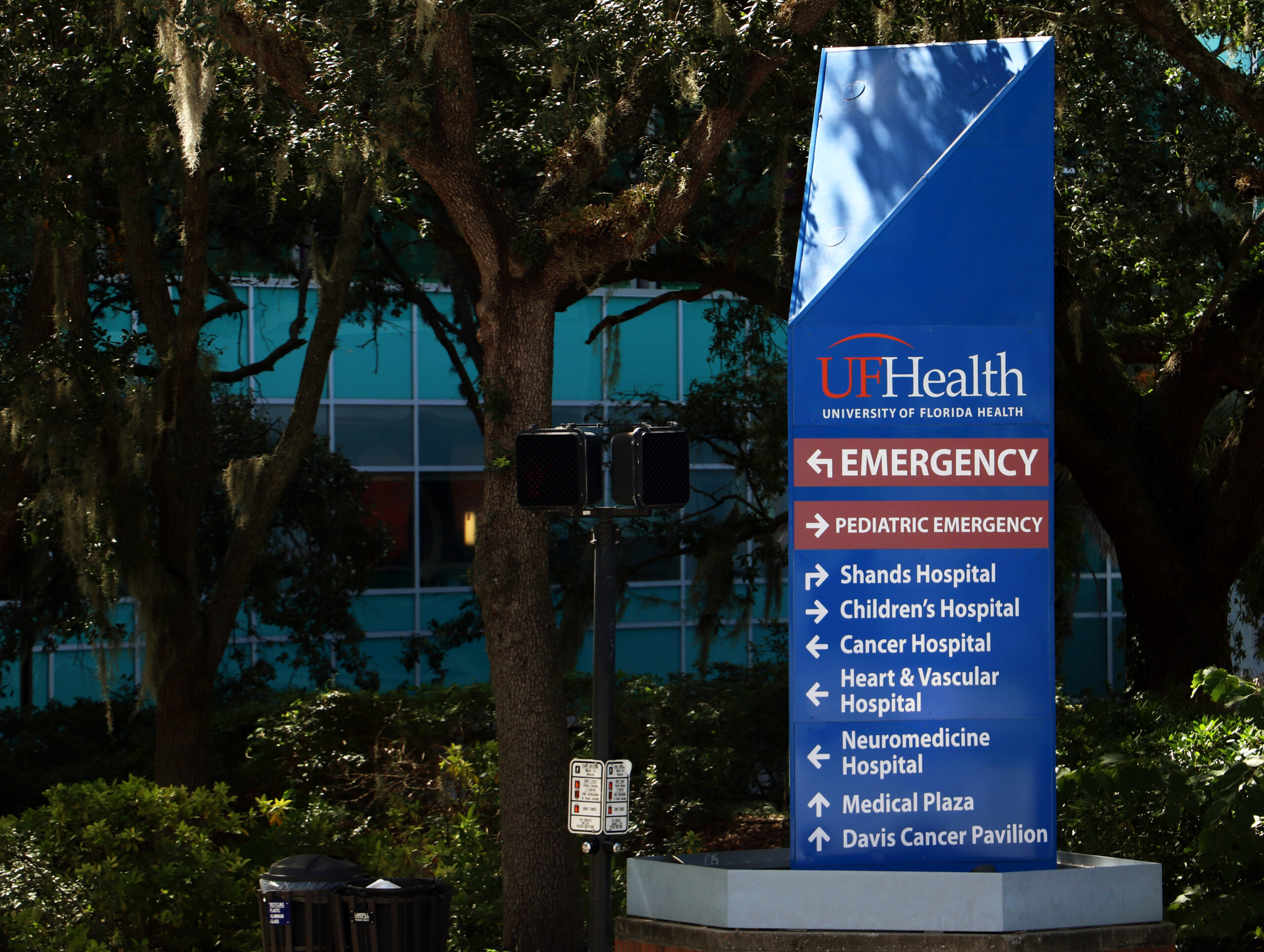
The University of Florida said Thursday it was investigating two college classrooms where measles exposures may have occurred. Additionally, six other confirmed measles cases were reported across northern Florida in new data published by the Department of Health.
The state’s flagship university said in a statement that health officials had already started to reach out to people in the two classrooms, after health officials confirmed two measles cases in Alachua County. UF did not disclose any details about the patients, citing student-patient confidentiality rules.
UF said most of its students were already vaccinated. It did not identify which classes or colleges might have been exposed. It said exposure to measles “may have occurred” in those classrooms.
“If you are not contacted, there is no reason to believe you were exposed,” the university said in a statement emailed across campus. It was signed by four administrators, including the provost, a senior human resources official, a student life administrator and the president of UF Health.
UF health officials last week emailed a warning to students — but not faculty or staff — noting an unspecified number of new measles cases in Alachua, Duval and St. Johns counties. It did not say or suggest last week that measles had been detected in anyone connected to the university.
“Our university-affiliated health care teams are keeping a close watch on this situation,” the Jan. 29 email said.
The timing of the previous email meant that UF officials waited at least seven days to inform anyone publicly that measles might be linked to its sprawling campus of more than 61,000 undergraduate, graduate and law school students.
The first confirmed measles case in Alachua County wasn’t publicly disclosed until earlier Thursday in new Florida health department figures, but UF’s email said last week there was at least one case in the county. It wasn’t clear how much officials knew last week about the case when they emailed students.
Abigail Moore, 20, a second-year UF student, said she believed the university should have disclosed more information. She said measles is preventable with the vaccine.
“You have to know that you are doing damage to the public immunity that the society has built up and you are benefiting from everyone else getting vaccinated,” she said. “And the more people who choose not to get vaccinated, the weaker it becomes, and then outbreaks like these happen.”

The new disclosure also meant measles may be present on the campus where Florida’s Surgeon General — who has aggressively campaigned to eliminate vaccine requirements — is a professor of medicine.
Depending on their class schedules, students may attend four or five classes each week for up to three hours at a time — typically with class sizes that can range from a half dozen to hundreds. Some students participate in some classes online. Common areas like libraries and cafeterias can be densely packed. The measles virus can remain viable in the air or on surfaces for up to two hours.
“Obviously I have some level of concern just because it’s people clustered together in all the libraries,” said Patrick Reakes, interim dean for all libraries on UF campus. “You go down right now into Library West and you know, there’s a bunch of people there all together.”
Adam Ahmad, 19, another second-year student, said he was waiting to see how the cases develop before worrying.
“There doesn’t seem to be too much urgency,” Ahmad said.
UF’s statement said the best way to avoid the disease is the measles, mumps and rubella vaccine, which it said was 97% effective after two doses. It said even getting the vaccine within 72 hours of exposure can still help protect students.
During the pandemic, UF recorded more COVID infections than any other higher-education institution in the country, about 14,500 cases. As criticism mounted over a lack of social-distancing, mask-wearing or other precautions, the university stopped publishing updated infection figures. No one died from classroom exposure, but two staff members died in cases tied to exposures off campus.
The new Florida Health Department figures — current through last Saturday — also showed one measles case in St. Johns County and four cases in Duval County, home to Jacksonville. A fifth case there was confirmed by Dr. Mobeen Rathore, the chief of the division of pediatric infectious diseases and immunology at the University of Florida College of Medicine in Jacksonville.
All five cases in Duval County involve children, according to Rathore and the new health department data. At least three were younger than 9, the data showed.
Disclosures about these new cases across northern Florida follow outbreaks infecting at least 20 people in southwest Florida, mostly involving students at Ave Maria University, a private Catholic school near Naples in Collier County.
Last year, Florida reported a total of seven cases statewide of measles, a highly infectious virus that spreads when an infected person breathes, coughs or sneezes. Nationally, there have been 588 cases across 17 states this year through Jan. 26, according to the Centers for Disease Control and Prevention.
Measles can result in severe illness, including pneumonia and encephalitis, an inflammation of the brain, which can lead to seizures, hallucinations, permanent brain damage, blindness, hearing loss and memory loss. In rare cases, measles can be fatal, especially in young children.
The Ave Maria University outbreak has been the most serious so far in Florida.
“We know that in the past there have been outbreaks in boarding schools and universities,” Rathore said. It’s because the virus is highly contagious and stays in the air for about two hours, meaning areas where people congregate are more susceptible, he said.
The measles cases in Florida are occurring amid a highly politicized debate over vaccines. Florida’s Surgeon General, Joseph Ladapo has emphasized the danger from measles and the effectiveness of the measles vaccine, but he also has promised to work with Gov. Ron DeSantis to end all vaccine mandates. In 2024, Ladapo told parents it was acceptable to send unvaccinated children to school.
At a conference in September with DeSantis, Ladapo said, “Who am I to tell you what your child should put in their body? Your body is a gift from God.”
Last month, Ladapo and First Lady Casey DeSantis campaigned on behalf of mothers who struggle to find pediatricians willing to treat their unvaccinated children, describing the issue as one of parental rights and medical freedom.
Vaccination rates for measles among kindergarten-aged children have also dropped in Florida, from about 93% in 2019-2020 to about 88.8% in 2024-2025, according to the Centers for Disease Control and Prevention.
Some family members may avoid vaccinations to protect relatives who are immunocompromised, said Rep. Yvonne Hayes Hinson, a Gainesville Democrat whose legislative district includes the University of Florida. She said she believes the state is moving in the wrong direction with its vaccination policies.
“I’m old enough to remember polio,” Hinson said in a phone interview. “I’m old enough to remember measles killing people, (and) chicken pox. I’m old enough to remember when these diseases not only created great pain and misery to human beings, but how they evolved into other diseases that were not controllable.”
A bill being considered in the Legislature — originally sponsored by Sen. Clay Yarborough, a Jacksonville Republican — would allow parents to send unvaccinated children to school or day care if vaccines conflict with the parent’s conscience. It must be approved by at least two more Senate committees before a full vote.
It would also force health practitioners to inform the parent or guardian of a minor before administering a vaccine and provide information approved by the state. Parents or guardians would be required to confirm they received the information.
___
This story was produced by Fresh Take Florida, a news service of the University of Florida College of Journalism and Communications. The reporters can be reached at [email protected]. You can donate to support our students here.