After its 2009 launch, Uber spread like wildfire across the U.S., revolutionizing the gig economy with its app-based model that connects consumers to independent contractors who use their own cars and set their own schedules. That approach has since attracted more than 9.5 million Uber contractors worldwide.
But in cities like San Francisco, Los Angeles, Phoenix, and Atlanta, customers are increasingly turning to autonomous vehicles to get around town, with some even sending their teens to school in them. What once felt like science fiction has now become everyday reality across parts of the U.S. as Alphabet-backed Waymo, Tesla, and Amazon-backed Zoox expand the burgeoning market.
As robotaxis continue to gain traction, they’re putting increasing pressure on the millions of drivers who rely on the ride-share economy for income.
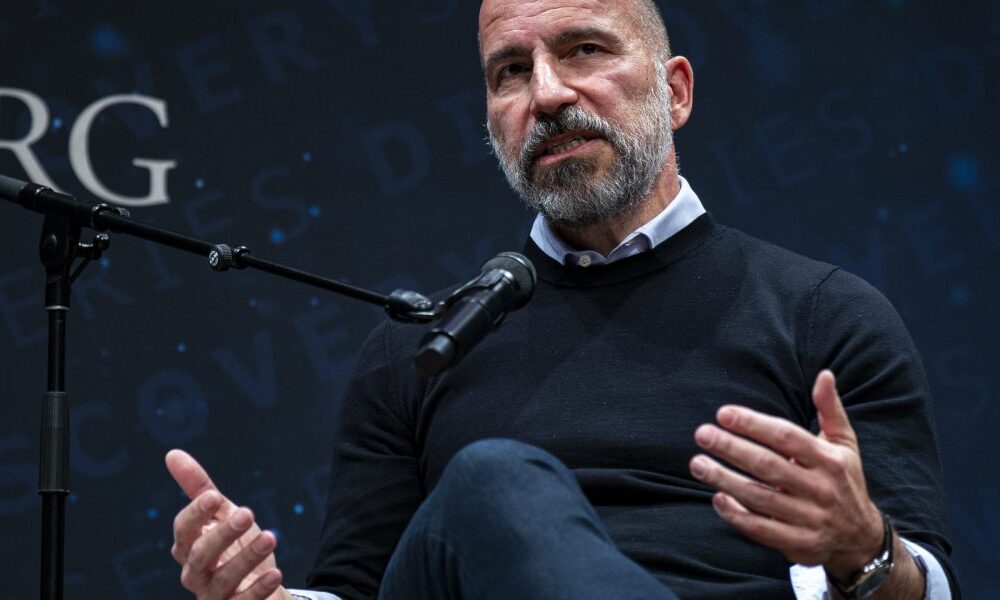
“You can imagine the majority of our trips being fulfilled by robots of some kind,” Uber CEO Dara Khosrowshahi said in a recent interview on The Diary of a CEO podcast. “Probably not 10 years from now, but you go 15 to 20 years from now, you’re going to start getting there.”
Business leaders have sounded the alarm on AI’s ability to replace a growing number of jobs, even those traditionally held by white-collar workers. Microsoft AI chief Mustafa Suleyman even predicted all white-collar work could be replaced by automation in as little as a year.
Job security in the short term
In response to a request for comment, an Uber spokesperson pointed to past remarks from the CEO emphasizing that the company expects the number of drivers and couriers on its platform to continue growing for several years.
A 2025 Goldman Sachs report predicted the number of robotaxis in the U.S. will grow from 1,500 in 2025 to about 35,000 in 2030, capturing about 8% of the U.S. ride-share market—a near 90% compound annual growth rate, but still a far cry from the 20 million robotaxis Khosrowshahi thinks will eventually infiltrate the ride-share market.
During the podcast, Khosrowshahi said there are still many issues the company, and other ride-share providers, must contend with to scale up a driverless car fleet. “We don’t operate in the virtual world, we operate in the physical world,” he said. “You have to get the regulations up. You have to build the cars. You have to build the sensor stacks; the models have to get there.”
But Uber is aiming to accelerate this process, announcing Monday the launch of Uber Autonomous Solutions to commercialize robotaxis around the world, organizing development across AV infrastructure, user experience, and fleet operations.
What will drivers do instead?
AI is not just an issue for ride-share drivers. Khosrowshahi thinks that over the next 10 years AI will be able to replace the work that 70% to 80% of humans can do.
“Ten years is not a lot of time for society to adjust to that kind of an impact,” he said.
Uber is already looking to ease that adjustment by diversifying the type of work Uber contractors can do. For one, Uber offers delivery and shopping opportunities to contractors, work Khosrowshahi said he doesn’t believe AI can replace anytime soon. And in October, the company launched a new AI Solutions initiative where contractors can train AI agents and models from their phones when they’re not driving. Individuals can take on tasks ranging from evaluating AI responses to translating and reviewing content.
Still, he believes retraining and the future of work is a big question business leaders will have to address within the next several years.
“When you go five plus years [into the future], it’s going to become more of an issue for society at large,” Khosrowshahi said.