Connect with us

Business

U.S. Supreme Court ruling on tariffs could derail Trump’s plan to take Greenland

Published

on


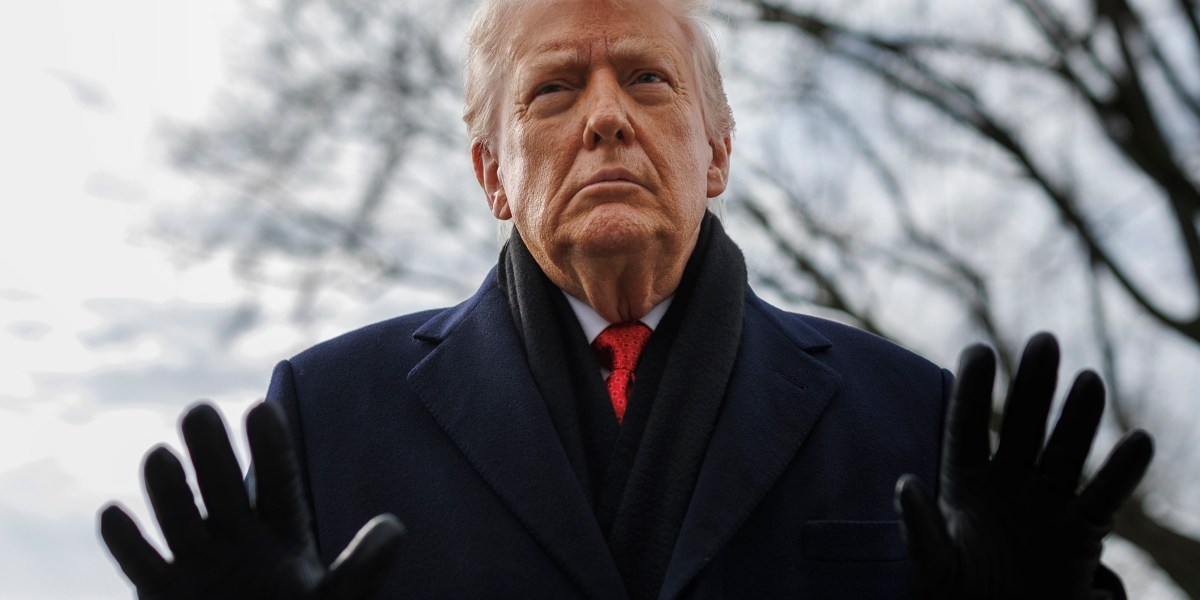
The U.S. Supreme Court could rule on Tuesday that President Donald Trump’s trade tariffs are illegal—and that would throw up a significant hurdle for his plan to acquire Greenland.

President Trump posted his latest threat to take over Greenland late last night on Truth Social: “Now it is time, and it will be done!!!”

Previously, on Saturday, he threatened to impose tariffs of 10%, rising to 25%, on Denmark, Norway, Sweden, France, Germany, the U.K., the Netherlands, and Finland, rising to 25% on June 1, “until such time as a Deal is reached for the Complete and Total purchase of Greenland.”

But analysts noted this morning that the court is due to issue rulings on Tuesday and Wednesday of this week. The expectation on Wall Street is that the court will rule that the president does not have the power under the International Emergency Economic Powers Act (IEEPA) to impose tariffs on routine international trade. If that happens, Trump’s threats could become meaningless, at least in the short-term.

“Threatened U.S. tariffs … may be overturned by the U.S. Supreme Court,” UBS advised clients in a note this morning.

At ING, Carsten Brzeski and Bert Colijn said, “If the Supreme Court rules against all earlier IEEPA tariffs, Trump’s latest announcement [about Greenland] would be void, and he would have to find other tariffs. Something that would take more time.”

The ruling had been expected earlier this month. The delay has caused some to speculate that the court, which at oral arguments appeared to be skeptical of the White House’s arguments, may now be leaning toward the Trump Administration. The court has a history of taking longer to produce its big, unexpected rulings.

“While the Court is positioned to issue additional opinions this week—sessions are scheduled for Tuesday and Wednesday—our economists’ expectation is that the ruling may not come until later in the year, potentially as late as June,” Jim Reid and his colleagues at Deutsche Bank said in their morning note.

Join us at the Fortune Workplace Innovation Summit May 19–20, 2026, in Atlanta. The next era of workplace innovation is here—and the old playbook is being rewritten. At this exclusive, high-energy event, the world’s most innovative leaders will convene to explore how AI, humanity, and strategy converge to redefine, again, the future of work. Register now.


Source link

Continue Reading

Business

Microsoft researchers have revealed the 40 jobs most exposed to AI—and even teachers make the list

Published

on


As companies like Amazon publicly announce AI-driven workforce reductions, workers are scrambling to understand which careers might soon disappear and be outsourced to technology.

A report from Microsoft researchers studying the occupational implications of generative AI offers some clarity.

Translators, historians, and writers are among the roles with the highest AI applicability score, meaning the job’s tasks are most closely aligned with AI’s current abilities, according to the report that ranked professions. Customer service and sales representatives—which make up about 5 million jobs in the U.S.—will also have to compete with AI. 

Overall, the jobs most exposed are ones that involve knowledge work—like people doing computer, math, or administrative work in an office, the researchers wrote. Sales jobs are also high on the list, since they often involve sharing and explaining information.

While Microsoft said high applicability doesn’t automatically mean those jobs will necessarily be replaced by AI, the list of roles quickly went viral—with professionals deeming them “most at risk.” It comes as companies like IBM have been freezing thousands of would-be new roles that it expects AI will take over in the next 5 years, and graduates in the U.K. are facing the worst job market since 2018 as employers pause hiring and use AI to cut costs, said Indeed.

Of course, there are some jobs that are unlikely to be touched by AI: Dredge operators; bridge and lock tenders; and water treatment plant and system operators are among the jobs with virtually no generative AI exposure, thanks in part to their hands-on equipment requirements.

Still, business leaders like Nvidia CEO Jensen Huang have said every job will be touched by AI in some way, and so it’s best to embrace it. 

“Every job will be affected, and immediately. It is unquestionable,” Huang said at the Milken Institute’s Global Conference in 2025. “You’re not going to lose your job to an AI, but you’re going to lose your job to someone who uses AI.”

A degree won’t save you from AI’s jobs revolution

Many of the jobs with high chances of getting upended by AI soon, like political scientists, journalists, and management analysts, are all ones that typically require a four-year degree to land a job. And as the researchers point out, having a degree—which was once considered a surefire path to career advancement—is no longer a safeguard against the changing tides. 

“In terms of education requirements, we find higher AI applicability for occupations requiring a Bachelor’s degree than occupations with lower requirements,” wrote the researchers, who studied 200,000 real-world conversations of Copilot users and cross-compared the AI’s performance with occupational data.

On the flip side, there are some career paths with low AI exposure, that are growing in demand. The health care sector, in particular, is an area that is experiencing this heavily. The home health and personal care aid industry is expected to create among the greatest number of new jobs over the next decade, according to the U.S. Bureau of Labor.

At the same time, the researchers recognized even their findings don’t capture the full scope of the AI revolution—and there could be further automation caused by more than just generative technology: “Our measurement is purely about LLMs: other applications of AI could certainly affect occupations involving operating and monitoring machinery, such as truck driving.”

Kiran Tomlinson, a senior Microsoft researcher, told Fortune the study focused on highlighting where AI might change how work is done, not take away or replace jobs.

“Our research shows that AI supports many tasks, particularly those involving research, writing, and communication, but does not indicate it can fully perform any single occupation. As AI adoption accelerates, it’s important that we continue to study and better understand its societal and economic impact,” Tomlinson said.

Gen Z’s big bet on education might not be all glam

After seeing the rollercoaster of layoffs across the tech industry over the past few years, many Gen Zers have turned to seemingly steadier fields like education.

The sector was the fastest-growing industry among recent U.K. graduates last year, and it was similarly a top career choice for American graduates. And while the profession can provide further work-life balance and decent benefits, the ability for AI to do the work may cause further headache. The report singles out farm and home management educators—as well as postsecondary economics, business, and library science teachers—as roles with relatively high AI applicability.

While it’s unlikely that schools will roll out AI teachers en masse, the report’s findings underscore how quickly the technology could reshape the education profession—and many others.

The top 10 least affected occupations by generative AI:

  1. Dredge Operators
  2. Bridge and Lock Tenders
  3. Water Treatment Plant and System Operators
  4. Foundry Mold and Coremakers
  5. Rail-Track Laying and Maintenance Equipment Operators
  6. Pile Driver Operators
  7. Floor Sanders and Finishers
  8. Orderlies
  9. Motorboat Operators
  10. Logging Equipment Operators

The top 40 most affected occupations by generative AI:

  1. Interpreters and Translators
  2. Historians
  3. Passenger Attendants
  4. Sales Representatives of Services
  5. Writers and Authors
  6. Customer Service Representatives
  7. CNC Tool Programmers
  8. Telephone Operators
  9. Ticket Agents and Travel Clerks
  10. Broadcast Announcers and Radio DJs
  11. Brokerage Clerks
  12. Farm and Home Management Educators
  13. Telemarketers
  14. Concierges
  15. Political Scientists
  16. News Analysts, Reporters, Journalists
  17. Mathematicians
  18. Technical Writers
  19. Proofreaders and Copy Markers
  20. Hosts and Hostesses
  21. Editors
  22. Business Teachers, Postsecondary
  23. Public Relations Specialists
  24. Demonstrators and Product Promoters
  25. Advertising Sales Agents
  26. New Accounts Clerks
  27. Statistical Assistants
  28. Counter and Rental Clerks
  29. Data Scientists
  30. Personal Financial Advisors
  31. Archivists
  32. Economics Teachers, Postsecondary
  33. Web Developers
  34. Management Analysts
  35. Geographers
  36. Models
  37. Market Research Analysts
  38. Public Safety Telecommunicators
  39. Switchboard Operators
  40. Library Science Teachers, Postsecondary

A version of this story originally published on Fortune.com on July 31, 2025.

More on artificial intelligence:

Join us at the Fortune Workplace Innovation Summit May 19–20, 2026, in Atlanta. The next era of workplace innovation is here—and the old playbook is being rewritten. At this exclusive, high-energy event, the world’s most innovative leaders will convene to explore how AI, humanity, and strategy converge to redefine, again, the future of work. Register now.


Source link

Continue Reading

Business

Pro-Greenland protesters mock Trump’s MAGA slogan with ‘Make America Go Away’ caps

Published

on


COPENHAGEN, Denmark (AP) — Red baseball caps spoofing Donald Trump’s iconic MAGA hats have become a symbol of Danish and Greenlandic defiance against the U.S. president’s threat to seize the frozen territory.

The caps reading “Make America Go Away” — parodying Trump’s “Make America Great Again” slogan — have gained popularity along with several variants on social media and at public protests, including a weekend demonstration held in freezing weather in the Danish capital.

European governments are rallying behind Denmark, citing the need to defend Arctic regions and warning that threats against Greenland undermine Western security.

Protesters, however, are less diplomatic.

“I want to show my support to Greenland and also show that I don’t like the president of the United States,” said 76-year-old Copenhagen resident Lars Hermansen, who wore one of the red caps at a protest Saturday.

The mock hats were created by Copenhagen vintage clothing store owner Jesper Rabe Tonnesen. Early batches flopped last year — until the Trump administration recently escalated its rhetoric over Greenland. Now there are popping up everywhere.

“When a delegation from America went up to Greenland, we started to realize this probably wasn’t a joke — it’s not reality TV, it’s actually reality,” said Tonnesen, 58. “So I said, OK, what can I do?” Can I communicate in a funny way with a good message and unite the Danes to show that Danish people support the people of Greenland?”

Demand suddenly surged from a trickle to selling out in the space of one weekend. Tonnesen said he has now ordered “several thousand.”

The original version designed by Tonnesen featured a play on words: “Nu det NUUK!” — a twist on the Danish phrase “Nu det nok,” meaning “Now it’s enough,” substituting Nuuk, Greenland’s tiny capital.

Protesters at Saturday’s rally waved red-and-white Danish and Greenlandic flags and carried handmade signs mocking U.S. claims over the territory, which is slightly larger than Saudi Arabia.

“No Means No,” read one sign. Another declared, “Make America Smart Again.”

Wearing one of the spoof hats, protester Kristian Boye, 49, said the gathering in front of Copenhagen City Hall struck a lighthearted tone while delivering a serious message.

“I’m here to support the Greenlanders, who are going through a very hard time right now,” he said. “They are being threatened with having their country invaded. I think it’s totally unacceptable.”

This story was originally featured on Fortune.com


Source link

Continue Reading

Business

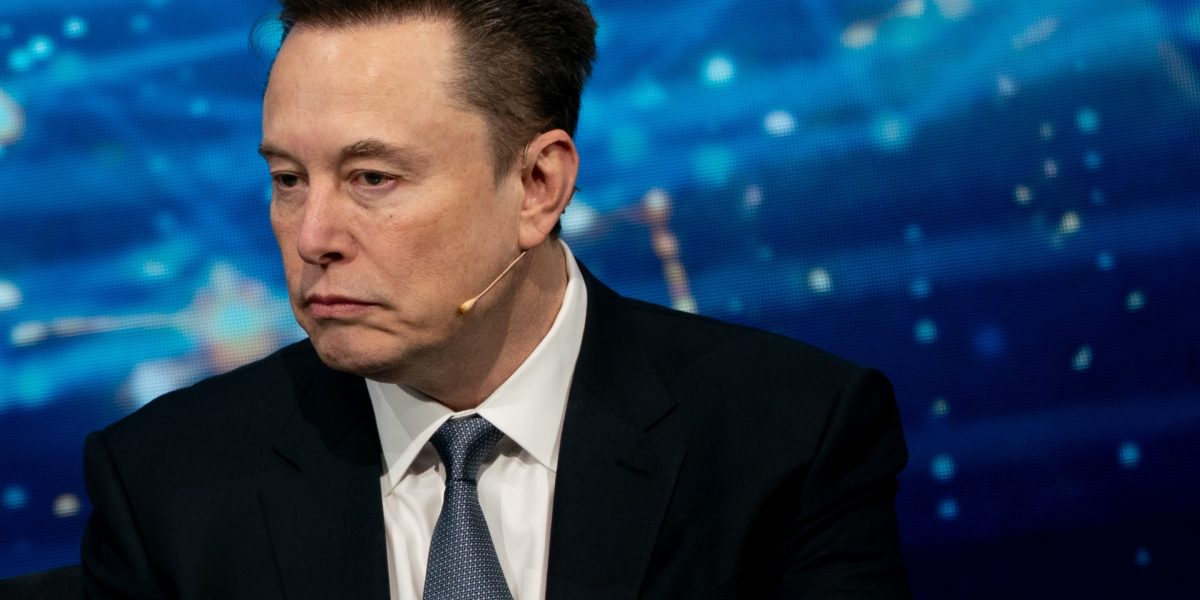
Elon Musk: AI, robotics will make work optional and money irrelevant in 10 to 20 years

Published

on


In the future, Elon Musk sees humans as metaphorical vegetable farmers.

The Tesla CEO said at the recent U.S.-Saudi Investment Forum in Washington that in the next 10 to 20 years, work will be optional, likening the decision to have a job to the more laborious upkeep of a vegetable garden.

“My prediction is that work will be optional. It’ll be like playing sports or a video game or something like that,” Musk said. “If you want to work, [it’s] the same way you can go to the store and just buy some vegetables, or you can grow vegetables in your backyard. It’s much harder to grow vegetables in your backyard, and some people still do it because they like growing vegetables.”

The future of optional work will be the result of millions of robots in the workforce able to usher in a wave of enhanced productivity, according to Musk. The tech mogul, worth about $681 billion, has made the recent push to expand Tesla beyond just electric vehicles, working on consolidating his sprawling business interests into his broader vision of an AI-fueled, robotic-powered future. That includes his goal of having 80% of Tesla’s value come from his Optimus robots, despite continuous production delays for the humanoid bots. 

These advancements in automation will have other benefits, too, according to Musk. In an episode of the Moonshots with Peter Diamandis podcast earlier this month, the Tesla CEO predicted his automatons would outnumber human surgeons within the decade. These advancements in medical care would exceed the quality of service the president receives, he said.

In Musk’s imagined future, humans would need that exceptional medical care for longer. He told Diamandis overcoming the problem of a limited lifespan is a programming issue, with access to immortality within human reach thanks to AI.

“You’re pre-programmed to die. And so if you change the program, you will live longer,” Musk said.

Addressing growing pains of an automated future

To many others, the notion of an automated future is less bright, particularly amid concerns about and early evidence of AI displacing entry-level jobs, which may be contributing to Gen Z’s job market woes and flatlining income growth—more of a nightmare than a utopian dream.

But in Musk’s automated, job-voluntary future, money won’t be an issue, he said. Musk takes a page from Iain M. Banks’ Culture series of science fiction novels, in which the self-proclaimed socialist author conjures a post-scarcity world filled with superintelligent AI beings and no traditional jobs.

“In those books, money doesn’t exist. It’s kind of interesting,” Musk said. “And my guess is, if you go out long enough—assuming there’s a continued improvement in AI and robotics, which seems likely—money will stop being relevant.” 

At Viva Technology 2024, Musk suggested “universal high income” would sustain a world without necessary work, though he did not offer details on how this system would function. His reasoning rhymes with that of OpenAI CEO Sam Altman, who has advocated for universal basic income, or regular payments given unconditionally to individuals, usually by the government. 

“There would be no shortage of goods or services,” Musk said at last year’s conference.

Tesla did not immediately respond to Fortune’s request for comment.

Is Musk’s optional-work vision possible?

Creating the world Musk is describing will be a challenge, according to economists. First of all, there’s the question of whether the technology to automate jobs will be accessible and affordable in the next couple of decades. While the cost of AI is decreasing, robotics are stubbornly expensive, making them harder to scale, according to Ioana Marinescu, an economist and associate professor of public policy at the University of Pennsylvania, who alongside colleague Konrad Kording published a working paper at the Brookings Institution last year. (For example, AI expense management platform Ramp noted in April 2025 companies are now paying $2.50 per 1 million tokens—the fundamental unit for powering AI—compared with $10 a year ago.) 

“We’ve been at it making machines forever, since the industrial revolution, at scale,” Marinescu told Fortune. “We know from economics that … you often run—for these kinds of activities—into decreasing returns, as it gets harder in order to make progress in a line of technology that you’ve been at, in this case, for a couple of centuries.”

AI is progressing rapidly, she said. Large language models can be applied to myriad white-collar careers, while physical machines, which she said are necessary in automated labor, are not only more expensive, but highly specialized, contributing to the slowdown in their workplace implementation.

Marinescu agrees with Musk’s vision of full-scale automation as the future of labor, but she is dubious about his timeline—not only because of the limitations of robotics, but also because AI adoption in the workplace is still not as rapid as anticipated, despite recent tech-related layoffs. A Yale Budget Lab report from October 2025 found that since ChatGPT’s November 2022 public release, the “broader labor market has not experienced a discernible disruption” because of AI automation.

Then there’s the matter of what these sweeping changes in labor will mean for the millions—or possibly billions—of people without jobs. Even with an established need for a universal basic income, finding the political willpower to make it happen is a different issue, said Samuel Solomon, an assistant professor of labor economics at Temple University. He told Fortune the political structure supporting the transformed labor force will be just as important as the technological one. 

“AI has already created so much wealth and will continue to,” Solomon said. “But I think one key question is: Is this going to be inclusive? Will it create inclusive prosperity? Will it create inclusive growth? Will everyone benefit?”

The current systems have appeared to widen the gap between the haves and have-nots during this AI industrial revolution, beginning with Musk’s $1 trillion pay package. A ballooning AI bubble has also illuminated class differences, with earnings expectations being revised up for the Magnificent Seven because of the AI boom, while expectations for the rest of the S&P 493 are being revised down, according to Apollo Global Management chief economist Torsten Slok. It suggests that as of today.

“Spending by well-off Americans, driven by their surging stock portfolios, is the single most significant driver of growth,” Slok wrote in a blog post.

Existential changes from AI

Ironing out the complicated logistics of a work-optional world is one thing. Figuring out whether that’s something humans really want is another. 

“If the economic value of labor declines so that labor is just not very useful anymore, we’ll have to rethink how our society is structured,” Anton Korinek, professor and faculty director of the Economics of Transformative AI Initiative at the University of Virginia, told Fortune.

Korinek cited research, such as the landmark 1938 Harvard University study that found humans derive satisfaction from meaningful relationships. Most of those relationships right now come from work, he said. In Musk’s imagined future, the coming generations will have to shift the paradigm of establishing meaningful relationships.

Musk offered his own take on the existential future of humans at Viva Technology in 2024.

“The question will really be one of meaning: If the computer and robots can do everything better than you, does your life have meaning?” he said. “I do think there’s perhaps still a role for humans in this—in that we may give AI meaning.”

A version of this story was published on Fortune.com on November 20, 2025.

More on Elon Musk’s vision for the future:

  • Elon Musk shares 4 bold predictions for the future of work: Robot surgeons in 3 years, immortality, and no need for retirement savings
  • Bad luck, six-figure earners: Elon Musk warns that money will ‘disappear in the future as AI makes work (and salaries) irrelevant
  • Elon Musk says saving for retirement is irrelevant because AI is going to create a world of abundance: ‘It won’t matter’



Source link

Continue Reading

Trending

Copyright © Miami Select.