Connect with us

Business

U.S. stocks follow Asia, Europe down on fear that Nvidia, other superstars are overvalued

Published

on


The U.S. stock market fell following another jarring day on Tuesday, as worries keep dogging Nvidia, bitcoin and other Wall Street stars that their prices shot too high.

After quickly sliding to a morning loss of 1.5%, the S&P 500 clawed back nearly all of it before sinking again. It finished with a fall of 0.8% and pulled further from its all-time high set late last month. The Dow Jones Industrial Average lost 498 points, or 1.1%, and the Nasdaq composite sank 1.2%.

Nvidia was again the heaviest weight on the market, and its drop of 2.8% brought its loss for the month so far to more than 10%. That’s a steep enough fall that Wall Street has a name for it: a correction.

What Nvidia does matters disproportionately to savers’ 401(k) accounts because its immense size means it’s the most influential stock on Wall Street. It single-handedly steers the direction of the S&P 500 some days, after fervent demand for its artificial-intelligence chips helped it briefly top $5 trillion in total value.

The U.S. stock market’s recent struggles are a sharp turnaround from its nearly relentless rally since April, when Wall Street last sold off after President Donald Trump shocked the world with stiff tariffs.

That rally was so strong that critics say it may have carried prices too high, too fast and left the market at risk of a sharp drop. They point in particular to stocks swept up in the AI mania, which have been surging at spectacular speeds for years.

Nvidia’s price more than doubled in four of the last five years, for example, while Palantir Technologies’ stock more than doubled in the first six and a half months of this year.

Many big investors still seem to expect stock prices to rise further, according to the latest monthly survey of global fund managers by Bank of America Global Research. But when asked what the No. 1 risk for the market is, one with a lower probability of happening but a chance of very big damage, 45% pointed to an AI bubble. That beat out potential trouble in the bond market, inflation and trade wars.

A record percentage of investors is also saying companies are “overinvesting,” according to the survey. The worry is that all the dollars pouring into AI chips and data centers worldwide may not produce the kind of revolution that AI proponents have been predicting, or at least not as profitable a one.

Other high-flying areas of the market with their own evangelists have also been struggling lately. Bitcoin’s price briefly fell below $90,000 in the morning, down from nearly $125,000 last month. It later recovered some of its losses and climbed back toward $93,000.

Home Depot also helped drag the market lower after falling 6%. It reported a weaker profit for the summer than analysts expected and cited a variety of reasons. Chief among them was a lack of storms, which would have driven customers to buy more home-improvement supplies. CEO Ted Decker also pointed to “consumer uncertainty and continued pressure in housing” for preventing an expected increase in demand.

Reporting stronger profits is one of the ways a company can make its stock price look less expensive, because stock prices tend to track with earnings over the long term. That’s raising the stakes for Wednesday’s profit report from Nvidia, which could either help halt its stock’s slide or worsen it.

Elsewhere on Wall Street, Cloudflare fell 2.8% after an earlier issue at the internet infrastructure provider caused global outages for ChatGPT and other services.

All told, the S&P 500 fell 55.09 points to 6,617.32. The Dow Jones Industrial Average dropped 498.50 to 46,091.74, and the Nasdaq composite sank 275.23 to 22,432.85.

In the bond market, Treasury yields likewise oscillated through the day. The yield on the 10-year Treasury eventually eased to 4.11% from 4.13% late Monday.

Yields have been swinging amid doubts about whether the Federal Reserve will cut its main interest rate at its next meeting in December, something that traders had earlier seen as very likely. What the Fed does is critical for the market because stock prices ran to records in part because of expectations for continued cuts to rates.

The Fed has cut rates twice already this year in hopes of shoring up a slowing job market. But lower interest rates can make inflation worse, and inflation has stubbornly remained above the Fed’s 2% target.

In stock markets abroad, indexes tumbled across Europe and Asia.

South Korea’s Kospi sank 3.3%, Japan’s Nikkei 225 dropped 3.2% and France’s CAC 40 fell 1.9% for some of the world’s larger drops.

___

AP Business Writers Matt Ott and Elaine Kurtenbach contributed.


Source link

Continue Reading

Business

Gavin Newsom hires former CDC officials to work as public health consultants for state of California

Published

on


Two former senior officials from the Centers for Disease Control and Prevention, including one fired by the Trump administration, will join California as public health consultants, Gov. Gavin Newsom announced Monday.

California joined Washington and Oregon — two other states with Democratic governors — to launch an alliance in September to establish their own public health guidance and vaccine recommendations, as the Trump administration makes sweeping changes to vaccine and health policy.

Susan Monarez was fired as the CDC’s director and Dr. Debra Houry resigned as the agency’s chief medical officer and deputy director over disputes about changes at the agency. The two will work with California’s public health department to help build trust in “science-driven decision-making,” Newsom’s office said.

“By bringing on expert scientific leaders to partner in this launch,” Newsom said in a statement, “we’re strengthening collaboration and laying the groundwork for a modern public health infrastructure that will offer trust and stability in scientific data not just across California, but nationally and globally.”

California has increasingly positioned itself as a counterweight to federal health policy, and Newsom has amped up his criticisms of President Donald Trump and challenged the Republican’s policies in court. The governor’s final term ends in just over a year and he’s gearing up for a possible presidential run in 2028.

California state Sen. Tony Strickland, a Republican, said the new initiative is an example of Newsom prioritizing his national political ambitions over the state.

“California has serious problems, and we need serious solutions from a serious leader,” Strickland said in a statement.

The White House and U.S. Department of Health and Human Services did not respond to emails seeking comment on the hirings.

Trump and Health Secretary Robert F. Kennedy Jr. have repeated falsehoods about vaccines, and the administration has given health recommendations this year that experts say were not backed by science.

Trump in September urged pregnant women not to take Tylenol, saying it could pose a risk of autism to their babies, remarks medical experts said were irresponsible. The CDC website was changed last month to contradict the longtime scientific conclusion that vaccines do not cause autism. A federal vaccine advisory panel voted earlier this month to reverse decades-old guidance recommending that all U.S. babies get immunized against the liver infection hepatitis B on the day they’re born. The vaccine is credited with preventing thousands of illnesses.

Monarez, a former director of a federal biomedical research agency, was named acting director of the CDC in January. Trump later nominated her to to serve as director. She was confirmed by the Senate in July, making her the first nonphysician to serve in the role. But she was fired by the Trump administration in August after less than a month in the post.

Kennedy has said Monarez was fired after she told him she was untrustworthy. But Monarez said that was false in congressional testimony and that she was fired after refusing to endorse new vaccine recommendations that weren’t backed by science.

Houry, who spent more than a decade at the CDC, was among a handful of top officials at the agency who resigned around the time Monarez was fired. Houry said in August she was concerned about the rise of vaccine misinformation during the Trump administration, as well as planned budget cuts, reorganization and firings at the CDC.

She said she’s excited to join California’s new initiative.

“California will advance practical, scalable solutions that strengthen public health within the state and across states —showing how states can modernize data, share capacity, and work together more efficiently, while remaining focused on protecting people and communities,” Houry said in a statement.

___

Associated Press writer Trân Nguyễn contributed.

This story was originally featured on Fortune.com


Source link

Continue Reading

Business

Down Arrow Button Icon

Published

on


Dealmakers are heading into the final weeks of 2025 on a $100 billion cliffhanger.

Paramount Skydance Corp.’s hostile bid to snatch Warner Bros. Discovery Inc. from under the nose of Netflix Inc. encapsulates the themes that have shaped a banner year for mergers and acquisitions: renewed desire for transformative tie-ups, massive checks from Wall Street, the flow of Middle East money and US President Donald Trump’s role as both disruptor and dealmaker.

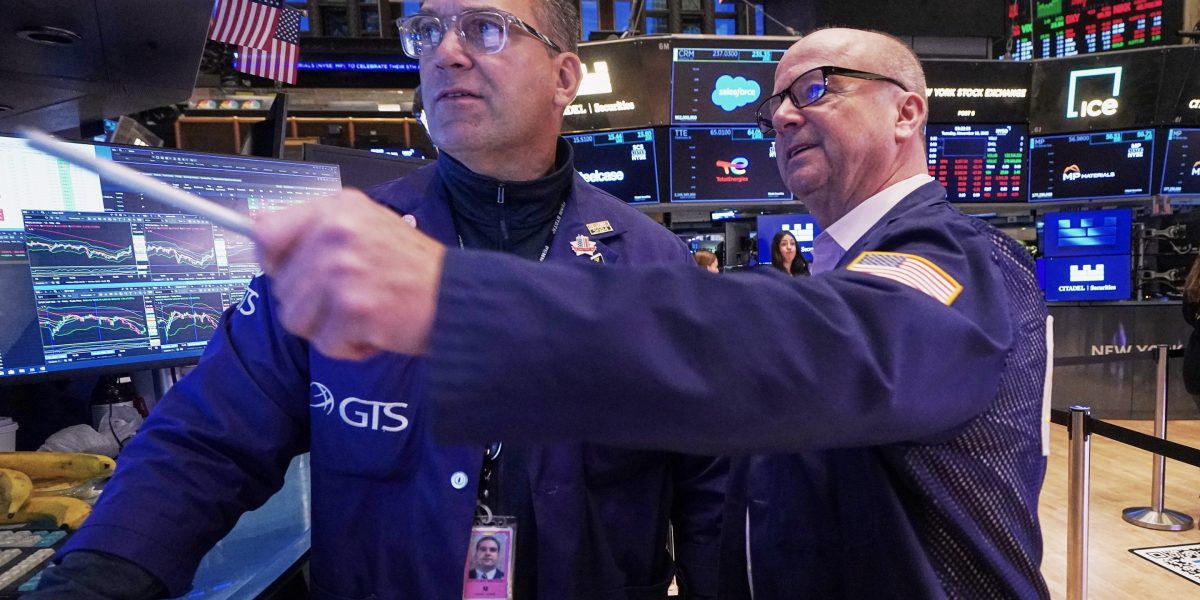
Global transaction values have risen around 40% to about $4.5 trillion this year, data compiled by Bloomberg show, as companies chase ultra-ambitious combinations, emboldened by friendlier regulators. That’s the second-highest tally on record and includes the biggest haul of deals valued at $30 billion or more.

“There’s a sentiment in boardrooms and among CEOs that this is a potential multi-year window where it’s possible to dream big,” said Ben Wallace, co-head of Americas M&A at Goldman Sachs Group Inc. “We’re at the beginning of a rate-cutting cycle so there’s anticipation that there will be more liquidity.”

Beyond Netflix’s purchase of Warner Bros., this year’s blockbusters include Union Pacific Corp.’s acquisition of rival railroad operator Norfolk Southern Corp. for more than $80 billion including debt, the record leveraged buyout of video game maker Electronic Arts Inc., and Anglo American Plc’s takeover of Teck Resources Ltd. to reshape global mining. 

“When you look around and you see your peers doing these big deals and taking advantage of the tailwinds, you don’t want to be left out,” said Maggie Flores, partner at law firm Kirkland & Ellis LLP in New York. “The regulatory environment is in a position that is very conducive to dealmaking and people are taking advantage of it.”

The tally also shows a level of exuberance in certain pockets that some advisers and analysts worry is unsustainable. Global trade tensions are ongoing, and market observers are increasingly warning of a selloff in the white-hot equity markets that have underpinned the M&A resurgence.

Top executives at Goldman Sachs, JPMorgan Chase & Co. and Morgan Stanley have all flagged the risk of a correction in the months ahead, in part tied to concerns about an overheated artificial intelligence ecosystem, where huge amounts of investment have juiced technology stocks.

“These equity returns are really coming out of AI, and AI spend is not sustainable,” said Charlie Dupree, global chair of investment banking at JPMorgan. “If that pulls back, then you are going to see a broader market that isn’t really advancing.”

The AI buzz led to some the year’s standout transactions. Sam Altman’s OpenAI took in major investments from the likes of SoftBank Group Corp., Nvidia Corp. and Walt Disney Co., and a consortium led by BlackRock Inc.’s Global Infrastructure Partners agreed to pay $40 billion for Aligned Data Centers. In March, Google parent Alphabet Inc. framed its $32 billion acquisition of cybersecurity startup Wiz Inc. as a way to provide customers with new safeguards in the AI era.

“Everyone needs to be an AI banker now,” said Wally Cheng, head of global technology M&A at Morgan Stanley. “Just as software began eating the world 15years ago, AI is now eating software. You have to be conversant in AI and understand how it will affect every company.”

The technology sector more broadly has already notched a record year for deals, thanks to a series of big-ticket takeovers across public and private markets. The trend extended to the White House over the summer, when the US government took a roughly 10% stake in Intel Corp. in an unconventional move aimed at reinvigorating the company and boosting domestic chip manufacturing.

It was one of the clearest indications of Trump’s willingness to blur the lines between state and industry and insert himself into M&A situations during his second term, particularly in sectors deemed mission critical. His administration also acquired a stake in rare-earth producer MP Materials Corp. and Commerce Secretary Howard Lutnick has hinted at similar deals in the defense sector.

Trump has separately been positioning himself as kingmaker on high-profile transactions. The government secured a so-called golden share in United States Steel Corp. as a condition for approving its takeover by Japan’s Nippon Steel Corp., and the president recently signaled he’ll oppose any acquisition of Warner Bros. that doesn’t include new ownership of CNN.

“The Trump administration’s approach to merger regulation today is markedly different compared to the first time around,” said Brian Quinn, a professor at Boston College Law School. Quinn said he couldn’t think of a member of the Republican Party from 15 to 20 years ago who would now believe the US government “is involved in the business of picking winners.”

To be sure, bankers will be wondering if they could have achieved more in 2025 had it not been for the chaotic period earlier in the year, when deals were put on hold after Trump’s trade war hobbled markets. And in a sign that persistent economic challenges are still impacting some parts of M&A, the number of deals being announced globally remains flat.

Many small and mid-cap companies have lagged the broader stock market and are opting to pursue their own strategic plans instead of weighing inorganic options, according to Jake Henry, global co-leader of the M&A practice at consultancy McKinsey & Co.

“They’re thinking ‘I’m better off just operating my business and getting there.’ It has to be an explosive offer for them to come to the table,” he said.

Meanwhile, private equity firms, whose buying and selling is a key barometer for M&A, are still having a harder time offloading certain assets because of valuation gaps with buyers. This has had a knock-on effect on their ability to raise funds and spend on new acquisitions. But bankers are starting to see a recovery here too as interest rates come down and bring more potential acquirers to the table.

“What’s motivating sponsors more than anything is their need to return cash to investors,” said Saba Nazar, chair of global financial sponsors at Bank of America Corp. “We have been in bake-off frenzy for the last couple of months.”

Road to Record

Dealmakers began the year whispering of M&A records under Trump’s pro-business administration. While they will just miss out on the milestone in 2025, there is a strong sense on Wall Street that those early bumps only delayed the inevitable. 

Brian Link, co-head of North America M&A at Citigroup Inc., said that after ‘Liberation Day’ in April, he expected to spend more time figuring out the impact of tariffs on different business and how to adjust around that. 

“That has not been the case,” he said. “Unless fear creeps back into the market, there doesn’t seem to be anything in the near term that’s going to change the dynamic here.”


Source link

Continue Reading

Business

New York City is officially getting 3 Las Vegas-style casinos

Published

on


The New York Mets’ ballpark in Queens. A Bronx golf course once operated by President Donald Trump ’s company. A slot parlor on a horse racing track near John F. Kennedy International Airport.

The three disparate sites, located far from the tourist hub of Manhattan, will become the future homes of New York City’s first Las Vegas-style resort casinos.

The state Gaming Commission on Monday awarded the three projects licenses to operate in the lucrative metropolitan-area market during a meeting at a riverside park in upper Manhattan.

The panel approved the licenses with the condition that the companies each appoint an outside monitor that would report regularly to the commission to ensure they meet their financial and legal obligations, as well as the promised investments they made to local communities.

Brian O’Dwyer, the commission’s chair, said the state looked forward to the promise of jobs, infrastructure improvements and gaming revenue being realized.

“You all have an important charge ahead of you, and you can be assured that this commission takes our responsibility to keep your feet to the fire with great respect,” he said to the project representatives in attendance.

Democratic New York Gov. Kathy Hochul said in a statement the projects would pump billions of dollars into the state’s transit and education systems and create tens of thousands of jobs.

But a handful of protesters opposed to billionaire Mets owner Steve Cohen’s Hard Rock plan vowed to continue their fight in court. They and other casino opponents worry the projects will only increase gambling addiction.

“You picked a billionaire over New Yorkers! Shame on you!” the group shouted as they walked out of the meeting.

Cohen and Hard Rock’s proposal calls for an $8.1 billion casino complex on a parking lot next to the Mets’ Citi Field that would include a performance venue, hotel and retail space.

Bally’s has proposed a roughly $4 billion casino at the Ferry Point golf course in the Bronx that would include a hotel, event center, meeting spaces, restaurants and other amenities.

And Resorts World has proposed investing more than $5 billion to expand its slots parlor at Aqueduct Race Track in Queens into a full casino with a hotel, dining and entertainment options.

The projects bested several other proposals that fell by the wayside during the high-stakes competition.

Among them were three casinos proposed for Manhattan that were rejected by local boards, including a Caesars Palace in the heart of Times Square backed by rapper Jay-Z. A plan for a resort on Coney Island’s iconic boardwalk in Brooklyn was also defeated by local opposition, and MGM abruptly pulled out of the once-crowded sweepstakes, despite local support.

The state gaming commission was authorized to license up to three casinos in the New York City area after voters approved a referendum in 2013 opening the door to casino gambling statewide.

Four full casinos, all upstate, now offer table games. The state also runs nine gambling halls without live table games, many of them also miles away from Manhattan.

Monday’s decision, in some ways, was largely a formality. Millions of dollars in gambling revenues are already factored into the state budget.

A state panel charged with vetting the proposals for the commission also recommended awarding a license to all three remaining proposals earlier this month.

The Gaming Facility Location Board, in its written decision, argued that the region’s dense and relatively affluent population, combined with high tourism, would be able to support all three plans, despite their relative proximity to each other.

The panel said its consultants conservatively estimated the casinos would generate a combined $7 billion in gambling tax revenues from 2027 to 2036, plus $1.5 billion in licensing fees and nearly $6 billion in state and local taxes.

Monday’s decision also means Trump could stand to claim a substantial prize. When Bally’s purchased operating rights for the city-owned Ferry Point golf course from the Trump Organization in 2023, it agreed to pony up an additional $115 million if it won a casino license.

Spokespersons for the Trump Organization didn’t respond to an email seeking comment Monday on the expected windfall.


Source link

Continue Reading

Trending

Copyright © Miami Select.