Business
U.S. Olympians earn just 5% of what Singapore pays—many are forced to juggle jobs as baristas, brokers, and dentists just to get by

While it might feel safe to assume Olympic athletes rake in the dough much like other celebrities and public figures, the reality is that many of them hold onto several jobs just to make ends meet. The athletes who represent the $2 billion global spectacle often take home at most tens of thousands of dollars, and many earn nothing directly from competing.
Plus, training for the Olympics can range from tens of thousands of dollars a year to more than $100,000 for some sports. Annual training costs in sports like skiing and skating can run as high as five or even six figures once flights to competitions, equipment, ice time, coaching, physical therapy, and insurance are factored in. And the International Olympic Committee does not pay athletes to compete: Athletes only go home with money from their country, which varies widely depending on their home country and the medal they receive.
For example, a gold medalist in Singapore can expect to take home nearly $750,000, but one from the U.S. only banks $38,000, according to the National Olympic Committee and other local reports analyzed by CNBC in 2024. Those figures also don’t account for taxes and other fees, which further reduce athletes’ earning potential.
That’s typically one of the only ways Olympians take home money for their efforts, although every U.S. Olympian this year will get $200,000, whether they medal or not, thanks to a $100 million gift to the United States Olympic & Paralympic Committee (USOPC) from billionaire Ross Stevens, the founder and CEO of Stone Ridge Holdings Group. But they won’t see that money right away: The first $100,000 they’ll receive at age 45, or 20 years after their first qualifying Olympic appearance, whichever comes later. The remaining $100,000 will be given as a guaranteed benefit for their families after they die.
“I do not believe that financial insecurity should stop our nation’s elite athletes from breaking through to new frontiers of excellence,” Stevens said.
Still, the gap between the Olympic brand’s commercial heft and the financial reality for athletes is what pushes many American winter athletes into second jobs. Here are a few examples of how winter Olympians are making ends meet.
The barista
Alpine skier Keely Cashman, who represented the U.S. in the 2022 Winter Olympics and qualified for this year’s games, spends part of her year behind the counter as a barista at The Serene Bean, a coffee shop her family owns in Strawberry, Calif.—a super small town with a population of only 86 people.
And growing up in a blue-collar area, Cashman didn’t have as many financial resources as some other athletes do. But by age 12, she went to Tahoe to ski, and it’s where she still trains in the offseason.
“Ski racing is obviously a very expensive sport. I come from a very blue-collar area,” Cashman told local news station KSBW. “My brothers and I were able to ski race because my dad was a coach, and that covered some of the costs.”
While Cashman hasn’t disclosed her earnings from being a barista, this money can help fill in the financial gaps left by variable federation support and the absence of major endorsement money in women’s speed events, even for Olympians. According to Indeed, baristas in California make an average of $18.90 per hour.
The broker
Curler Chris Plys is also into his family business when he’s not competing. Plys, 38, left college when his father was battling brain cancer to take over his food brokerage, Plys Superior Consulting, and still owns the business in Duluth, Minnesota.
“It was the first major thing that I had gone through after the Olympics and I just was forced to grow up fast,” he told USA Today.


He now balances running the firm with training and competing for Team USA in men’s and mixed doubles curling. Back in 2010, Plys had also competed on reality show Bank of Hollywood to help pay for his parents to watch him compete in the 2010 Vancouver Olympics as an alternate. The trip cost $6,500, and Plys also competed in the 2022 Beijing Games. He was still playing vice-skip on John Shuster’s team and competed in the U.S. Olympic Curling Team Trials for Milano-Cortina 2026 in late 2025, but it’s unclear whether he’ll compete this year.
The dentist
When Tara Peterson isn’t curling, she’s a practicing dentist in White Bear Lake, Minn., at Isaacson Gentle Dentistry. Peterson’s parents, also a dentist and a dental hygienist, joined a curling league and also signed up Tara and her older sister, Tabitha, for a junior curling league in St. Paul, which is what launched Peterson’s career.


Tara made her Olympic debut as the lead alongside her sister, Tabitha, who was the skip at the Winter Olympic Games Beijing 2022, where they finished sixth. Tabita is also in the health care field, working as a pharmacist. The median salary for dentists in 2024 was about $180,000, according to Bureau of Labor Statistics data, and pharmacists make about $140,000. Both Tara and Tabitha qualified for the 2026 Olympics.
The artist
Freestyle moguls skier Bradley Wilson, a three-time Olympian, created his own business selling original artwork, called Bradley Wilson Studios.
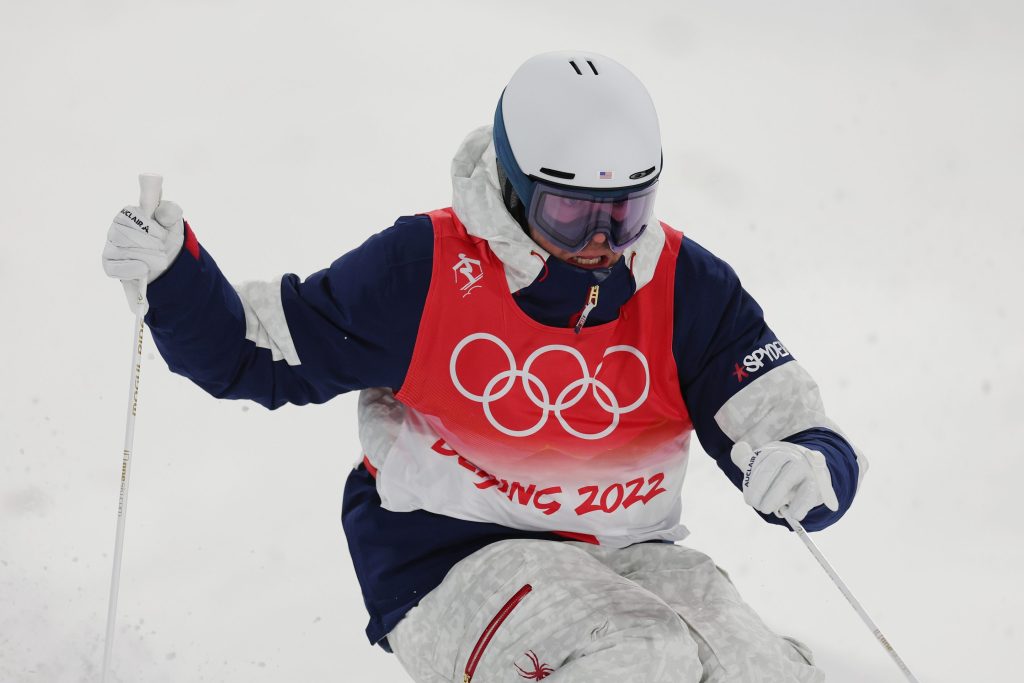
“Like most sports, skiing has an off-season, and I had to stay productive. So during the summer in Park City, I started to play around with painting and, like my ski career, the art started to progress and began to take off,” Wilson wrote on his site. “I have been selling paintings for 3 years now, and it has been a huge help to pay for my expenses in my ski career.”
He also has several sponsors listed, including Deer Valley Resort and snow helmet company Giro. Bradley sells prints for about $50 each and paintings for up to $600. He competed in the 2014, 2018, and 2022 Olympics.
This story was originally featured on Fortune.com