Connect with us

Business

U.S. launches financial rescue of Argentina, Treasury buys pesos

Published

on


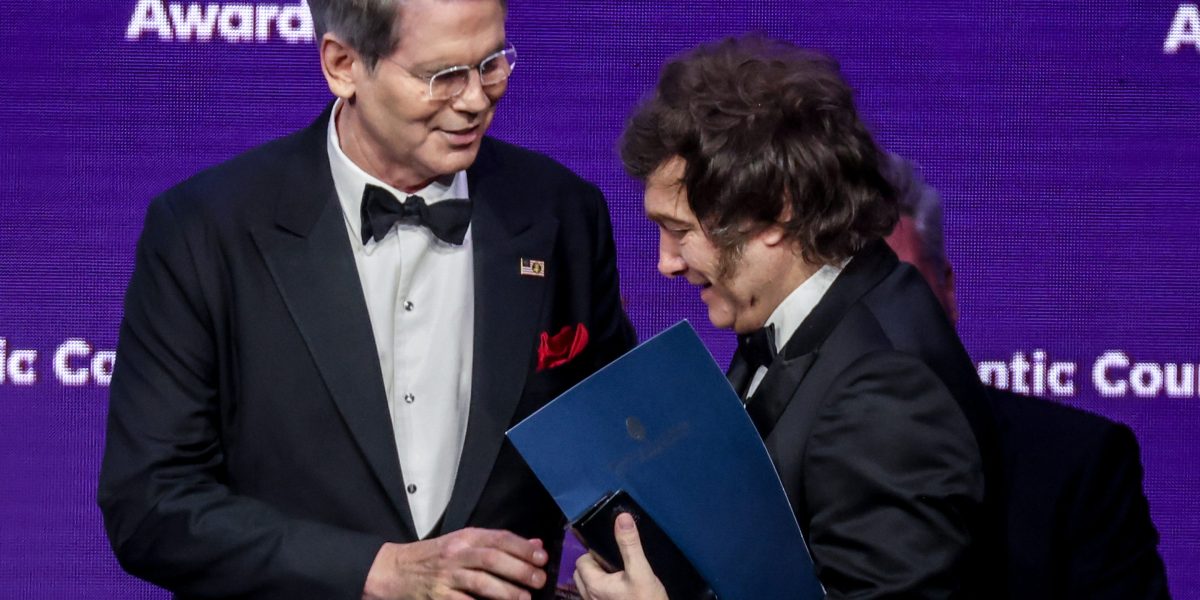
The US rushed to stabilize Argentina’s economy on Thursday, offering $20 billion in financing and carrying out a rare intervention in currency markets to prop up the peso after weeks of sharp declines.

Washington has finalized a $20 billion currency swap framework with Argentina’s central bank, Treasury Secretary Scott Bessent said in a social media post. The US also directly purchased pesos, he said, a move that follows unsuccessful efforts by Argentine authorities to stabilize the exchange rate on their own.

Trump and Bessent are making a bet on a nation that’s defaulted and devalued repeatedly over the past several decades. The goal is to help their political ally President Javier Milei notch a win in Oct. 26 midterm elections, and calm markets unsettled by fears of his leftist rivals returning to power.

“The US Treasury is prepared, immediately, to take whatever exceptional measures are warranted to provide stability to markets,” Bessent said.

Milei welcomed the intervention, thanking Bessent and President Donald Trump in a post on X. “Together, as the closest of allies, we will make a hemisphere of economic freedom and prosperity,” he said. 

‘Illiquidity’ Trouble

Bessent characterized Argentina’s woes as “a moment of acute illiquidity,” suggesting he doesn’t see a fundamental issue with its ability to make good on its debt. It isn’t immediately clear what the US is asking of Argentina in return for its aid. Milei has denied that the US asked Argentina to get rid of a separate $18 billion swap line with China. 

While speculation had risen before Bessent’s announcement that the US might press Argentina to allow a free float of the peso, the Treasury chief said the country’s “exchange rate band remains fit for purpose.”

This is a modal window.

The media could not be loaded, either because the server or network failed or because the format is not supported.

“Argentina’s policies, when anchored on fiscal discipline, are sound,” Bessent said. He also said he discussed potential investment incentives for US companies who may want to do business in Argentina.

Argentina’s dollar bonds jumped across the curve, with some of the nation’s most liquid notes up more than 4 cents on the dollar to session highs. The peso, which started the day down 2.7% as local authorities stayed out of the market for the first time in more than a week, ended it 0.7% higher against the dollar.

Summit Coming

Trump and Milei will meet at the White House Oct. 14. in their second sit-down, after they held talks on the sidelines of the UN General Assembly in New York in September.

The announcements follow several days of US discussions with Argentina’s economic team, including Economy Minister Luis Caputo, who had also met this week with International Monetary Fund Managing Director Kristalina Georgieva. Argentina is by far the Fund’s biggest debtor, owing some $55 billion after a string of bailouts.

The new bilateral “swap” would likely be different from the swap lines that the Federal Reserve has with other developed-economy central banks, and more reminiscent of tools used by Washington to bail out Mexico three decades ago.

Although the US help may help stabilize Argentina’s volatile markets for now, it’s already been questioned on both sides of the aisle in Washington for conflicting with Trump’s “America First” agenda.

For his part, Milei has repeatedly said government isn’t the solution while wielding a chainsaw to symbolize federal spending cuts in Argentina. After promising to close his central bank during his campaign two years ago, the currency swap line now runs through it. 

Trump’s financial lifeline for Milei comes on top of the US supporting a separate $20 billion April agreement for Argentina with the IMF. That was Argentina’s third bailout from the fund since Trump’s first term. 

Fortune Global Forum returns Oct. 26–27, 2025 in Riyadh. CEOs and global leaders will gather for a dynamic, invitation-only event shaping the future of business. Apply for an invitation.


Source link

Continue Reading

Business

Trump administration waives part of a Biden-era fine against Southwest Air for canceled flights

Published

on


The U.S. Department of Transportation is waiving part of a fine assessed against Southwest Airlines after the company canceled thousands of flights during a winter storm in 2022.

Under a 2023 settlement reached by the Biden administration, Southwest agreed to a $140 million civil penalty. The government said at the time that the penalty was the largest it had ever imposed on an airline for violating consumer protection laws.

Most of the money went toward compensation for travelers. But Southwest agreed to pay $35 million to the U.S. Treasury. Southwest made a $12 million payment in 2024 and a second $12 million payment earlier this year. But the Transportation Department issued an order Friday waiving the final $11 million payment, which was due Jan. 31, 2026.

The department said Southwest should get credit for significantly improving its on-time performance and investing in network operations.

“DOT believes that this approach is in the public interest as it incentivizes airlines to invest in improving their operations and resiliency, which benefits consumers directly,” the department said in a statement. “This credit structure allows for the benefits of the airline’s investment to be realized by the public, rather than resulting in a government monetary penalty.”

The fine stemmed from a winter storm in December 2022 that paralyzed Southwest’s operations in Denver and Chicago and then snowballed when a crew-rescheduling system couldn’t keep up with the chaos. Ultimately the airline canceled 17,000 flights and stranded more than 2 million travelers.

The Biden administration determined that Southwest had violated the law by failing to help customers who were stranded in airports and hotels, leaving many of them to scramble for other flights. Many who called the airline’s overwhelmed customer service center got busy signals or were stuck on hold for hours.

Even before the settlement, the nation’s fourth-biggest airline by revenue said the meltdown cost it more than $1.1 billion in refunds and reimbursements, extra costs and lost ticket sales over several months.


Source link

Continue Reading

Business

Trump slams Democratic congressman as disloyal for not switching parties after pardon

Published

on


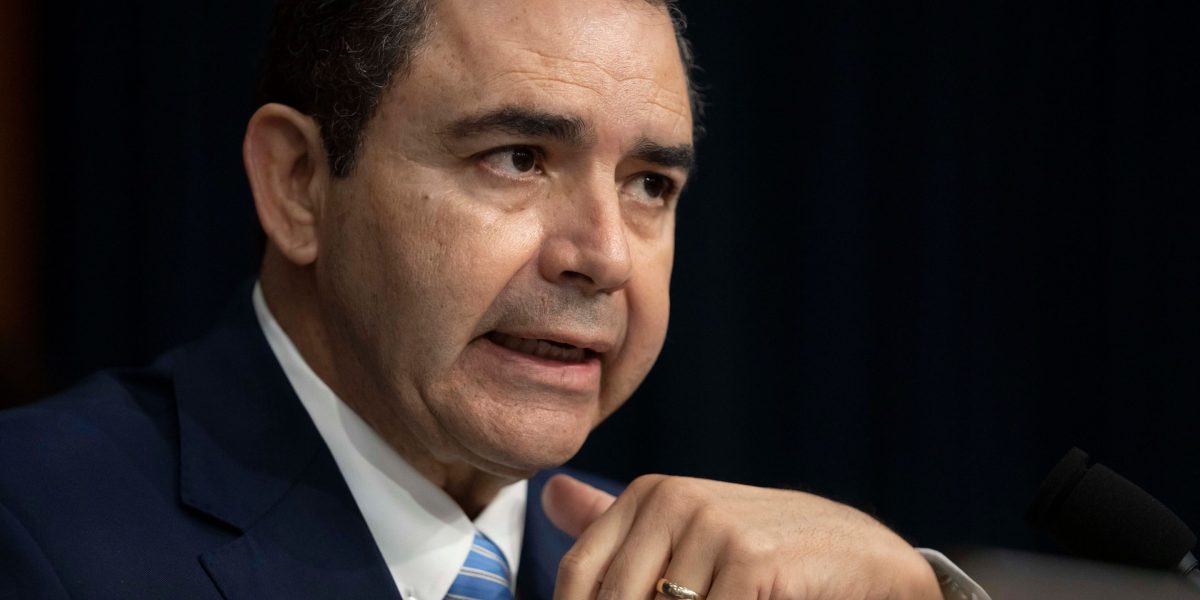
Trump blasted Cuellar for “Such a lack of LOYALTY,” suggesting the Republican president might have expected the clemency to bolster the GOP’s narrow House majority heading into the 2026 midterm elections.

Cuellar, in a television interview Sunday after Trump’s social media post, said he was a conservative Democrat willing to work with the administration “to see where we can find common ground.” The congressman said he had prayed for the president and the presidency at church that morning “because if the president succeeds, the country succeeds.”

Citing a fellow Texas politician, the late President Lyndon Johnson, Cuellar said he was an American, Texan and Democrat, in that order. “I think anybody that puts party before their country is doing a disservice to their country,” he told Fox News Channel’s “Sunday Morning Futures.”

Trump noted on his Truth Social platform that the Democratic President Joe Biden’s administration had brought the charges against Cuellar and that the congressman, by running once more as a Democrat, was continuing to work with “the same RADICAL LEFT” that wanted him and his wife in prison — “And probably still do!”

“Such a lack of LOYALTY, something that Texas Voters, and Henry’s daughters, will not like. Oh’ well, next time, no more Mr. Nice guy!” Trump said. Cuellar’s two daughters, Christina and Catherine, had sent Trump a letter in November asking that he pardon their parents.

Trump explained his pardon he announced Wednesday as a matter of stopping a “weaponized” prosecution. Cuellar was an outspoken critic of Biden’s immigration policy, a position that Trump saw as a key alignment with the lawmaker.

Cuellar said he has good relationships within his party. “I think the general Democrat Caucus and I, we get along. But they know that I’m an independent voice,” he said.

A party switch would have been an unexpected bonus for Republicans after the GOP-run Legislature redrew the state’s congressional districts this year at Trump’s behest. The Texas maneuver started a mid-decade gerrymandering scramble playing out across multiple states. Trump is trying to defend Republicans’ House majority and avoid a repeat of his first term, when Democrats dominated the House midterms and used a new majority to stymie the administration, launch investigations and twice impeach Trump.

Yet Cuellar’s South Texas district, which includes parts of metro San Antonio, was not one of the Democratic districts that Republicans changed substantially, and Cuellar believes he remains well-positioned to win reelection.

Federal authorities had charged Cuellar and his wife with accepting thousands of dollars in exchange for the congressman advancing the interests of an Azerbaijan-controlled energy company and a bank in Mexico. Cuellar was accused of agreeing to influence legislation favorable to Azerbaijan and deliver a pro-Azerbaijan speech on the floor of the U.S. House.

Cuellar has said he his wife were innocent. The couple’s trial had been set to begin in April.

In the Fox interview, Cuellar insisted that federal authorities tried to entrap him with “a sting operation to try to bribe me, and that failed.”

Cuellar still faces a House Ethics Committee investigation.


Source link

Continue Reading

Business

Jerome Powell faces a credibility issue as he tries to satisfy hawks and doves on a divided Fed

Published

on


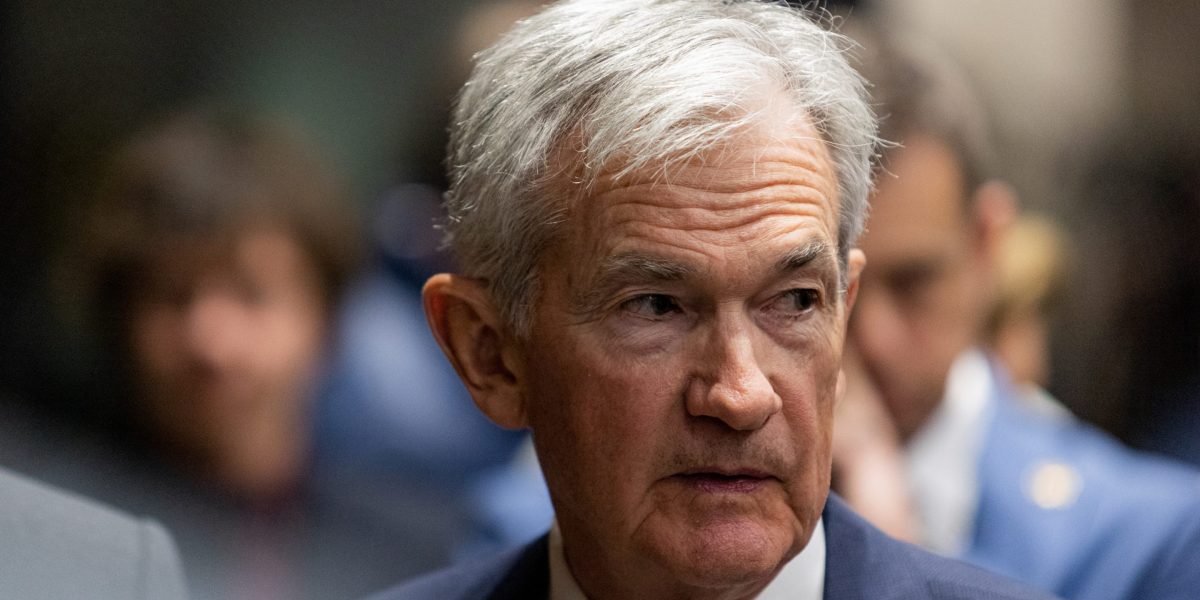
With the Federal Reserve split between increasingly hawkish and increasingly dovish policymakers, Chairman Jerome Powell is due to perform some serious log-rolling when the central bank meets this week.

Another rate cut is a near certainty after the Fed meeting ends on Wednesday, but the main question is what Powell will say about the prospects for more easing next month.

Wall Street expects a hawkish cut, meaning Powell is likely to avoid signaling a January cut to appease Fed hawks, after joining doves to lower rates this month.

“Chair Powell is facing the most divided committee in recent memory,” analysts at Bank of America said in a note on Friday. “Therefore, we think he will attempt to balance the expected rate cut with a hawkish stance at the press conference, just as he did in October.”

But at the same time, the Fed chief has also been insistent that policymakers are not on a pre-determined course and that rate moves depend on the data that come in.

As a result, BofA is doubtful that he can pull off a hawkish cut so easily, considering all the market-moving data that will come out between the two meetings, with some delayed due to the government shutdown.

The week after the Fed meeting, for example, jobs numbers for October and November, October retail sales, and the consumer price index for November will come out. And December readings for those indicators are likely to be released before the next meeting on Jan. 27-28.

“It will be difficult for Powell to send a credibly hawkish signal at the press conference,” analyst said.

BofA still sees a way for him to thread the needle. One option is for Powell to suggest that “significant further weakening” in the jobs data will be necessary to trigger a January cut.

Another option is to argue that 3.5%-3.75%—where benchmark rates would be if the Fed cuts again this week—isn’t restrictive after accounting for inflation, meaning the central bank is no longer weighing on the economy as much.

Similarly, JPMorgan chief U.S. economist Michael Feroli said he expects Powell to stress that after this week’s cut, rates will be close to neutral. So any additional easing would depend on meaningful deterioration in the labor market and not be predicated in risk management.

For now, Wall Street doesn’t expect a January cut, with 25% odds currently being priced in on CME Group’s FedWatch tool. But BofA thinks Powell will likely leave the door open for one.

“We wouldn’t be surprised if markets start pushing more aggressively for a Jan cut in the near term,” analysts predicted. “And the anticipation of this outcome might raise the probability of more dissents in Dec, since hawks might be inclined to dig their heels in instead of compromising.”


Source link

Continue Reading

Trending

Copyright © Miami Select.