Connect with us

Politics

U.S. applying leverage to bring South American country in line
Published

on


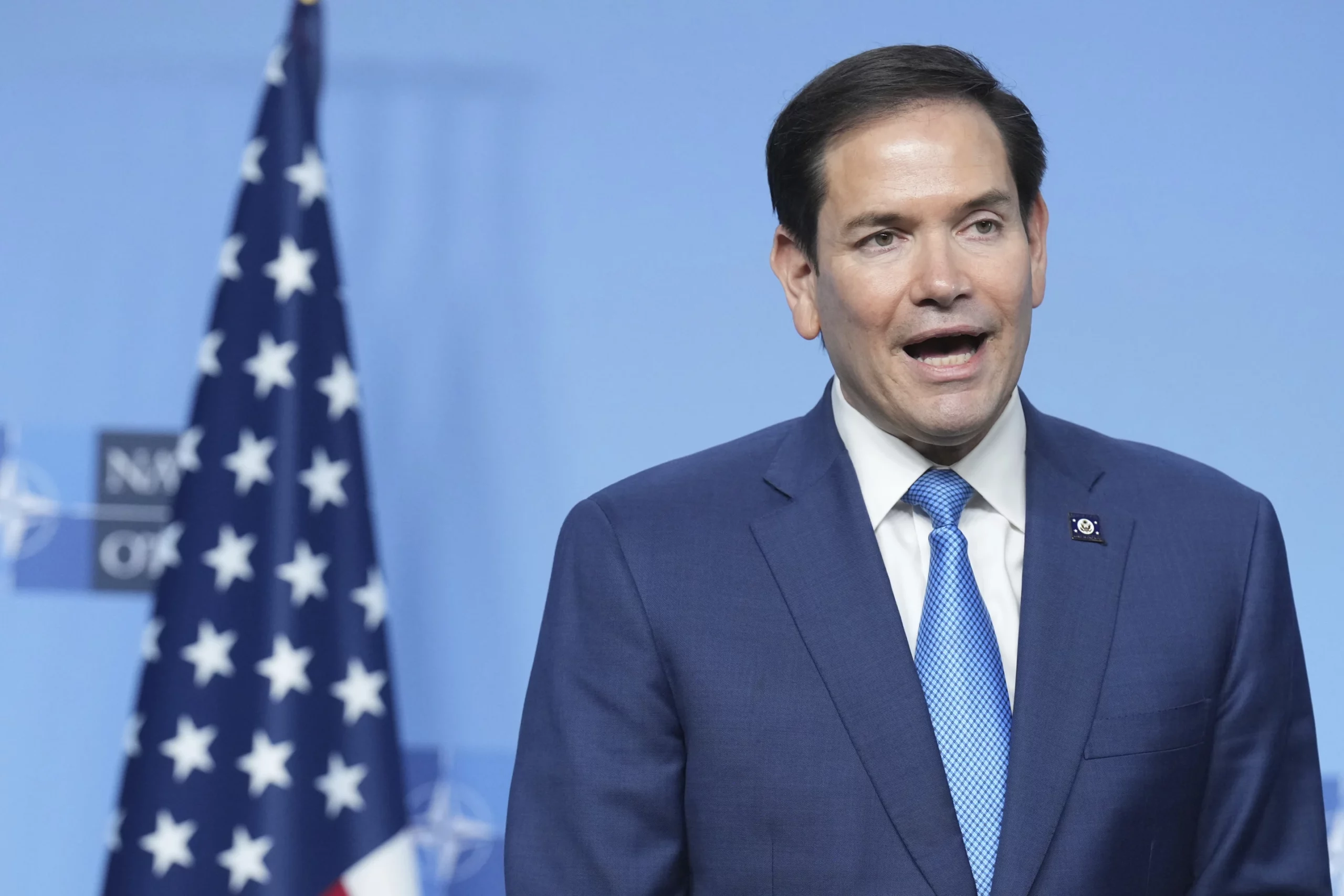
In a wide-ranging interview on the raid of Venezuela and the arrest of that country’s President Nicolas Maduro, U.S. Secretary of State Marco Rubio fielded questions on what comes next for American involvement.

Rubio engaged in the interview on ABC’s This Week with George Stephanopoulas and the host put it to Rubio as to what legal authority the U.S. has to run Venezuela, as President Donald Trump claimed on Saturday.

Rubio said the Venezuelan economy is in a holding pattern for the most part now that the U.S. removed Maduro, who is now being held in a New York City jail.

“We have a quarantine on their oil,” Rubio said on the Sunday morning program. “That means their economy will not be able to move forward until the conditions, that are in the national interests of the United States and in the interests of the Venezuelan people, are met and that’s what we intend to do.

“That leverage remains. That leverage is ongoing and we expect that it’s going to lead to results here. We hope so and we’re hopeful that it does lead to positive results for the people of Venezuela, but most importantly, for us and the national interests for the United States…,” Rubio said.

Saturday’s dramatic action capped an intensive Trump administration pressure campaign on the South American nation and its autocratic leader and months of secret planning resulting in the most assertive American action to achieve regime change since the 2003 invasion of Iraq.

Legal experts immediately raised questions about whether the operation was lawful. Venezuela’s vice president Delcy Rodríguez demanded in a speech that the U.S. free Maduro and called him the country’s rightful leader, before Venezuela’s high court ordered her to assume the role of interim president.

Speaking to reporters hours after Maduro’s capture, Trump revealed his plans to exploit the leadership void to “fix” the country’s oil infrastructure and sell “large amounts” of oil to other countries.

Rubio emphasized U.S. courts and an indictment against Maduro gave the U.S. the authority to conduct the raid and removal of Maduo and his wife. Still, Stephanopoulos asked the Rubio if the U.S. is currently running the country of Venezuela.

“What we are running is the direction that this is going to move, moving forward,” Rubio said in the exchange. “… In  a few weeks they’re going to have to start pumping oil, unless they make changes. And that leverage that we have with the armada of (U.S.) boats that are currently positioned allow us to seize any sanctioned boas coming into or out of Venezuela loaded with oil or on its way in to pick up oil,” Rubio said.

“We can pick and choose which ones we go after and we have court orders for each one. That will continue to be in place until the people who have the control over the levers of power in that country make changes that are not just in the interests of Venezuela, but in the interests of the United States and the things that we care about.”

___

Material from The Associated Press was used in this report with permission.


Source link

Continue Reading

Politics

Gov. DeSantis names his appointments and reappointments to FAMU Trustees panel

Published

on


All four names picked by DeSantis have steep backgrounds in public service.

The Florida A&M University (FAMU) Board of Trustees has two new members and two that are coming back for renewed terms.

Gov. Ron DeSantis appointed of Roderick Harris and Kenneth Johnson to the panel while also reappointing Natalie Figgers and Michael White to the FAMU panel. The moves still need final approval from the Florida Senate. The FAMU Board of Trustees sets policy for the school based in Tallahassee.

Harris is the Director of System Innovation at the Florida Department of Juvenile Justice and he’s also steeped in business. He’s the Senior Business Analyst and Project Manager for Five Points Technology Group, which specializes in behavioral Health data for the Northwest Florida Health Network. Harris has previous experience with FAMU where he was the Secretary of the school’s Social Work Community Advisory Council.

Jones joins the FAMU board with backing in experience as the CEO of HCA Florida Northwest Hospital in Broward County. He was also the previous President of AMITA Health St. Francis Hospital and had a stint as the CEO of Southeast Orthopedic Specialists.

Figgers if the Founder of her own law firm based in Fort Lauderdale. She’s also a community activist as she serves as Secretary and Treasurer of the Figgers Foundation Inc. and received the Most Ardent Community Advocate in 2022 from Florida Memorial University.

White is the Co-Founder and Chief Business Development Officer of Indelible Solutions, a personal and human services firm based in Tallahassee. White is also a member of the Florida Institute of Certified Public Accountants. His work and expertise earned him the honor of being a finalist for the Ernst & Yount Entrepreneur of the Year Award in 2023.

Members of the FAMU Board of Trustees work on the panel as volunteers as none of the members of the panel receive any compensation for their service.


Source link

Continue Reading

Politics

Florida GOP backs James Uthmeier for Attorney General

Published

on


Incumbent Attorney General James Uthmeier has nominal opposition in August’s Primary, but he has the official imprimatur of the state’s Republican Party well ahead of the first votes being cast.

“James Uthmeier represents the very best of our party and our movement,” said Republican Party of Florida Chairman Evan Power. “He earned the trust of Governor Ron DeSantis through his appointment as Attorney General and the endorsement of President Donald Trump by consistently delivering for Florida. This unanimous endorsement reflects the unity of our party and our shared confidence in James to continue leading and winning for Florida.”

Uthmeier was DeSantis’ Chief of Staff before being appointed to replace former AG Ashley Moody, who herself was appointed to replace current Secretary of State Marco Rubio in the United States Senate.

As evidenced by the unanimous vote to endorse him at Saturday’s meeting of the state party,  the Republican apparatus approves of what Uthmeier has done with his opportunity, lauding him for being “focused on fighting federal overreach, standing up for victims, protecting parental rights, and ensuring Florida remains the freest state in the nation.”

“The Republican Party of Florida is united and focused on winning,” Power added. “James Uthmeier has delivered for Florida, and we are proud to stand with him as he continues the important work of defending our state and our values.”

“Florida’s conservative grassroots leaders have helped us to become the deep red ‘Free State of Florida!’ It’s an honor to have your support and I will not let you down,” Uthmeier said on social media after receiving the endorsement.


Source link

Continue Reading

Politics

President pushes to cap credit card interest at 10% as banks balk

Published

on


Reviving a campaign pledge, President Donald Trump wants a one-year, 10% cap on credit card interest rates, a move that could save Americans tens of billions of dollars but drew immediate opposition from an industry that has been in his corner.

Trump was not clear in his social media post Friday night whether a cap might take effect through executive action or legislation, though one Republican senator said he had spoken with the president and would work on a bill with his “full support.” Trump said he hoped it would be in place Jan. 20, one year after he took office.

Strong opposition is certain from Wall Street and the credit card companies, which donated heavily to his 2024 campaign and to support his second-term agenda.

“We will no longer let the American Public be ripped off by Credit Card Companies that are charging Interest Rates of 20 to 30%,” Trump wrote on his Truth Social platform.

Researchers who studied Trump’s campaign pledge after it was first announced found that Americans would save roughly $100 billion in interest a year if credit card rates were capped at 10%. The same researchers found that while the credit card industry would take a major hit, it would still be profitable, although credit card rewards and other perks might be scaled back.

Americans are paying, on average, between 19.65% and 21.5% in interest on credit cards according to the Federal Reserve and other industry tracking sources. That has come down in the past year as the central bank lowered benchmark rates, but is near the highs since federal regulators started tracking credit card rates in the mid-1990s.

The Republican administration has proved particularly friendly until now to the credit card industry.

Capital One got little resistance from the White House when it finalized its purchase and merger with Discover Financial in early 2025, a deal that created the nation’s largest credit card company. The Consumer Financial Protection Bureau, which is largely tasked with going after credit card companies for alleged wrongdoing, has been largely nonfunctional since Trump took office.

In a joint statement, the banking industry was opposed to Trump’s proposal.

“If enacted, this cap would only drive consumers toward less regulated, more costly alternatives,” the American Bankers Association and allied groups said.

The White House did not respond to questions about how the president seeks to cap the rate or whether he has spoken with credit card companies about the idea.

Sen. Roger Marshall, who said he talked with Trump on Friday night, said the effort is meant to “lower costs for American families and to reign in greedy credit card companies who have been ripping off hardworking Americans for too long.”

Legislation in both the House and the Senate would do what Trump is seeking.

Sens. Bernie Sanders and Josh Hawley released a plan in February that would immediately cap interest rates at 10% for five years, hoping to use Trump’s campaign promise to build momentum for their measure.

Hours before Trump’s post, Sanders said that the president, rather than working to cap interest rates, had taken steps to deregulate big banks that allowed them to charge much higher credit card fees.

Reps. Alexandria Ocasio-Cortez and Anna Paulina Luna have proposed similar legislation. Ocasio-Cortez is a frequent political target of Trump, while Luna is a close ally of the president.

___

Republished with permission of the Associated Press.


Source link

Continue Reading

Trending

Copyright © Miami Select.