Iran is asserting control over the Strait of Hormuz even as the U.S. and Israel continue to bombard the country, first by bringing traffic to a near standstill with attacks on ships and then by choosing who can travel through the narrow waterway.
According to the maritime news and intelligence journal Lloyd’s List, Tehran has carved out a de facto “safe” shipping corridor through Iranian territorial waters via Iran’s Larak Island, where the Islamic Revolutionary Guard Corps and the port authority can make visual confirmation of “approved” vessels.
Passage through the corridor is negotiated on a case-by-case basis, and the governments of India, Pakistan, Iraq, Malaysia and China have discussed transit plans directly with Tehran, Lloyd’s reported on Wednesday. One tanker even paid about $2 million as part of its agreement with Iran.
“Ships hoping to use the pre-approved route are expected to have communicated extensive details regarding both the ownership of the vessel and destination of the cargo to the IRGC in advance of the transit,” Lloyd’s added. “Those details are being communicated via a series of Iran-affiliated individuals operating outside of Iran.”
Despite U.S. and Israeli forces decimating Iran’s military, including its navy, the Islamic republic retains enough combat power to scare away commercial shipping from the Strait of Hormuz, keeping 20% of the world’s oil and liquified natural gas bottled up.
That’s created supply nightmares across the global economy. But at the same time, Iran’s control over the strait means it is able to deliver oil to top customer China and continue generating vital revenues.
Now, the alternate corridor through the strait represents a nascent ship registration system, and the IRGC is expected to establish a more formalized approval process, Lloyd’s said.
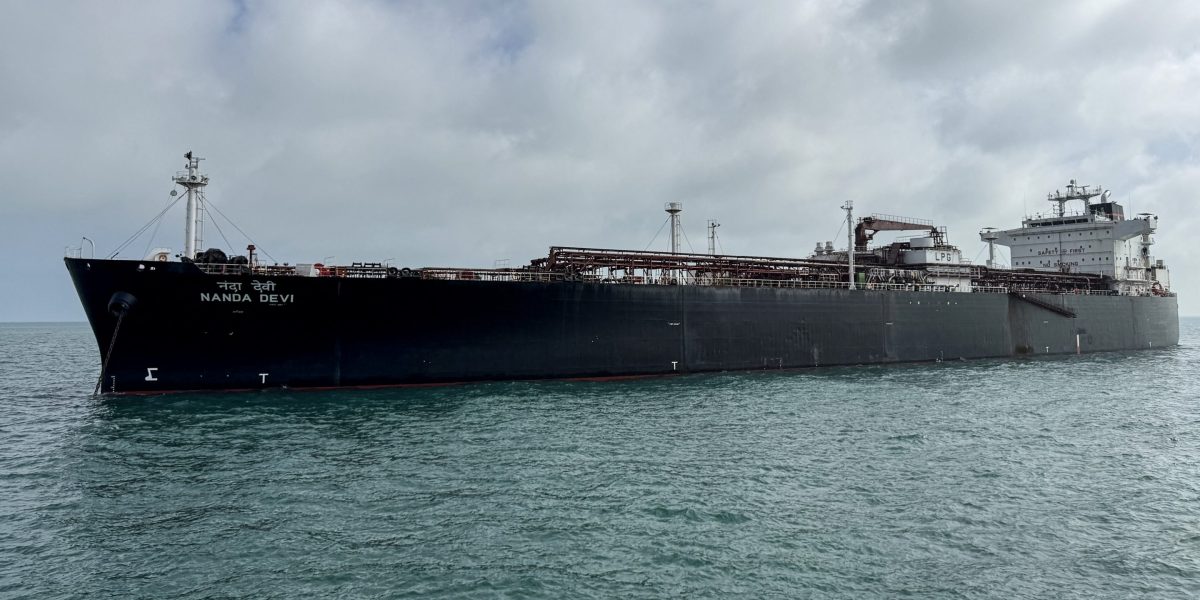
At least nine ships have exited the strait by way of Iran’s alternate route, including India-flagged gas tankers Shivalik and Nanda Devi.
That’s still just a trickle compared to normal prewar traffic, which topped 100 oil and cargo ships everyday. Meanwhile, President Donald Trump is sending thousands of Marines to the Middle East amid reports he is considering deploying ground troops to reopen the strait.
Sources told Axios on Friday that Trump is mulling an operation to occupy or blockade Iran’s Kharg Island, which processes 90% of Iran’s crude oil exports.
With control of the island and leverage over Iran’s economy, the U.S. could pressure Tehran to relinquish its chokehold over the Strait of Hormuz, according to the report, easing the energy crunch that’s sent oil and gas prices soaring.
But the Marines may not arrive for a few more weeks, and Navy officials have said the Strait of Hormuz is a “kill box” filled with Iranian threats that make it too dangerous for warships to enter. Neutralizing the risks may require landing troops on Iran’s coast near the strait.
U.S. allies in the Persian Gulf have reportedly warned that if Trump ends the Iran war without restoring free navigation in the strait, then Tehran will continue to have the power to hold the regional and global economy hostage.
So although the White House signaled that Trump has no plans to send ground troops into Iran, the outcome of his war may depend on it.
“He wants Hormuz open. If he has to take Kharg Island to make it happen, that’s going to happen. If he decides to have a coastal invasion, that’s going to happen. But that decision hasn’t been made,” a senior administration official told Axios.