Connect with us

Business

Trump’s visa crackdown hits SEA’s Cambodia and Thailand, a decision experts find ‘puzzling’

Published

on


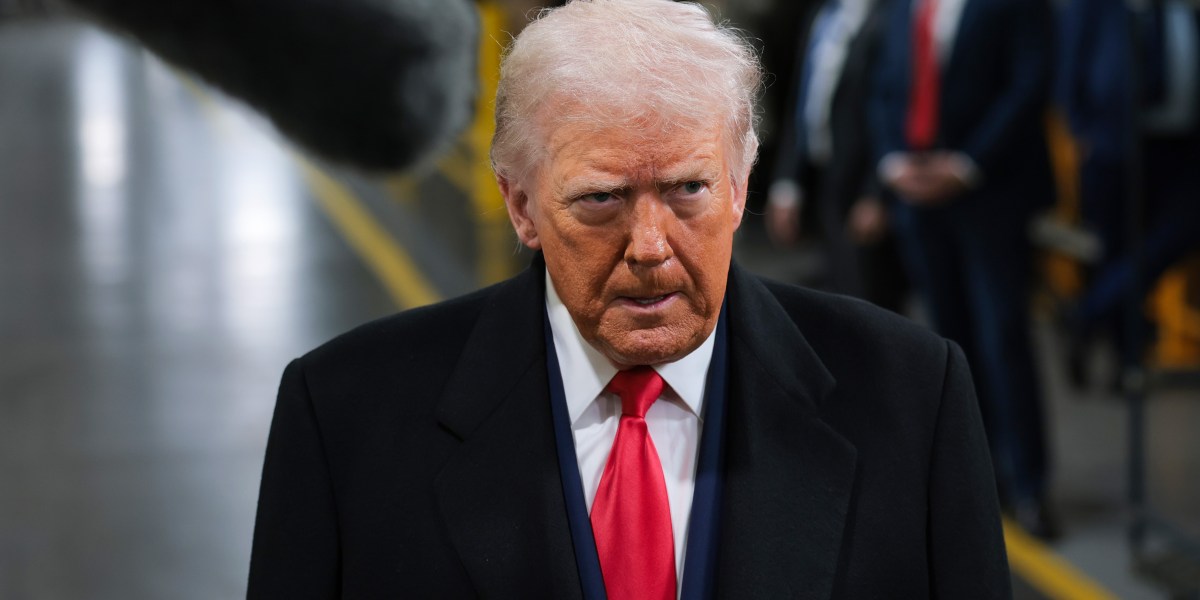
Several Asian countries are hit by the Trump Administration’s decision to pause immigrant processing for 75 countries, including the Southeast Asian nations of Cambodia, Thailand, Myanmar and Laos. 

The suspension, which will take effect on Jan. 21, is the first time the U.S. is restricting applicants from Cambodia and Thailand, just months after U.S. President Donald Trump inked trade deals with both nations on the sidelines of the 2025 ASEAN Summit. He had assured Southeast Asian leaders at the event that they could view the U.S. as a “strong partner and friend” in the years to come. 

The suspension covers several other countries elsewhere in Asia, including the South Asian nations of Bangladesh and Pakistan, as well as countries in Central Asia and the Middle East. The suspension only covers immigrant visas; non-immigrant visas, like tourist and business visas, are not affected. (The U.S. is set to host the FIFA World Cup this year).

“President Trump has made clear that immigrants must be financially self-sufficient and not be a financial burden to Americans,” the U.S. State Department wrote in a post on Jan. 14. It continued that it was starting a “full review of all policies, regulations, and guidance to ensure that immigrants from these high-risk countries do not utilize welfare in the United States or become a public charge.” The post made clear that while nationals in the affected countries could submit applications, no visas would be issued during the suspension. 

“Given the transactional nature of the U.S. dealings with other countries, these pauses can be seen as another way for the U.S. to coerce countries to strike deals that they otherwise would not be keen to do,” suggests Nona Pepito, an associate professor of economics at Singapore Management University. 

Trump’s engagement with Southeast Asia has remained mostly focused on trade, though the U.S. President also tried to negotiate a ceasefire to the violent border conflict between Cambodia and Thailand last year. 

The ceasefire ultimately fell apart, and the two countries began fighting again in late December; both now operate under another, China-facilitated, ceasefire. Last week, the U.S. offered $45 million in aid to both countries to help maintain the truce. 

Laos is already subject to a full travel ban. Cambodia has also previously been in the Trump Administration’s cross-hairs, appearing in a leaked State Department memo last July that noted “concerns” with the Southeast Asian country’s migration policies, though it wasn’t included in later travel restrictions.

Before this suspension, Thailand had yet to be targeted by U.S. immigration policies. A ban could risk “pushing the Thai government and its people closer to China,” Pepito warns. “If the U.S. is seen as an unreliable partner, Thailand, a key treaty ally, may look elsewhere for security and economic cooperation.”

Thailand’s addition is “puzzling,” says Tan Sook Rei, a senior lecturer at Singapore’s James Cook University (JCU), who points out that both the Philippines and Vietnam—which rank among the top sources of U.S. immigrant visas—are “notably absent” from the visa suspension list. “The policy appears less focused on managing migration volumes than on political signaling.”

Jacob Wood, an associate professor of economics at JCU, points to allegations by U.S. officials that Thai businesses have been issuing fake certificates of origin to support China’s “tariff-washing” practices as a source of tension between Washington and Bangkok.

Trump has launched a sweeping crackdown on immigration since taking office a year ago. Last month, the U.S. Department of Homeland Security, in what it called “historic progress in securing the homeland,” claimed that over 2.5 million “illegal aliens” had left the U.S. 

The U.S. is also tightening pathways for legal migration to the country. Trump suspended the U.S. Refugee Admissions Program (USRAP), which provided a safe haven for individuals overseas of “special humanitarian concern.” 

Moreover, the president has increased vetting for international students trying to attend the U.S. The number of new international students starting at a U.S. college or university in fall 2025 fell by 17%, according to the Institute of International Education.

The U.S. has also hiked fees for H-1B employment visas, often used by high-skilled labor in sectors like tech, to $100,000.


Source link

Continue Reading

Business

Worried about AI taking your job? New Anthropic research shows it’s not that simple

Published

on


Welcome to Eye on AI, with AI reporter Sharon Goldman. In this edition…New Anthropic research on AI and jobs…Leadership drama at Mira Murati’s Thinking Machines…Another blockbuster quarter for TSMC…Google Gemini introduces Personal Intelligence.

It’s probably the number one question people ask me when they hear I cover AI: “Will AI take my job?” That question is often followed by, “How about your job?”

Sigh. Well, so far, I’m still here. And new research from Anthropic suggests the fate of our jobs is more complicated than a simple story of humans being replaced by AI agents and robots.

In the latest installment of its Economic Index, Anthropic rolled out a new way of measuring how people actually use its chatbot Claude—what kinds of tasks they give it, how much autonomy they grant it, and how often it succeeds. The goal is to get a clearer, data-driven picture of whether AI is really making people faster at work, what sorts of tasks AI supports best and how it might actually change the nature of people’s occupations and professions.

I spoke yesterday to Anthropic economist Peter McCrory about the ongoing research, which he said the company kicked off in earnest a year ago in recognition of the fact that AI is a general purpose technology that will affect every job in some way–certainly every sector of the economy. 

AI reshapes jobs differently depending on the role

But the results are not always straightforward–at least for now. For example, the research found that AI is reshaping jobs differently depending on the role. A radiologist or therapist may find that AI can elevate their skills by taking on some of the most time-intensive tasks, allowing them to spend more time talking with patients and clients. But people in other jobs may find themselves being deskilled, or that their jobs become simpler without allowing them to devote more time to some obvious higher-level task. This could happen for jobs such as data entry workers, IT specialists and travel agents. 

In addition, human collaboration and oversight remain essential, particularly for complex work. So AI appears to increase productivity for highly-skilled professionals, rather than replacing those roles. 

McCrory said that he is hopeful that other researchers can take Anthropic’s insights to better understand the uneven implications of AI on the labor market. However, one thing is easily understood: Adoption is happening quickly – in fact, AI is spreading across the US faster than any major technology in the past century, he said. 

“In our last report that we put out in September, we documented that disproportionate use is concentrated in a small number of states,” he explained. “In this report, we see evidence that low-usage states are catching up pretty quickly.” 

Anthropic’s Claude is growing in the number of tasks it can cover

And there is no doubt that AI is getting more powerful: The research found that Anthropic’s Claude is growing in the number of tasks it can cover, with 44% of jobs now able to use AI in at least a quarter of its tasks, up from 36% in the last report. 

I couldn’t help but note that the latest research was completed before Anthropic’s latest model, Opus 4.5, debuted – and also prior to the release of Claude’s Cowork application, a general-purpose AI agent that can manipulate, read, and analyze files on a user’s computer, which just came out this week. 

“it just illustrates the broad-based applicability of this technology, and the fact that Claude is increasingly able to not just give you information, but take actions on your behalf, under your discretion and delegation,” McCrory said. “I think you might see a rise in the importance of delegation skills–there’s evidence from the academic literature that suggests that people get more value out of large language models when they have better managerial skills.” That’s also been his own experience, he added: “I find myself delegating increasingly sophisticated tasks to Claude that I might have otherwise given to a research assistant if I had one.”

When I told McCrory that I had written in last week’s Eye on AI about software developers excited about using Claude Code but depressed over reducing their role to that of a manager, he nodded sympathetically and suggested I check out other Anthropic research, developed by its societal impacts team. 

“I think the big takeaway here is that we don’t know what’s on the horizon,” he said. When I pointed out how much most of us dislike uncertainty, he emphasized that he hoped the report and the data would help researchers see the future a bit more clearly. “We’re committed to open sourcing this data,” he said, so economists and policymakers can better understand the potential is of what’s coming and how we all prepare for it. 

With that, here’s more AI news.

Sharon Goldman
sharon.goldman@fortune.com
@sharongoldman

FORTUNE ON AI

AI ‘godfather’ Yoshua Bengio says he’s found a fix for AI’s biggest risks and become more optimistic by ‘a big margin’ on humanity’s future – by Sharon Goldman

Trump triggers retail investors to dump the Magnificent Seven – by Jim Edwards

Teachers decry AI as brain-rotting junk food for kids: ‘Students can’t reason. They can’t think. They can’t solve problems’ – by Eva Roytburg

What Apple’s AI deal with Google means for the two tech giants, and for $500 billion ‘upstart’ OpenAI by Jeremy Kahn and Beatrice Nolan


AI IN THE NEWS

Leadership drama at Mira Murati’s Thinking Machines. In a surprising leadership shake-up, two co-founders of Mira Murati’s AI startup Thinking Machines Lab — Barret Zoph and Luke Metz — announced they’re leaving the fledgling company to rejoin OpenAI, just months after departing the organization to help start the venture. According to Wired, another former OpenAI researcher, Sam Schoenholz, is also returning to OpenAI as part of the move. The departures were confirmed in an internal memo from OpenAI’s applications chief, Fidji Simo, who said the return “has been in the works for several weeks.” The turn of events represents a significant blow to Thinking Machines Lab, which had only recently raised a large seed round and recruited top talent, and underscores the intense competition for elite AI researchers in the industry.

Another blockbuster quarter for TSMC. According to CNBC and others, Taiwan Semiconductor Manufacturing Company, the world’s largest semiconductor fabricator, reported a 35% jump in profit and record revenue as demand for AI chips continues to surge. The company beat expectations on both revenue and net income, with its high-performance computing business—driven by AI and data center chips—now accounting for 55% of sales. Advanced chips of 7 nanometers or smaller made up more than three-quarters of wafer revenue, underscoring how central cutting-edge AI processors have become to TSMC’s business. 

Google Gemini introduces Personal Intelligence. In a new blog post written by Google VP Josh Woodward, the company announced the US beta launch of “Personal Intelligence” in its Gemini app–which lets users opt in to securely connect their Gmail, Photos, Search, YouTube and other Google apps to Gemini. The idea is to make the assistant more proactive and useful—combining information across emails, photos, and searches to answer questions or offer recommendations specific to your life—while keeping privacy control in the user’s hands (the feature is off by default and users choose what to connect). Personal Intelligence is initially available in the U.S. to paid subscribers, with plans to expand over time, and signals Google’s push to differentiate its consumer AI by leveraging its wider ecosystem to power more personalized AI interactions.

EYE ON AI NUMBERS

48% 

That’s how many single adults reported using AI to help draft break-up messages or boundary-setting texts, according to new research from chat assistant use.ai. 

As a result, there’s less need to “ghost” dating partners now that users can rely on AI to navigate emotionally charged conversations. Among those who used AI tools to let their dates down gently, 62% described the resulting conversations as more structured, and 39% noted fewer follow-up conflicts. 

According to the survey of 4,812 single adults across five English-language markets, the trend extends beyond dating: 27% rehearse sensitive in-person conversations with AI, while 20% use it to manage boundaries in non-romantic relationships. 

AI CALENDAR

Jan. 19-23: World Economic Forum, Davos, Switzerland.

Jan. 20-27: AAAI Conference on Artificial Intelligence, Singapore.

Feb. 10-11: AI Action Summit, New Delhi, India.

March 2-5: Mobile World Congress, Barcelona, Spain.

March 16-19: Nvidia GTC, San Jose, Calif.

April 6-9: HumanX, San Francisco. 


Source link

Continue Reading

Business

Customers lament Tesla’s move toward monthly fees for self-driving cars

Published

on


Elon Musk’s announcement that Tesla will soon stop selling its Full Self-Driving (FSD) software, leaving consumers with monthly fees as their only option, has inspired mixed reactions online and more questions about tech giants’ shift towards subscription-based services.

Musk, Tesla’s CEO, shared the news on Wednesday on X. FSD will no longer be available for outright purchase starting February 14, after which the software will “only be available as a monthly subscription.”

For Musk, the move signals an end to his longtime portrayal of FSD as an “appreciating asset,” worth buying outright now because the price will only rise as the software improves. And for Tesla, the change represents the latest decision by a tech giant to move towards a software-as-a-service (SaaS) model, in which a provider continues to host its software—handling updates, security, and maintenance—while renting it to users. But for the Tesla-curious and those who already own one of Musk’s cars, the move was a reminder of how difficult it has become to truly own things in today’s economy.

“Imagine buying a self-driving car and still having to pay a monthly subscription just for it to actually drive itself,” one user wrote in a reply to Musk’s announcement.

“You will own nothing and be happy.”

At current rates, Tesla owners can purchase FSD—which remains primarily a driver-assistance program that requires an attentive driver at all times—for $8,000, or opt for a monthly subscription for $99. Tesla owners who have already purchased FSD will retain the software, though it is unclear whether they will be able to transfer the rights to a new vehicle, as Tesla previously made possible through limited-time promotions. Tesla did not immediately reply to Fortune’s request for comment on whether rates would remain unchanged or transfers between vehicles would be possible after February 14. At the current monthly price point, it would take drivers around seven years to match the outright purchase cost.

Tesla has gradually raised FSD’s purchase price from $5,000 at launch to $ 15,000 in 2022, its most expensive point. Musk described the price hikes as evidence of FSD being a sound investment for consumers to get an early stake in, although the software’s upfront price dipped to $8,000 in 2024, around the same time Tesla reduced the monthly rental fee in the U.S. from $199 to $99.

The price slashes occurred in the wake of reports alleging a low conversion rate among Tesla drivers who opted to upgrade to FSD. While Tesla does not actively disclose the percentage of its customer base that uses FSD, CFO Vaibhav Taneja said the share was “still small, around 12% of our current fleet” during an October earnings call.

‘You will never actually own your EV’

Many of the replies to Musk’s announcement lamented the prevalence of subscription-based features that car companies now withhold. 

“People want to own their stuff outright, not be eternally beholden,” one user wrote.

“You will never actually own your EV, because it will be useless without the software that you can never remove, replace, or modify,” said another, before adding a recommendation: “Stick to internal combustion engines with as few computers as possible.”  

Criticism has ramped up recently about the software dependency of new vehicles, to the point that the industry has referred to electric cars as “smartphones on wheels.” Tesla is far from the only offender, as in August, Volkswagen released a new feature to increase the horsepower on some of its electric cars priced at $22.50 a month. GM also offers a subscription-based hands-free driving capability, Super Cruise, on designated highways. Launched in 2017, the service offers a three-year trial period, followed by a $25 monthly fee. Super Cruise has grown into a significant money-maker for GM, which late last year projected an active user base of 600,000 and more than $200 million in revenue for 2025.

Software updates and subscription fees in their cars might be starting to frustrate users. Last year, 68% of consumers said they would pay for car-connected services, according to an S&P Global survey, down from 86% in 2024.

While electric vehicles tend to be the most software-heavy, all cars nowadays rely on connected services in some way, regardless of their powertrain. Most modern cars are supported by up to a million lines of code, and frequent updates can quickly make some features incompatible. In 2022, as carriers upgraded their telecommunications infrastructure from 3G, many cars made by Toyota, Chrysler, and Jeep—including both battery- and gasoline-powered models—permanently lost access to a feature that automatically notified first responders in the event of a crash.


Source link

Continue Reading

Business

Oregon QB Dante Moore turns down $50 million in NFL to stay in school amid growing NIL appeal

Published

on


Dante Moore, the quarterback for the University of Oregon Ducks, plans to play another year of college football—turning down an eight-figure salary as a result. 

The 20-year-old college athlete announced on Wednesday he would remain on the Oregon Ducks for the 2026 season, delaying the draft, where he was expected to be a top-two pick. Last year’s No. 2 draft pick Travis Hunter signed a four-year, $46.65 million deal, and this year’s projected earnings are expected to increase.

“This year, I’ve had many great throws, many great plays, but at the end of the day I feel I can still learn so much more,” Moore said in an interview with ESPN on Wednesday. “As a kid, since I was 4 years old, I’ve dreamed about being in the NFL—but this team, we’ve been through a lot, a lot of people are returning, so we’ve got some exciting things to come this year. I’m excited to keep pushing my team.”

Moore, who threw for threw for 3,565 yards and had 30 touchdowns in the 2025 season, is part of only a small fraction of college football players who have taken more time before going pro: Stanford quarterback Andrew Luck announced in 2011 he would delay NFL entry to finish his architectural design degree, allowing the Carolina Panthers to select Cam Newton as its No. 1 draft pick instead. USC quarterback Matt Leinart made a similar decision in 2005.

But Moore’s choice may mark the beginning of a new pattern among college athletes: Beyond an extra opportunity to notch a national championship, college athletes also have a shot at making real money while enrolled at school thanks to expanding name, image, and likeness (NIL) rules, taking away pressure to go pro before getting a degree or maturing as a player.

A June 2021 Supreme Court ruling made it possible for the NCAA to adopt a policy for college athletes to benefit from their own name, image, and likeness. A House settlement last summer allows for colleges to now directly pay their athletes for the first time, creating a revenue-sharing model where athletic departments could distribute about $20.5 million in NIL revenue to their athletes during the 2025-2026 season.

Cashing in on the NIL boom

Moore has already been a beneficiary of the NIL boom for college athletes, cashing in on his own deals with Nike, Beats by Dr. Dre, and Raising Cane’s. He has a net worth of $2.3 million, according to On3, making him the 12th wealthiest college football player, and the highest-earning Oregon Duck. 

Moore, via a University of Oregon spokesperson, did not immediately respond to Fortune’s request for comment.

The University of Oregon has also become a dominant force in NIL, thanks to Nike founder Phil Knight—known as “Uncle Phil” to the college’s football stars—who has donated more than $1 billion to his alma mater as of 2023. Knight founded Division Street, a sports venture whose Ducks of a Feather program effectively serves as a premium marketing agency for University of Oregon’s athletes, ultimately a bid for Knight, 87, to assist in his hope of the Ducks winning another championship.

“Phil Knight is bankrolling that whole thing and wants to see them win a national title,” one unnamed NIL agent told CBS Sports. “They are really, really aggressive with money.”

NIL deals are already beginning to change the landscape of professional league drafts. The 2025 NBA draft  saw the lowest number of early-entrant candidates in about ten years, with more than a dozen other high-potential candidates withdrawing at the draft deadline. Basketball analysts attributed the dip in part to the growing appeal of NIL.

Basketball insider Jeff Borzello told ESPN in May 2025 NIL has transformed how student athletes think about going pro, particularly in the NBA, where the minimum salary for rookies is $1.2 million, a number many college athletes can surpass with brand deals and revenue-sharing models. Meanwhile, students can theoretically improve their game and still maintain relationships with the NBA teams scouting them.

“With salaries for the final handful of picks in this year’s first round clocking in at below $3 million per season for the next two seasons, per the rookie scale, players projected in that range can now make just as much money by opting to stay in college while theoretically improving their draft stock,” Borzello said.


Source link

Continue Reading

Trending

Copyright © Miami Select.