Connect with us

Business

Trump’s Intel deal gambles with the perils of picking national champions

Published

on


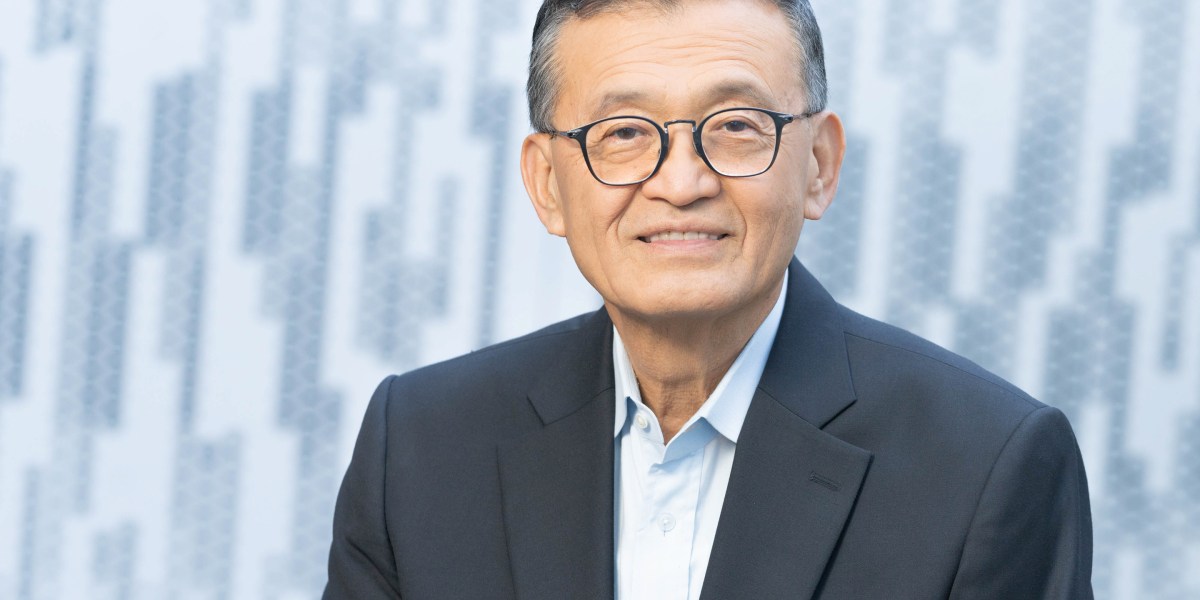
Good morning. What just happened? Only 15 days after President Trump posted that Intel CEO Lip-Bu Tan “is highly CONFLICTED and must resign,” the two men had seemingly become best buds, and the U.S. sent Intel $8.9 billion in return for a 9.9% stake in the company. Then, yesterday, National Economic Council Director Kevin Hassett told CNBC, “I’m sure that at some point there’ll be more transactions, if not in this industry, in other industries.” He likened the deal to a “down payment on a sovereign wealth fund.” 

But why? Why now? What’s next?

For answers, I spoke with three experts on government investments in companies. Three themes came through—though answers were harder to find.

This deal is like none other. “It is entirely unusual, if not unprecedented, for the United States government to take a significant ownership stake in a major company in the United States, particularly one in a strategic industry,” says Douglas Rediker, a lawyer and economist with long experience in global finance, sovereign wealth funds, global capital flows, and their impact on foreign policy. Luigi Zingales, a professor at the University of Chicago business school, says, “The thing that, to me, is shocking and unbelievable is that it starts as an attack to the CEO based completely on his potential self-dealing—which might be true, might not be true—but if that’s the problem, it cannot be solved by giving some stock to the U.S. government.”

The deal’s objective is far from clear. William Megginson, a professor at the University of Oklahoma business school, has researched the privatization of state-owned enterprises and sovereign wealth funds. He notes that the $8.9 billion paid to Intel is an advance of money earmarked for Intel in the Chips Act, so “the government is not bringing any new capital.” But then “what is the government bringing if it’s not bringing capital to catch up with Taiwan Semiconductor, which is probably going to invest something like $40 billion just this year—three or four times what Intel can spend?” Zingales says, “That is the biggest problem. If you have an objective, you can say it is right or wrong, feasible or not feasible. But without a clear objective, it’s kind of a mess.”

Intel’s competitors won’t like this deal, and they can’t know what to expect. “Are we now in an era in which the U.S. government is literally picking national champions, and if so, what does that say to other companies?” Rediker asks. “Does that mean Intel will now be given preferential treatment in, for example, government contracts? if you’re Intel’s competitors, you might be scratching your head and saying, Maybe we want to go in a different direction if we’re going to be compromised or disadvantaged because Intel is now the favorite son of the industry.”

If you’re a CEO, have worked for Intel in the past (or compete with them), I’d be particularly curious to hear your thoughts on the state of affairs. You can email me directly at Geoff.Colvin@fortune.com.

Top news

President Trump fires Fed Governor

President Donald Trump announced via Truth Social Monday night that he is firing Fed Governor Lisa Cook after she was accused of taking out two home loans in which she attested that both were her primary residence. Cook has not been accused of wrongdoing in any formal legal process. The move casts doubt over the Fed’s independence as Trump-appointed Fed governors would represent a majority on the Fed board if Trump appoints a replacement. Cook says she will not leave her post, setting up a legal conflict over whether the president has a right to remove a governor “for cause.” The NYT has a useful bio describing Cook’s career as an economist.

Wall Street is aghast

What they’re saying today: “This is an extraordinary act of aggression that violates the Fed’s independence,” Eswar Prasad, a professor at Cornell University, told the FT. “Trump has now declared open war on the US institutional framework, which underpins the dollar’s dominance in global finance.” … “This is unprecedented,” Lev Menand, a Columbia Law School professor said. “If this removal sticks . . .  it spells something close to the end of central bank independence in the U.S.” … “It’s an authoritarian power grab that blatantly violates the Federal Reserve Act, and must be overturned in court,” said Sen. Elizabeth Warren (D-Mass.).

“They have to give us magnets”

President Trump has hit a wrinkle in his trade negotiations with China: China controls 90% of the supply of rare earth minerals that are crucial for electronics and military equipment that depend on high-powered magnets. “They have to give us magnets, if they don’t give us magnets, then we have to charge them 200% tariffs or something,” Trump said yesterday. The Economist has a good article about China’s export strategy here. The bottom line: China has what the U.S. needs and thus holds a strong hand in the tariff talks.

Canada and German pledge cooperation on mineral supply

Unsurprisingly, the E.U. and Canada are maneuvering around the U.S. and developing trade ties to increase the supply of minerals without involving the U.S. “For too long, Canada’s vast reserves of nickel, cobalt, and other critical minerals have been underdeveloped, allowing Russia and China to dominate the global market,” Canadian Prime Minister Mark Carney said yesterday. “Canada is ready to be a reliable supplier for our allies — particularly Germany as Europe’s largest economy and Canada’s largest trading partner in the European Union.”

Postal services, parcel shippers drop deliveries to the U.S.

The “de minimis” exemption to Trump’s tariffs (which allows small businesses and individuals  to send parcels to the U.S. worth less than $800 tariff-free) comes to an end this week and at least 19 countries in Europe are pausing or dropping service to the U.S. as a result. Asian services are following suit, Axios reports.

Tesla rejected $60 million deal before losing $243 million case

Tesla rejected the opportunity to settle a lawsuit over a fatal crash involving Tesla Autopilot for $60 million, before losing a jury verdict that awarded $243 million in damages against the company. The verdict, if upheld on appeal, threatens to impose massive, long-term liabilities on Tesla in car crashes involving the company’s driver assistance software. Tesla said it would appeal.

CBO: Tariffs will cut $4 trillion from federal deficit

The Congressional Budget Office believes that the Trump Administration’s tariffs will cut federal deficits by $4 trillion over the next decade. In June, the nonpartisan agency put savings at just $4 billion. 

Coinbase CEO’s AI mandate

In a recent appearance on the Cheeky Pint podcast with Stripe cofounder and president John Collison, Coinbase CEO Brian Armstrong noted that he mandated every engineer at the company to use AI coding assistants within a week’s time and fired those without a good reason for ignoring the mandate. “Even as CEO, by the way, I use it a lot,” Armstrong also said.

More Epstein documents subpoenaed

The House Oversight Committee has demanded documents from Jeffrey Epstein’s estate in hopes of discovering more about the “birthday book” given to Epstein that reportedly contained a warm message from Trump to his former friend. (Trump denies he wrote it.) The DOJ has already delivered thousands of pages that it held on Epstein. Here’s a list of likely names inside the book.

The markets

S&P 500 futures were down 0.13% this morning, premarket, after the index closed down 0.43% yesterday. STOXX Europe 600 was down 0.71% in early trading. The U.K.’s FTSE 100 was down 0.52% in early trading. Japan’s Nikkei 225 was down 0.97%. China’s CSI 300 was down 0.37%. The South Korea KOSPI was down 0.95%. India’s Nifty 50 was up 0.72% before the end of the session. Bitcoin fell to $110.2K.

Around the watercooler

Millions of Gen Zers are jobless—and unemployment is mainly affecting men by Emma Burleigh

New Zealand has the best work-life balance in the world—here’s what works by Jessica Coacci

Kind’s billionaire founder says he still picks up pennies off the street because ‘ego is the only thing more powerful than greed’ by Dave Smith

You won’t get more money from quitting in this economy, BofA says, as job-hopping freezes in white-collar America by Nick Lichtenberg

CEO Daily is compiled and edited by Joey Abrams and Jim Edwards.

This is the web version of CEO Daily, a newsletter of must-read global insights from CEOs and industry leaders. Sign up to get it delivered free to your inbox.


Source link

Continue Reading

Business

Binance has been proudly nomadic for years. A new announcement suggests it’s chosen an HQ

Published

on


For years, Binance has dodged questions about where it plans to establish a corporate headquarters. On Monday, the world’s largest crypto exchange made an announcement that indicates it has chosen a location: Abu Dhabi, the capital of the United Arab Emirates.

In its announcement, Binance reported that it has secured three global financial licenses within Abu Dhabi Global Market, a special economic zone inside the Emirati city. The licenses regulate three different prongs of the exchange’s business: its exchange, clearinghouse, and broker dealer services. The three regulated entities are named Nest Exchange Limited, Nest Clearing and Custody Limited, and Nest Trading Limited, respectively.

Richard Teng, the co-CEO of Binance, declined to say whether Abu Dhabi is now Binance’s global headquarters. “But for all intents and purposes, if you look at the regulatory sphere, I think the global regulators are more concerned of where we are regulated on a global basis,” he said, adding that Abu Dhabi Global Market is where his crypto exchange’s “global platform” will be governed.

A company spokesperson declined to add more to Teng’s comments, but did not deny Fortune’s assertion that Binance appears to have chosen Abu Dhabai as its headquarters.

Corporate governance

The Abu Dhabi announcement suggests that Binance, which has for years taken pride in branding itself as a company with no fixed location, is bowing to the practical considerations that go with being a major financial firm—and the corporate governance obligations that entails.

When Changpeng Zhao, the cofounder and former CEO of Binance, launched the company in 2017, he initially established the exchange in Hong Kong. But, weeks after he registered Binance in the city, China banned cryptocurrency trading, and Zhao moved his nascent trading platform. Binance has since been itinerant. “Wherever I sit is going to be the Binance office,” Zhao said in 2020.

The location of a company’s headquarters impacts its tax obligations and what regulations it needs to follow. In 2023, after Binance reached a landmark $4.3 billion settlement with the U.S. Department of Justice, Zhao stepped down as CEO and pleaded guilty to failing to implement an effective anti-money laundering program.

Teng took over and promised to implement the corporate structures—like a board of directors—that are the norm for companies of Binance’s size. Teng, who now shares the CEO role with the newly appointed Yi He, oversaw the appointment of Binance’s first board in April 2024. And he’s repeatedly telegraphed that his crypto exchange is focused on regulatory compliance.

Binance already has a strong footprint in the Emirates. It has a crypto license in Dubai, received a $2 billion investment from an Emirati venture fund in March, and, that same month, said it employed 1,000 employees in the country. 


Source link

Continue Reading

Business

Leaders in Congress outperform rank-and-file lawmakers on stock trades by up to 47% a year

Published

on


Stocks held by members of Congress have been beating the S&P 500 lately, but there’s a subset of lawmakers who crush their peers: leadership.

According to a recent working paper for the National Bureau of Economic Research, congressional leaders outperform back benchers by up to 47% a year.

Shang-Jin Wei from Columbia University and Columbia Business School along with Yifan Zhou from Xi’an Jiaotong-Liverpool University looked at lawmakers who ascended to leadership posts, such as Speaker of the House as well as House and Senate floor leaders, whips, and conference/caucus chairs.

Between 1995 and 2021, there were 20 such leaders who made stock trades before and after rising to their posts. Wei and Zhou observed that lawmakers underperformed benchmarks before becoming leaders, then everything suddenly changed.

“Importantly, whilst we observe a huge improvement in leaders’ trading performance as they ascend to leadership roles, the matched ‘regular’ members’ stock trading performance does not improve much,” they wrote.

Leadership’s stock market edge stems in part from their ability to set the regulatory or legislation agenda, such as deciding if and when a particular bill will be put to a vote. Setting the agenda also gives leaders advanced knowledge of when certain actions will take place.

In fact, Wei and Zhou found that leaders demonstrate much better returns on stock trades that are made when their party controls their chamber.

In addition, being a leader also increases access to non-public information. The researchers said that while companies are reluctant to share such insider knowledge, they may prioritize revealing it to leaders over rank-and-file lawmakers.

Leaders earn higher returns on companies that contribute to their campaigns or are headquartered in their states, which Wei and Zhou said could be attributable to “privileged access to firm-specific information.”

The upper echelon also influences how other members of Congress vote, and the paper found that a leader’s party is much more likely to vote for bills that help firms whose stocks the leader held, or vote against bills that harmed them. And stocks owned by leadership tend to see increases in federal contract awards, especially sole-source contracts, over the following one to two years.

“These results suggest that congressional leaders may not only trade on privileged knowledge, but also shape policy outcomes to enrich themselves,” Wei and Zhou wrote.

Stock trades by congressional leaders are even predictive, forecasting higher occurrences of positive or negative corporate news over the following year, they added. In particular, stock sales predict the number of hearings and regulatory actions over the coming year, though purchases don’t.

Investors have long suspected that Washington has a special advantage on Wall Street. That’s given rise to more ETFs with political themes, including funds that track portfolios belonging to Democrats and Republicans in Congress.

And Paul Pelosi, former House Speaker Nancy Pelosi’s husband, even has a cult following among some investors who mimic his stock moves.

Congress has tried to crack down on members’ stock holdings. The STOCK Act of 2012 requires more timely disclosures, but some lawmakers want to ban trading completely.

A bipartisan group of House members is pushing legislation that would prohibit members of Congress, their spouses, dependent children, and trustees from trading individual stocks, commodities, or futures.

And this past week, a discharge petition was put forth that would force a vote in the House if it gets enough signatures.

“If leadership wants to put forward a bill that would actually do that and end the corruption, we’re all for it,” said Rep. Anna Paulina Luna, R-Fla., on social media on Tuesday. “But we’re tired of the partisan games. This is the most bipartisan bipartisan thing in U.S. history, and it’s time that the House of Representatives listens to the American people.”


Source link

Continue Reading

Business

Macron warns EU may hit China with tariffs over trade surplus

Published

on


French President Emmanuel Macron warned that the European Union may be forced to take “strong measures” against China, including potential tariffs, if Beijing fails to address its widening trade imbalance with the bloc.

“I’m trying to explain to the Chinese that their trade surplus isn’t sustainable because they’re killing their own clients, notably by importing hardly anything from us any more,” Macron told Les Echos newspaper in an interview published on Sunday.

“If they don’t react, in the coming months we Europeans will be obliged to take strong measures and decouple, like the US, like for example tariffs on Chinese products,” he said, adding that he had discussed the matter with European Commission President Ursula von der Leyen.

Macron has just returned from a three-day state visit in China, where he pressed for more investment as Paris seeks to recalibrate its relationship with the world’s second-largest economy. France’s goods trade deficit with China reached around €47 billion ($54.7 billion) last year, according to the French Treasury. Meanwhile, China’s goods trade surplus with the EU swelled to almost $143 billion in the first half of 2025, a record for any six-month period, according to data released by China earlier this year.

Tensions between France and China escalated last year after Paris backed the EU’s decision to impose tariffs on Chinese electric vehicles. Beijing retaliated by imposing minimum price requirements on French cognac, sparking fears among pork and dairy producers that they could be targeted next.

‘Life or Death’

Macron said the US approach to China was “inappropriate” and had worsened Europe’s position by diverting Chinese goods toward the EU market.

“Today, we’re stuck between the two, and it’s a question of life or death for European industry,” Macron said, while noting that Germany — Europe’s biggest economy — doesn’t entirely share France’s stance.

In addition to Europe needing to become more competitive, the European Central Bank too has a role to play in strengthening the EU’s single market, Macron said, arguing that monetary policy should take growth and jobs into account, not just inflation, he said.

He also said the ECB’s decision to continue selling the government bonds it holds risks pushing up long-term interest rates and weighing on economic activity.

“Europe must — and wants to — remain a zone of monetary stability and credible investment,” Macron said.


Source link

Continue Reading

Trending

Copyright © Miami Select.