Connect with us

Business

Trump’s cane sugar Coca-Cola push could disrupt U.S. agriculture: trade group

Published

on


U.S. corn producers are sounding the alarm on President Donald Trump’s efforts to switch Coca-Cola products away from using corn syrup in favor of cane sugar, claiming the change will wreak havoc on the agricultural industry.

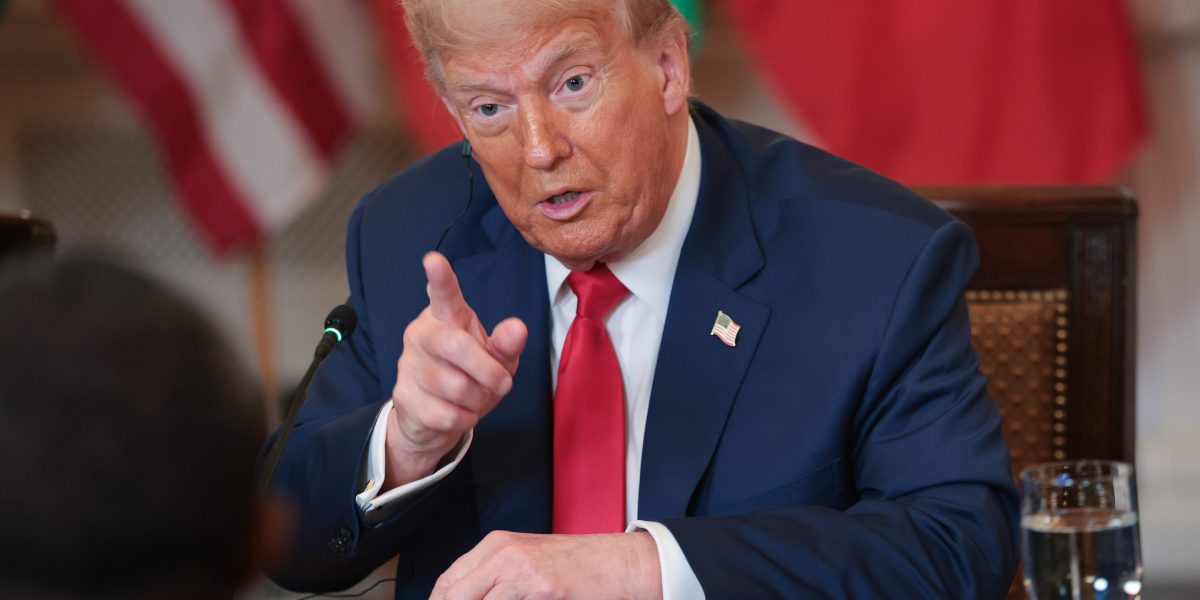
Trump on Wednesday announced efforts to push Coca-Cola to switch to cane sugar for its U.S.-made products, a departure from the abundant and inexpensive corn syrup currently used in most of its products.

“I have been speaking to @CocaCola about using REAL Cane Sugar in Coke in the United States, and they have agreed to do so,” Trump wrote on social media. “I’d like to thank all of those in authority at Coca-Cola. This will be a very good move by them — You’ll see. It’s just better!”

In response, Coca-Cola said it would have “more details on new innovative offerings” soon but did not confirm the switch to cane sugar for U.S. products. The company made an additional statement on Thursday defending its use of high-fructose corn syrup, which it said “has about the same number of calories per serving as table sugar and is metabolized in a similar way by your body.” Coca-Cola declined to comment further.

But the possibility of a shift in sweeteners has left a bad taste in the mouths of corn industry leaders, such as the Corn Refiners Association, a trade group, who fears the sugar swap could put some farmers of the U.S.’s largest crop at a disadvantage.

“Replacing high-fructose corn syrup with cane sugar doesn’t make sense. President Trump stands for American manufacturing jobs, American farmers, and reducing the trade deficit,” Corn Refiners Association CEO John Bode said in a statement on Wednesday. “Replacing high fructose corn syrup with cane sugar would cost thousands of American food manufacturing jobs, depress farm income, and boost imports of foreign sugar, all with no nutritional benefit.”

Factoring in Trump’s tariffs

Changes in demand for corn syrup, such as that used in Coke, would increase demand for cane sugar in Louisiana and Florida, as well as from Central and South America, where the sweetener is heavily tariffed. It could force corn farmers—primarily in Iowa and Illinois—to look for business elsewhere, Brandon McFadden, a professor of food policy economics at the University of Arkansas’ Bumpers College of Agricultural, Food and Life Sciences, told Fortune

The most obvious solution for corn farmers would be to export their crops. But while corn exports have hit record highs this year, Trump’s trade policy with China has completely inhibited the export of corn from the U.S. to the nation, which has previously been a major boon to the U.S. corn industry.

“The exports were looking really good, but they would look even better if we were still supplying China so heavily,” McFadden said.

Other industry experts said these short-term effects are being overstated. Corn syrup production in the U.S. accounts for 410 million bushels of the country’s 15.5 billion bushels of corn, making up less than 3% of the total industry’s total, according to data from the U.S. Department of Agriculture’s Economic Research Center. With Coca-Cola’s use of high-fructose corn syrup representing a fraction of that fraction, the company making the switch to cane sugar wouldn’t have an outsized impact on the industry as a whole, according to Scott Irvin, the Laurence J. Norton Chair of Agricultural Marketing at the University of Illinois Urbana-Champaign.

“For Coca-Cola to remove it completely would be a pretty small blip in the corn market,” he told Fortune.

Fear of a growing ‘MAHA’ movement

But Trump’s cane sugar push could still have sizable consequences for the corn industry, Irwin said. The change would have a meaningful impact for U.S. food processing giants such as Archer-Daniels-Midland, which produces high-fructose corn syrup. The manufacturer’s stock dropped 6% in pre-market trading on Thursday following Trump’s announcement, though later mostly recovered.

The largest impact of the proposed switch, however, is the symbolic impact of the growing influence of Department of Human Health and Safety Secretary Robert F. Kennedy Jr.’s controversial “Make America Healthy Again” (MAHA) campaign, Irwin said. Kennedy has repeatedly targeted ultraprocessed foods, including corn syrup, favoring alternatives like cane sugar, despite some nutrition experts asserting the two sugars are essentially chemically identical.

“This is exactly the kind of MAHA move that U.S. [agriculture] fears,” Irwin told Fortune. “There’s clearly a growing consumer backlash captured by the MAHA movement against food additives, chemicals being added, diabetes, obesity—throw it all together.”

As major U.S. food makers acquiesce to pressure from the Trump administration by adding more explicit packaging labels and vowing to remove dyes and seed oils from their products, there’s real concern from the corn industry the administration could outright ban corn syrup, which would have “a real price impact” on the market, according to Irwin.

HHS and the White House did not respond to Fortune’s request for comment.

Trump’s agricultural Catch-22

However, the seemingly unstoppable force of the Trump administration’s MAHA push may meet the immovable object of decades-old, powerful lobbying barriers from U.S. agriculture, putting a damper on the prospect of cane-sugar Coke in the U.S.

In the 1970s, the U.S. protected sugar producers, particularly beet sugar, building on an 18th-century tradition of piling tariffs on sugar imports to insulate the industry. But as the cost of beet and cane sugar increased in the U.S. and decreased globally, U.S. food processors manufactured corn syrup as a cheap alternative. Corn farming is bolstered by subsidies by the U.S. government, and the powerful corn lobby has continued to oppose changes to the U.S. sugar program limiting imports on sugar, ultimately keeping corn syrup on top.

Therefore, according to Irwin, the more effective way to eliminate high-fructose corn syrup would be to weaken the industry by rationalizing U.S. sugar policy.

“An economist’s answer is: Let’s level the playing field by eliminating the high-priced approach from domestically produced sugar,” he said.

Not only is the sugar lobby likely too powerful to be dislodged—but because the Trump administration relies on its large support base of American farmers—it backs policies often friendly to U.S. agriculture. When corn trade groups speak out against threats to high-fructose corn syrup, it puts Trump in a Catch-22.

“It’s just going to be trying to walk that tightrope throughout this administration,” Irwin said.


Source link

Continue Reading

Business

A Thanksgiving dealmaking sprint helped Netflix win Warner Bros.

Published

on


The Netflix Inc. plans that clinched the deal for Warner Bros. Discovery Inc. started to shape up around Thanksgiving. 

deadline was looming: Warner Bros. had asked bidders, which also included Paramount Skydance Corp. and Comcast Corp., to have their latest proposals and contracts in by the Monday after the holiday, following a round about a week earlier. The suitors were told to put their best foot forward.

While most Americans were watching football and feasting on turkey, Netflix executives and advisers hunkered down to finalize a binding offer and a $59 billion bridge loan from banks, one of the biggest of its kind. That gave the streaming company the ammunition to make a mostly cash-and-stock bid that helped it prevail over Comcast and David Ellison’s Paramount, according to people familiar with the matter.

The resulting $72 billion deal, announced Friday, is set to bring about a seismic shift in the entertainment business — if it can survive intense regulatory scrutiny and a potential fight from Paramount. This account of Netflix’s surprise victory in the biggest M&A auction of the year is based on interviews with half a dozen people involved in negotiations. They asked not to be identified because the details are confidential.

The sales process had kicked off with several unsolicited bids from Paramount Skydance, itself a newly formed company after a merger this year orchestrated by Ellison. He’s now the studio’s chief executive officer and controlling shareholder, with backing from his father, Oracle Corp. billionaire Larry Ellison. 

Paramount’s early move gave it a head start in the bidding process weeks before other would-be buyers got access to information. But the post-Thanksgiving deadline for second-round bids became a turning point by giving Netflix time to catch up and assemble the documents it needed, some of the people said. And since the streaming giant was bred in the fast-paced ethos of Silicon Valley, it could move quickly. 

When the binding bids arrived that Monday, Netflix’s offer emerged as superior, the people said.

One issue was the Warner Bros. camp had doubts about how Paramount would pay for the company, which owns sprawling Hollywood studios, the HBO network and a vast film and TV library. Paramount’s offer included financing from Apollo Global Management Inc. and several Middle Eastern funds, and it had conveyed that its bid was fully backstopped by the Ellisons. Still, Warner Bros. executives were privately concerned about the certainty of the financing, people familiar with the matter said.

Representatives for Netflix and Warner Bros. declined to comment.

‘Noble’ vs ‘Prince’

In the weeks leading up to the finale, Warner Bros. advisers set up war rooms at various hotels in midtown Manhattan. A core group holed up at the Loews Regency, which has long been a convening spot for the city’s movers and shakers.

Inside Warner Bros., the situation was known as “Project Sterling.” The company called itself by the code name “Wonder.” The team referred to Netflix as “Noble,” while Paramount was “Prince” and Comcast was “Charm.”

At Netflix, Chief Financial Officer Spencer Neumann served as the point man while corporate development head Devorah Bertucci organized people day-to-day. Chief Legal Officer David Hyman and Spencer Wang, vice president of finance, investor relations and corporate development, also were key architects, with all of them reporting into co-CEOs Ted Sarandos and Greg Peters.

The contours of the deal were shaped in a way befitting of a tech company: mostly over video chat or phone rather than in person. Virtual war rooms were set up. While strategizing or discussing diligence on Zoom, participants would raise virtual hands or make suggestions over chat rather than unmuting and slowing down the meeting. Google Docs were used to review and edit documents together in real time.

Talks heated up this week, with Warner Bros. advisers in continuous dialogue with the bidders and negotiating contract language and value. Comcast said it would merge its NBCUniversal division with Warner Bros. Paramount offered to more than double its proposed breakup fee to $5 billion to sweeten its deal and outshine rivals. 

In the end, Warner Bros. determined Netflix had the best offer and the company was the most flexible on key terms. On Wednesday, Paramount lobbed an aggressively worded letter to Warner Bros. board saying the sales process was “tainted.” It also identified what it saw as regulatory risks in the Netflix proposal, one sign that a winning outcome was slipping away for Paramount. 

Netflix found out Thursday evening New York time that it had won. Executives and advisers were assembled on a video call when they got the official word, sparking a moment of jubilation before everyone snapped into action. By 10:25 p.m., Bloomberg News broke the news that a deal was imminent. 

Even Sarandos made it sound like the ending was a twist on a conference call with investors. “I know some of you are surprised that we’re making this acquisition, and I certainly understand why,” he said. “Over the years, we have been known to be builders, not buyers.”

Regardless of whether Paramount reemerges to try and top the bid, Netflix will have work ahead of it. It has agreed to pay a $5.8 billion breakup fee to Warner Bros. if the transaction fails on regulatory grounds. The company also has to digest its largest acquisition ever.

“It’s going to be a lot of hard work,” co-CEO Peters said on the conference call. “We’re not experts at doing large-scale M&A, but we’ve done a lot of things historically that we didn’t know how to do.”


Source link

Continue Reading

Business

‘Its own research shows they encourage addiction’: Highest court in Mass. hears case about Instagram, Facebook effect on kids

Published

on


Massachusetts’ highest court heard oral arguments Friday in the state’s lawsuit arguing that Meta designed features on Facebook and Instagram to make them addictive to young users.

The lawsuit, filed in 2024 by Attorney General Andrea Campbell, alleges that Meta did this to make a profit and that its actions affected hundreds of thousands of teenagers in Massachusetts who use the social media platforms.

“We are making claims based only on the tools that Meta has developed because its own research shows they encourage addiction to the platform in a variety of ways,” said State Solicitor David Kravitz, adding that the state’s claim has nothing to do the company’s algorithms or failure to moderate content.

Meta said Friday that it strongly disagrees with the allegations and is “confident the evidence will show our longstanding commitment to supporting young people.” Its attorney, Mark Mosier, argued in court that the lawsuit “would impose liabilities for performing traditional publishing functions” and that its actions are protected by the First Amendment.

“The Commonwealth would have a better chance of getting around the First Amendment if they alleged that the speech was false or fraudulent,” Mosier said. “But when they acknowledge that its truthful that brings it in the heart of the First Amendment.”

Several of the judges, though, seem to more concerned about Meta’s functions such as notifications than the content on its platforms.

“I didn’t understand the claims to be that Meta is relaying false information vis-a-vis the notifications but that it has created an algorithm of incessant notifications … designed so as to feed into the fear of missing out, fomo, that teenagers generally have,” Justice Dalila Wendland said. “That is the basis of the claim.”

Justice Scott Kafker challenged the notion that this was all about a choose to publish certain information by Meta.

“It’s not how to publish but how to attract you to the information,” he said. “It’s about how to attract the eyeballs. It’s indifferent the content, right. It doesn’t care if it’s Thomas Paine’s ‘Common Sense’ or nonsense. It’s totally focused on getting you to look at it.”

Meta is facing federal and state lawsuits claiming it knowingly designed features — such as constant notifications and the ability to scroll endlessly — that addict children.

In 2023, 33 states filed a joint lawsuit against the Menlo Park, California-based tech giant claiming that Meta routinely collects data on children under 13 without their parents’ consent, in violation of federal law. In addition, states including Massachusetts filed their own lawsuits in state courts over addictive features and other harms to children.

Newspaper reports, first by The Wall Street Journal in the fall of 2021, found that the company knew about the harms Instagram can cause teenagers — especially teen girls — when it comes to mental health and body image issues. One internal study cited 13.5% of teen girls saying Instagram makes thoughts of suicide worse and 17% of teen girls saying it makes eating disorders worse.

Critics say Meta hasn’t done enough to address concerns about teen safety and mental health on its platforms. A report from former employee and whistleblower Arturo Bejar and four nonprofit groups this year said Meta has chosen not to take “real steps” to address safety concerns, “opting instead for splashy headlines about new tools for parents and Instagram Teen Accounts for underage users.”

Meta said the report misrepresented its efforts on teen safety.

___

Associated Press reporter Barbara Ortutay in Oakland, California, contributed to this report.


Source link

Continue Reading

Business

Quant who said passive era is ‘worse than Marxism’ doubles down

Published

on


Inigo Fraser Jenkins once warned that passive investing was worse for society than Marxism. Now he says even that provocative framing may prove too generous.

In his latest note, the AllianceBernstein strategist argues that the trillions of dollars pouring into index funds aren’t just tracking markets — they are distorting them. Big Tech’s dominance, he says, has been amplified by passive flows that reward size over substance. Investors are funding incumbents by default, steering more capital to the biggest names simply because they already dominate benchmarks.

He calls it a “dystopian symbiosis”: a feedback loop between index funds and platform giants like Apple Inc., Microsoft Corp. and Nvidia Corp. that concentrates power, stifles competition, and gives the illusion of safety. Unlike earlier market cycles driven by fundamentals or active conviction, today’s flows are automatic, often indifferent to risk.

Fraser Jenkins is hardly alone in sounding the alarm. But his latest critique has reignited a debate that’s grown harder to ignore. Just 10 companies now account for more than a third of the S&P 500’s value, with tech names driving an outsize share of 2025’s gains.

“Platform companies and a lack of active capital allocation both imply a less effective form of capitalism with diminished competition,” he wrote in a Friday note. “A concentrated market and high proportion of flows into cap weighted ‘passive’ indices leads to greater risks should recent trends reverse.” 

While the emergence of behemoth companies might be reflective of more effective uses of technology, it could also be the result of failures of anti-trust policies, among other things, he argues. Artificial intelligence might intensify these issues and could lead to even greater concentrations of power among firms. 

His note, titled “The Dystopian Symbiosis: Passive Investing and Platform Capitalism,” is formatted as a fictional dialog between three people who debate the topic. One of the characters goes as far as to argue that the present situation requires an active policy intervention — drawing comparisons to the breakup of Standard Oil at the start of the 20th century — to restore competition.

data-srcyload

In a provocative note titled “The Silent Road to Serfdom: Why Passive Investing is Worse Than Marxism” and written nearly a decade ago, Fraser Jenkins argued that the rise of index-tracking investing would lead to greater stock correlations, which would impede “the efficient allocation of capital.” His employer, AllianceBernstein, has continued to launch ETFs since the famous research was published, though its launches have been actively managed. 

Other active managers have presented similar viewpoints — managers at Apollo Global Management last year said the hidden costs of the passive-investing juggernaut included higher volatility and lower liquidity. 

There have been strong rebuttals to the critique: a Goldman Sachs Group Inc. study showed the role of fundamentals remains an all-powerful driver for stock valuations; Citigroup Inc. found that active managers themselves exert a far bigger influence than their passive rivals on a stock’s performance relative to its industry.

“ETFs don’t ruin capitalism, they exemplify it,” said Eric Balchunas, Bloomberg Intelligence’s senior ETF analyst. “The competition and innovation are through the roof. That is capitalism in its finest form and the winner in that is the investor.”

Since Fraser Jenkins’s “Marxism” note, the passive juggernaut has only grown. Index-tracking ETFs, which have grown in popularity thanks to their ease of trading and relatively cheaper management fees, are often cited as one of the primary culprits in this debate. The segment has raked in $842 billion so far this year, compared with the $438 billion hauled in by actively managed funds, even as there are more active products than there are passive ones, data compiled by Bloomberg show. Of the more than $13 trillion that’s in ETFs overall, $11.8 trillion is parked in passive vehicles. The majority of ETF ownership is concentrated in low-cost index funds that have significantly reduced the cost for investors to access financial markets. 

In Fraser Jenkins’s new note, one of his fictitious characters ask another what the “dystopian symbiosis” implies for investors. 

“The passive index is riskier than it has been in the past,” the character answers. “The scale of the flows that have been disproportionately into passive cap-weighted funds with a high exposure to the mega cap companies implies the risk of a significant negative wealth effect if there is an upset to expectations for those large companies.”


Source link

Continue Reading

Trending

Copyright © Miami Select.