America is facing an energy imperative: Grow power from all sources or face potential failure.
That’s failure in the race against China for AI supremacy; failure to provide ample affordable power for its citizens; and failure to make energy as clean as possible as climate change woes mount with each passing year.
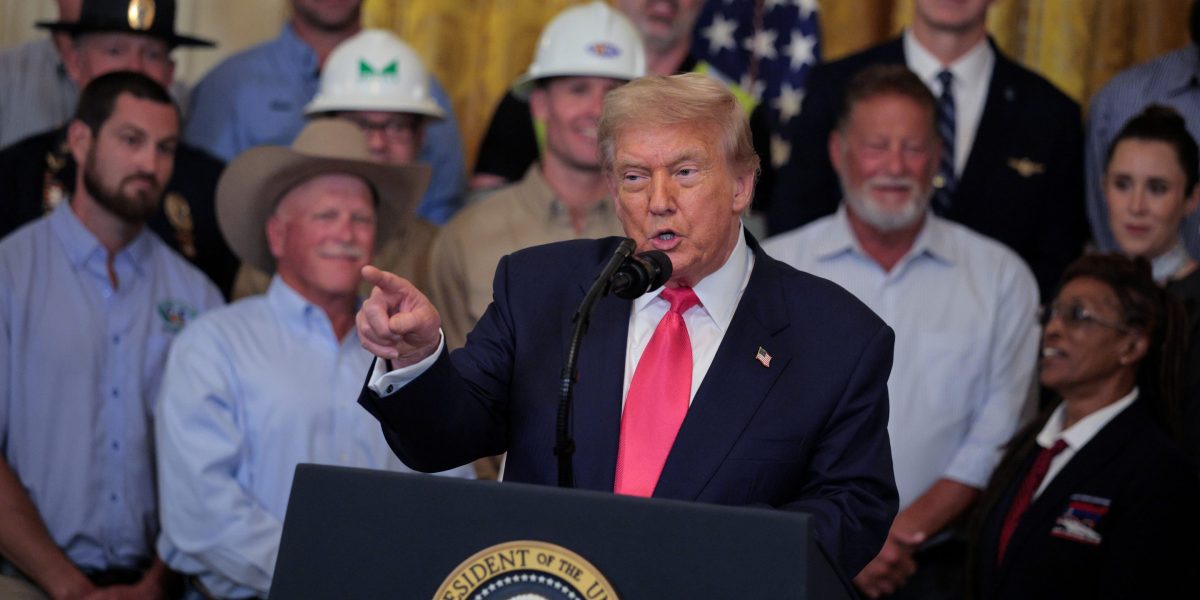
As President Donald Trump has touted American energy dominance, he has leaned on executive orders to expedite natural gas-fired power and new nuclear plants. But regulatory and supply-chain bottlenecks still put those projects several years out.
Meanwhile, Trump’s “One Big, Beautiful Bill” is intentionally handicapping more easily and faster-built wind, solar and battery storage projects that would help satiate the massive data center power demands of the large-scale cloud service providers known as hyperscalers. The final legislation approved by Congress on July 3 (the House concurred on a 218-214 vote) agrees to quickly unwind the clean energy tax credits that could have helped strengthen an already stretched electric grid.
The GOP is leaning on clean energy cuts to support fossil fuels, while channeling the president’s own anti-renewables sentiments: He has often decried the intermittent nature of wind and solar—even if that unpredictability is increasingly offset by the growth of battery storage for renewable energy. And of course cutting tax credits helps offset federal spending elsewhere in the bill.
Unsurprisingly, the clean energy industry is up in arms about the BBB legislation. Abigail Ross Hopper, president and CEO of the Solar Energy Industries Association, said it will increase electricity bills, shut down manufacturing facilities, cost many thousands of U.S. construction jobs, and weaken the grid.
“This legislation [will] set back America’s global competitiveness, destabilize our energy future, and weaken the very industries that power our economy and strengthen our national security—while surrendering the 21st-century tech race to China,” she said.
On the other hand, with money flowing from fossil fuel interests to support Trump and Republicans last year, oil and gas lobbyists—who frequently decry clean energy tax credits as unfair—praised the final bill.
Melissa Simpson, president of the oil and gas industry’s Western Energy Alliance, hailed the “monumental bill that’ll unleash the energy we need.” She specifically touted “provisions promoting oil and natural gas production on public lands” and the halting of the emissions-related “excessive tax on natural gas.”
“Energy dominance” or “energy abundance”?
The final legislation rapidly phases out tax credits for all clean energy projects not online by the end of 2027—exempting those that break ground by June 2026. The Senate’s original, less draconian language required starting construction by the end of 2027—a subtle but massive timeline difference for those scrambling to get projects up and running.
This isn’t just a problem for clean energy developers or environmental advocates; it could dramatically slow the country’s planned and much-needed rapid increases in power generation. In simple terms, that means less power for increasingly electricity-hungry tech and manufacturing sectors, and a growing population—meaning higher power bills for everyone, and possible shortfalls and brownouts.
“The bill doesn’t just burden families, it undermines our country,” said Ari Matusiak, CEO of the Rewiring America nonprofit. “We need low-cost, abundant energy to compete globally. We will become collectively poorer, less resilient, and less equipped to lead in a rapidly changing world.” After all, renewables accounted for almost 90% of new power generation installed in the U.S. last year, according to the Department of Energy.
A wind power turbine near Constellation Energy’s LaSalle Clean Energy Center nuclear power plant, in Illinois.
Scott Olson—Getty Images
Cutting deadlines back to 2027 for completing most projects will result in about 20% fewer clean energy projects being built in the U.S. over the next 10 years, according to S&P Global Commodity Insights projections.
“That’s extremely meaningful,” said Roman Kramarchuk, head of climate market and policy analysis for S&P Global. “This isn’t 20% of a small share; this is 20% of the strong majority of the new deployments.
“That’s rough,” he added. “What it will do is increase costs for power.”
Instead of so-called energy dominance, there’s a growing plea from tech, utilities, and political moderates for scaled-up “energy abundance”—a stance that embraces all forms of power to more rapidly build capacity and help push down prices. But both political parties have been tripped up by ideology, failing to support a strategy that includes clean energy and natural gas—with the GOP targeting renewables and Democrats fighting fossil fuels.
That’s despite the urging of the Edison Electric Institute (EEI), an organization representing investor-owned electric utilities nationwide, and many others. “We’re in unprecedented times for our industry; we haven’t seen this type of load growth since the advent of air conditioning,” EEI chairman and Exelon CEO Calvin Butler told Fortune. “We have to get new power generation built. It’s going to take the all-of-the-above portfolio approach—nuclear, gas, wind, solar, and new technologies like battery storage.”
Butler said he would have supported the legislation if it allowed clean energy projects to break ground by 2027, although later was preferred. “We believe the tax credits are key,” he said. “We don’t believe we can get to the energy dominance without having renewables as part of the solution.”
Why do we need so much power?
After U.S. power demand has remained relatively stagnant for a couple of decades, domestic electricity consumption is expected to spike by 25% from 2023 to 2035 and roughly 60% from 2023 to 2050, according to the International Energy Agency.
A big part of that increase comes from the hyperscalers: Amazon, Google, and Microsoft are investing anywhere from $75 billion to $100 billion each into building data centers for 2025 alone.
To put those dollars in context, the entire market cap of Big Oil giant BP is $80 billion. A planned, super-sized Meta data center in Louisiana, for instance, would require twice the power used by the whole city of New Orleans.
John Ketchum, CEO of NextEra Energy (173 on the Fortune 500)—a massive utility and power developer—estimates that anticipated gas-fired generation cannot even meet 20% of the data center needs from now until 2030. Despite record volumes of shale gas produced domestically in recent years, the turbines required to turn that gas into electricity are getting more costly and there aren’t enough being manufactured because of supply chain challenges.
“If it’s not renewables, what is it going to be?” Ketchum said of the remaining 80% of data center power needs, while speaking at the Politico Energy Summit in June.
While the legislation does not cripple clean energy—a lot of utility-scale wind and solar will still be built—it does substantially weaken its access to tax breaks and increase costs.
A prior version of the bill didn’t just phase out the tax credits; it also placed a brand-new excise tax on clean energy projects—one that even renewable energy opponents bristled at. Some projections estimated the tax easily could have killed most pending clean energy projects, making them economically not viable. That tax was removed just before final Senate voting.
Another last-minute change exempted clean energy projects from losing the tax credit if they break ground by June 2026, even if they exceed the 2027 completion deadline—although these are still very tight timelines.
Likewise, the legislation keeps the “transferability” of tax credits—the removal of which was considered a backdoor “poison pill” meant to cripple the program. Transferability allows smaller developers to raise capital by transferring tax credits at a discount to larger buyers that can immediately take advantage of the tax benefits. The original House version of the bill had eliminated transferability.
The legislation also places new “foreign entity of concern” (FEOC) provisions on renewable energy projects. The FEOC rules, which only applied to electric vehicle tax credits in the Inflation Reduction Act, would now apply to all clean energy tax credits, essentially limiting needed supply-chain materials from China. The House bill placed arduous FEOC provisions on projects, but the final version takes a more measured, phased-in approach.
No matter how much new manufacturing is built in the U.S., many of the materials still only come from China and any delays or missteps cede more ground to China in the middle of a brawl for AI dominance as China rapidly builds more power from coal to wind and solar.
While China is currently more reliant on coal than the U.S., China now sources about one-third of its power from renewables—compared to about 22% in the U.S.—and China is currently installing more solar power, for instance, than the rest of the world combined. As China continues to rapidly build more generation, U.S. slowdowns in any forms of new electricity infrastructure will give China more of a power boost in the AI race to supremacy.
The credit for residential solar projects will be axed as part of the megabill passed by Congress July 3.
Justin Sullivan—Getty Images
The legislation also undoes a bevy of other clean energy and efficiency efforts. The electric vehicle tax credit is axed, as is the credit for residential solar projects and for other home energy efficiency efforts. The megabill also comes as the Trump administration aims to roll back energy efficiency standards for home appliances and more.
“Families will face rising electricity costs with fewer tools to do anything about it,” said Matusiak of Rewiring America. “As energy demand from AI, data centers, and manufacturing explodes, households are boxed in, expected to pay more while getting less.”
Residential electricity costs in the U.S. already have risen by 13% on average from 2022 until now, according to the Department of Energy. And they are projected to keep increasing with demand growth from data centers and higher natural gas prices as a wave of liquefied natural gas export projects come online between now and 2030.
What happens next?
Next up in the renewables sector is the continuation of a rabid race to break ground on clean energy projects to beat the tax credit deadlines. In a way, the more stringent the timelines, the bigger and faster the mad dash is to qualify for tax breaks—even if fewer will be built overall.
“This sector has done this before,” Kramarchuk said. “There’s always the rush to hit the deadlines.”
In the push for more fossil fuel-sourced power, new gas-fired turbines that aren’t already contracted will take five years or so to be built. In the meantime, that means increasing the utilization of existing gas-fired power plants and working to keep more coal plants open for longer. “It means running your existing gas or coal units harder,” Kramarchuk said. Not coincidentally, a tax break for coal exports was a late add to the legislation.
By 2028, 50 gigawatts of existing coal capacity are scheduled to be retired. Some of those plants must stay online for longer to bridge the gap, but how much longer is even possible is unclear. “A lot of those plants are very old and require significant capital investments to keep them going,” he said.
To be clear, the end of tax credits does not mean the death of renewables. The GOP-aligned super PAC ClearPath Action, which supports efforts to combat climate change, called the bill a much better draft than some earlier versions that would have imposed additional taxes on renewables and “devasted” the clean energy industry. “Senate Republicans and House allies rejected that approach and preserved some financial tools to accelerate American innovation and invest in American manufacturing,” said ClearPath CEO Jeremy Harrell.
It does mean, however, that wind and solar projects will become more expensive. A lot of regional utilities and smaller developers may kill the clean energy projects on their drawing boards. But the hyperscalers, of course, have bigger budgets.
“New wind and solar that would’ve been built, can be built. It’s just going to cost a lot more,” Kramarchuk said. “If you’re a hyperscaler, then you probably have more latitude to pay more.”
As for the rest of us? Our electricity and heating bills will likely rise too.
HHS billed the plan as a “first step” focused largely on making its work more efficient and coordinating AI adoption across divisions. But the 20-page document also teased some grander plans to promote AI innovation, including in the analysis of patient health data and in drug development.
“For too long, our Department has been bogged down by bureaucracy and busy-work,” Deputy HHS Secretary Jim O’Neill wrote in an introduction to the strategy. “It is time to tear down these barriers to progress and unite in our use of technology to Make America Healthy Again.”
The new strategy signals how leaders across the Trump administration have embraced AI innovation, encouraging employees across the federal workforce to use chatbots and AI assistants for their daily tasks. As generative AI technology made significant leaps under President Joe Biden’s administration, he issued an executive order to establish guardrails for their use. But when President Donald Trump came into office, he repealed that order and his administration has sought to remove barriers to the use of AI across the federal government.
Experts said the administration’s willingness to modernize government operations presents both opportunities and risks. Some said that AI innovation within HHS demanded rigorous standards because it was dealing with sensitive data and questioned whether those would be met under the leadership of Health Secretary Robert F. Kennedy Jr. Some in Kennedy’s own “Make America Health Again” movement have also voiced concerns about tech companies having access to people’s personal information.
Strategy encourages AI use across the department
HHS’s new plan calls for embracing a “try-first” culture to help staff become more productive and capable through the use of AI. Earlier this year, HHS made the popular AI model ChatGPT available to every employee in the department.
The document identifies five key pillars for its AI strategy moving forward, including creating a governance structure that manages risk, designing a suite of AI resources for use across the department, empowering employees to use AI tools, funding programs to set standards for the use of AI in research and development and incorporating AI in public health and patient care.
It says HHS divisions are already working on promoting the use of AI “to deliver personalized, context-aware health guidance to patients by securely accessing and interpreting their medical records in real time.” Some in Kennedy’s Make America Healthy Again movement have expressed concerns about the use of AI tools to analyze health data and say they aren’t comfortable with the U.S. health department working with big tech companies to access people’s personal information.
Experts question how the department will ensure sensitive medical data is protected
Oren Etzioni, an artificial intelligence expert who founded a nonprofit to fight political deepfakes, said HHS’s enthusiasm for using AI in health care was worth celebrating but warned that speed shouldn’t come at the expense of safety.
“The HHS strategy lays out ambitious goals — centralized data infrastructure, rapid deployment of AI tools, and an AI-enabled workforce — but ambition brings risk when dealing with the most sensitive data Americans have: their health information,” he said.
Etzioni said the strategy’s call for “gold standard science,” risk assessments and transparency in AI development appear to be positive signs. But he said he doubted whether HHS could meet those standards under the leadership of Kennedy, who he said has often flouted rigor and scientific principles.
Darrell West, senior fellow in the Brooking Institution’s Center for Technology Innovation, noted the document promises to strengthen risk management but doesn’t include detailed information about how that will be done.
“There are a lot of unanswered questions about how sensitive medical information will be handled and the way data will be shared,” he said. “There are clear safeguards in place for individual records, but not as many protections for aggregated information being analyzed by AI tools. I would like to understand how officials plan to balance the use of medical information to improve operations with privacy protections that safeguard people’s personal information.”
Still, West, said, if done carefully, “this could become a transformative example of a modernized agency that performs at a much higher level than before.”
The strategy says HHS had 271 active or planned AI implementations in the 2024 financial year, a number it projects will increase by 70% in 2025.
Big Tech’s AI arms race is fueling a massive investment surge in data centers with construction worker labor valued at a premium.
Despite some concerns of an AI bubble, data center hyperscalers like Google, Amazon, and Meta continue to invest heavily into AI infrastructure. In effect, construction workers’ salaries are being inflated to satisfy a seemingly insatiable AI demand, experts tell Fortune.
In 2026 alone, upwards of $100 billion could be invested by tech companies into the data center buildout in the U.S., Raul Martynek, the CEO of DataBank, a company that contracts with tech giants to construct data centers, told Fortune.
In November, Bank of Americaestimated global hyperscale spending is rising 67% in 2025 and another 31% in 2026, totaling a massive $611 billion investment for the AI buildout in just two years.
Given the high demand, construction workers are experiencing a pay bump for data center projects.
Construction projects generally operate on tight margins, with clients being very cost-conscious, Fraser Patterson, CEO of Skillit, an AI-powered hiring platform for construction workers, told Fortune.
But some of the top 50 contractors by size in the country have seen their revenue double in a 12-month period based on data center construction, which is allowing them to pay their workers more, according to Patterson.
“Because of the huge demand and the nature of this construction work, which is fueling the arms race of AI… the budgets are not as tight,” he said. “I would say they’re a little more frothy.”
On Skillit, the average salary for construction projects that aren’t building data centers is $62,000, or $29.80 an hour, Patterson said. The workers that use the platform comprise 40 different trades and have a wide range of experience from heavy equipment operators to electricians, with eight years as the average years of experience.
But when it comes to data centers, the same workers make an average salary of $81,800 or $39.33 per hour, Patterson said, increasing salaries by just under 32% on average.
Some construction workers are even hitting the six-figure mark after their salaries rose for data center projects, according to The Wall Street Journal. And the data center boom doesn’t show any signs it’s slowing down anytime soon.
Tech companies like Google, Amazon, and Microsoft operate 522 data centers and are developing 411 more, according to The Wall Street Journal, citing data from Synergy Research Group.
Patterson said construction workers are being paid more to work on building data centers in part due to condensed project timelines, which require complex coordination or machinery and skilled labor.
Projects that would usually take a couple of years to finish are being completed—in some instances—as quickly as six months, he said.
It is unclear how long the data center boom might last, but Patterson said it has in part convinced a growing number of Gen Z workers and recent college grads to choose construction trades as their career path.
“AI is creating a lot of job anxiety around knowledge workers,” Patterson said. “Construction work is, by definition, very hard to automate.”
“I think you’re starting to see a change in the labor market,” he added.
Reed Hastings may soon pull off one of the biggest deals in entertainment history. On Thursday, Netflix announced plans to acquire Warner Bros.—home to franchises like Dune, Harry Potter, and DC Universe, along with streamer HBO Max—in a total enterprise value deal of $83 billion. The move is set to cement Netflix as a media juggernaut that now rivals the legacy Hollywood giants it once disrupted.
It’s a remarkable trajectory for Netflix’s cofounder, Hastings—a self-made billionaire who found a love for business starting as a teenage door-to-door salesperson.
“I took a year off between high school and college and sold Rainbow vacuum cleaners door to door,” Hastings recalled to The New York Timesin 2006. “I started it as a summer job and found I liked it. As a sales pitch, I cleaned the carpet with the vacuum the customer had and then cleaned it with the Rainbow.”
That scrappy sales job was the first exposure to how to properly read customers—an instinct that would later shape Netflix’s user-obsessed culture. After graduating from Bowdoin College in 1983, Hastings considered joining the Marine Corps but ultimately joined the Peace Corps, teaching math in Eswatini for two years. When he returned to the U.S., he obtained a master’s in computer science from Stanford and began his career in tech.
The idea for Netflix reportedly came a few years later in the late 1990s. After misplacing a VHS copy of Apollo 13 and getting hit with a $40 late fee at Blockbuster, Hastings began exploring a mail-order rental service. While it’s an origin story that has since been debated, it marked the start of a company that would reshape global entertainment.
Hastings stepped back as CEO in 2023 and now serves as Netflix’s chairman of the board. He has amassed a net worth of about $5.6 billion. He’d be even richer if he didn’t keep offloading his shares in the company and making record-breaking charitable donations.
Netflix’s secret for success: finding the right people
Hastings has long said that one of the biggest drivers of Netflix’s success is its focus on hiring and keeping exceptional talent.
“If you’re going to win the championship, you got to have incredible talent in every position. And that’s how we think about it,” he told CNBC in 2020. “We encourage people to focus on who of your employees would you fight hard to keep if they were going to another company? And those are the ones we want to hold onto.”
To secure top performers, Hastings said he was more than willing to pay for above-market rates.
“With a fixed amount of money for salaries and a project I needed to complete, I had a choice: Hire 10 to 25 average engineers, or hire one ‘rock-star’ and pay significantly more than what I’d pay the others, if necessary,” Hastings wrote. “Over the years, I’ve come to see that the best programmer doesn’t add 10 times the value. He or she adds more like a 100 times.”
That mindset also guided Netflix’s leadership transition. When Hastings stepped back from the C-suite, the company didn’t pick a single successor—it picked two. Greg Peters joined Ted Sarandos as co-CEO in 2023.
“It’s a high-performance technique,” Hastings said, speaking about the co-CEO model. “It’s not for most situations and most companies. But if you’ve got two people that work really well together and complement and extend and trust each other, then it’s worth doing.”
Netflix’s stock has soared more than 80,000% since its IPO in 2002, adjusting for stock splits.
Netflix brought unlimited PTO into the mainstream
Netflix’s flexible workplace culture has also played a key role in its success, with Hastings often known for prioritizing time off to recharge.
“I take a lot of vacation, and I’m hoping that certainly sets an example,” the former CEO said in 2015. “It is helpful. You often do your best thinking when you’re off hiking in some mountain or something. You get a different perspective on things.”
The company was one of the first to introduce unlimited PTO, a policy that many firms have since adopted. About 57% of retail investors have said it could improve overall company performance, according to a survey by Bloomberg. Critics have argued that such policies can backfire when employees feel guilty taking time off, but Hastings has maintained that freedom is core to Netflix’s identity.
“We are fundamentally dedicated to employee freedom because that makes us more flexible, and we’ve had to adapt so much back from DVD by mail to leading streaming today,” Hastings said. “If you give employees freedom you’ve got a better chance at that success.”
“For over thirty years, I had a hard cut-off on Tuesdays. Rain or shine, I left at exactly 5 p.m. and spent the evening with my best friend. We would go to a movie, have dinner, or just go window-shopping downtown together,” Randolph wrote in a LinkedIn post.
“Those Tuesday nights kept me sane. And they put the rest of my work in perspective.”