A nearby offshore wind farm was already planned when Donald Trump purchased coastal land in northern Scotland to develop the Trump International Golf Links—a project he envisioned as an homage to his Scottish-American mother, Mary Anne MacLeod Trump.
“I am not thrilled. I want to see the ocean; I do not want to see windmills,” Trump told BBC News in May 2006. It was the first-known example of Trump’s years-long war against wind power.
It took another five years for the Aberdeen Offshore Wind Farm to initiate permitting and, in 2012 as the golf course was nearing its opening, Trump launched an all-out media and legal assault against the wind project—a campaign that proved unsuccessful. “Tourism will suffer and the beauty of your country is in jeopardy,” Trump warned in a 2012 advertisement.
Trump wrote in a 2013 Daily Mail article that he would fight “for as long as it takes—to hell if I have to—and spend as much as it takes to block this useless and grotesque blot on our heritage.” By the time he was first running for president in 2015, Trump had tweeted negatively about wind or “windmills” more than 130 times.
Much to Trump’s chagrin, the Scottish wind farm opened in 2018. But he’s carried that fight much more aggressively in his second term as U.S. president.
Upon his return to Scotland this July, he emphasized: “We will not allow a windmill to be built in the United States. They’re killing us”. Trump added Aug. 20 on Truth Social that he “will not approve” wind or solar projects. “The days of stupidity are over in the USA!!!” he posted.
While Trump may not prevent every new wind turbine installed in the U.S., he certainly is trying.
Apart from a rapid phasedown of tax credits for wind and solar projects in the One Big Beautiful Bill signed into law in July, the Trump administration has ramped up its attacks on wind—and solar—into a full-scale war, including all but banning new wind and solar projects on federal lands and waters, keeping wind turbines away from highways and railroads, investigating turbines for eagle deaths, and, most recently, making it harder for renewables to even qualify for the short-lived credits eliminated after 2027.
Potentially most onerously, wind or solar projects must now go through three levels of federal review, including personally by Interior Secretary Doug Burgum, who said in August that “gargantuan, unreliable, intermittent energy projects hold America back from achieving U.S. energy dominance.” These secretary-level reviews include many proposed on private land. Earlier this month, the administration canceled the massive Lava Ridge Wind Project in Idaho, yanking permits approved last year.
While Trump has long despised wind turbines, he’s only made it a top political priority in 2025. More wind projects were built during Trump’s first term than during the Biden administration. It’s only now though that U.S. power demand is surging—thanks to the AI data center boom—and it’s happening just when renewable energy is being handicapped.
Average electricity bill costs are up 7% year over year as of May, according to the Department of Energy, and they’re projected to keep rising.
“It’s a triumph of polarization over pragmatism,” American Clean Power Association CEO Jason Grumet told Fortune. “What is mind-boggling is that, after eliminating the subsidies, the administration has then gone on the attack with federal mandates and buckets of red tape to actively oppose projects being built.”
Executive ‘double-cross’
The last-minute compromise in the “Big Beautiful Bill” focused on keeping the renewable energy tax credits in place for now—but quickly phasing them out.
To qualify, projects must break ground by July 4, 2026, or be completed by the end of 2027. The key is really on breaking ground by next summer because few started after July 2026 are likely to finish by year-end 2027.
As soon as the omnibus spending law was passed, the Trump administration went to work making it harder to qualify for the tax credits—specifically what counts as breaking ground. Those revised rules were finalized on Aug.15.
It used to be that developers only had to pay 5% of the costs up front to lock in the tax credits. Instead, the 5% rule is eliminated for all but small solar farms, requiring all others to demonstrate that “physical work of a significant nature” has begun on or off-site, such as foundation excavation.
Grumet calls it a “double-cross” to immediately change the rules after reaching a deal that was already tough on the clean power sector. “This is basically an ‘America Last’ energy policy,” he said.
The fear was the administration would change the rules even more dramatically, but some Republican senators—including John Curtis of Utah and Chuck Grassley of Iowa—threatened holds on confirming some Trump nominees until the rules were released. After all, most new wind and solar farms are being built in so-called red states.
Also troublesome for the industry are new foreign-sourcing rules that penalize projects for using Chinese parts in a renewables industry dominated by Chinese supply chains.
Other regulatory aspects are potentially worse for the industry too. For instance, Burgum’s Interior Department went a step further on Aug. 1 to also include “enhanced” reviews for power line transmission projects that are deemed to help enable wind or solar projects.
That order came days after the Energy Department revoked a loan guarantee for the 800-mile Grain Belt Express transmission project from Kansas to Indiana.
Christina Hayes, executive director of Americans for a Clean Energy Grid, told Fortune that the transmission policy move adds more “uncertainty” when the nation rapidly needs more power infrastructure, especially when power lines are agnostic to electricity generated by wind or coal burning.
“There’s no sorting hack for electrons. Once an electron is on the system, it is like all the other electrons,” Hayes said, proceeding to make a Harry Potter reference. “It’s not like, ‘Oh, you’re a Gryffindor electron, you’re a renewable electron, you’re Hufflepuff, you’re coal.’ That’s not how this works.”
Rising obstacles
Potentially the most insidious changes for wind and solar aren’t the outright policy revisions, but the behind-the-curtains roadblocks created: federal websites going dark, meetings canceled, phone calls repeatedly unanswered.
“In order to permit a project, you have to interact with the federal government,” Grumet said. “You’re a developer, and you’ve gone through your 63 of 64 steps, and suddenly you can’t get your final meeting. And now future permits are going to be politicized at the cabinet secretary level for everything from where you put a fence to how you create a road. It’s weaponizing bureaucracy to undermine American energy production.”
For instance, Hayes said Elon Musk’s DOGE cuts contributed to the Energy Department’s staffing for the Coordinated Interagency Transmission Authorizations and Permits Program (CITAP) shrinking from about 60 people to six—critical for transmission siting and permitting.
Grumet likened the process to going to the Department of Motor Vehicles in the 1950s-era Soviet Union. “The government is challenging enough when everyone is working towards solutions; it’s impossible when the government is working to create problems.”
All the false claims
Trump has repeatedly called “windmills” a green energy scam and accused them of killing birds and marine life. He’s even falsely said the noise can cause cancer. But mostly, he loathes wind turbines for their aesthetics.
On the other hand, air pollution from fossil fuels can be carcinogenic, and the U.S. Fish and Wildlife Service has found that oil pits cause three times more bird deaths than wind turbines, which were deemed responsible for fewer than 0.01% of human-caused bird fatalities.
Outside of, yes, cats, the leading cause of bird deaths is building and glass collisions, including Trump’s towers in New York and around the world. Trump’s Aberdeen golf complex also was built on sand dunes that housed multiple species of endangered birds.
“The American public sees past the idea that a wind blade is a carcinogen,” Grumet said. “The issue the president really focuses on is the aesthetics. That’s a matter of personal opinion if the president thinks that staring at a natural gas facility is a source of American beauty, and staring at a wind turbine is an assault on the landscape.”
So, why now? One, this Trump administration is more filled with partisan players who were prepared to hit the ground running. Two, the energy fight increasingly has become more politically biased.
“Between 2020 and 2024, I think the whole energy debate became more partisan, and wind power, in particular, got locked into the ‘us versus them’ imagination of the way America works,” Grumet said.
Yes, it’s a tough time for renewable energy in America. Fewer projects will come to fruition. The extent of that decline is unclear. But new natural gas-fired plants and nuclear facilities will take five to 10 years to build. Retiring coal plants will have their lives extended, but only temporarily. New power generation is needed more quickly, and renewables, especially solar power, will still fill most of the short-term gap—with or without tax credits.
“We are inexorably moving toward a more efficient, lower-carbon energy system,” Grumet said. “The president’s actions certainly could slow that down for a couple years, but the direction is not going to change.”
An increasingly acrimonious dispute over the direction of French billionaire Pierre Castel’s drinks conglomerate burst into full public view after a pair of heirs demanded the group CEO’s resignation and organized a vote aimed at ousting him.
Romy Castel, daughter of the 99-year-old founder, and Alain Castel, his nephew, told Bloomberg News they deeply disagree with the way Chief Executive Officer Gregory Clerc is running thewine and beer conglomerate and the power they say he’s amassed.
Clerc “is attempting to take control,” Romy Castel, 51, said in a telephone interview, referring to a move by the CEO earlier this month to remove Alain Castel from two company boards.
In a separate statement, Alain Castel, 65, questioned Clerc’s strategic vision and ability to effectively run the group, which has a workforce of 43,000.
“For me and my family, it has become vital that Mr. Clerc fully appreciate the situation and realize that his resignation is the best solution,” he said.
The closely held Castel Group, which had sales of about €6.5 billion ($7.6 billion) last year from its globe-spanning wine, beer and agricultural operations, has been torn in recent months by internal strife that has pitted key members of the family against Clerc. As the first outsider to oversee operations within the secretive empire, the dispute highlights the risks of generational change within family-controlled companies.
In a statement, the eponymous Castel Group said that Clerc rejects the family members’ claims and added that he remains focused on his mandate to develop and grow the company “within a framework of demanding and responsible governance.”
The website of another company in the group, Castel Afrique, posted a message saying that the board of Castel Group had met in Luxembourg on Dec. 11 and backed Clerc.
The acrimony is escalating at a time when the founder’s health has been faltering. Pierre Castel remained the public face of the businesses until a few years ago, and Clerc was named CEO in 2023 after serving as the founder’s tax lawyer in Switzerland.
The extent of the Castel fortune and the group’s labyrinthine corporate structure came to light through a tax dispute that the billionaire lost on appeal. A Swiss federal court ruled in a July 2023 decision that the businessman had evaded taxes as a longstanding resident in the country. Castel was fined more than €350 million.
Tax Probe
While the Swiss legal procedure is over, a tax probe by French authorities is ongoing, according to Romy Castel.
The power struggle within the conglomerate surfaced earlier this month when Alain Castel, who heads the wine arm of the group, Castel-Vins, said he was removed from the board of a Luxembourg-based holding company, D.F. Holding, as well as Cassiopee Pte. Ltd., a Singapore-based entity that is higher up in the corporate structure. Clerc has seats on both boards.
D.F. Holding is wholly owned by Cassiopee, which is ultimately controlled by Investment Beverage Business Fund, also in the city state.
In his statement, Alain Castel said “deep disagreement” with Clerc has been simmering since his arrival as CEO, adding that one trigger was a survey carried out that he claims hurt a number of projects.
Romy Castel said she has convened an extraordinary general meeting in Singapore on Jan. 8 of Investment Beverage Business Management, or IBBM, the fund management vehicle, to seek Clerc’s removal as director.
A recent filing for that company lists Romy Castel, a French national based in Switzerland, as a shareholder, alongside another of her father’s nephews, Michel Palu. The other shareholders on the list are from outside the family: Two former longstanding French executives, Guy de Clercq and Gilles Martignac, as well as CEO Pierre Baer.
Alain Castel described Romy as a “majority shareholder” of IBBM. The filing shows her having a 24% stake.
With the two former executives as allies “I have the majority,” to remove Clerc, Romy Castel said in the interview. “I am very, very confident.”
Pierre Castel’s empire spans the wine business that started in France and includes chateaus, vineyards, the Nicolas brand of stores and online seller Vinatis. The much bigger brewing and soda operation is focused on Africa, with some 61 brands of beer.
D.F. Holding, which includes both beer and wine operations, reported sales of €6.5 billion in 2024, little changed from the year before. Dividends paid to shareholders rose about eight-fold to €350 million compared with €43 million.
Since Clerc came on board, the firm has consolidated results across a swath of Castel operations. These include factories in 22 African countries as well as sugar plantations, flour and distillery activities.
This year it warned about lower wine consumption in France, political tension in a number of African countries and the war in Ukraine.
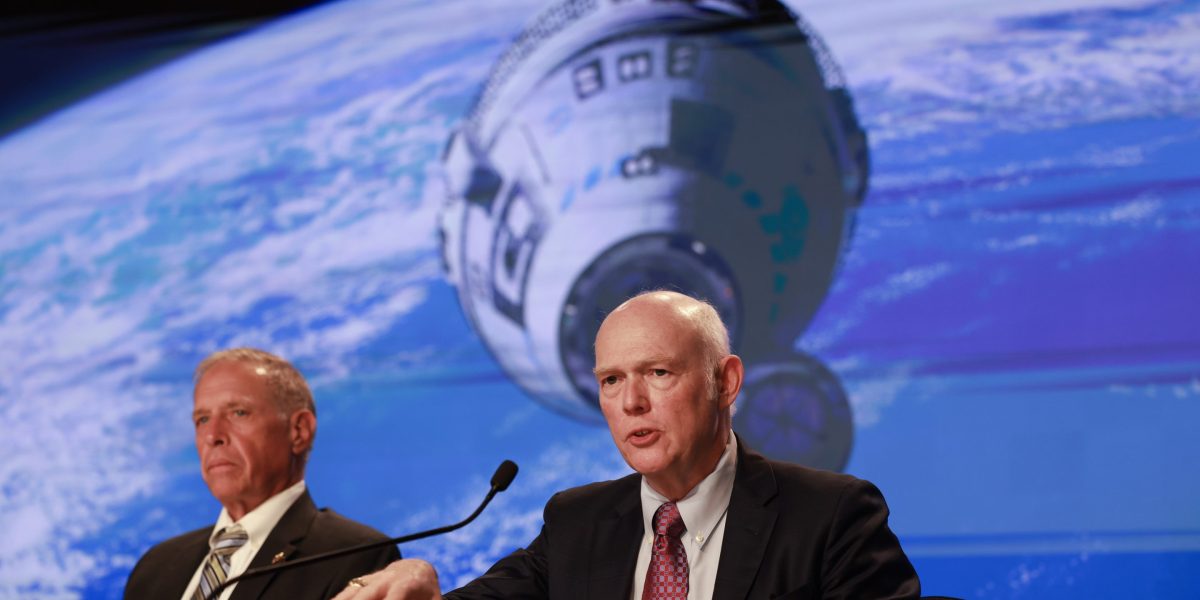
Tory Bruno, the chief executive officer of Boeing Co. and Lockheed Martin Corp.’s rocket joint venture United Launch Alliance, has resigned after serving in the position for nearly 12 years.
Chief Operating Officer John Elbon will serve as interim CEO, ULA’s board of directors announced on Monday.
One of SpaceX’s biggest rivals, ULA is one of an elite group of companies that is authorized to launch the most sensitive satellites for the US military. During his tenure leading ULA, Bruno oversaw the retirement and phasing out of the company’s older Delta and Atlas rockets, while spearheading the development of a new rocket called Vulcan.
“We are grateful for Tory’s service to ULA and the country, and we thank him for his leadership,” the ULA board said in a statement. Bruno is leaving to pursue another opportunity, the statement said.
Join us at the Fortune Workplace Innovation Summit May 19–20, 2026, in Atlanta. The next era of workplace innovation is here—and the old playbook is being rewritten. At this exclusive, high-energy event, the world’s most innovative leaders will convene to explore how AI, humanity, and strategy converge to redefine, again, the future of work. Register now.
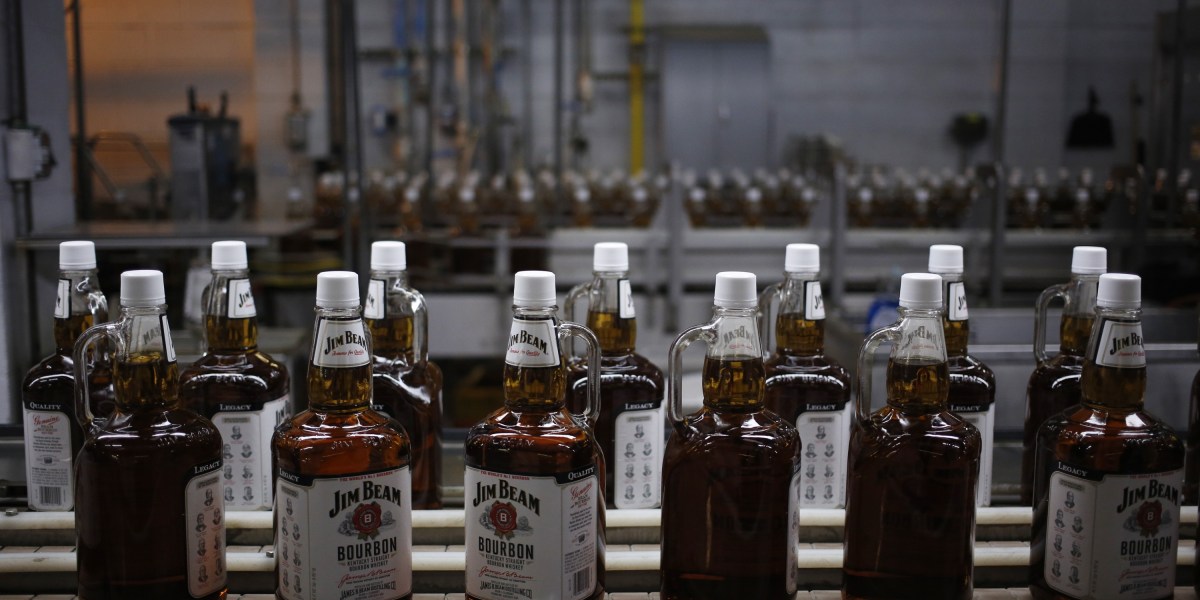
Bourbon maker Jim Beam plans to pause production at its main US distillery for all of 2026 after slumping demand caused an oversupply of whiskey.
The brand, owned by Japanese alcohol giant Suntory Holdings Ltd., said it’s halting whiskey distillation at the James B. Beam campus in Clermont, Kentucky after an assessment of its production levels against consumer demand, according to a statement on Monday.
The company plans to use the downtime to invest in site enhancements. Production will still continue at the smaller Fred B. Noe craft distillery in Clermont and the Booker Noe site in Boston, it added.
Sales of bourbon have slowed as consumers rein in spending and drinking, and as uncertainty over the impact of US President Donald Trump’s tariffs and taxes on aging barrels weigh on the sector, the Kentucky Distillers’ Association said in October. There are about 16.1 million barrels — a record — of bourbon aging in warehouses in Kentucky as of January, though most won’t be ready to bottle until after 2030, the association said.
Jim Beam, which employs about 6,000 people worldwide, did not announce layoffs. Bottling and warehousing operations will continue at the brand’s James B. Beam campus, while its visitor center and restaurant remain open, it said.
Suntory, which also owns soft drinks such as Orangina, is grappling with the fallout of Takeshi Niinami’s resignation as chief executive officer in September after Japanese police raided his home as part of an investigation into suspected illegal cannabis-based supplements. Niinami was one of the country’s best-known and most outspoken business leaders.
Join us at the Fortune Workplace Innovation Summit May 19–20, 2026, in Atlanta. The next era of workplace innovation is here—and the old playbook is being rewritten. At this exclusive, high-energy event, the world’s most innovative leaders will convene to explore how AI, humanity, and strategy converge to redefine, again, the future of work. Register now.





 Politics8 years ago