Connect with us

Business

Trump’s $100,000 visa targets a $280 billion India success story

Published

on


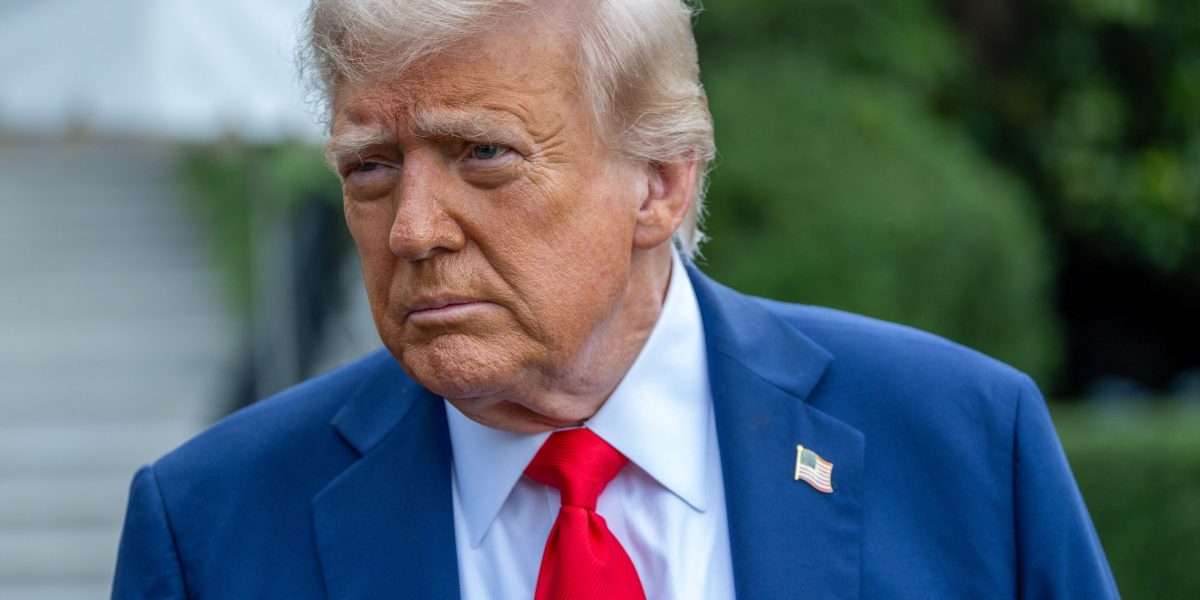
Donald Trump’s move to curtail H-1B visas threatens to rewrite the rules for one of India’s biggest business success stories, a decades-old model that’s grown into a $280 billion industry and underpins much of the technology behind the world’s largest corporations.

The U.S. president’s order on Friday—which requires a $100,000 fee for H-1B applications—will force a rethink at Indian outsourcers led by Tata Consultancy Services Ltd. and Infosys Ltd., who use the program to deploy tens of thousands of engineers across American clients from Citigroup Inc. to Walmart Inc. The two Indian software exporters’ shares slid more than 3% on Monday.

The abrupt move—a response in part to accusations of abuse—forces Prime Minister Narendra Modi to once again deal with the fallout from America First policies. Companies from TCS to Wipro Ltd. have been hailed as a touchstone of Indian technological achievement, helping create high-skilled jobs for the world’s most populous economy since the idea of outsourced information technology gained currency around the 1990s. Trump deals a blow to some of India’s most valuable companies at a time they’re grappling with IT cutbacks because of geopolitical and economic uncertainty.

Trump’s move is a “geopolitical turf war,” said Chander Prakash Gurnani, the former chief executive officer of Tech Mahindra Ltd., who now runs an AI firm. “We’re only helping America. And we’re helping American companies be more competitive.”

“In the short run, the next 12 months, there is a shock,” he told Bloomberg Television, emphasizing however that TCS and its rivals have in some ways anticipated a longer-term shift away from the U.S. “The business model, and the global delivery model, are changing and we live in a very dynamic world.”

The changes to the visa policy increased strains on the India-U.S. relationship on the eve of the Indian team’s visit to Washington as the countries seek a breakthrough on trade talks. They also add to a wave of anti-immigration movements across the globe that have impacted the nation of 1.4 billion people.

In India, social media erupted with responses that ran the gamut from outraged to panicked and accusatory. Many worried about the impact on families who rely on H-1Bs to work and stay in the U.S. as well as their relatives in India who they often send money to.

The H-1B visa program is used heavily by Indian outsourcing firms as well as the U.S. tech sector to bring in skilled workers from abroad. Finance companies and consulting firms also use the program, which makes tens of thousands of visas available via a lottery. The Trump administration cast the changes as part of a broader plan to bolster legitimate applications while weeding out abuses.

H-1B visas are awarded based on a system where employers file petitions by March for a lottery in April, with 65,000 visas available plus 20,000 for U.S. master’s graduates. In 2025, over 470,000 applications were submitted. Many firms submit multiple registrations for the same workers to improve their odds at the lottery, a Bloomberg News investigation previously found.

The new $100,000 payment would be in addition to current fees, which are more modest. Fees directly tied to the H-1B visa application currently include a $215 fee to register for the lottery alongside various filing fees.

Indian-born workers accounted for 72.3% of all H-1B beneficiaries in the U.S. fiscal year to September 2023, which includes initial and continuing employment. Infosys got approval for initial employment of 2,504 H-1B visas in FY2024. Under the new rules, that would cost at least $250 million.

As recently as July, Indian Commerce and Industry Minister Piyush Goyal had said immigration rules—including those around H-1B visas—had not come up in U.S. trade talks. Opposition lawmakers were quick to blame Modi for Trump’s decision on the H-1B fee hike, saying the government has failed once again to protect Indian interests.

In a televised address to the nation Sunday, Modi spoke about a reduction in consumption taxes, but didn’t make mention of the visa changes. India’s foreign ministry on Saturday said the local tech industry and the U.S. are expected to consult on the path forward.

While Trump aims to protect U.S. jobs by restricting immigrant inflows, the new rules could backfire: they will likely raise costs for American corporations and push them to step up the expansion of their so-called global capability centers in India. Companies including Microsoft Corp., Google, Goldman Sachs Group Inc., JPMorgan Chase & Co. and Morgan Stanley already run large GCCs in India.

“If American companies cannot outsource onshore, they may look to expand their offshore presence in places like India, even with a possible fee hit,” said Bhaskar Rao, CEO of communications company Digital Sea. “The decision is clearly targeted to keep Trump voters happy, but it remains to be seen whether they can replace nearly 65,000–85,000 junior and mid-level professionals affected by the H-1B cap.”

The order, which took effect Sunday, is already drawing criticism for flouting clear requirements of U.S. federal immigration law and is likely to invite immediate lawsuits. The lack of clarity around the new rules prompted Microsoft, Amazon.com Inc. and Alphabet Inc.—some of the biggest beneficiaries of the H-1B program—to initially warn employees against foreign travel. 

“The main issue with such decisions is that they create a lot of uncertainty in the business environment,” said Arup Raha, a Singapore-based independent economist. “Such a supply-side shock” isn’t in U.S. interests either, he said.

Indian firms such as TCS, Infosys and HCL Tech Ltd. have steadily pared back their dependence on H-1B visas since Trump threatened to raise immigration barriers in his first term and a bulk of projects was done remotely at the height of the coronavirus pandemic. All major IT companies have also stepped up local hiring and ramped up so-called delivery centers in the U.S. to service clients.

Still, the H-1B remains critical to Indian IT firms— t helps maintain key client relationships in their biggest market, and allows engineers to be stationed on the ground for sensitive projects in the U.S. The increased visa costs will force them to fly even fewer workers to client sites. Infosys employs thousands of people across its delivery centers in states including Texas, Indiana, and North Carolina.

“The move will almost certainly be challenged in court, and there will be considerable pressure from the tech industry to reverse it,” Digital Sea’s Rao said. “Nothing is final with Trump.”


Source link

Continue Reading

Business

Judge tells notorious crypto scammer ‘you have been bitten by the crypto bug’ in handing down 15 year sentence

Published

on


First Sam Bankman-Fried was sentenced to prison for his crypto crime. Now, it’s the turn of Do Kwon, who is widely regarded as crypto’s most infamous fraudster after Bankman-Fried. On Thursday, the 34 year-old was sentenced to 15 years in prison, after being charged with misleading investors and inflating the value of his company’s cryptocurrencies known as Terra and Luna. 

At his sentencing hearing in New York, the judge chastised Kwon, suggesting he had succumbed to the worst elements of an industry known for get-rich-quick swindles. “You have been bitten by the crypto bug and I don’t think that’s changed. You must be incapacitated. If not for your guilty plea, my sentence would have been higher,” said U.S. District Judge Paul Engelmayer, according to a tweet from Inner City Press, which provides reliable reporting on court proceedings. 

The sentencing is the final fallout from 2022, when Kwon’s stablecoins TerraUSD and Luna both suddenly collapsed in value, which led to massive losses for investors. Kwon was charged with committing wire fraud and conspiring to commit securities fraud and commodities fraud, according to a statement by the Department of Justice. 

After his company went bankrupt in 2022, Kwon was on the run for months. He fled South Korea and later Singapore after he was wanted by both the United States and South Korea. He was arrested in March 2023 in Montenegro after he was found in possession of a fake Costa Rican passport. Late last year, Montenegro extradited Kwon to the United States. 

In a 2024 suit by the Securities and Exchange Commission, the regulator found Terraform and Kwon liable for civil fraud. A jury then determined that Kwon and Terraform misled investors. Kwon and Terraform lied about how the company’s blockchain technology was using Chai, a Korean payment application, to make transactions. Kwon and Terraform had also claimed that the stablecoin was algorithmically pegged to the US dollar, which jurors found to be misleading to investors. 

Kwon agreed to pay more than $200 million and Terraform agreed to pay more than $3.5 billion in order to wind down the firm. 

In August, Kwon pleaded guilty to conspiracy and wire fraud. “I knowingly agreed with others to defraud, and did in fact defraud, purchasers of cryptocurrencies issued by my company, Terraform Labs,” Kwon said at the time. “What I did was wrong and I want to apologize for my conduct. I take full responsibility.” 

Kwon is one of several high profile crypto figures sentenced to jail in the last couple of years. Sam Bankman-Fried, the founder of FTX, was sentenced to 25 years in prison in March of last year. A month later, Changpeng Zhao, co-founder Binance, was sentenced to four months in prison. President Donald Trump has since pardoned Zhao, while Bankman-Fried remains behind bars. 


Source link

Continue Reading

Business

Botched baton passes show why AI needs trust, Blackbaud exec says

Published

on


The U.S. Olympic men’s and women’s sprinting teams have won more gold medals than any other country in history, but the men’s 4×100-meter relay team has suffered four blistering defeats in the past two decades. Why? An absolute whiff at the critical point when a runner has to instinctively reach back and trust their squadmate enough to perfectly place the baton in their hand.  

Sudip Datta, chief product officer at AI-powered software firm Blackbaud, said that image captures exactly what’s taking place in AI today. Companies are advancing swiftly to build the fastest and most powerful systems they can, but there’s a severe lack of trust between the technology and the people using it, causing any new innovation or efficiencies to completely fumble at the handoff. 

“How many times did the U.S. have the fastest athletes, but ended up losing the 4×100 relay?” Datta asked an expert roundtable audience at Fortune’s Brainstorm AI event in San Francisco this week. “Because the trust was not there, where the runner would blindly take it from someone who is passing the baton.”

Datta said the reflexive reach backward on faith alone is what will separate the winners from the losers in AI adoption. And a major challenge looming in building trust is that a lot of companies today treat trust-building as a compliance burden that slows everything down. The opposite is true, he told the Brainstorm AI audience. 

“Trust is actually a revenue driver,” said Datta. “It’s an enabler because it propels further innovation, because the more customers trust us, we can accelerate on that innovation journey.”

Scott Howe, president and CEO of data collaboration network LiveRamp, outlined five conditions that need to be met in order to build trust. Regulation has done a reasonable job in setting up the first two but “we still have a long way to go” on the remaining three, he said. The five conditions include: Transparency into how your data is going to be used; control over your data; an exchange of value for personal data; data portability; and finally, interoperability. Regulations including the EU’s General Data Protection Regulation (GDPR) have secured some minimal progress but Howe said most people don’t “get nearly fair value for the data we contribute.”

“Instead, really big companies, some of whom are speaking on stage today, have scraped the value and made a ton of money,” said Howe. “And then the last two, as an industry and as businesses, we are nowhere on.”

Owning the data

In Howe’s vision of the future, he sees data being viewed as a property right and people being entitled to fair compensation for its use. 

“The LLMs don’t own my data,” said Howe, referring to large language models. “I should own my data and so I should be able to take it from Amazon to Google, and from Google to Walmart if I want, and it should travel with me,”

However, major tech companies are actively resisting portability and interoperability, which has created data silos that entomb customers in their current ecosystems, said Howe. 

Beyond personal data and potential consumer rights issues, the trust challenge takes on a different shape inside various companies, and each has to decide what their own AI systems can safely access and which tasks can be completed autonomously. 

Spencer Beemiller, innovation officer at software company ServiceNow, said the firm’s customers are trying to determine which AI systems can operate without human oversight, a question that remains largely unanswered. He said ServiceNow helps organizations track their AI agents the same way they’ve historically monitored infrastructure by tracking what the systems are doing, what they have access to, and their lifecycle. 

“We’re trying to get a little bit of a grasp on helping our customers determine what points actually matter to create that autonomous decision making,” Beemiller said. 

Issues like hallucinations, where an AI system will confidently provide made-up or inaccurate information in response to a question, require significant risk mitigation processes, he said. ServiceNow approaches it by using what Beemiller called “orchestration layers,” in which queries are directed to specialized models. Small language models handle enterprise-specific tasks that require more precision, while larger models manage natural conversational items, he said. 

“So it’s a little bit of a ‘Yes, and’ conversation of certain agent components will talk to specific models that are only trained on internal data,” he said. “Others called up from the orchestration layer will abstract to a larger model to be able to answer the problem.”

Still, many fundamental issues remain unresolved, including questions about cybersecurity, critical infrastructure, and the potentially catastrophic consequences that could stem from AI errors. And even more so than in other areas of tech, there’s an inherent tension between moving fast and getting it right.

“If we can win the trust, speed follows,” Datta said. “It’s not about only running fast, but also having trust along the way.”

Read more from Brainstorm AI:

Cursor developed an internal AI help desk that handles 80% of its employees’ support tickets, says the $29 billion startup’s CEO

AI is already taking over managers’ busywork—and it’s forcing companies to reset expectations

OpenAI COO Brad Lightcap says ‘code red’ will force the company to focus, as the ChatGPT maker ramps up enterprise push


Source link

Continue Reading

Business

DOGE isn’t dead—it’s been absorbed into the bloodstream of the government, federal employees say

Published

on


DOGE may no longer be helmed by Elon Musk or even considered an official government entity anymore, but the reports of its death are greatly exaggerated. The special advisory intended to eliminate government “waste, fraud, and abuse,” is still up to something, two federal employees told Fortune.

Last month, Office of Personnel Management Director Scott Kupor told Reutersthat DOGE “doesn’t exist,” and is no longer a “centralized entity.” According to an executive order signed on President Donald Trump’s first day in office, DOGE as a temporary organization had been scheduled to end on July 4, 2026, suggesting the agency disbanded about eight months ahead of schedule.

Kupor later clarified DOGE’s current role in the federal government in an X post, saying, “The truth is: DOGE may not have centralized leadership under the [U.S. DOGE Service] But, the principles of DOGE remain alive and well: de-regulation; eliminating fraud, waste and abuse; re-shaping the federal workforce; making efficiency a first-class citizen.”

Federal employees interviewed by Fortune, who spoke on the condition of anonymity as they are not authorized to speak to the press, said it was not apparent to them that DOGE had been disbanded.

An Internal Revenue Services (IRS) employee told Fortune that DOGE “became a shell company” as more and more operatives from the temporary group became tangled in the oversight of individual government agencies.

“It’s like taking the dust jacket off of the book and saying, ‘We’ve got rid of the book,’” he said.

DOGE is still barking

The IRS employee confirmed to Fortune that the agency has been administering “coding tests” over the last few weeks, first reported by Wired, an addition to mandatory training required for certain employees. Per Wired, the tests were a directive from the Treasury Department’s chief information officer and DOGE operative Sam Corcos, and were administered through HackerRank, a tool used by private sector tech companies to assess coding and programming skills of prospective hires.

“The business case could be made that you want people who know their job thoroughly,” the IRS employee told Fortune of the purpose of the tests. “However, given the treatment that we’ve received over the past eight, nine months, I would say it’s more of another screening out of more people.”

Court documents from October indicate the Treasury Department has terminated approximately 1,446 employees since the start to Trump’s second term.

A National Institutes of Health (NIH) employee told Fortune the Department of Health and Human Services (HHS), which oversees the NIH, still has plenty of DOGE personnel, though they are now employees of the agency. Amy Gleason, whom Trump named acting administrator of DOGE, was appointed as an expert/consultant to the HHS’s Office of the Secretary in March. 

The HHS likewise lists Clark Minor, DOGE operative and former Palantir software engineer, as the agency’s chief information officer and acting chief artificial intelligence officer. The agency announced earlier this month a Minor-led effort to integrate AI the HHS’s internal operations and research, in order to fulfill a directive from the Office of Management and Budget led by director and DOGE partner Russell Vought, to integrate technology for “improving internal operations, efficiency, and federal use.”

The NIH and IRS did not respond to Fortune’s requests for comment.

DOGE’s lasting impact

DOGE’s sweeping changes have continued to impact the government’s productivity. For the IRS, December is usually a quiet month, when taxpayer call volumes are so low the agency’s servers can be shut down for routine maintenance, the agency employee said. This year, however, offices are so short-staffed as a result of DOGE-led layoffs that employees have been overwhelmed balancing taking calls with their other responsibilities. The IRS employee said his office has one-third of the workers it had about a year ago.

“This is going to be probably the roughest filing season we’ve had since the pandemic,” he said.

He said ongoing burnout from increased workloads has the potential to impact the quality of internal reviews.

“When we look back historically, we’re going to see that the gutting of the bureaucracy that keeps the government running, that keeps the country functional, will be the trigger that collapses America,” the employee said.

Musk, who was DOGE’s de facto leader as a special government employee earlier this year, had his own reservations about the group’s effectiveness. In an interview with conservative influencer Katie Miller, Musk said DOGE was only “somewhat successful,” claiming it saved the government between $100 billion and $200 billion in annual “zombie payments,” or spending on expired programs.

When Miller asked if Musk would go back and run DOGE all over again, Musk said, “I don’t think so.”

“Instead of doing DOGE, I would have, basically…worked on my companies,” he said.

If you’re a federal worker with a tip, or if you’d like to share your experience, please contact Sasha Rogelberg on Signal @sashrogel.13.


Source link

Continue Reading

Trending

Copyright © Miami Select.