Connect with us

Business

Trump vows to fight ‘fraud’ in SNAP benefits for 42 million Americans

Published

on


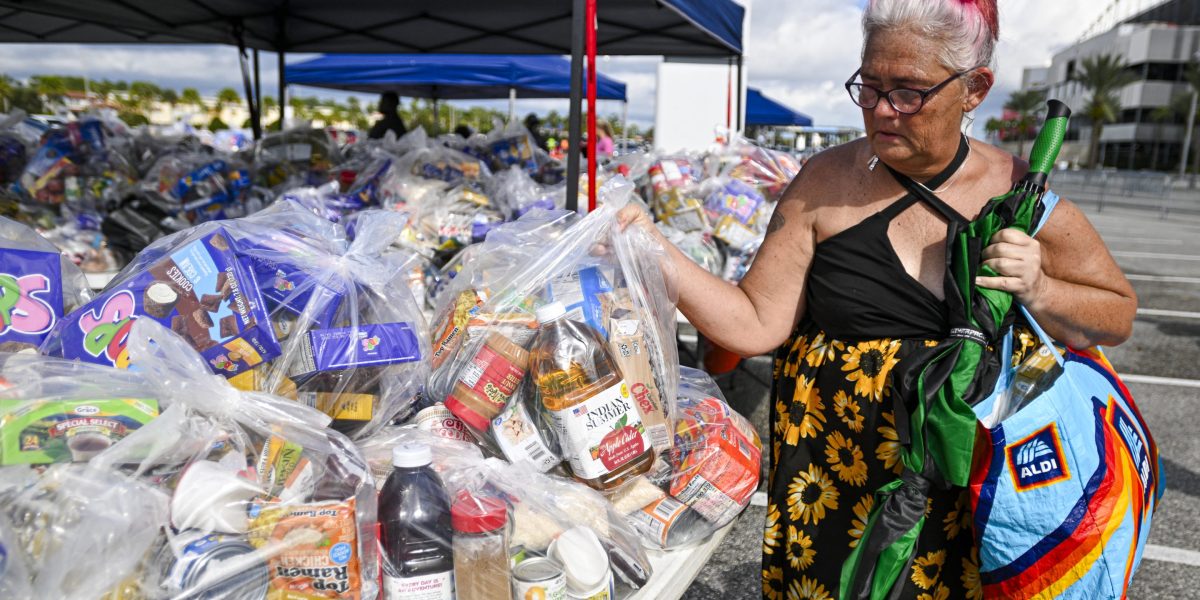
President Donald Trump ’s administration is talking tough about SNAP, saying the government’s biggest food aid program is riddled with fraud that must be stopped.

His appointees are looking at Supplemental Nutrition Assistance Program from an enforcement perspective, seeing fraud as a major and expensive problem, perpetrated by organized criminal organizations, individual recipients and retailers willing to break the laws for profit.

“We know there are instances of fraud committed by our friends and neighbors, but also transnational crime rings,” Jennifer Tiller, a senior advisor to U.S. Agriculture Secretary Brooke Rollins, said in an interview.

Some experts agree that SNAP fraud is a major problem. But there is little publicly available data showing the extent of it, and others who study the program are skeptical about the scale.

“It you’re spending $100 billion on anything, you’re going to have some leakage,” said Christopher Bosso, a professor of public policy and politics at Northeastern University who published a book on SNAP.

The administration leans into fraud allegations

Of the $100 billion spent on SNAP a year, about $94 billion goes to benefits and the rest to administrative costs.

About 42 million people — or 1 in 8 Americans — receive SNAP benefits averaging about $190 per person per month. The number of recipients is in the same ballpark as the number of people in poverty — 36 million by the traditional measure and 43 million under a more nuanced one also used by the federal government.

Under federal law, most households must report their income and basic information every four to six months and be fully recertified for SNAP at least every 12 months.

The Trump administration has demanded that states turn over data on individual SNAP recipients including Social Security numbers, dates of birth and immigration status as part of its effort to root out fraud.

States with Republican governors, plus North Carolina, have complied. Most led by Democrats are pushing back in court, arguing that providing the data would violate recipients’ privacy.

The USDA says that from the records that have been shared, it found 186,000 deceased people — about 1% of participants in those states — receiving benefits and about 500,000 people — about 2.7% — receiving benefits in more than one jurisdiction.

The USDA has not made public detailed reports on the data and has not broken down the estimates by type of alleged fraud. The department also hasn’t answered questions about what portion of any improperly awarded benefits was actually spent and how much sat unclaimed on EBT cards after recipients moved or died.

The department estimated in a letter to the states that have refused to turn over data that the nationwide total combining fraud and undetected errors could be $9 billion a year or more. Democratic-led states responded in a letter last week that states already have systems to catch wrongdoing and that USDA isn’t explaining how it’s crunching the numbers.

Program participants can be perpetrators or victims of fraud

There are a lot of forms of wrongdoing.

SNAP benefits are put on EBT cards that recipients swipe in stores like debit cards. Organized crime groups put skimmers on EBT readers to get information used to make copies of the benefit cards and steal the allotments of recipients — or to use stolen identity information to apply for benefits for fictitious people. A Romanian man who was in the U.S. illegally pleaded guilty last year to skimming cards in California. Authorities say he took more than 36,000 numbers over three years.

A USDA employee pleaded guilty this year to accepting bribes in exchange for providing registration numbers for EBT card readers placed illegally in several New York delis. Authorities said more than $30 million passed through those terminals.

And three people were charged this year in Franklin County, Ohio, accused of using stolen benefits to order big quantities of energy drinks and candy — apparently to resell it.

Mark Haskins, who worked on USDA investigations from 2013 until leaving the department in August as branch chief of a special investigations unit, said there have been cases of retailers running similar operations. Several states are barring using SNAP for some junk food products with policies that kick in as soon as Jan. 1.

Haskins also says some legitimate recipients buy non-grocery items with SNAP benefits by persuading a store employee to ring up the wrong item — generally one that costs more than what’s being bought — or to sell benefit cards. He said he thinks those forms of fraud are more costly than the ones run by organized criminal groups.

Haskins and Haywood Talcove, CEO of LexisNexis Risk Solutions Government, which helps create fraud prevention strategies, both believe fraud costs significantly more than the USDA’s $9 billion estimate.

“The system is corrupt. It doesn’t need a fix here and there, it needs a complete overhaul,” said Haskins, who would like to see fewer retailers in the network and participants having to reapply, even if that makes it harder for qualified people to access benefits.

Advocates and researchers see a different system

The USDA last published a report on SNAP fraud in 2021. It covered what happened in from 2015 through 2017 and found that about 1.6% of benefits were stolen from recipients’ accounts.

The government replaced benefits that were stolen between Oct. 1, 2022 and Dec. 20, 2024. The value of replaced benefits over that time was $323 million — or about 24 cents for every $100 in SNAP benefits, though that’s believed to be an undercount.

It’s reports like those that lead advocates and academics who research SNAP to see fraud, while troublesome, as less than the massive problem the USDA makes it out to be.

Dartmouth College economist Patricia Anderson, who studies food insecurity, said in an email that the maximum benefits for a family of four are about $1,000 a month. “It really takes organized crime that is either stealing from the EBT cards or creating a lot of fake recipients out of whole cloth before the gain for the fraudster really starts to be worth it,” she said.

Jamal Brown, a 41-year-old food stamp participant who lives in Camden, New Jersey, said he’s witnessed people selling benefits to bodegas to get cash. And he’s had his benefits stolen by a skimmer.

He also said he had to deal with benefits being cut off after being told he missed an interview to recertify his need when a county welfare worker didn’t call him as planned.

“It’s always something that goes wrong,” Brown said, “unfortunately.”


Source link

Continue Reading

Business

Lidl launches holiday meal deal for less than $4 per person

Published

on


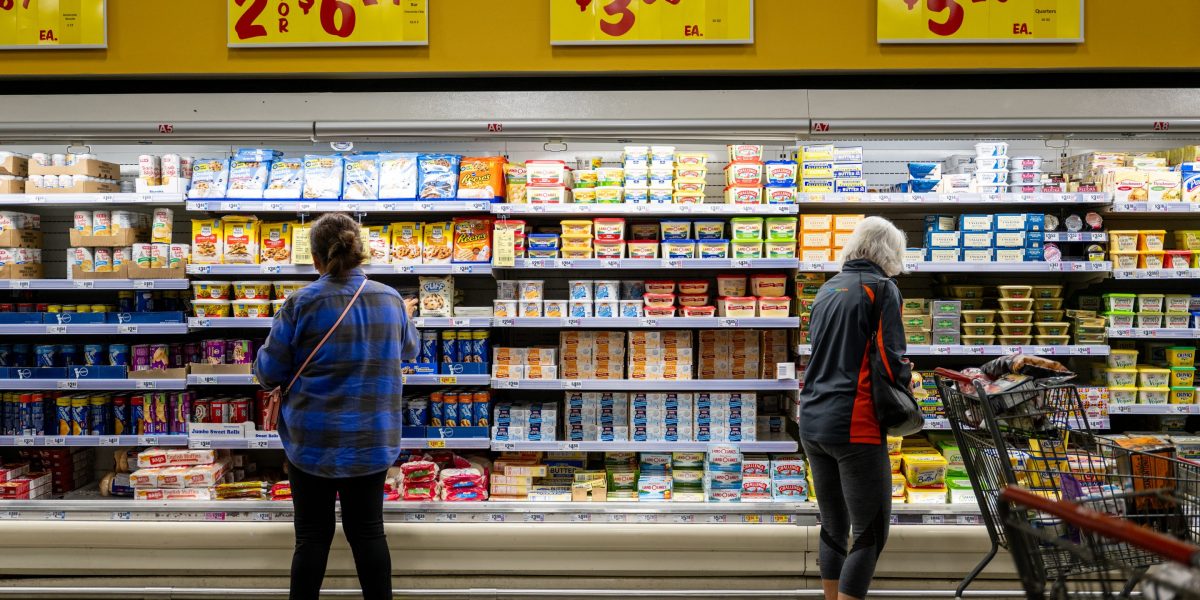
Lidl US is offering its first-ever holiday meal deal that serves 12 people for less than $4 per person. The shopping list includes a ham portion priced at $0.77 per pound, 12 ounces of hawaiian rolls at $1.79, and 7.25 ounces of mac and cheese for $0.56, as well as many other food items like sweet potatoes and ingredients to make a pumpkin pie. The deal runs through Dec. 24, according to the company’s press release

In total, the meal costs $42.66 and feeds 12 people. To qualify for the holiday meal at less than $4 per person, customers must be myLidl members. Other items not part of the holiday meal deal are offered at a discount, including a slightly pricier line featuring premium ham and an assortment of desserts.

“Lidl US is dedicated to making high-quality food accessible to everyone, especially during this time of year,” Lidl US CEO Joel Rampoldt said.

Holiday deals coming at the right time for consumers

The discount deal comes as American shoppers pull back on gift spending for the holidays and voters sour on grocery prices.

In November, President Donald Trump announced he was scrapping tariffs on beef, coffee, and other commodities as Democrats and Republicans alike decried a growing affordability crisis.

Despite inflation slowing since its pandemic spike, food price growth ticked up to 3.1% in September—the latest government data available—slightly outpacing headline inflation at 3% and well above the Fed’s target rate of 2%, according to the Bureau of Labor Statistics.

Still, the economy remains afloat, in large part due to a K-shaped economy, in which wealthier Americans who own financial and property assets have enjoyed the period of elevated inflation, while Americans with less financial means have been struck by sticker shock and rising energy prices. This has led to a downward trend in economic activity from low-income earners and an upward trend in assets owned by the wealthy, creating a “K” shape. 

Mark Zandi, chief economist at Moody’s Analytics, estimated in September the top 10% of earners account for about 49.2% of all U.S. consumer spending—heights that haven’t been reached in data back since 1989. The top 20% accounted for more than 60% of total spending this year.

When announcing another 25 basis points cut last week, Fed Chair Jerome Powell was uneasy about the state of the K-shaped economy.

“As to how sustainable it is, I don’t know,” Powell said.


Source link

Continue Reading

Business

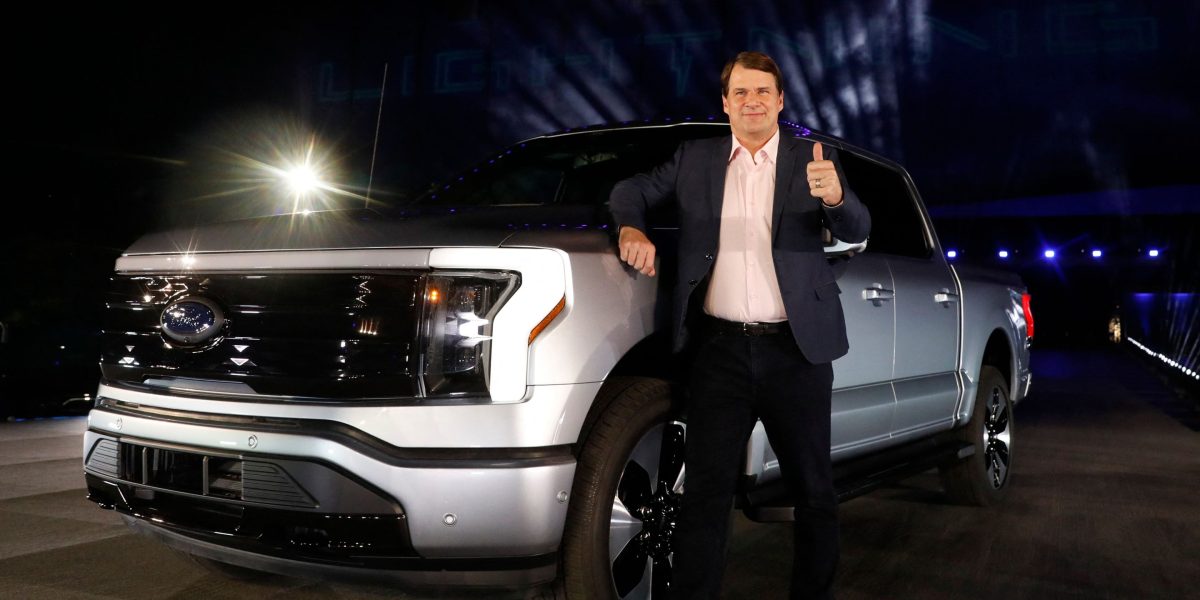
Ford CEO Jim Farley said Trump would halve the EV market by ending subsidies. Now he’s writing down $19.5 billion amid a ‘customer-driven’ shift

Published

on


Several months ago, Ford CEO Jim Farley said ending the nearly two-decade-long EV tax credit would halve America’s electric vehicle market. Now, his company is facing its own reality check.

Ford said this week it would cease production for the original electric F-150 Lightning, which was once touted as a breakthrough for the industry, and shift some of its existing workforce to producing a hybrid version of the pickup with a gas-powered generator called an EREV‚ or an extended range electric vehicle. The automaker said it would be taking a $19.5 billion charge in 2026 as a result of this “customer-driven shift.” 

With that in mind, it’s worth reviewing what Farley said at the Ford Pro Accelerate summit in Detroit in September. EVs will remain a “vibrant industry” going forward, he said, but also “smaller, way smaller than we thought.” The end of the $7,500 consumer incentive would be a game-changer, Farley added, before predicting that EV sales in the U.S. could plummet from to 5% from a previous 10%-12%.

Speaking to CNBC on Monday about Ford’s electric pivot, Farley claimed the EV market had, in fact, already shrunk to around 5% of the U.S. vehicle market. The automaker’s EV lineup was simply out of sync with consumer demand, he said.

“More importantly, the very high end EVs, the 50, 60, 70, $80,000 vehicles, they just weren’t selling,” Farley told CNBC.

Farley had established Ford’s Model E division in 2022 to innovate on electric vehicles and operate as a startup within the more-than-100-year-old automaker. At the same time, Farley told CNBC that he knew when he established Model E, it would be “brutal business-wise.” That may have been an understatement. In under three years, the Model E division has lost $13 billion, more than double Ford’s net income for 2024

As part of its pivot, Farley said the company is listening to consumers.

“We’re following customers to where the market is, not where people thought it was going to be, but to where it is today,” he said. 

This means prioritizing hybrid and semi-gas-powered EREVs over pure-play EVs. These categories are what customers are still interested in, Farley said. 

To be sure, the company says its Model E division will still be profitable, but in 2029, three years after the 2026 date it had previously targeted. By 2030, the company is also predicting that hybrids, semi-gas-powered EREVs, and pure-play EVs will make up half of Ford’s global sales, a stark increase from about 17% now. And most of that, Farley told CNBC, will be “hybrid and EREV.”

This story was originally featured on Fortune.com


Source link

Continue Reading

Business

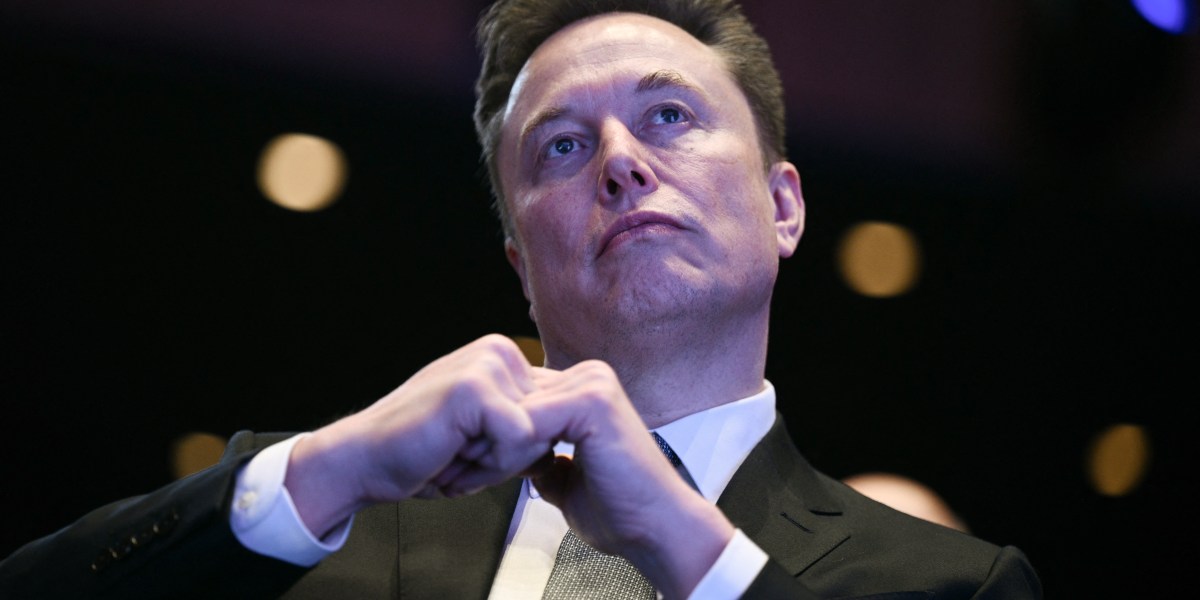
A SpaceX IPO could be the largest public offering of all time—and Elon Musk’s biggest headache

Published

on


The SpaceX public offering could very well be the largest public offering of all time—bringing in even more money than Saudi Aramco’s cosmic $29 billion public listing in 2019. And with the rocketing costs (pun intended) that SpaceX would rack up as it paves the way for more test flights for the mega-rocket Starship it wants to send to Mars, the thousands of additional satellites it intends to send to orbit, and the artificial intelligence data centers it may decide to construct in outer space, some extra billions in cash sure wouldn’t hurt.

But the multibillion-dollar question is: Does Elon Musk really want the headaches that would come with all that money?

Since reports of the potential IPO emerged, would-be buyers have been acting like Christmas came early. Investors—from Wall Street mainstay institutions to the Elon fan-boys who trade shibu inu meme coins in their basements—will clamor to purchase shares in SpaceX on the public markets. The company, which Musk founded in 2002 with a large portion of the money he had made off PayPal, has quite literally built the foundation of America’s private space ecosystem. It is the leading space company in the world and is one of the U.S. government’s most important—and well-paid—private contractors.

Reporting has, thus far, pegged a potential market capitalization at $1.5 trillion, meaning that a public debut would immediately catapult SpaceX into the ranks of the 10 most valuable public companies in the world. Payload Space, which publishes detailed annual revenue research and estimates on SpaceX, forecasted that SpaceX will generate around $15 billion in revenue this year, and between $22 billion to $24 billion in 2026. Musk said earlier this month that SpaceX has been cash flow positive for “many” years. “The SpaceX IPO will be the most anticipated and successful IPO ever, in my opinion,” says Andrew Rocco, a stock strategist at Zacks Investment Research.

Early shareholders who have had to wait for their turn to sell shares in SpaceX’s liquidity events will finally get all the liquidity their hearts desire. And journalists like myself will finally have real visibility into the company’s business and profit breakdowns, and an explanation of what SpaceX has determined are key risks to the business. 

In short, pretty much everyone has a legitimate reason to get excited about a SpaceX IPO—except for Elon Musk.

It’s hard at first to grasp why Musk has suddenly become convinced that taking SpaceX public is worth the scrutiny, criticism, and regulatory burden he has long said he wanted to avoid. He was the leader who took Twitter private, after all, so he could instill sweeping layoffs and changes without the criticisms of the public markets. And, in earlier business history lore, he famously tweeted he was considering taking Tesla private in 2018—a tweet that prompted an SEC investigation and litigation with shareholders. Keeping his other companies private—including Neuralink, xAI, and the Boring Co.—has allowed Musk to run his businesses the way he likes without much public scrutiny.

Tesla—the only one of Musk’s six companies that is publicly traded—has, on several occasions, attracted more short sellers than any other stock in the last several years; Musk’s pay package has been ridiculed and challenged; his tweets have been investigated; and his improbable timelines for product delivery have been picked apart by analysts. Investors punished Tesla stock when Musk stepped away to work in the White House earlier this year, even as SpaceX, thanks to being private, was able to avoid much of the fallout. Indeed, quite the opposite: A share sale this summer pegged SpaceX’s value at $400 billion, while an impending tender offer will double that valuation, according to the Wall Street Journal

The fickle tendencies and demands of public investors haven’t only been inconvenient for Musk at Tesla; he’s sometimes taken them as a personal affront. In a 2017 interview, Musk described a heaping $9 billion short position into Tesla as “hurtful.” In March, during the heat of Musk’s episode running President Trump’s Department of Government Efficiency, Musk admitted on Fox News the personal toll the vandalism to Tesla vehicles and showrooms and Tesla’s plummeting stock price had taken on him.

If SpaceX goes public next year, it will be immediately thrown into the frenzy of Wall Street scrutiny over short-term financials, product delays, and costs. Few analysts will be asking Musk about his long-term plans for colonizing Mars. Surely Musk would never subject SpaceX—the beating heart of his broader cosmic ambitions—to the scrutiny that Tesla endures. That is: unless he felt it was the only option. 

Hitting the ceiling of private markets

It’s hard to imagine that Musk would ever take SpaceX public unless the math depended on it. And, to be sure, the math may not, at least in the short term. SpaceX’s CFO has reportedly told employees that whether and when an IPO would take place was “highly uncertain.”

To date, SpaceX has managed to reel in more capital than most other private companies in history. The company has raised more than $10 billion, according to PitchBook, a figure that, just a decade ago, would have sounded absurd. 

Of course, this is 2025, and—as the private markets have exploded as institutional investors like endowments, pension funds, mutual funds, and sovereign wealth funds have sought outsized returns in venture capital funds—companies like the AI juggernaut Musk cofounded, OpenAI, and TikTok-owner ByteDance have reached valuations in the hundreds of billions that are well above those of most public companies. An $800 billion tender offer would put SpaceX among the 20 most valuable public companies in the U.S., right alongside JPMorgan Chase, which has an $880 billion market cap, and Walmart, which was worth $931 billion at market close on Monday. 

But the private markets have their limits. While there may be some $2 trillion to $3 trillion in capital sitting on the sidelines, available to deploy into private companies—which is nothing to sneeze at—there is somewhere around $100 trillion to $150 trillion that has been invested in global equities, according to PitchBook emerging technology analyst Ali Javaheri. 

“SpaceX has effectively hit the ceiling of what private markets can support,” Javaheri says. “Financing a multi-decade, industrial-scale roadmap simply doesn’t map cleanly onto private fund structures.”

In pure numbers, reports peg discussions for a more than $30 billion raise for SpaceX, which would be—in a single listing—about three times the capital the company has raised since its inception in 2002. To be clear, not all that money would go to fund future SpaceX operations. In an IPO, it all comes down to which shareholders choose to float shares, and it remains to be seen how many shares—if any—SpaceX would list itself.

But it’s hard to imagine a scenario where SpaceX didn’t raise any money at all, or was simply under pressure from shareholders to give them an opportunity to cash out. The company does regular liquidity events, and there is never a shortage of demand. SpaceX’s board includes personal confidants as well as investors who have already made a fortune off of Musk’s various companies, and it would seem unlikely they’d be putting any kind of pressure on Musk to take the company public.

Given that SpaceX is already profitable, and therefore likely doesn’t need immediate cash to continue operation, SpaceX must need capital for some of its impending priorities.

If you follow Musk’s X account and public comments closely, he has suggested a series of places that money might go: the rollout of Starlink for mobile devices, data centers in space, Starlink factories on the moon, and a Starlink-esque satellite network around Mars. There’s the whole defense business, Star Shield, which we know so little about. SpaceX is also working on new Starship launch pads.

All of this will cost money—and a lot of it.

More scrutiny going public

Preparing SpaceX for an IPO would be a headache for Musk. For one, SpaceX would probably need to make some adjustments to its board. As we learned with Tesla early last year, there will be skepticism over whether its members are adequately independent—or if their ties are too close to the founder.

In the heat of the litigation over Musk’s compensation package agreement with Tesla, a judge determined that the process for approval for Musk’s compensation was “deeply flawed,” due to Musk’s close personal and financial ties with the members of the compensation committee, which included SpaceX board member Antonio Gracias.

Based on Fortune’s reporting, SpaceX’s board currently has six members. In addition to Musk and Tesla board member Gracias, who is an investor at Valor Equity Partners and a close friend of Musk; there is Luke Nosek, who was also a PayPal cofounder; Steve Jurvetson, one of the original SpaceX investors and a longtime friend of Musk; and Gwynne Shotwell, who is an insider as president and COO of SpaceX. The only truly independent board member seems to be Donald Harrison, who is president of global partnerships and corporate development at Google. That board composition could expose SpaceX to pressure from investors and potential litigation if it went public.

It’s “heavily weighted toward insiders and Musk loyalists,” PitchBook’s Javaheri says. “I would expect a meaningful expansion of truly independent board members ahead of any listing.”

There’s also ongoing litigation that would draw scrutiny should SpaceX start having to explain it in annual reports. The company is currently fighting a case with the National Labor Relations Board, over allegations from eight engineers who say they were fired for contributing to and signing an open letter that criticized Musk. In March 2025, an appeals court determined that the case could proceed, after SpaceX had attempted to block the Board from pursuing its claims.

Musk’s compensation plan at SpaceX—along with the compensation of all the other top executives, like Shotwell—will become public, too. And, depending on what those plans look like, they could end up provoking more public, and legal, attention.

To infinity and beyond

In 2018, Musk had the phrase “DON’T PANIC” written on the touchscreen of a Tesla Roadster that SpaceX launched into space on board the Falcon Heavy it was testing. It was in homage to one of his favorite books, A Hitchhiker’s Guide to the Galaxy, in which that message was written on the cover of a  guidebook meant to reassure confused space travelers who might be frightened by the chaotic universe they suddenly found themselves in.

As companies graduate from the private markets to the public, executives must start spending as much time reassuring their shareholders as they do running their businesses. There is a slowdown that happens when you have to explain and answer for the decisions you make, versus just looping in a few people on your board. For people like Musk—someone who will sometimes demand that engineers figure out how to catch a rocket with chopstick arms—there is a constant tension between the predetermined rules and bureaucracy of regulation and the desire to move faster, dream bigger.

At Tesla, Musk must balance his ultimate vision for humanoid robots and self-driving vehicles with quarterly metrics and manufacturing costs. A SpaceX IPO will almost certainly hinder the speed at which his plans for Mars become a reality. At the same time, it may be the money and financing generated via that IPO that is the only means to make it possible.

But, for Musk, it will be a sacrifice. He will have to spend an increasing amount of his time saying the same thing to his investors, over and over: DON’T PANIC.


Source link

Continue Reading

Trending

Copyright © Miami Select.