Connect with us

Business

Trump slams Fed’s third-straight rate cut as ‘too small,’ saying he wishes it was twice as large

Published

on


The Federal Reserve reduced its key interest rate by a quarter-point for the third time in a row Wednesday but signaled that it may leave rates unchanged in the coming months.

The cut decreased the Fed’s rate to about 3.6%, the lowest it has been in nearly three years. Lower rates from the Fed can bring down borrowing costs for mortgages, auto loans, and credit cards over time, though market forces can also affect those rates.

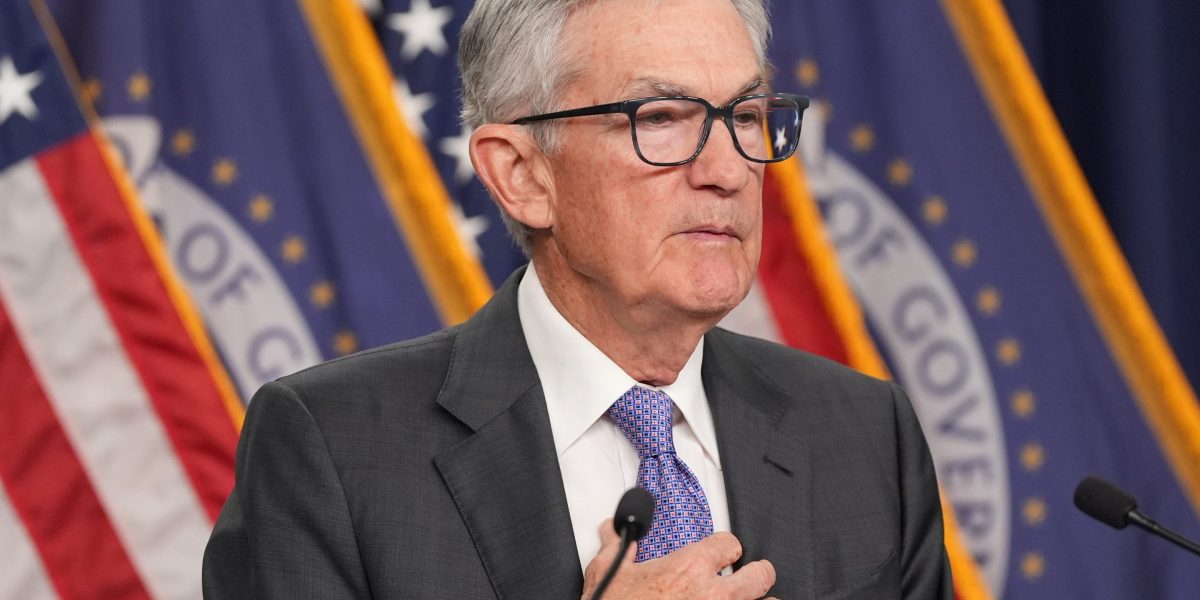
Chair Jerome Powell suggested at a news conference that after six rate cuts in the past two years, the central bank can step back and see how hiring and inflation develop. In a set of quarterly economic projections, Fed officials signaled they expect to lower rates just once next year.

Fed officials “will carefully evaluate the incoming data,” Powell said, adding that the Fed is “well positioned to wait to see how the economy evolves.”

The chair also said that the Fed’s key rate was close to a level that neither restricts nor stimulates the economy, a significant shift from earlier this year, when he described the rate as high enough to slow the economy and quell inflation. With rates closer to a more neutral level, the bar for further rate cuts is likely higher that it was this fall.

“We believe the labor market will have to noticeably weaken to warrant another rate cut soon,” Ryan Sweet, global chief economist at Oxford Economics, said.

Three Fed officials dissented from the move, the most dissents in six years and a sign of deep divisions on a committee that traditionally works by consensus. Two officials voted to keep the Fed’s rate unchanged: Jeffrey Schmid, president of the Kansas City Fed, and Austan Goolsbee, president of the Chicago Fed. Stephen Miran, whom Trump appointed in September, voted for a half point cut.

December’s meeting could usher in a more contentious period for the Fed. Officials are split between those who support reducing rates to bolster hiring and those who’d prefer to keep rates unchanged because inflation remains above the central bank’s 2% target. Unless inflation shows clear signs of coming fully under control, or unemployment worsens, those divisions will likely remain.

“What you see is some people feel we should stop here and we’re in the right place and should wait, and some people think we should cut more next year,” Powell said.

A stark sign of the Fed’s divisions was the wide range of cuts that the 19 members of the Fed’s rate-setting committee penciled in for 2026. Seven projected no cuts next year, while eight forecast that the central bank would implement two or more reductions. Four supported just one. Only 12 out of 19 members vote on rate decisions.

President Donald Trump on Wednesday criticized the cut as too small, and said he would have preferred “at least double.” Trump could name a new Fed chair as soon as later this month to replace Powell when his term ends in May. Trump’s new chair is likely to push for sharper rate cuts than many officials will support.

Stocks jumped in response to the Fed’s move, in part because some Wall Street investors expected Powell to be more forceful in shutting down the possibility of future cuts. The broad S&P 500 stock index rose 0.7% and closed near an all-time high reached in October.

Powell was also optimistic about the economy’s growth next year, and said that consumer spending remains resilient while companies are still investing in artificial intelligence infrastructure. He also suggested growing worker efficiency could contribute to faster growth without more inflation.

Still, Powell said the committee reduced borrowing costs out of concern that the job market is even weaker than it appears. While government data shows that the economy has added just 40,000 jobs a month since April, Powell said that figure could be revised lower by as much as 60,000, which would mean employers have actually been shedding an average of 20,000 jobs a month since the spring.

“It’s a labor market that seems to have significant downside risks,” Powell told reporters. “People care about that. That’s their jobs.”

The Fed met against the backdrop of elevated inflation that has frustrated many Americans, with prices higher for groceries, rents, and utilities. Consumer prices have jumped 25% in the five years since COVID.

“We hear loud and clear how people are experiencing really high costs,” Powell said Wednesday. “A lot of that isn’t the current rate of inflation, a lot of that is e mbedded high costs due to higher inflations in 2022-2023.”

Powell said inflation could move higher early next year, as more companies pass tariff costs to consumers as they reset prices to start the year. Inflation should decline after that, he added, but it’s not guaranteed.

“We just came off an experience where inflation turned out to be much more persistent than anyone expected,” he said, referring to the spike in 2022. “Is that going to happen now? That’s the risk.”

The Fed’s policy meeting took place as the Trump administration moves toward picking a new Fed chair to replace Powell when his term finishes in May. Trump’s nominee is likely to push for sharper rate cuts than many officials may support.

Trump has hinted that he will likely pick Kevin Hassett, his top economic adviser. But on Wednesday, Trump said he would meet with Kevin Warsh, a former Fed governor who has also been on the short list to replace Powell.

Trump added that he wants someone who will lower interest rates. “Our rates should be the lowest rates in the world,” he said.

A government report last week showed that overall and core prices rose 2.8% in September from a year earlier, according to the Fed’s preferred measure. That is far below the spikes in inflation three years ago but still painful for many households after the big run-up since 2020.

Adding to the Fed’s challenges, job gains have slowed sharply this year and the unemployment rate has risen for three straight months to 4.4%. While that is still a low rate historically, it is the highest in four years. Layoffs are also muted, so far, as part of what many economists call a “low hire, low fire” job market.

The Fed typically keeps its key rate elevated to combat inflation, while it often reduces borrowing costs when unemployment worsens to spur more spending and hiring.

Powell will preside over only three more Fed meetings before he steps down. On Wednesday, he was asked about his legacy.

“I really want to turn this job over to whoever replaces me with the economy in really good shape,” he said. “I want inflation to be under control, coming back down to 2%, and I want the labor market to be strong.”

___

Associated Press Writers Collin Binkley and Alex Veiga in Los Angeles contributed to this report.


Source link

Continue Reading

Business

Bittensor just halved its supply. Here’s what that means

Published

on


Early on Monday, the supply of new cryptocurrency tied to Bittensor—a decentralized network of AI projects—dropped by half. The halving was the first the currency has experienced and came about by design, reflecting how Bittensor shares the same anti-inflationary architecture as Bitcoin. The event also serves a milestone for one of the most novel and ambitious cryptocurrencies to launch in years.

Currently, Bittensor has a market capitalization of $2.7 billion, according to the crypto analytics site CoinGecko. That pales in comparison to Bitcoin but is number 50 on the list of most popular cryptocurrencies. It also enjoys the backing of influential crypto billionaire Barry Silbert. At a time when AI is dominating the economy and the political discourse, Bittensor offers the promise of a decentralized alternative to Big Tech—provided it can keep picking up traction in the crypto world and beyond, and if its price holds up following the new drop in supply.

Here’s an overview of exactly what Bittensor is, who’s betting on its success, and what some crypto prognosticators say will come next after its halving:

What is Bittensor?

Founded by Jacob Steeves, a former Google engineer, in 2019, Bittensor is designed to repurpose the mechanics of Bitcoin for AI. In the world of Bitcoin, owners of fleets of computer servers leverage their processing power to process and secure cryptocurrency transactions. This is called Bitcoin mining.

Similarly, Steeves devised a system where fleets of computers compete to process AI computations. In exchange for their processing power, these “miners” receive Bittensor’s cryptocurrency, TAO. In aggregate, Bittensor is like a decentralized server farm for AI. “How did we create a supercomputer that is bigger than any government or corporation can create with a centralized entity?” Steeves said to Fortune in 2024.

Who’s betting on Bittensor?

Bittensor isn’t the most easily understood tech, but the protocol has had some serious backers. In 2024, the crypto venture capitalist Polychain held around $200 million of the cryptocurrency, another crypto VC Dao5 held $50 million, and the crypto conglomerate Digital Currency Group had around $100 million

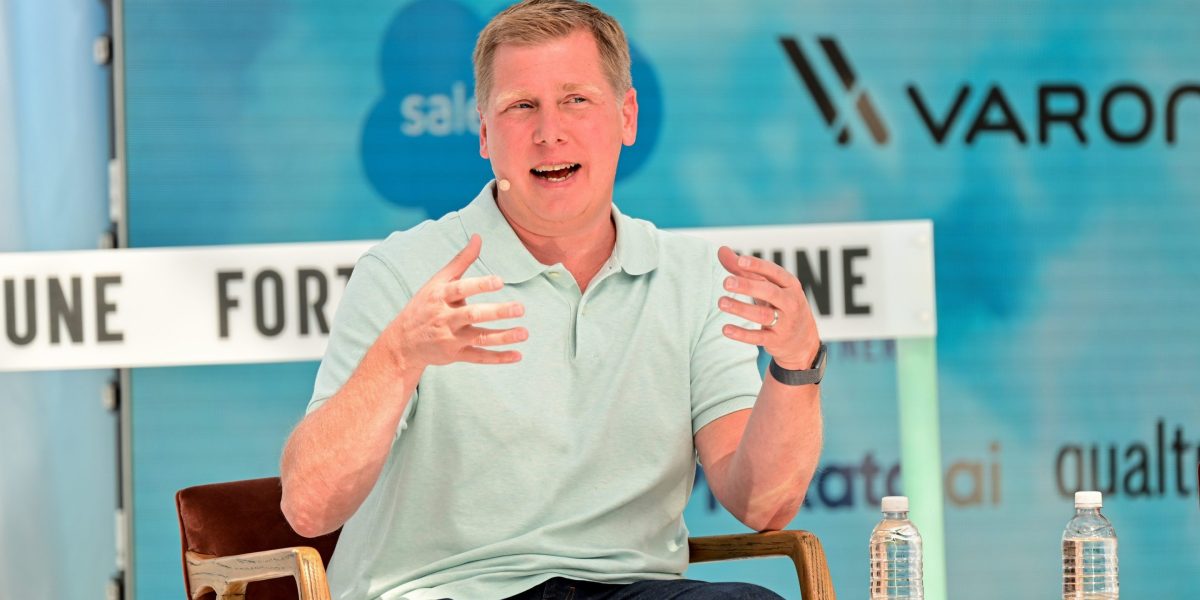
Barry Silbert, the billionaire founder of Digital Currency Group, is such a believer in Bittensor that he’s founded his own startup called Yuma that’s dedicated to the cryptocurrency. “It is the thing that I’ve gotten most excited about since Bitcoin,” he said.

When did Bittensor halve and what will come next?

On Monday at 8:30 a.m. New York time, Bittensor reduced the amount of daily tokens it issues from 7,200 to 3,600. Like Bitcoin, the supply of Bittensor’s cryptocurrency is capped at 21 million.

In a research note, analysts at Grayscale, a crypto ETF issuer and a subsidiary of Barry Silbert’s Digital Currency Group, said that the halving could be a “positive catalyst for price.” Just a week before, the ETF issuer announced that trading in the U.S. had begun for a vehicle that gives investors exposure to Bittensor.

Sami Kassab, managing partner at Unsupervised Capital, a hedge fund dedicated to Bittensor, was similarly optimistic. “Halvings aren’t complicated. Historically, halvings have been bullish because there’s simply less inventory hitting the market, “ he said. “The same logic applies to TAO.”

Still, over the past 24 hours, the price of Bittensor’s cryptocurrency has dropped about TK% to $TK. That doesn’t mean the halving was a bust since the market often prices in such events ahead of time and, in the case Bitcoin, has often spurred subsequent booms. When Bitcoin last halved in April 2024, its price hovered around $65,000 shortly afterwards. But, by the end of the year, the world’s largest cryptocurrency had rocketed to above $100,000. 

This is Bittensor’s first halving. Its next will follow in late 2029, according to current projections.


Source link

Continue Reading

Business

Airbnb CEO Brian Chesky says he went to ‘night school’ for an hour every day with Barack Obama

Published

on


To build Airbnb into a billion-dollar business, Brian Chesky sometimes worked gruesome 100-hour weeks. However, on top of that, he would regularly carve out time to pick the brains of one of the most important people in the world: former President Barack Obama.

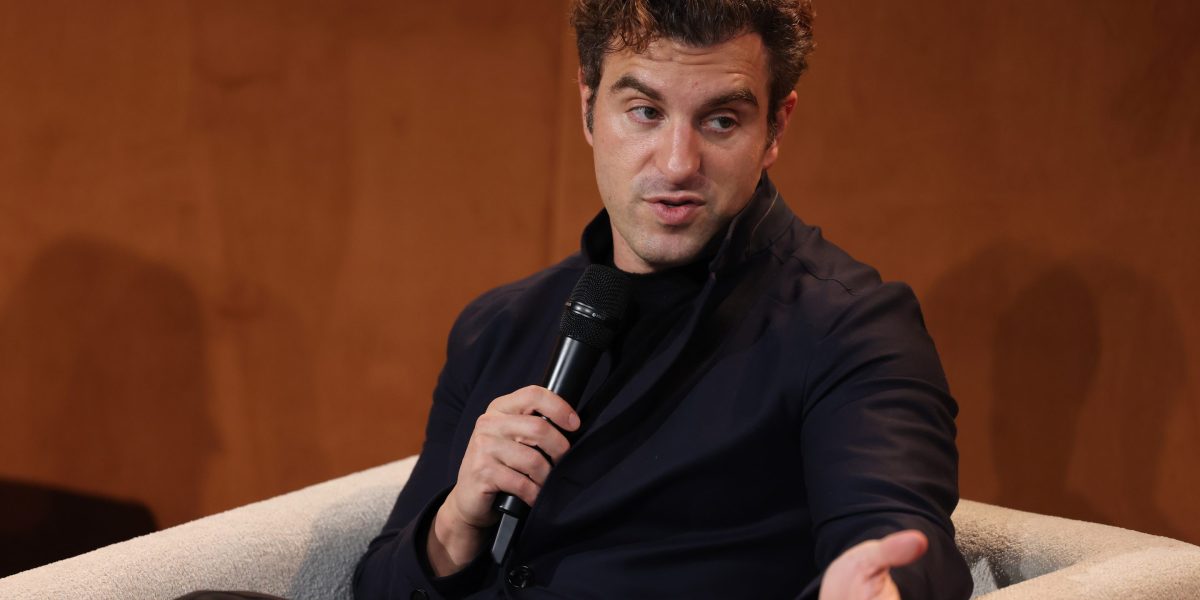
“At one point in 2018, we had a standing one-hour call every week, and I basically had my day job during the day, and then I had my night school with the former president, where I would get these assignments, but it changed my life,” Chesky has just revealed.

Speaking on Michelle Obama’s podcast IMO, he added: “I just was really shameless about reaching out to him, asking for advice, asking for mentorship, and he would meet with me, and he’d give me advice.” 

He recalled the 44th president of the United States advised him to avoid becoming like other leaders who are effectively “self-driving cars” without intention. Instead, he should always be thinking long and hard about relationships—with his friends, his success, and his company—and be more active with the impact he wants to make.

Fortune reached out to Chesky and former President Obama for comment. 

Finding a mentor in a president

After building Airbnb into a household name, Chesky faced a problem: He still wasn’t satisfied—nor necessarily happy. 

“The thing about being very successful in tech and making a lot of money and all this is no one ever told me how lonely it would become,” Chesky said to Michelle and Robinson. “And I started realizing, well, it’s weird, I had old friends that were middle-class, and I’ll be honest, a lot of them seemed happier than me at that point in my life.”

And he credits former President Obama with helping him realize that how he was feeling was completely normal: that “the more success you get, the more isolated you get.” 

“People dream of success, but what they don’t realize is a lot of with success comes disconnection to your past, to yourself, to your friends, and I think a lot of what I’ve tried to do the last handful of years is to reconnect, to not live a life of isolation,” Chesky said. 

Obama’s wisdom to Chesky was simple: He needed to be more hands-on with his relationships. That means instead of texting or calling a close friend once a year, stay constantly connected with them. Chesky said it’s a lesson he translated into his work as the leader of Airbnb.

“He told me something that I’ll never forget,” Chesky said. “He said you should institutionalize your intentions, so that even when you’re a public company, you can make sure not to compromise your vision. And what he meant by that, I think, was that you should be more thoughtful about what you’re making, why you’re making it, and the impact of what you’re making is on people.”

Chesky admitted Obama’s advice has made a “really, really big difference” at Airbnb. And while it may sound odd for a former President to effectively give a CEO homework, it’s something nothing new for Obama, who spent over a decade in the classroom teaching constitutional law at the University of Chicago before his jump into the political arena.

The ‘life hack’ to find success: Reach out to an old friend

The lessons learned from Chesky and President Obama’s relationship on finding success can be summarized into two simple steps: Seek out mentors and have friends outside of social media.

“For young people, the number one thing they need to learn how to do is how to learn,” Chesky said. “And some of the best ways to learn are from other people, and some of the best ways to learn from people are, again, in the real world.”

Moreover, rekindling old relationships is among what Chesky calls a “simple life hack” to make life happy.

“I think the vast majority of people, if they reach out to someone, someone will want to help them,” he added. “They reach out to an old friend, the old friend will want to reach back out to them, and that is the path for reconnection. It’s a path for relationships, and it’s a path for purpose.”

A version of this story originally published on Fortune.com on May 27, 2025.

More on career advice:

Join us at the Fortune Workplace Innovation Summit May 19–20, 2026, in Atlanta. The next era of workplace innovation is here—and the old playbook is being rewritten. At this exclusive, high-energy event, the world’s most innovative leaders will convene to explore how AI, humanity, and strategy converge to redefine, again, the future of work. Register now.


Source link

Continue Reading

Business

Why Birkin bags are a better investment than gold, according to an Hermès expert

Published

on


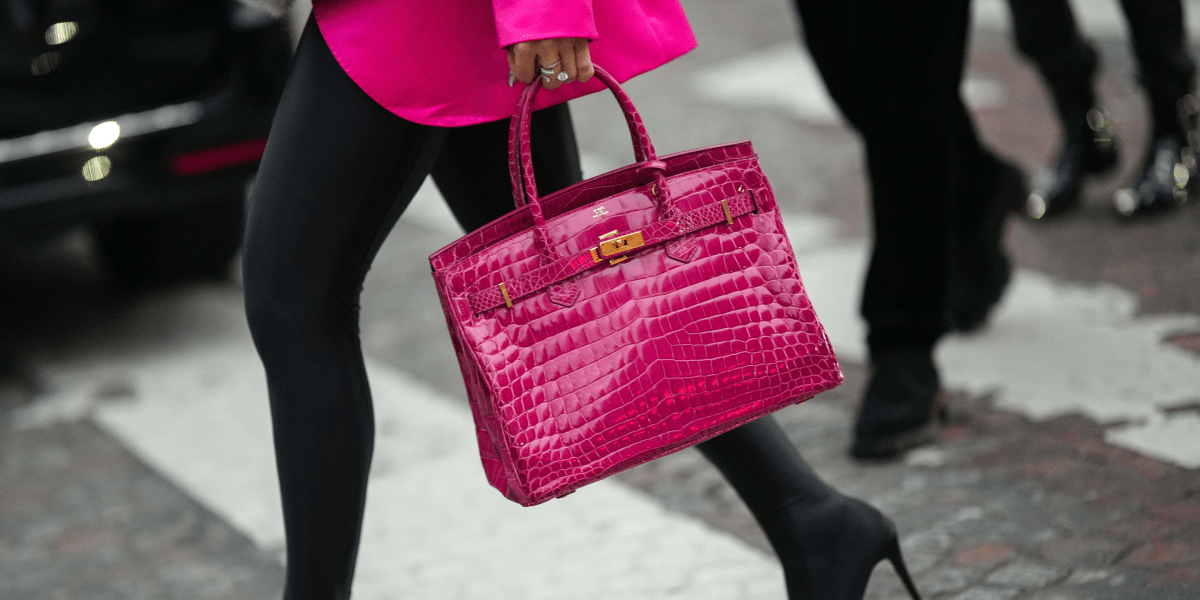
The value of a Birkin bag skyrockets from the moment it leaves the Hermès store.

That’s partly because not just any regular person can buy the bag. Only customers with a sizable purchase history at the brand are offered the opportunity to buy a “quota bag,” such as a Birkin or a Kelly.

But even Hermès’ most loyal shoppers don’t get to choose the exact Birkin model they want. The brand allows boutiques to purchase a select number of Birkins per season, and the style of the bags is rarely known ahead of time, according to Sotheby’s. The notoriously opaque process, nicknamed the Hermès Game, has only generated more desire for the bag—and even became the subject of a class-action lawsuit.

Looking to sidestep the Hermès Game and score the bag their heart desires, handbag enthusiasts shell out tens of thousands of dollars on the resale market. Thanks to its exclusivity and its status as an investment piece, a Birkin bag’s value is much higher than its sticker price of around $12,000.

“The resale value of particularly the Birkin and Kelly bags over the past 10 years has outpaced gold,” James Firestein, founder of luxury resale and authentication platform OpenLuxury, told Fortune.

Prior to starting his own company in 2022, Firestein spent a decade as a luxury authenticator, including two years as the director of authentication at Rebag. Over the course of his career, Firestein has seen a “perfect storm” of factors “bolster this wild ride upward.”

“I know several instances where people have doubled their money based on buying it 10 years ago, and reselling it today in pristine condition,” he said.

‘Like buying a Picasso’

For some buyers, a Birkin bag isn’t a high-end piece of arm candy, but a worthy investment. Of the Birkin owners he has worked with, Firestein estimates 75% actually use the bags, while the remaining 25% keep them in storage as investments. 

“It’s similar to buying a Piccaso and holding it in your home, because you can look at it, you can enjoy it,” Firestein said. “But then you ship it off in a couple of years and trade it for something else.”

The value of an Hermès bag can increase dramatically over time, Firestein said, depending on its color, material, and condition. Secondhand demand is so high partly because the resale market offers shoppers more options than the Hermès store, where customers are allowed one quota bag per year, and rarely get to choose the exact model they want. 

Firestein said the steepest price increase he has seen was a Black Togo 30 Birkin that doubled in value in five years. But price increases can be driven by trend cycles and changing demand—so it can be a “gamble,” he said.

“I wouldn’t say jump in with both feet at this point,” he said. “But if you got it in 2012, and you sold in 2019, that’s different.”

The Birkin legend

Before its handbags were spotted on the arms of Jane Birkin and Cardi B, Paris-based Hermès began in 1837 as a maker of horse harnesses. Over the course of six generations, it became a ready-to-wear and leather-goods powerhouse renowned for its craftsmanship.

As for the iconic Birkin bag, here’s how the legend goes: In 1984, the late actress Jane Birkin was seated next to Jean-Louis Dumas, executive chairman of Hermès at the time, on a flight from Paris to London. Birkin said she couldn’t find a bag that suited her needs as a young mother—so she sketched her dream design on a sick bag, according to CNN. Dumas infused the bag with equestrian elements, giving it the signature Hermès look.

“It was more of a subtle old-money brand,” Firestein said of Hermès’ status prior to the Birkin craze.

The Birkin slowly reached “it bag” status thanks to being spotted on the arm of many celebrities in the 1990s and 2000s—and on Sex and the City. But it wasn’t until the 2010s, when the online resale market reached the masses, that the hype went stratospheric.

Firestein credits e-commerce with enabling shoppers to buy a secondhand Hermès bag from any part of the world. Meanwhile, online forums allowed people to share the secrets of the Hermès Game once exclusive to the 1%. The Birkin became a collector’s item over time—and underground demand continues to fuel the resale market.

What’s in the bag?

Some people may desire Birkin bags because they’re so hard to get—but fans also celebrate the brand’s artisan manufacturing and 200-year legacy of craftsmanship.

Unlike brands owned by LVMH and Kering, which often share factories, Hermès only uses its own factories, says Firestein. Conglomerate-owned brands like Balenciaga, Gucci, and Saint Laurent also tend to use more mass-market materials that are cheaper and easier to get, Firestein explains.

“Their leather factories are only Hermès affiliates, and they only create Hermès leathers,” he said. “So you’re buying into part of that heritage, but then you’re also buying into a higher-quality material that they’ve been using for many, many years.”

Compared to other brands, Hermès’ quality is “top-tier,” Firestein said. And though he works with 43 different luxury brands, he admits to having an affinity for Hermès bags.

“They’re made to last for generations,” Firestein said. “And they’re just beautiful luxury objects at the end of the day—almost like sculptures.”

A version of this story published on Fortune.com on March 27, 2024.

Join us at the Fortune Workplace Innovation Summit May 19–20, 2026, in Atlanta. The next era of workplace innovation is here—and the old playbook is being rewritten. At this exclusive, high-energy event, the world’s most innovative leaders will convene to explore how AI, humanity, and strategy converge to redefine, again, the future of work. Register now.


Source link

Continue Reading

Trending

Copyright © Miami Select.