Connect with us

Fashion

Trump shook up global trade this year; some uncertainty may persist in 2026

Published

on


By

Reuters

Published


December 22, 2025

President Donald Trump‘s return to the White House in 2025 kicked off a frenetic year for global trade, with waves of tariffs on U.S. trading partners that lifted import taxes to their highest since the Great Depression, roiled financial markets and sparked rounds of negotiations over trade and investment deals. 

Reuters

His trade policies – and the global reaction to them – will remain front and center in 2026, but face some hefty challenges. 

Trump’s moves, aimed broadly at reviving a declining manufacturing base, lifted the average tariff rate to nearly 17% from less than 3% at the end of 2024, according to Yale Budget Lab, and the levies are now generating roughly $30 billion a month of revenue for the U.S. Treasury.

They brought world leaders scrambling to Washington seeking deals for lower rates, often in return for pledges of billions of dollars in U.S. investments. Framework deals were struck with a host of major trading partners, including the European Union, the United Kingdom, Switzerland, Japan, South Korea, Vietnam and others, but notably a final agreement with China remains on the undone list despite multiple rounds of talks and a face-to-face ⁠meeting between Trump and Chinese leader Xi Jinping.

The EU was criticized by many for its deal for a 15% tariff on its exports and a vague commitment to big U.S. investments. France’s prime minister at the time, Francois Bayrou, called it an act of submission and a “sombre day” for the bloc. Others shrugged that it was the “least bad” deal on offer.

Since ⁠then, European exporters and economies have broadly coped with the new tariff rate, thanks to various exemptions and their ability to find markets elsewhere. French bank Societe Generale estimated the total direct impact of the tariffs was equivalent to just 0.37% of the region’s GDP.

Meanwhile, China’s trade surplus defied Trump’s tariffs to surpass $1 trillion as it succeeded in diversifying away from the U.S., moved its manufacturing sector up the value chain, and used the leverage it has gained in rare earth minerals – crucial inputs into the West’s security scaffolding – to push back against pressure from the U.S. or Europe to ‍curb its surplus.

What notably did ‌not happen was the economic calamity and high inflation that legions of economists predicted would unfold from Trump’s tariffs.

The U.S. economy suffered a modest contraction in the first quarter amid a scramble to import goods ⁠before tariffs took effect, but quickly rebounded and continues to grow at an above-trend ‌pace thanks to a massive artificial intelligence investment boom and resilient consumer spending.

The International Monetary Fund, in fact, twice lifted its global growth outlook in the months following Trump’s “Liberation Day” tariffs ‌announcement in April as uncertainty ebbed and deals were struck to reduce the originally announced rates. 

And while U.S. inflation remains somewhat elevated in part because of tariffs, economists and policymakers now expect the effects to be more mild and short-lived than feared, with cost sharing of the import taxes occurring across the supply chain among producers, importers, retailers and consumers.

A big unknown for 2026 is whether many of Trump’s tariffs are allowed to stand. A challenge to the novel legal premise for what he branded as “reciprocal” tariffs on goods from individual countries and for levies imposed on China, Canada and Mexico tied ‍to the flow of fentanyl into the U.S. was argued before the U.S. Supreme Court in late 2025, and a decision is expected in early 2026.

The Trump administration insists it can shift to other, more-established legal authorities to keep tariffs in place should it lose. But those are more cumbersome and often limited in scope, so a loss at the high court for the administration might prompt renegotiations of the deals struck so far or usher in ‌a new era of uncertainty about where the tariffs will ⁠end up. 

Arguably ​just as important for Europe is what is happening with its trading relationship with China, for years a reliable destination for its exporters. The depreciation of the yuan and ⁠the gradual move up the ​value chain for Chinese companies have helped China’s exporters.

Europe’s companies meanwhile have struggled to make further inroads into the slowing domestic Chinese market. One of the key questions for 2026 is whether Europe finally uses tariffs or other measures to address what some of its officials are starting to call the “imbalances” in the China-EU trading ties.

Efforts to finally cement a U.S.-China deal loom large as well. A shaky detente reached in this year’s talks will ​expire in the second half of 2026, and Trump and Xi are tentatively set to meet twice over the course of the year.

And lastly, the free trade deal with the two largest U.S. trading partners – Canada and Mexico – is up for review in 2026 amid uncertainty over whether Trump will let the pact expire or try to retool it more ⁠to his liking. 

“It seems like the administration is rowing back on its harshest stance on tariffs in order ⁠to mitigate some of the inflation/pricing issues,” Chris Iggo, chief investment officer for Core Investments and chair of the Investment Institute at AXA Investment Managers, said on a 2026 outlook call.

“So less of a concern to markets. Could be marginally helpful to the inflation outlook if tariffs are reduced or at least not further increased.”  Ahead of midterm elections later in the year,  “a confrontational trade war with China would not be great – a deal would be politically and economically better for the U.S. outlook,” he said.

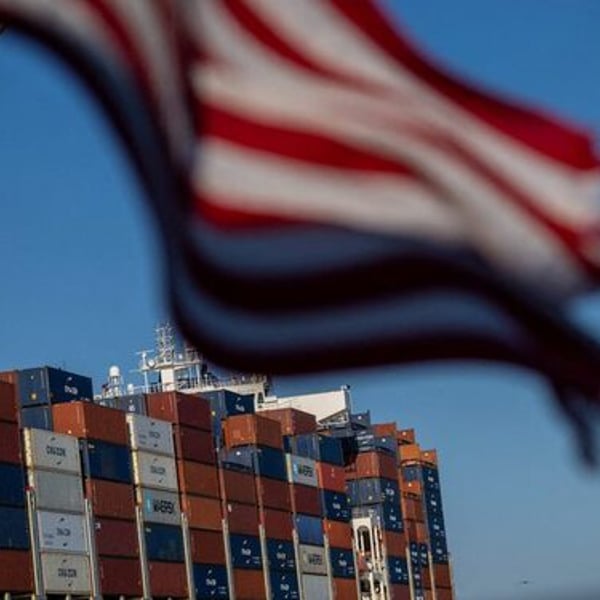
© Thomson Reuters 2025 All rights reserved.


Source link

Continue Reading

Fashion

West End events and store initiatives boost November/December shopper visits

Published

on


Published


December 22, 2025

Super Saturday may not have been that super footfall-wise across the UK, but the West End of London has been seeing strong footfall in recent weeks.

Photo: Pexels/Public domain

The New West End Company (NWEC) told the BBC that central London has diverged from the national trend with footfall up 9% in the seven days before Black Friday week, while in the week itself it was up 4.1%. The week that kicked off with Cyber Monday also saw a 6.1% footfall rise.

Meanwhile the 6-7 December weekend was also “busy” as Regent Street was temporarily closed to traffic and Oxford Street hosted live performances.

Those two events saw significant footfall rises. Regent Street’s pedestrianisation, for instance, saw footfall rising 33.7% year on year and the live performances on Oxford Street saw it up 25.1%.

“Both events featured on-street festive activations and in-store offers and experiences, drawing crowds and causing footfall to surge by nearly a third across the weekend,” a spokesperson told the news organisation.

NWEC also told the BBC that it has been seeing “real momentum” overall during the period.

Its statements come as retailers in the area pull out all the stops to attract more people through their doors. Significant moves includes the Disney takeover at Selfridges; John Lewis opening its temporary VIP members lounge in its flagship; last weekend’s special appearance by Lewis Hamilton at Lululemon’s Regent Street store; Penhaligon’s upgraded reopening; the latest Michael Kors opening; and multiple events and debuts on Bond Street, Carnaby Street and beyond.

Copyright © 2025 FashionNetwork.com All rights reserved.


Source link

Continue Reading

Fashion

Coty appoints former Procter & Gamble executive Markus Strobel as interim chief executive

Published

on


By

AFP

Published


December 22, 2025

US cosmetics group Coty announced on Monday that it has appointed Markus Strobel as interim chief executive officer, effective January 1.

Markus Strobel – Coty

Markus Strobel, who spent 33 years of his career at Procter & Gamble, will take the reins at Coty “at a pivotal moment for the company,” according to a press release by Coty, “as a strategic review of the consumer beauty business is underway.”

Markus Strobel succeeds both Peter Harf, who will retire from Coty’s Board of Directors after more than thirty years of service, and Sue Nabi, who will step down as CEO after a five-year term, the release said.

“Harf’s leadership has helped shape Coty into a global beauty leader, while Nabi has overseen the launch of several major hit fragrances, including Burberry Goddess, and significantly reduced Coty’s net financial leverage,” the release said. “Both leave Coty on a solid footing for future profitable growth,” it added.

On the Paris stock exchange, Coty’s shares were down 5.54% at €2.65, while the wider market was 0.21% lower at around 09:40. Since the start of the year, the stock has fallen by more than 50%.

“I’m delighted to be joining Coty at this key moment. Building on Coty’s solid foundations, I see considerable potential to accelerate growth,” said Markus Strobel.

In September, Coty announced the launch of a strategic review of its consumer cosmetics division, with the aim of refocusing on perfumery by bringing together the “prestige” and “consumer” fragrance divisions.

But Coty is on the verge of losing the Gucci licence, as luxury group Kering, owner of the Italian brand, has sold its beauty division to the world’s leading cosmetics company, French group L’Oréal.

The group fell into the red in the 2024/25 financial year (which ended in late June) with a net loss of $381 million, compared with a net profit of $76 million a year earlier. Sales fell by 4% to $5.9 billion.

In the first quarter of the 2025/26 financial year, results were down, with net profit falling 19% to $64.6 million and sales down 6% to $1.58 billion.
 

This article is an automatic translation.
Click here to read the original article.

Copyright © 2025 AFP. All rights reserved. All information displayed in this section (dispatches, photographs, logos) are protected by intellectual property rights owned by Agence France-Presse. As a consequence you may not copy, reproduce, modify, transmit, publish, display or in any way commercially exploit any of the contents of this section without the prior written consent of Agence France-Presses.


Source link

Continue Reading

Fashion

Dune losses widen as results lag investment in growth

Published

on


Published


December 22, 2025

Dune — or more specifically Dune Topco Ltd — has filed its results for the year to February 2025 with turnover in the latest 53-week period falling to £137.6 million from £141.9 million in the previous 52-week year.

Dune

Gross profit dipped to £66.1 million from £68.2 million and the operating loss widened to £5.88 million from £2.7 million. The loss before tax was £7.4 million, almost double that of the £3.8 million loss in the previous year and the net loss for the period was £6.2 million, much worse than the almost-£1.7 million loss the year before.

The company talked of a challenging trading environment but also said that AW25 sees it trading strongly as demand for boots and bags has helped to drive like-for-like sales up in double digits.

It also faced the fact that it’s investing heavily in expansion and the fruits of this investment will be seen in the future rather than in the year in question. The company highlighted how its latest financial results “lag behind the strategic changes under way in the business”.

The company said that the year saw it with a clear strategy focused on “transitioning the business from a UK high street footwear retailer to a global footwear and accessories brand significantly distributed through partners”.

It delivered retail sales growth in the year, both overall and on a like-for-like basis, reflecting good progress in omnichannel in the UK market and in category development, in particular in accessories.

Beyond the UK, Dune International delivered growth in earnings in the year of consolidation of low-margin accounts with a heightened focus on development of key strategic markets supported by a reduction in admin costs.

During the period it opened one new outlet store and launched on two new online marketplace with a UK and European customer base. New stores and concessions were also opened in conjunction with its franchise partners in the Middle East, Australia, Libya, Croatia and the Philippines. 

It has also grown existing and new wholesale accounts in the UK and overseas, including in both concessions and online in the North American market. At the same time it’s been exiting UK stores that “no longer have the prospect of being profitable”.

Copyright © 2025 FashionNetwork.com All rights reserved.


Source link

Continue Reading

Trending

Copyright © Miami Select.