Connect with us

Business

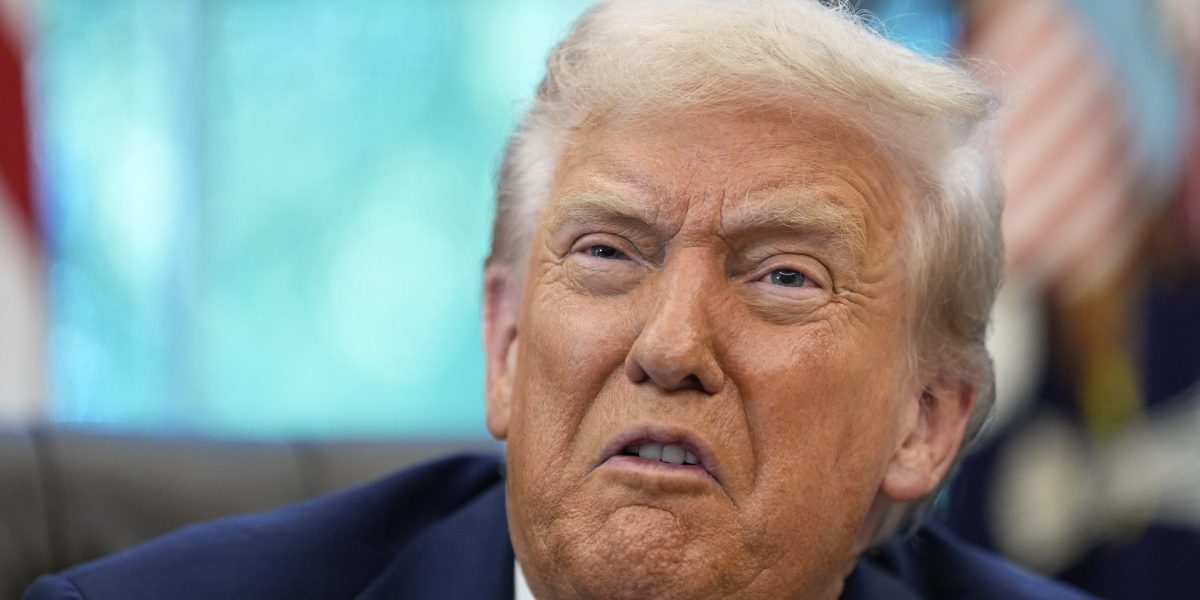
Trump ramps up retribution campaign with push for AG to hasten pursuit of ‘justice’ against his foes

Published

on


Eight months into his second term, President Donald Trump’s long-standing pledge to take on those he perceives as his political enemies has prompted debates over free speech, media censorship and political prosecutions.

From late-night comedian Jimmy Kimmel’s suspension to Pentagon restrictions on reporters and an apparent public appeal to Attorney General Pam Bondi to pursue legal cases against his adversaries, Trump has escalated moves to consolidate power in his second administration and root out those who have spoken out against him.

In a post on social media this weekend addressed to Bondi, Trump said “nothing is being done” on investigations into some of his foes.

“We can’t delay any longer, it’s killing our reputation and credibility,” he said. Noting that he was impeached and criminally charged, “JUSTICE MUST BE SERVED, NOW!!!”

Criticizing investigations into Trump’s dealings under Democratic President Joe Biden’s Justice Department, Sen. Rand Paul, R-Ky., said Sunday that “it is not right for the Trump administration to do the same thing.”

Directive to Bondi to investigate political opponents

Trump has ratcheted up his discussion of pursuing legal cases against some of his political opponents, part of a vow for retribution that has been a theme of his return to the White House. He publicly pressed Bondi this weekend to move forward with such investigations.

Trump posted somewhat of an open letter on social media Saturday to his top prosecutor to advance such inquiries, including a mortgage fraud probe into New York Attorney General Letitia James and a possible threat case against former FBI Director James Comey.

He posted that he had “reviewed over 30 statements and posts” that he characterized as criticizing his administration for a lack of action on investigations.

“We have to act fast — one way or the other,” Trump told reporters later that night at the White House. “They’re guilty, they’re not guilty — we have to act fast. If they’re not guilty, that’s fine. If they are guilty or if they should be charged, they should be charged. And we have to do it now.”

Trump later wrote in a follow-up post that Bondi was “doing a GREAT job.”

Paul, a frequent Trump foil from the right, was asked during an interview on NBC’s “Meet the Press” about the propriety of a president directing his attorney general to investigate political opponents. The senator decried “lawfare in all forms.”

Sen. Chris Murphy, D-Conn., said it was “unconstitutional and deeply immoral for the president to jail or to silence his political enemies.” He warned it could set a worrisome precedent for both parties.

“It will come back and boomerang on conservatives and Republicans at some point if this becomes the norm,” Murphy told ABC’s “This Week.”

The Senate’s Democratic leader, Chuck Schumer of New York, said on CNN’s “State of the Union” that Trump is turning the Justice Department “into an instrument that goes after his enemies, whether they’re guilty or not, and most of them are not guilty at all, and that helps his friends. This is the path to a dictatorship. That’s what dictatorships do.”

The Justice Department did not respond Sunday to a message seeking comment.

Appointment of new prosecutor in Letitia James investigation

Each new president nominates his own U.S. attorneys in jurisdictions across the country. And Trump has already worked to install people close to him in some of those jobs, including former Fox News host Jeanine Pirro in the District of Columbia and Alina Habba, his former attorney, in New Jersey.

Trump has largely stocked his second administration with loyalists, continuing Saturday with the nomination of a White House aide as top federal prosecutor for the office investigating James, a longtime foe of Trump.

Trump announced Lindsey Halligan to be the U.S. attorney in the Eastern District of Virginia on Saturday, just a day after Erik Siebert resigned from the post and Trump said he wanted him “out.”

Trump said he was bothered that Siebert had been supported by the state’s two Democratic senators.

“There are just two standards of justice now in this country. If you are a friend of the president, a loyalist of the president, you can get away with nearly anything, including beating the hell out of police officers,” Murphy said, mentioning the defendants in the Jan. 6, 2021, riot at the U.S. Capitol pardoned by Trump as he returned to office. “But if you are an opponent of the president, you may find yourself in jail.”

New restrictions on Pentagon reporters

Trump has styled himself as an opponent of censorship, pledging in his January inaugural address to “bring free speech back to America” and signing an executive order that no federal officer, employee or agent may unconstitutionally abridge the free speech of any American citizen.

Under a 17-page memo distributed Friday, the Pentagon stepped up restrictions on the media, saying it will require credentialed journalists to sign a pledge to refrain from reporting information that has not been authorized for release, including unclassified information. Journalists who don’t abide by the policy risk losing credentials that provide access to the Pentagon.

Asked Sunday if the Pentagon should play a role in determining what journalists can report, Trump said, “No, I don’t think so.”

“Nothing stops reporters. You know that,” Trump told reporters as he left the White House for Charlie Kirk’s memorial service.

Trump has sued numerous media organizations for negative coverage, with several settling with the president for millions of dollars. A federal judge in Florida tossed out Trump’s $15 billion defamation lawsuit against The New York Times on Friday.

Jimmy Kimmel ouster and FCC warning

Perhaps the most headline-grabbing situation involves ABC’s indefinite suspension Wednesday of veteran comic Jimmy Kimmel’s late-night show. What he said about Kirk’s killing had led a group of ABC-affiliated stations to say it would not air the show and provoked some ominous comments from a top federal regulator.

Trump celebrated on his social media site: “Congratulations to ABC for finally having the courage to do what had to be done.”

Earlier in the day, the Federal Communications Commission chairman, Brendan Carr, who has launched investigations of outlets that have angered Trump, said Kimmel’s comments were “truly sick” and that his agency has a strong case for holding Kimmel, ABC and network parent Walt Disney Co.accountable for spreading misinformation.

“We can do this the easy way or the hard way,” Carr said. “These companies can find ways to take action on Kimmel or there is going to be additional work for the FCC ahead.”

Sen. Markwayne Mullin, R-Okla., argued that Kimmel’s ouster wasn’t a chilling of free speech but a corporate decision.

“I really don’t believe ABC would have decided to fire Jimmy Kimmel over a threat,” he said Sunday on CNN. “ABC has been a longstanding critic of President Trump. They did it because they felt like it didn’t meet their brand anymore.”

Not all Republicans have applauded the move. On his podcast Friday, GOP Sen. Ted Cruz of Texas called it “unbelievably dangerous for government to put itself in the position of saying we’re going to decide what speech we like and what we don’t, and we’re going to threaten to take you off air if we don’t like what you’re saying.”

Trump called Carr “a great American patriot” and said Friday that he disagreed with Cruz.


Source link

Continue Reading

Business

Why Birkin bags are a better investment than gold, according to an Hermès expert

Published

on


The value of a Birkin bag skyrockets from the moment it leaves the Hermès store.

That’s partly because not just any regular person can buy the bag. Only customers with a sizable purchase history at the brand are offered the opportunity to buy a “quota bag,” such as a Birkin or a Kelly.

But even Hermès’ most loyal shoppers don’t get to choose the exact Birkin model they want. The brand allows boutiques to purchase a select number of Birkins per season, and the style of the bags is rarely known ahead of time, according to Sotheby’s. The notoriously opaque process, nicknamed the Hermès Game, has only generated more desire for the bag—and even became the subject of a class-action lawsuit.

Looking to sidestep the Hermès Game and score the bag their heart desires, handbag enthusiasts shell out tens of thousands of dollars on the resale market. Thanks to its exclusivity and its status as an investment piece, a Birkin bag’s value is much higher than its sticker price of around $12,000.

“The resale value of particularly the Birkin and Kelly bags over the past 10 years has outpaced gold,” James Firestein, founder of luxury resale and authentication platform OpenLuxury, told Fortune.

Prior to starting his own company in 2022, Firestein spent a decade as a luxury authenticator, including two years as the director of authentication at Rebag. Over the course of his career, Firestein has seen a “perfect storm” of factors “bolster this wild ride upward.”

“I know several instances where people have doubled their money based on buying it 10 years ago, and reselling it today in pristine condition,” he said.

‘Like buying a Picasso’

For some buyers, a Birkin bag isn’t a high-end piece of arm candy, but a worthy investment. Of the Birkin owners he has worked with, Firestein estimates 75% actually use the bags, while the remaining 25% keep them in storage as investments. 

“It’s similar to buying a Piccaso and holding it in your home, because you can look at it, you can enjoy it,” Firestein said. “But then you ship it off in a couple of years and trade it for something else.”

The value of an Hermès bag can increase dramatically over time, Firestein said, depending on its color, material, and condition. Secondhand demand is so high partly because the resale market offers shoppers more options than the Hermès store, where customers are allowed one quota bag per year, and rarely get to choose the exact model they want. 

Firestein said the steepest price increase he has seen was a Black Togo 30 Birkin that doubled in value in five years. But price increases can be driven by trend cycles and changing demand—so it can be a “gamble,” he said.

“I wouldn’t say jump in with both feet at this point,” he said. “But if you got it in 2012, and you sold in 2019, that’s different.”

The Birkin legend

Before its handbags were spotted on the arms of Jane Birkin and Cardi B, Paris-based Hermès began in 1837 as a maker of horse harnesses. Over the course of six generations, it became a ready-to-wear and leather-goods powerhouse renowned for its craftsmanship.

As for the iconic Birkin bag, here’s how the legend goes: In 1984, the late actress Jane Birkin was seated next to Jean-Louis Dumas, executive chairman of Hermès at the time, on a flight from Paris to London. Birkin said she couldn’t find a bag that suited her needs as a young mother—so she sketched her dream design on a sick bag, according to CNN. Dumas infused the bag with equestrian elements, giving it the signature Hermès look.

“It was more of a subtle old-money brand,” Firestein said of Hermès’ status prior to the Birkin craze.

The Birkin slowly reached “it bag” status thanks to being spotted on the arm of many celebrities in the 1990s and 2000s—and on Sex and the City. But it wasn’t until the 2010s, when the online resale market reached the masses, that the hype went stratospheric.

Firestein credits e-commerce with enabling shoppers to buy a secondhand Hermès bag from any part of the world. Meanwhile, online forums allowed people to share the secrets of the Hermès Game once exclusive to the 1%. The Birkin became a collector’s item over time—and underground demand continues to fuel the resale market.

What’s in the bag?

Some people may desire Birkin bags because they’re so hard to get—but fans also celebrate the brand’s artisan manufacturing and 200-year legacy of craftsmanship.

Unlike brands owned by LVMH and Kering, which often share factories, Hermès only uses its own factories, says Firestein. Conglomerate-owned brands like Balenciaga, Gucci, and Saint Laurent also tend to use more mass-market materials that are cheaper and easier to get, Firestein explains.

“Their leather factories are only Hermès affiliates, and they only create Hermès leathers,” he said. “So you’re buying into part of that heritage, but then you’re also buying into a higher-quality material that they’ve been using for many, many years.”

Compared to other brands, Hermès’ quality is “top-tier,” Firestein said. And though he works with 43 different luxury brands, he admits to having an affinity for Hermès bags.

“They’re made to last for generations,” Firestein said. “And they’re just beautiful luxury objects at the end of the day—almost like sculptures.”

A version of this story published on Fortune.com on March 27, 2024.

Join us at the Fortune Workplace Innovation Summit May 19–20, 2026, in Atlanta. The next era of workplace innovation is here—and the old playbook is being rewritten. At this exclusive, high-energy event, the world’s most innovative leaders will convene to explore how AI, humanity, and strategy converge to redefine, again, the future of work. Register now.


Source link

Continue Reading

Business

Earnings calls citing ‘AI’ surge in 2025 as ‘uncertainty’ mentions fade

Published

on


Good morning. CEOs and CFOs are clearly focused on AI—it is the most-used term in S&P 500 earnings calls this year.

FactSet examined conference call transcripts for all S&P 500 companies that held earnings calls from September 15 through December 4 and found that the term “AI” was cited on 306 calls. This is the highest number of S&P 500 earnings calls on which “AI” has been cited over the past 10 years; the previous record was 292 in Q2 2025, according to John Butters, VP and senior earnings analyst at FactSet. In addition, the 306 figure is significantly above the five-year average of 136 and the 10-year average of 86.

At the sector level, information technology (95%) and communication services (95%) sectors have the highest percentages of earnings calls citing “AI” for Q3.

In addition, S&P 500 companies that cited “AI” on their Q3 earnings calls have seen a higher average price increase than those that did not—since Dec. 31, 2024 (13.9% vs. 5.7%), June 30, 2025 (8.1% vs. 3.9%), and Sept. 30, 2025 (1.0% vs. 0.3%).

Navigating uncertainty

Besides AI, another term I was curious about is “uncertainty,” so I asked Butters for his take. He analyzed S&P 500 earnings calls (per quarter) in which the term “uncertainty” was cited at least once, going back to 2020. He found that, similar to the pattern seen with “tariff” citations, mentions of “uncertainty” spiked in Q1 2025 but declined significantly over the following two quarters. In Q1 2025, there were 415 mentions of “uncertainty,” compared to 282 in Q2 and 201 in Q3.

Following President Donald Trump’s “Liberation Day” earlier this year, significant uncertainty emerged around the new administration’s economic and geopolitical agenda, Yuval Atsmon, CFO at McKinsey, recently told me. Atsmon explained that at the peak of uncertainty, his focus as a CFO was on identifying actions that would be helpful in any scenario. “The worst thing is inaction,” he added. Acting on what you can control builds resilience, he said.

Operating in uncertainty has seemingly become a constant, which may help explain why explicit mentions of the term have tapered off during earnings calls. While uncertainty often drives defensive moves, Atsmon emphasized the importance of revisiting long-standing strategies and seizing competitive opportunities.

Global AI spending is expected to climb in 2026, and it is likely that “AI” will remain a top term in Q4 earnings calls in January as companies discuss investment, margins, capex, and productivity.

SherylEstrada
sheryl.estrada@fortune.com

Leaderboard

Neil Berkley was promoted to CFO of Alector, Inc. (Nasdaq: ALEC), a clinical-stage biotechnology company. Berkley has served as Alector’s chief business officer (CBO) since March 2024, and CBO and interim CFO since June 2025. He is a biotech executive with more than two decades of experience leading corporate strategy, finance, business development, and operations across both early- and late-stage companies.

Caleb Noel was promoted to EVP and CFO of NFP, an Aon company, a property and casualty broker and benefits consultant. Noel has served in various corporate finance and operational roles during his 23-year career with NFP, most recently as SVP of finance and operations. He previously served as VP of finance for Scottish Holdings, a division of Scottish Re, and as an analyst in the investment banking division of Prudential Securities (now Wells Fargo & Company).

Big Deal

CFOs have a long-term focus when it comes to AI, according to research by RGP, a global professional services firm. The report, “The AI Foundational Divide: From Ambition to Readiness,” describes a finance landscape that is racing toward an AI-powered future yet constrained by issues such as fragile data foundations.

Although 66% of CFOs surveyed expect significant AI ROI within two years, only 14% report meaningful value today. However, optimism persists despite key obstacles to AI ROI, including deep structural barriers such as data trust issues (only 10% fully trust enterprise data), technical debt (86% say legacy systems limit AI readiness), and skills shortages that threaten to slow adoption.

The findings are based on insights from 200 U.S. CFOs at enterprises with more than $10 billion in annual revenue. Sectors include technology, health care, financial services, and CPG/retail.

Going deeper

A new episode of “This Week in Business,” a Wharton podcast, focuses on AI and technological evolution. Lynn Wu, a Wharton associate professor of operations, information and decisions, addresses the rise of transformative technologies and the cycles of tech bubbles throughout history. Wu discusses where AI fits within these cycles, describing it as a necessary phase of technological evolution that lays the groundwork for transformative advancements across industries.

Overheard

“In the end, consumers will win if courts and enforcers act based on evidence.”

—Satya Marar, a research fellow at the Mercatus Center at George Mason University, writes in a Fortune opinion piece titled “Netflix, Warner, Paramount and antitrust: Entertainment megadeal’s outcome must follow the evidence, not politics or fear of integration.” Marar specializes in competition, innovation, and governance, and is an AI and antitrust fellow at the Innovators Network.


Source link

Continue Reading

Business

Unlimited vacation policies can work—it just depends on where employees are based

Published

on


For years, the prevailing theory amongst workers about “unlimited vacation” is that it actually encourages workers to take less time off. Without the entitlement to a set number of days, employees can feel awkward requesting days off, or worried that doing so will make them look less committed to work. 

But a new study from payroll and HR platform Deel finds it’s less about specific PTO policies than about culture. It all depends on where you live, says Lauren Thomas, the startup’s economist. 

On average, European employees with unlimited vacation policies took four more days off than their counterparts with fixed time off this year27 vs. 23. But in North America, there was hardly a difference, as both those with unlimited and fixed vacation policies averaged about 17.

“Americans and Canadians are definitely getting less time off, even when you only look at fixed time, than Europeans are,” Thomas said. “That is a combination of policy and culture.” 

In fact, Canadian workers are taking less time off than those in the U.S. Thomas said this is because 77% of U.S. workers have access to paid vacation, while just 73% of Canadians do, based on U.S. Bureau of Labor Statistics and Statistics Canada data.

But Americans and Canadians who work for companies that span the Atlantic do take more time off than their counterparts working for companies that do not have hires in Europe, Thomas said.

“I think companies need to think really carefully about how much productivity they’re really getting when they’re requiring so much [working] time from their employees,” she said. “At the end of the day, we know that time off is important for productivity, it’s important for making a good company, it’s also really important for attracting talent.” 

Which cities are best at encouraging workers to take time off to rest and recharge? Stockholm, Berlin or Paris, where Thomas found employees took 25 or more days off this year. 

Kristin Stoller
Editorial Director, Fortune Live Media
kristin.stoller@fortune.com

Around the Table

A round-up of the most important HR headlines.

The Society for Human Resource Management, or SHRM, was hit with a $11.5 million verdict after a former employee accused the trade group of racial discrimination and retaliation. Business Insider

As jobs get more niche, it has become harder for workers to explain exactly what they do to family and friends. Wall Street Journal

OpenAI says its tools save workers roughly 40 to 60 minutes per day, and has helped improve either the speed or quality of their work. Bloomberg

Watercooler

Everything you need to know from Fortune.

Leaning out. For the first time in a decade, fewer women than men are interested in getting a promotion at work. —Sasha Rogelberg

Interview test. Gagan Biyani, CEO of the education platform Maven, says he gives candidates live feedback during job interviews to see how they react. —Orianna Rosa Royle

Manager shake-up. As AI agents are automating busy work, some managerial drudgery can be avoided—but human interaction is still essential. —Beatrice Nolan


Source link

Continue Reading

Trending

Copyright © Miami Select.