Connect with us

Business

Trump Mobile says it’s delaying its first-ever smartphone, and the government shutdown is to blame

Published

on


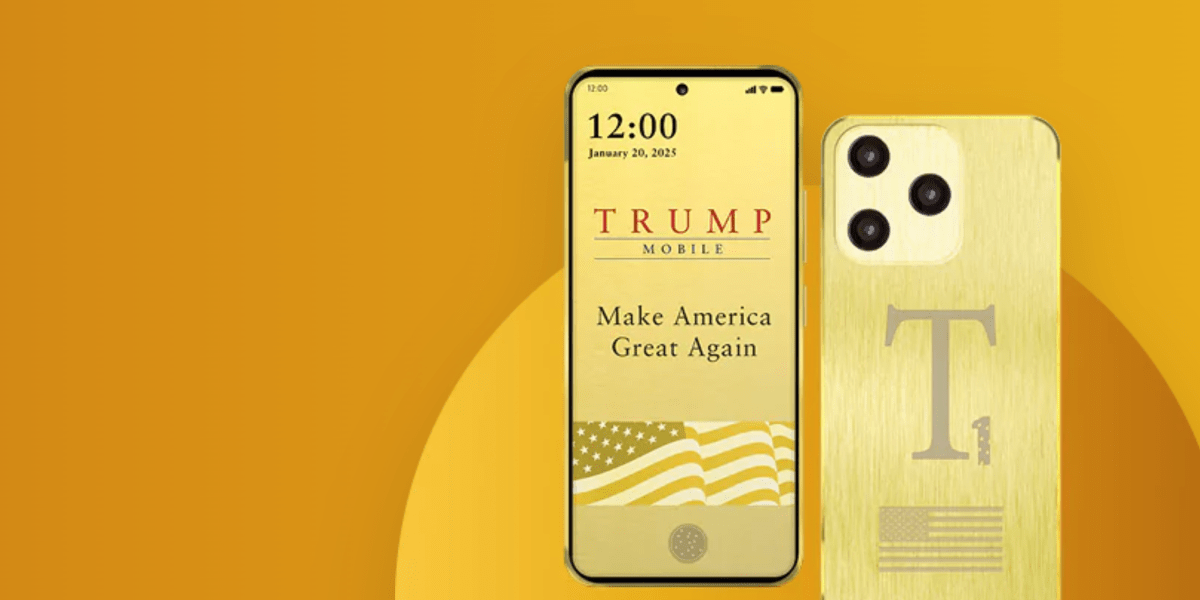
Trump Mobile, the wireless venture backed by the Trump Organization, has postponed delivery of its long-promised gold-colored T1 smartphone beyond the end of the year, blaming the latest U.S. government shutdown for the delay. The move extends a months-long slide in its launch timeline and underscores the operational challenges of turning a political brand into a mass-market hardware business.​

Customer service representatives for Trump Mobile told Fortune the shutdown had disrupted shipments of the $499 device, and said while the device would not be shipped this month, “we’ve been told mid to late January.” The company has not publicly provided a revised delivery date.

​​”The T1 has been delayed due to the government shutdown. They had to pause everything on the FCC side of things,” the customer service rep said, adding the $499 price has not changed.

Trump Mobile was unveiled in June as a licensing venture that uses the Trump name to sell mobile service and a branded Android handset, the T1 Phone. The device is marketed as a gold-colored smartphone priced at $499, available via preorder with a $100 down payment. It is designed to run on “The 47 Plan,” a $47.45-per-month offering that bundles 5G service with unlimited talk, text, and data, the pricing a nod to Donald Trump’s status as the 45th and 47th U.S. president.​​

At launch, the Trump Organization and Trump Mobile framed the project as both a business opportunity and a statement about domestic manufacturing. Early marketing materials promised a handset “built in the United States,” aligning with Trump’s public criticism of Apple and his threats of 25% tariffs on Apple and Samsung devices made in China. Supply chain experts quickly questioned whether a fully U.S.-made smartphone at that price point was realistic, noting less than 5% of the components in an iPhone are currently manufactured in the U.S., according to IDC estimates.​​

The shipping schedule has slipped repeatedly. Initial materials indicated the T1 Phone would be available in August, before the date was pushed to October and then to a vague commitment to deliver units by year-end. In recent weeks, Trump Mobile’s website has removed specific release dates and “Made in USA” language, according to NBC News and People, which have been tracking changes to the website. As the flagship device remains unavailable, the company has begun selling refurbished phones like Apple’s iPhone 15 and Samsung’s Galaxy S24, positioning them as lower-cost alternatives to buying directly from the manufacturers.​​

The business itself operates as a virtual mobile network rather than building its own infrastructure. Trump Mobile’s plan is delivered over existing U.S. carriers via Liberty Mobile Wireless, a Florida-based mobile virtual network operator, while customer service is handled by Ensurety Ventures, an insurance company in Missouri. The Trump-branded service is run out of Trump Tower in Miami, and key executives introduced at launch came from real estate, insurance, and pager businesses rather than from major smartphone manufacturers.​​

Trump Mobile has not explained exactly how the federal shutdown is affecting its production or logistics beyond citing it as the reason for the latest slip. Industry groups have previously noted shutdowns can slow regulatory approvals and customs processing for electronics, adding friction to certification and import timelines. Analysts also point out most shutdowns leave private-sector manufacturing and many core supply chains operating, which can limit how much disruption they cause to commercial product launches.​​

As for the customers who have already put down $100 to reserve the gold T1 Phone, some preorder buyers have reported receiving only receipts and generic assurances, with no firm shipping date and difficulty getting detailed updates from support channels.


Source link

Continue Reading

Business

‘Quiet luxury’ is coming for the housing market, The Corcoran Group CEO says

Published

on


While people have different definitions for luxury, the word typically elicits extravagance, grandeur, and exclusivity. And in the housing market, it usually prompts visions of a massive mansion dripping with amenities. 

But the definition of today’s luxury housing is changing, according to Pamela Liebman, CEO of The Corcoran Group, the real estate firm founded by Shark Tank star Barbara Corcoran in 1973. In fact, many wealthy buyers are leaning into the trend of understated “quiet luxury” when purchasing a home.

“When it comes to home buying, quiet luxury doesn’t have to be the biggest estate on the block,” Liebman told Mansion Global. “It could be a place that makes you so happy and it may have all your favorite bells and whistles, which could be something like a beautiful porch where you sit and have tea or a cocktail at the end of the day versus being a major estate that everyone drives past and wants to know who lives there.”

“Quiet luxury is luxury that makes you happy,” she continued. “Luxury in your face might be spitting it out to the rest of the world.”

In fact, a July report from vacation-home co-ownership platform Pacaso shows smaller homes are becoming more luxurious and are gaining popularity among high net-worth individuals. The average new-home size dropped from 2,314 square feet in Q4 2022 to 2,169 square feet in Q4 2024, U.S. Census Bureau data shows. 

“Affluent buyers are prioritizing convenience and financial flexibility, seeking homes that require less maintenance without sacrificing those high-end finishes we all love,” according to Pacaso. Plus, they’re choosing smaller homes because they’re easier to purchase in cash instead of taking out a mortgage while rates are still high.

Where ‘quiet luxury’ buyers are looking

Quiet luxury is also about where you buy. While the major luxury housing markets include the Hamptons, New York City, Los Angeles, Miami, Palm Beach, and Dallas, there are several emerging markets now on the radar. 

On the West Coast, Liebman noted Sonoma County, specifically Healdsburg, Calif., “is an interesting spot” where luxury home sales have surged 150% year-over-year and 20% of homes have received multiple offers. 

According to Zillow, the average home price there is nearly $1.1 million, about a 17% increase during the past five years. And as of late July, the average listing price was more than $1.5 million. Sonoma County has become a hot spot for buyers from urban areas like San Francisco and Los Angeles, according to Daniel Casabonne of Sotheby’s International Realty, because of its vineyard views and smaller-town vibe.

Park City, Utah, has also become a popular destination to buy a luxury home, particularly for people seeking a skiing destination, Liebman said—and it’s easier to get to than Aspen via a commercial flight.

“You know, not everybody has a private plane,” she said. Still, the average home price in Park City is a cool $1.5 million, according to Zillow. Namely, the Park City new-construction luxury condo market has been growing, and median sales prices rose 23% in Q2 to $1.85 million, data from Park City Investor shows.

On the East Coast, Lake Burton, Ga.; Asheville, N.C.; parts of South Carolina, and Florida’s panhandle have also become popular for luxury homebuyers, Liebman said. In Lake Burton, many 2024 listings exceeded $5 million, and Mayfair International Realty recently exclusively listed a $10 million private island there. 

Meanwhile, the luxury market in Florida’s panhandle is continuing to grow and inventory levels are on the rise. Specifically, Inlet Beach, Santa Rosa Beach, and Destin all are emerging as luxury markets with new upscale beachfront properties boosting overall prices. The average home price in Inlet Beach is $1.7 million, according to Zillow.

“Legacy destinations remain as timeless as ever, [but] Florida’s panhandle is solidifying its status as a favorite for vacationers,” Pacaso CEO and cofounder Austin Allison wrote in the company’s list of the top 20 luxury vacation home markets of 2024. 

A version of this story was published on Fortune.com on September 9, 2025.

More on luxury real estate:

Join us at the Fortune Workplace Innovation Summit May 19–20, 2026, in Atlanta. The next era of workplace innovation is here—and the old playbook is being rewritten. At this exclusive, high-energy event, the world’s most innovative leaders will convene to explore how AI, humanity, and strategy converge to redefine, again, the future of work. Register now.


Source link

Continue Reading

Business

Starbucks CEO Brian Niccol found evidence of turnaround plan working on Reddit thread

Published

on


Starbucks CEO Brian Niccol found evidence his efforts to turnaround the coffee chain’s fortunes are working while scrolling on Reddit.

During an interview at the Wall Street Journal Leadership Institute earlier this month and published on Monday, Niccol said he was reading a Reddit thread of people going through the interview process at Starbucks, with some users asking what interview question they should be prepared for. Other users, ostensibly those who work at the coffee chain, responded that candidates should be prepared to talk about their value of customer service.

“If you don’t like customer service, you’re probably not going to like working at Starbucks. We’re in that transition of getting people to understand that,” Niccol said. “When I saw that in the Reddit thread, I was like, ‘OK, we’re making progress on what the standard of services that we want [are].’”

Customer service has been at the core of Niccol’s “Back to Starbucks” plan he implemented when he took the help of the company in September 2024. Niccol has espoused the hopes of returning Starbucks to a cozy third space, away from the image of being a hurried pitstop to pick up a morning espresso, and toward 1990s nostalgia of lingering over a latte. He told WSJ he wants the Starbucks experience to harken back to the fictional coffee shop Central Perk, beloved by the sitcom Friends characters.

To achieve this relaxed effect, the coffee chain has implemented a swath of changes to its stores, including installing comfier seating and returning seats to thousands of locations where most furniture was moved to accommodate more mobile ordering, as well as writing customers’ names in Sharpie on each to-go cup. It cut back on its menu size in hopes of speeding up orders and introduced trendy items like protein-infused drinks to lure in customers.

“There is tremendous value in being a world-class, customer-service company combined with great craft, great quality food,” Niccol said at the Fast Company Innovation Festival in September. “When you look at putting those two things together for the price that we will have to charge for it, I think it will turn out to be invaluable.”

Early signs indicate Niccol’s efforts to revive the brand are working. In October, the company reported global sales in stores open for at least one year had risen for the first time in two years.

Customer service challenges for the mobile order crowd

One complication with Niccol’s vision of a Starbucks filled with lingering patrons is that 70% of store orders—including 40% drive-thru and 30% mobile, according to the CEO—come from customers looking to grab a coffee and go. He said expectations of store employees to greet and serve customers is the same, regardless of how long they are actually in the store.

“When the ticket comes out…it doesn’t matter to [baristas] whether they’re doing a mobile order or a cafe order,” Niccol said. “What matters, though, for the customer is the mobile order expectation is, you’ve got to be on time and accurate. The in-cafe customer, they want a little bit more connection, and then they also want to know that you’re going to be on time.”

Mobile ordering has been a challenge for Starbucks, with baristas struggling to keep up with the busy flow of orders on a weekday morning. Former CEO Laxman Narasimhan said last year loyal customers were even cancelling orders, as much as a mid-teens percent, that took too long to be fulfilled, which contributed to lagging sales.

In addition to cutting down its menu size, Starbucks has also implemented AI-powered technology behind the counter to help streamline baristas’ workflow and improve efficiency with the goal of completing orders in four minutes or less. Niccol said he doesn’t know how the technology will impact the number of employees working at a given store. However, having the drink-making process completely automated would, in his eyes, undermine the warm customer service reputation Starbucks is trying to rebuild.

“This is still a craft business,” Niccol said. “I think it’s important for you to see the espresso shot get pulled, the milk get steamed, the actual handcrafting of the beverage. I know there’s a lot of people that believe you can have a robot do it. I just think it takes the soul out of the experience.”


Source link

Continue Reading

Business

Zohran Mamdani to get sworn in twice—once underground at abandoned Subway station and once before freezing block party

Published

on


Zohran Mamdani will become mayor of New York City as the clock ticks over into 2026 — but the celebrations are set to last through New Year’s Day.

The Democrat’s team is planning two separate swearing-in ceremonies Thursday — a small, private one with his family in an old subway station around midnight, followed by a large event in the afternoon that will include a public block party outside City Hall.

As a new mayor’s term begins immediately with the new year, it has been customary for the city’s incoming leaders to hold two events. Outgoing mayor Eric Adams held his initial swearing-in at Times Square shortly after the famous ball drop, while Adams’ predecessor, Bill de Blasio, took his first oath at home in Brooklyn.

For his part, Mamdani will take his initial oath at the former City Hall subway station in Manhattan — one of the city’s original stops on its subterranean transit system, known for its tiled arches and vaulted ceilings.

New York Attorney General Letitia James, a political ally and notable foe of President Donald Trump, will administer the oath of office.

The old City Hall stop was designed as the flagship station of the city’s first subway line, but was decommissioned in 1945. These days, outside of occasional guided historical tours, locals can usually only catch a glimpse of it by staying on the 6 train after its last stop downtown when it turns around to head north.

In a statement, Mamdani’s office said the choice to be sworn in at the station reflected his “commitment to the working people who keep our city running every day.”

“When Old City Hall Station first opened in 1904 — one of New York’s 28 original subway stations — it was a physical monument to a city that dared to be both beautiful and build great things that would transform working peoples’ lives,” Mamdani said.

“That ambition need not be a memory confined only to our past, nor must it be isolated only to the tunnels beneath City Hall: it will be the purpose of the administration fortunate enough to serve New Yorkers from the building above,” he said.

On Thursday afternoon, Mamdani will be sworn in again, this time by U.S. Sen. Bernie Sanders, one of his political heroes, on the steps of City Hall in a ceremony scheduled to kick off at 1 p.m. U.S. Rep. Alexandria Ocasio-Cortez, another political ally, will deliver opening remarks.

Mamdani’s transition formed an inaugural committee that includes actor John Turturro, playwright Cole Escola and writer Colson Whitehead, as well as advocates, small business owners and campaign workers who the incoming mayor’s office says have “provided perspective, guidance, and cultural sensibility” for the ceremony.

The public swearing-in will be accompanied by a block party along a stretch of Broadway leading up to City Hall. Mamdani’s office expects thousands of people to attend and says there will be performances, music and interfaith elements.


Source link

Continue Reading

Trending

Copyright © Miami Select.