Connect with us

Business

Trump just declared Christmas Eve a national holiday. Here’s what’s open and closed?

Published

on


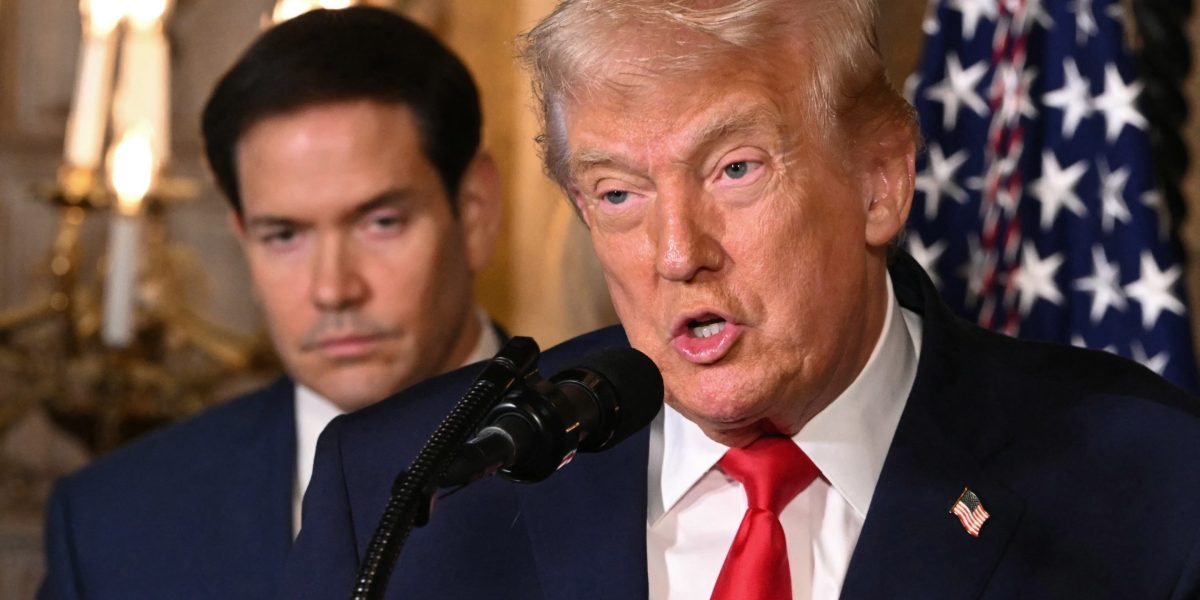
President Donald Trump delivered an early gift to the federal workforce, signing an executive order that effectively grants a five-day weekend to hundreds of thousands of government employees. The order, signed last Thursday, designates both Wednesday, Dec. 24, and Friday, Dec. 26, as federal holidays for 2025.

While the move is a boon for morale within the executive branch—closing non-essential agencies from Christmas Eve through the following Sunday—it creates a complex patchwork of operating hours for the private sector and quasi-governmental services.

“All executive departments and agencies of the Federal Government shall be closed and their employees excused from duty on Wednesday, December 24, 2025, and Friday, December 26, 2025,” the executive order says, although it includes a crucial caveat allowing agency heads to keep offices open for “reasons of national security, defense, or other public need.”

While the move is generous, it’s not without precedent. Presidents often issue executive orders closing the government on Christmas Eve when it falls mid-week. Trump did this in 2018, 2019, and 2020. President Barack Obama also closed the government on Dec. 26 in 2014. However, securing both surrounding days is a rarity. And crucially, Trump’s executive order does not not legally compel banks, markets, or private enterprises to close.

With all that said, here’s what’s open and closed on December 24th.

Government services & mail

While most federal offices—such as Social Security Administration field offices and passport agencies—will be dark, the U.S. Postal Service (USPS) is an exception. Despite being a federal establishment, USPS operations are largely funded by revenue rather than tax dollars. Post offices are expected to remain open on Christmas Eve (likely with shortened retail hours) and resume normal operations on Dec. 26. Mail will be delivered on both days, though not on Christmas Day.

Financial markets

Wall Street is not taking the extra days off. The New York Stock Exchange and Nasdaq will operate on a modified schedule:

  • Dec. 24: Open, with an early close at 1:00 p.m. ET.
  • Dec. 25: Closed.
  • Dec. 26: Open for a full trading day.

Banks

The Federal Reserve has not adopted the additional holidays for its banking operations. Consequently, most major banks (Chase, Bank of America, Wells Fargo) will remain open on Christmas Eve and Dec. 26. Customers should expect branches to close early on the 24th, but online banking and ATMs will function normally.

Shipping & logistics

For businesses rushing last-minute inventory, carriers have diverged on their post-Christmas plans:

  • FedEx: Expects to be fully operational on Dec. 26, though some freight services may run on a modified schedule.
  • UPS: Has announced no pickup or delivery service for Dec. 26, treating it effectively as a holiday extension alongside Christmas Day.

Private sector & retail

Major retailers like Walmart and Target are unaffected by the federal closure. They will generally be open for last-minute shoppers on Christmas Eve, closed Christmas Day, and fully open for returns and sales on Dec. 26.

This story was originally featured on Fortune.com


Source link

Continue Reading

Business

Down Arrow Button Icon

Published

on


Merry Christmas. The economy is recovering. 

In assessing our economy or, really, any economy, you want to know if the economy is growing, that there are enough jobs for people, that people can borrow at reasonable rates and that the dollar you hold today is worth about the same as it did a year ago. If those four metrics are solid, we are good. Using Pareto’s 80/20 principle—the idea that 20% of any set of numbers constitutes 80% of the value of the entire set—we know that real GDP, the unemployment rate, interest rates and inflation drive the vast majority of what is important.

If those four numbers are excellent and all other economic metrics are falling apart, we still get a B grade. If all other numbers are great and those four numbers are bad, we get an F.

These four pillars are the best antidote to the idea of the “vibecession”—a state defined by persistent negative “vibes” and a sense of malaise about the economy due to factors like high grocery prices and housing costs, with no regard to what the hard data says.

When rhetoric gets loud in politics, look at the basic math. First, consider gross domestic product (GDP). GDP is simply the value of all the goods and services a country produces within a time period. Think of GDP as a country’s sales or revenue, just like the top line for a company. After a minus 0.6% growth rate at the start of the year, the second quarter bounced back with a 3.8% increase. New data this week showed third-quarter GDP growth accelerating to 4.3%—the highest rate in two years. Historically, a real GDP growth rate above 3% is outstanding. Real GDP—check.

In contrast, unemployment sits at 4.6%, the highest since 2021. But look at context: Since 1950, the average U.S. unemployment rate has been about 5.7%. In 2020, it spiked to 14.8%. By any historical measure, if you want a job in America today, the math is on your side. Employment—check.

Next, interest rates. The Federal Reserve recently set a target range of 3.5% to 3.75%. Historically, 30-year mortgages run two to three percentage points higher than that rate, and they currently sit around 6.3%. We are in a cooling-off period after mortgage rates peaked near 8% in late 2023. If you are anchored to the sub-3% rates of 2020—a once-in-a-century anomaly—6.3% doesn’t feel so good. But the historical average since 1971 is 7.4%. We are currently borrowing at low rates compared to the last five decades. Interest rates—check.

Finally, the annual inflation rate is currently around 2.7%, higher than the Federal Reserve’s 2% target but well below the 75-year average of 3.5%. Remember, the COVID-era high was 9.1% in June 2022. Things still “feel” bad around inflation because groceries can cost $150 for two bags and because of what has occurred over the past five years. Prices aren’t dropping, but the speed of their increase has significantly slowed. We are still paying for the 24% total price hike endured since 2021, but the bleeding has stopped. At 2.7%, the engine is cooling to a healthy temperature. Inflation—check.

The answer: Despite the “vibecession” narrative, the economy is recovering. I think we get an A-minus, no matter who the teacher is—Democrat or Republican.

One last item. Who drives all these metrics? Certainly not the politicians. It is the small-business person. They create the jobs and the growth. A healthy economy is built by small businesses. They create about 65% of all new jobs and the vast majority of innovation. These businesses have been operating in a fog of mixed information and a quickly changing policy environment. Predictability is the oxygen needed for entrepreneurs because their lives are already upside down with risk. They need the certainty to plan, hire and invest. So, people, let’s not confuse the creators. It is time to move past the noise and get back to business. The math says we’re going to be just fine.

The opinions expressed in Fortune.com commentary pieces are solely the views of their authors and do not necessarily reflect the opinions and beliefs of Fortune.


Source link

Continue Reading

Business

Why gold went through the roof this year

Published

on


The S&P 500 closed up 0.46% yesterday to hit a new record of 6,909.79. The index is now up 17.48% for the year. With only the quiet Christmas week left before the end of the year it’s likely that investors will mark this down in their spreadsheets as a very good year.

Unless, of course, they have a friend who bought gold at or before the beginning of 2025. The price of gold is up an astonishing 71% year-to-date, and is currently hovering around $4,514 per troy ounce. That friend is now laughing at you, the foolish stock investor, for wasting your money on trivia like the Magnificent Seven.

There’s a hackneyed narrative explaining why gold went up: We had a volatile year with President Trump’s tariffs disrupting global trade; Russia’s ongoing invasion of Ukraine; there’s a bubble in AI-related tech stocks; Bitcoin went nowhere this year (it’s down 7%); inflation is trending up; and gold is the safe-haven investment for nervous investors who want a hedge against pretty much all of that. 

In fact, that is only partially true, according to newish research from Claude Erb and Campbell Harvey of the Fuqua School of Business at Duke University. The reality, they say, is that the introduction in 2004 of gold exchange-traded funds—which make buying gold as easy as buying stocks—has permanently pushed up the price of gold.

“Total North American gold ETFs have almost $200 billion, and ETFs outside the U.S. account for another $175 billion in gold,” they said in an October 2025 research paper.

This chart shows the apparent effect on the price of gold following the introduction of gold ETFs. The chart shows the “real” price of gold, which discounts inflation from its price:
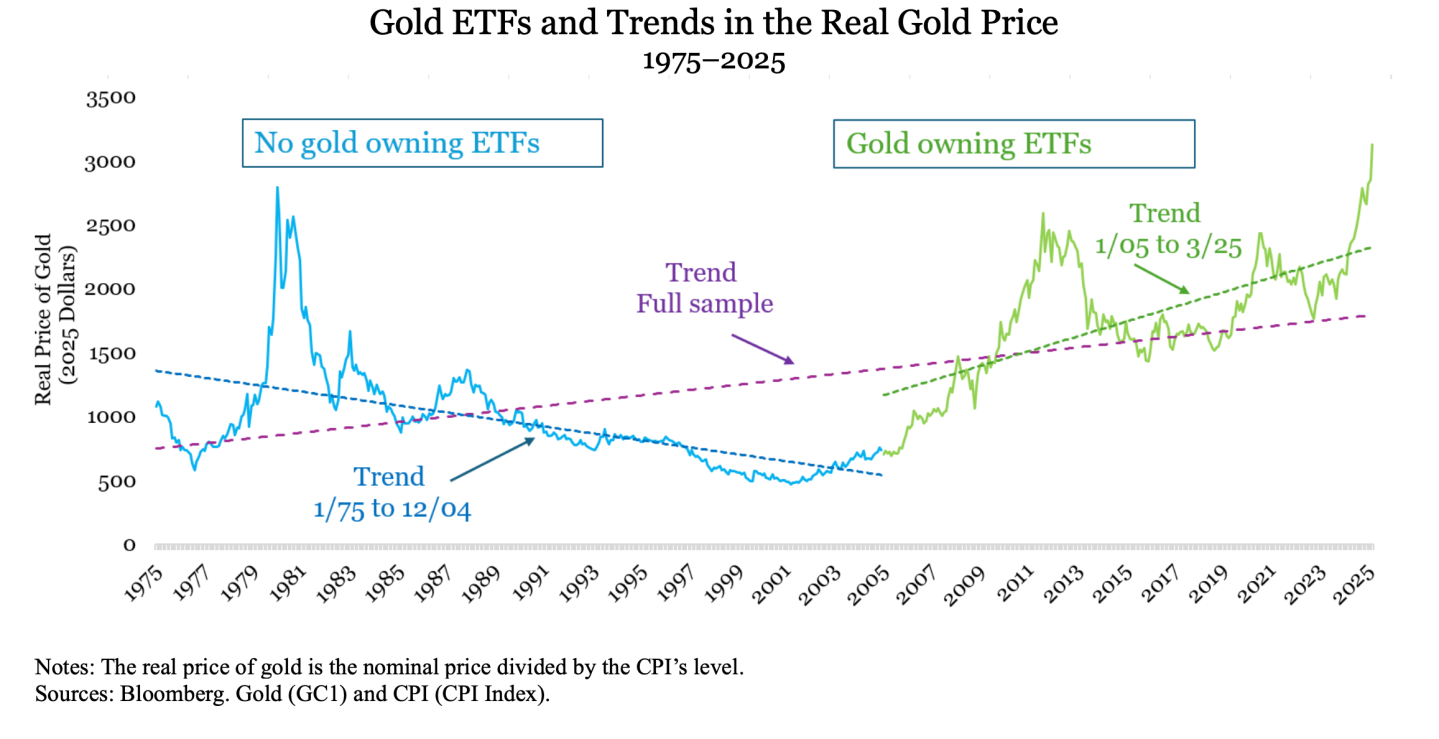
The more recent introduction of tokenized gold stablecoins—crypto tokens backed by gold reserves and thus pegged to the price of gold, which can be “staked” or locked up as investments in other risk assets like bonds—is likely to push the price up further, they say.

But don’t get too excited.

Gold isn’t actually a great hedge against inflation over the long run, Erb and Harvey argue. The price of gold has high volatility, whereas inflation is a low-vol phenomenon. Gold investors can thus spend years losing money if they are trying to beat inflation:

And then there is the performance of gold generally, in nominal dollars, versus stocks. This chart shows the price of gold over the last 40 years. Note that gold can spend years and years in long-term price declines:
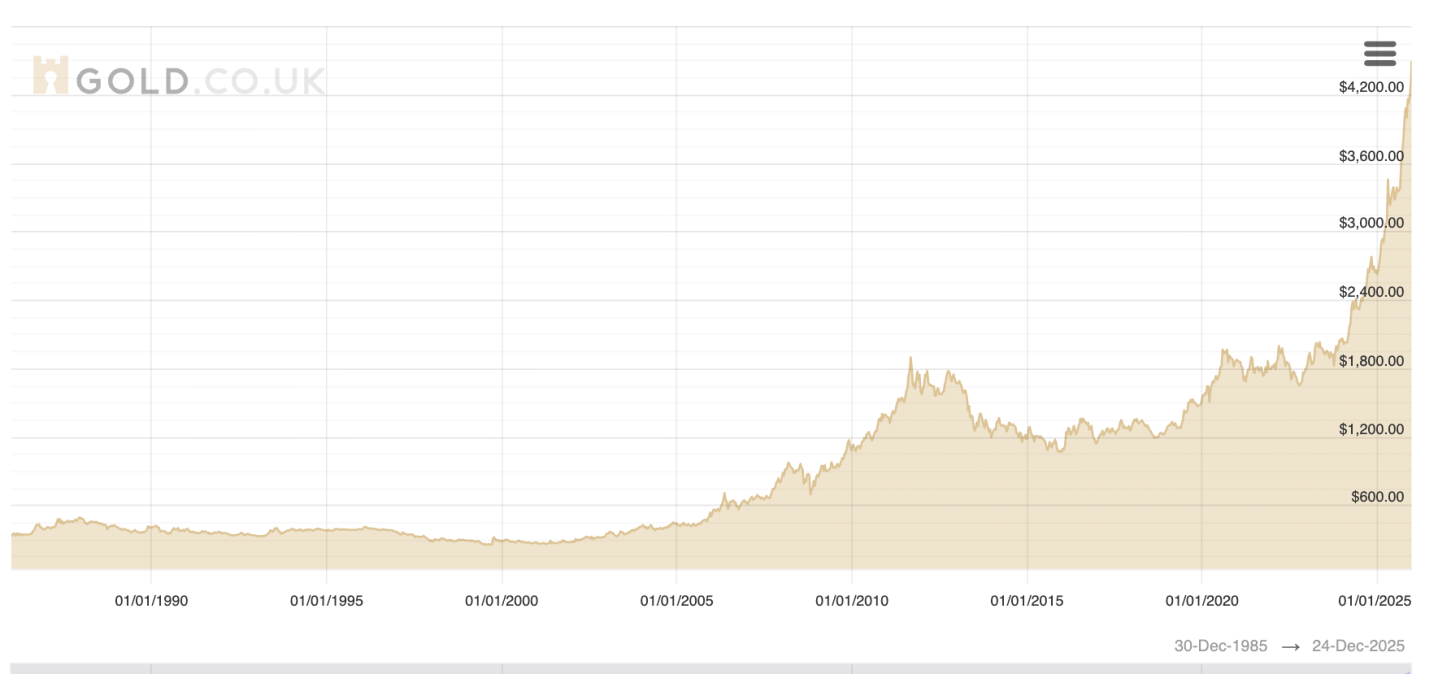
And here is the Comex continuous contract for gold versus the S&P 500 index over the last 20 years. Clearly, the winner ain’t gold:
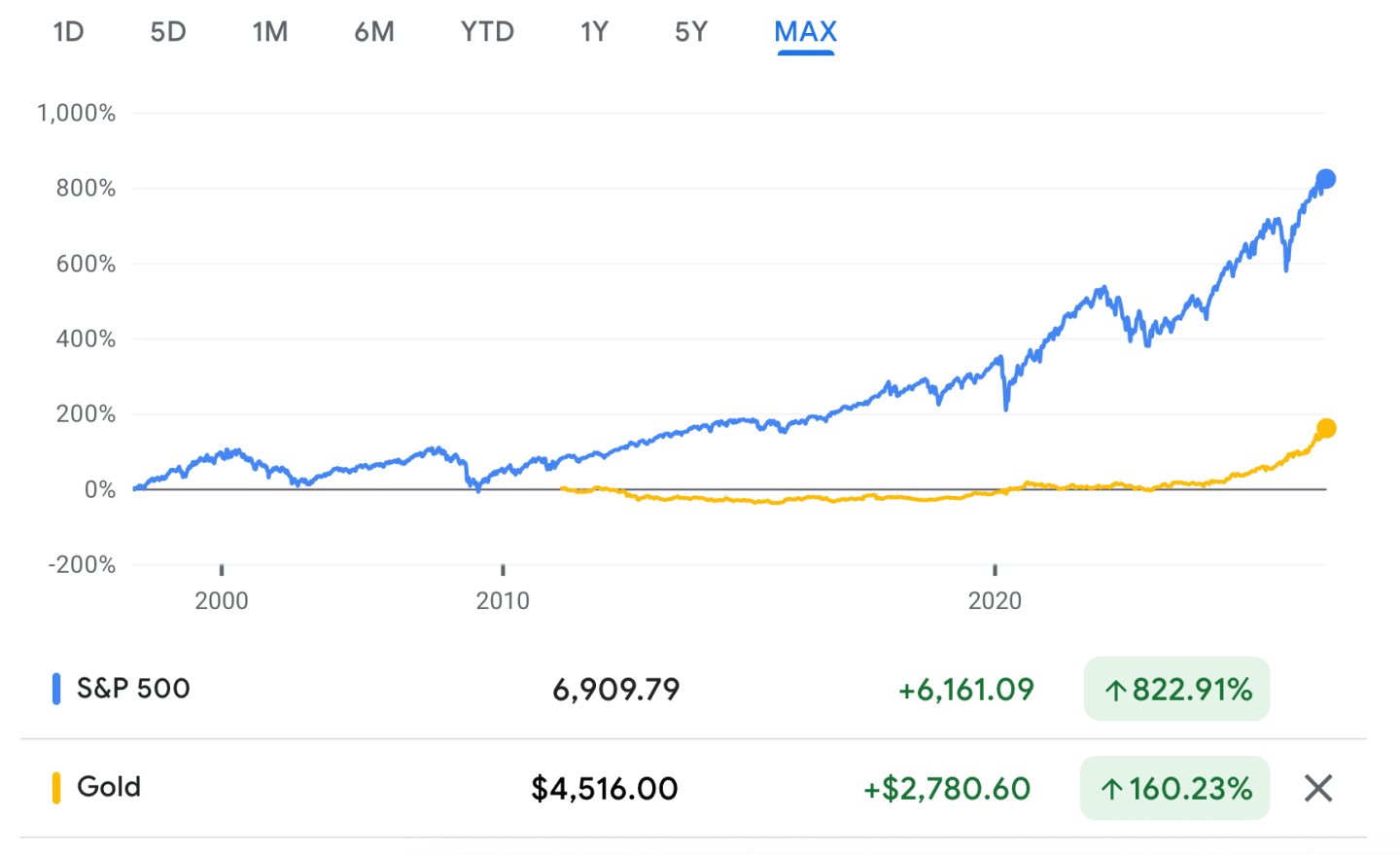
So has gold peaked? No one knows, obviously. But it is interesting that investment banks like Société Générale, Morgan Stanley, and Mitsui have all expanded their precious metal trading teams this year, and other banks are exploring getting back into the “vault” business of storing gold reserves, the Financial Times reports.

Here’s a snapshot of the markets ahead of the opening bell in New York this morning:

  • S&P 500 futures were flat this morning. The last session closed up 0.46% to hit a new record of 6,909.79. 
  • STOXX Europe 600 was up 0.39% in early trading. 
  • The U.K.’s FTSE 100 was down 0.12% in early trading. 
  • Japan’s Nikkei 225 was down 0.14%. 
  • China’s CSI 300 was up 0.29%. 
  • The South Korea KOSPI was down 0.21%. 
  • India’s NIFTY 50 was down 0.14%. 
  • Bitcoin was at $87K.
Join us at the Fortune Workplace Innovation Summit May 19–20, 2026, in Atlanta. The next era of workplace innovation is here—and the old playbook is being rewritten. At this exclusive, high-energy event, the world’s most innovative leaders will convene to explore how AI, humanity, and strategy converge to redefine, again, the future of work. Register now.


Source link

Continue Reading

Business

How AI is redefining finance leadership: ‘There has never been a more exciting time to be a CFO’

Published

on


Good morning. This year has shown that AI isn’t just a buzzword anymore—it’s redefining finance. 

In covering AI, I’ve spoken with CFOs across industries who are focused on value creation and developing real-world use cases for AI to reshape everything from forecasting and financial planning to strategic decision-making. As data moves faster than ever, finance leaders are asking a new question: not what AI could do, but how it can truly transform the enterprise. I’ve also talked with industry experts and researchers about topics ranging from the ROI of AI to “prompt-a-thons” and debates over whether AI will turn CFOs into chief capital officers.

Finance chiefs are signaling the next big evolution—2026 will be the year of enterprise-scale AI. Pilot programs and proofs of concept are giving way to avenues for full-scale deployment as CFOs expect AI to deliver measurable value: faster decisions, leaner operations, and predictive insights that can provide a competitive edge. However, that level of transformation comes with new demands—governance, data integrity, and human oversight matter more than ever.

I recently asked finance chiefs from leading companies how they expect AI to redefine what it means to lead in finance. For instance, Zane Rowe, CFO at Workday, told me: “There has never been a more exciting time to be a CFO with AI unlocking new opportunities for value creation through unprecedented data and insights. Most of the focus has been on experimentation and discovering the art of the possible, but this year, leaders will shift from ‘What can AI do?’ to ‘How do we build the foundation for scale?’ They will manage a more nuanced AI portfolio that balances launching pilots with rolling out proven solutions, and they will prioritize the unglamorous but critical work of data governance, process redesign, and maintenance of new technologies. Success in 2026 will be defined by how we mature our AI strategy to ensure it is both agile, durable, and enterprise-grade.”

Shifting from the perspective of a major tech company to a beauty and cosmetics leader, Mandy Fields, CFO at e.l.f. Beauty offered this prediction: “From where a CFO sits, AI simultaneously helps broaden our view to get a better macro picture and can help put a sharper focus on very specific points of interest. e.l.f. Beauty is growing globally, and AI has visibility across it all. Going into next year, we’ll continue to explore how we best leverage AI in finance to lean into its strengths. It’s a pretty similar approach to our high-performance teamwork culture in which we encourage the team to pursue and thrive in the areas where they have expertise, learn continuously and move at e.l.f. speed.”

You can read more insights from over a dozen CFOs on how AI will shape finance in 2026 in my complete article here.

This is the final CFO Daily of 2025. The next issue will land in your inbox on Jan. 5. Thank you for your readership—and wishing you a wonderful holiday season. See you in 2026!

Sheryl Estrada
sheryl.estrada@fortune.com

This story was originally featured on Fortune.com


Source link

Continue Reading

Trending

Copyright © Miami Select.