Connect with us

Business

Trump just celebrated the bull market’s third birthday by wiping 2% off the S&P 500, lashing out at China over the great rare earths tug of war

Published

on


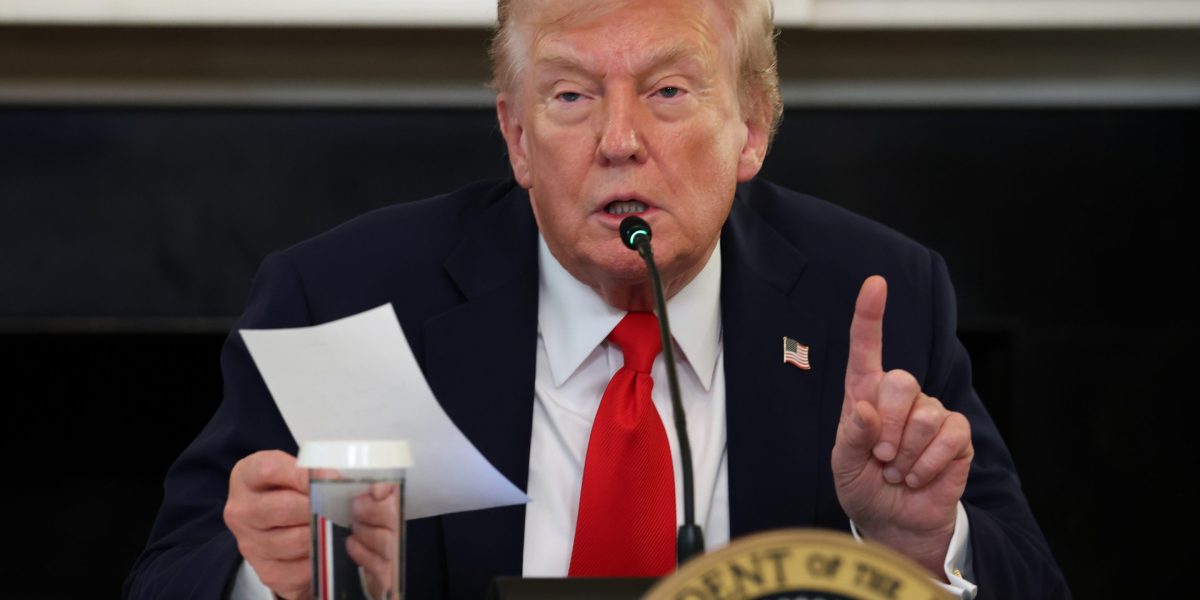
The third anniversary of the bull market took an unexpected turn on Friday as President Donald Trump’s latest comments on China sent shockwaves through financial markets, erasing 2% from the S&P 500 in a single trading session. What was expected to be a modest celebration of America’s longest stretch of market gains in a decade quickly transformed into another episode of geopolitical brinkmanship, this time over the world’s most strategic resources: rare earth metals and a fresh round of Chinese import restrictions.

Investors entered Friday morning with cautious optimism. The S&P 500 had drifted higher for much of the week, setting fresh record highs along the way. But by midday, sentiment had shifted sharply after Trump issued a lengthy Truth Social post stating, among other things, that the U.S. is considering a “massive increase of Tariffs on Chinese products” coming into the U.S.

“Some very strange things are happening in China!” Trump wrote against the backdrop of a scheduled meeting later in October with President Xi Jinping in South Korea, ahead of the Asia-Pacific Economic Cooperation summit. Trump wrote that China is “becoming very hostile,” arguing that the export controls on rare earths would clog world markets for the precious resource. Repeatedly in 2025, Trump’s tariffs-heavy trade regime has been countered by China, which holds the trump card of rare earths, essential for high-tech manufacturing.

The S&P 500 slid 2% in afternoon trading, while the Dow Jones Industrial Average dropped more than 600 points. Tech and green energy sectors, both heavily reliant on rare earth minerals such as neodymium and dysprosium, bore the brunt of the sell-off.

Rare Earths and Real Risks

Rare earth elements — a group of 17 metals critical for producing everything from smartphones and wind turbines to missile guidance systems — have long been a choke point in U.S.–China relations. China controls more than 60% of global production and nearly 90% of processing capacity.

Trump’s post accused Beijing of “a rather sinister and hostile move, to say the least.” He said he had not spoken to his Chinese counterpart, but that he was surprised by the new restrictions, and that there “seems to be no reason” to go ahead with meeting Xi in two weeks’ time.

Chinese tech companies saw steep declines, with Alibaba, Baidu, and JD.com among the hardest hit; Alibaba dropped 10%, Baidu over 8%, and JD.com by more than 6%.​ U.S. technology stocks with significant China exposure, like Nvidia, AMD, and Tesla, also fell; Nvidia lost 2.4%, AMD dropped 5.8%, and Tesla slipped 3.9%.

Companies tied to rare earth minerals, on the other hand, saw dramatic gains. MP Materials rose by as much as 15%, USA Rare Earth surged as much as 19%​, and NioCorp Developments climbed by 8%.

Fortune Global Forum returns Oct. 26–27, 2025 in Riyadh. CEOs and global leaders will gather for a dynamic, invitation-only event shaping the future of business. Apply for an invitation.


Source link

Continue Reading

Business

Trump says he’ll allow Nvidia to sell advanced chips to ‘approved customers’ in China

Published

on


President Donald Trump said Monday that he would allow Nvidia to sell an advanced type of computer chip used in the development of artificial intelligence to “approved customers” in China.

There have been concerns about allowing advanced computer chips to be sold to China as it could help the country better compete against the U.S. in building out AI capabilities, but there has also been a desire to develop the AI ecosystem with American companies such as chipmaker Nvidia.

The chip, known as the H200, is not Nvidia’s most advanced product. Those chips, called Blackwell and the upcoming Rubin, were not part of what Trump approved.

Trump said on social media that he had informed China’s leader Xi Jinping about his decision and “President Xi responded positively!”

“This policy will support American Jobs, strengthen U.S. Manufacturing, and benefit American Taxpayers,” Trump said in his post.

Nvidia said in a statement that it applauded Trump’s decision, saying the choice would support domestic manufacturing and that by allowing the Commerce Department to vet commercial customers it would “strike a thoughtful balance” on economic and national security priorities.

Trump said the Commerce Department was “finalizing the details” for other chipmakers such as AMD and Intel to sell their technologies abroad.

The approval of the licenses to sell Nvidia H200 chips reflects the increasing power and close relationship that the company’s founder and CEO, Jensen Huang, enjoys with the president. But there have been concerns that China will find ways to use the chips to develop its own AI products in ways that could pose national security risks for the U.S., a primary concern of the Biden administration that sought to limit exports.

Nvidia has a market cap of $4.5 trillion and Trump’s announcement appeared to drive the stock slightly higher in after hours trading.


Source link

Continue Reading

Business

Google Cloud CEO lays out 3-part AI plan after identifying it as the ‘most problematic thing’
Published

on


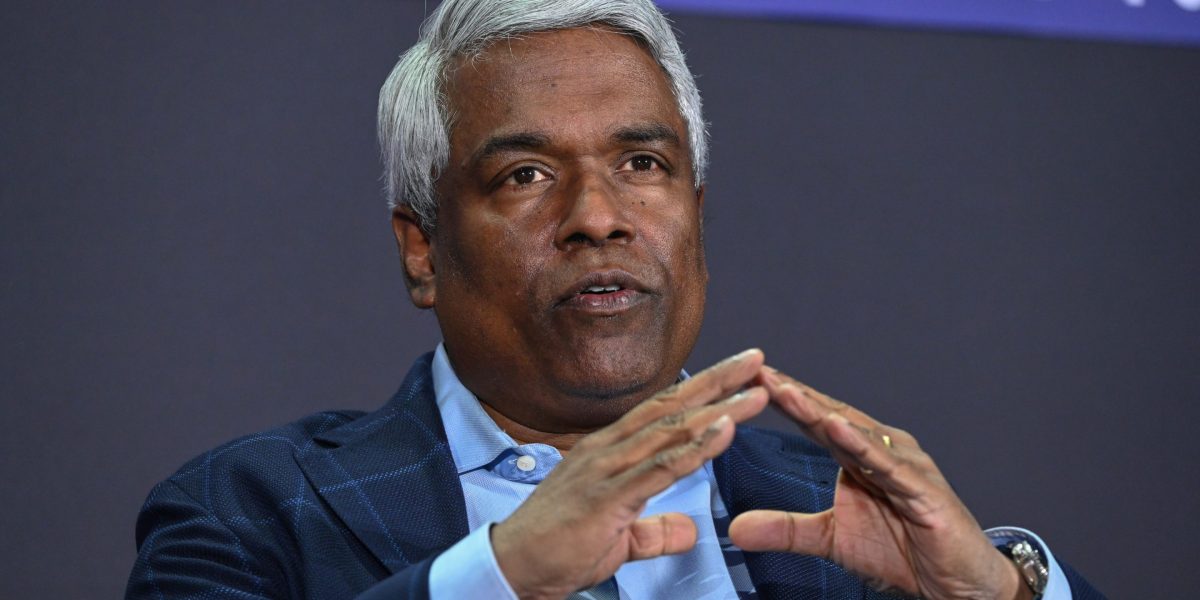
The immense electricity needs of AI computing was flagged early on as a bottleneck, prompting Alphabet’s Google Cloud to plan for how to source energy and how to use it, according to Google Cloud CEO Thomas Kurian.

Speaking at the Fortune Brainstorm AI event in San Francisco on Monday, he pointed out that the company—a key enabler in the AI infrastructure landscape—has been working on AI since well before large language models came along and took the long view.

“We also knew that the the most problematic thing that was going to happen was going to be energy, because energy and data centers were going to become a bottleneck alongside chips,” Kurian told Fortune’sAndrew Nusca. “So we designed our machines to be super efficient.”

The International Energy Agency has estimated that some AI-focused data centers consume as much electricity as 100,000 homes, and some of the largest facilities under construction could even use 20 times that amount.

At the same time, worldwide data center capacity will increase by 46% over the next two years, equivalent to a jump of almost 21,000 megawatts, according to real estate consultancy Knight Frank.  

At the Brainstorm event, Kurian laid out Google Cloud’s three-pronged approach to ensuring that there will be enough energy to meet all that demand.

First, the company seeks to be as diversified as possible in the kinds of energy that power AI computation. While many people say any form of energy can be used, that’s actually not true, he said.

“If you’re running a cluster for training and you bring it up and you start running a training job, the spike that you have with that computation draws so much energy that you can’t handle that from some forms of energy production,” Kurian explained.

The second part of Google Cloud’s strategy is being as efficient as possible, including how it reuses energy within data centers, he added.

In fact, the company uses AI in its control systems to monitor thermodynamic exchanges necessary in harnessing the energy that has already been brought into data centers.

And third, Google Cloud is working on “some new fundamental technologies to actually create energy in new forms,” Kurian said without elaborating further.

Earlier on Monday, utility company NextEra Energy and Google Cloud said they are expanding their partnership and will develop new U.S. data center campuses that will include with new power plants as well.

Tech leaders have warned that energy supply is critical to AI development alongside innovations in chips and improved language models.

The ability to build data centers is another potential chokepoint as well. Nvidia CEO Jensen Huang recently pointed out China’s advantage on that front compared to the U.S.

“If you want to build a data center here in the United States, from breaking ground to standing up an AI supercomputer is probably about three years,” he said at the Center for Strategic and International Studies in late November. “They can build a hospital in a weekend.”


Source link

Continue Reading

Business

Pepsi to cut product offering nearly 20% in deal with $4 billion activist Elliott

Published

on


PepsiCo plans to cut prices and eliminate some of its products under a deal with an activist investor announced Monday.

The Purchase, New York-based company, which makes Cheetos, Tostitos and other Frito-Lay products as well as beverages, said it will cut nearly 20% of its product offerings by early next year. PepsiCo said it will use the savings to invest in marketing and improved value for consumers. It didn’t disclose which products or how much it would cut prices.

PepsiCo said it also plans to accelerate the introduction of new offerings with simpler and more functional ingredients, including Doritos Protein and Simply NKD Cheetos and Doritos, which contain no artificial flavors or colors. The company also recently introduced a prebiotic version of its signature cola.

PepsiCo is making the changes after prodding from Elliott Investment Management, which took a $4 billion stake in the company in September. In a letter to PepsiCo’s board, Elliott said the company is being hurt by a lack of strategic clarity, decelerating growth and eroding profitability in its North American food and beverage businesses.

In a joint statement with PepsiCo Monday, Elliott Partner Marc Steinberg said the firm is confident that PepsiCo can create value for shareholders as it executes on its new plan.

“We appreciate our collaborative engagement with PepsiCo’s management team and the urgency they have demonstrated,” Steinberg said. “We believe the plan announced today to invest in affordability, accelerate innovation and aggressively reduce costs will drive greater revenue and profit growth.”

Elliott said it plans to continue working closely with the company.

PepsiCo shares were flat in after-hours trading Monday.

PepsiCo said it expects organic revenue to grow between 2% and 4% in 2026. The company’s organic revenue rose 1.5%. the first nine months of this year.

PepsiCo also said it plans to review its supply chain and continue to make changes to its board, with a focus on global leaders who can help it reach its growth and profitability goals.

“We feel encouraged about the actions and initiatives we are implementing with urgency to improve both marketplace and financial performance,” PepsiCo Chairman and CEO Ramon Laguarta said in a statement.

PepsiCo said in February that years of double-digit price increases and changing customer preferences have weakened demand for its drinks and snacks. In July, the company said it was trying to combat perceptions that its products are too expensive by expanding distribution of value brands like Chester’s and Santitas.


Source link

Continue Reading

Trending

Copyright © Miami Select.